Quick answer
For everyday wear, a metal butterfly clasp (also called a clutch) is the most secure standard backing because its spring tension grips the post firmly. Rubber backs are comfortable and easy to remove but loosen over time, while locking pin backs add a screw or locking mechanism for high-value or frequently worn pins.
Why pin backs keep falling off
Backs usually fail for one of three reasons: the clasp has lost tension, the post is bent or too short for the backing, or the pin is worn on thin or slippery fabric that lets the backing slide. Rubber backs are especially prone to stretching after repeated on-and-off use, while metal butterfly clasps can bend out of shape if pulled rather than squeezed. Understanding the failure mode helps you choose the right replacement.
When a locking back is worth the extra effort
Locking pin backs (often a screw-on or deluxe clasp design) are the most secure option for pins worn on backpacks, lanyards, or jackets where the pin is frequently bumped. They take longer to put on and remove, so they are less convenient for pins you swap daily. For a pin you plan to keep on one bag long-term, the trade-off is usually worth it.
Enamel pin backing FAQs
Which backing type is most secure?
Metal butterfly clasps hold well for most pins because the spring mechanism maintains tension. Locking backs are more secure but slower to remove. Rubber backs are the least secure over time. Match the backing to how often you remove the pin.
How do I stop my pin backs from falling off?
Check that the post is straight and fully inserted. Squeeze the butterfly clasp wings gently to restore tension. For rubber backs, replace them if they feel loose or stretched. A quick squeeze can save a loose clasp.
Can I replace a pin backing?
Yes. Most standard pin backs (butterfly clasps, rubber backs, and locking backs) are sold separately and fit standard posts. Match the backing type to the post diameter; if the post is an unusual size, check with the pin maker. Keep a few spare backs on hand for quick swaps.
How do I secure a pin on a backpack or jacket?
Use a locking back or a butterfly clasp rather than a rubber back. Place the pin through the fabric and backing, then press the clasp firmly. For extra security, add a small rubber keeper behind the clasp. High-movement fabrics need a firmer backing.
Does backing type affect enamel pin care?
Yes. Metal clasps can scratch if stored loose, and rubber backs can degrade with heat or sunlight. Store pins with backs attached in a dry place, and avoid pulling the pin by the front to remove it. Remove pins by the backing, not the enamel face.
Backing details on two Badge Bomb pins
-
Glasses Chick Enamel Pin: Glasses Chick Enamel Pin uses a butterfly clasp on a 1-inch hand-illustrated pin. The butterfly clasp provides reliable grip for a small, lightweight pin, making it a good everyday choice.
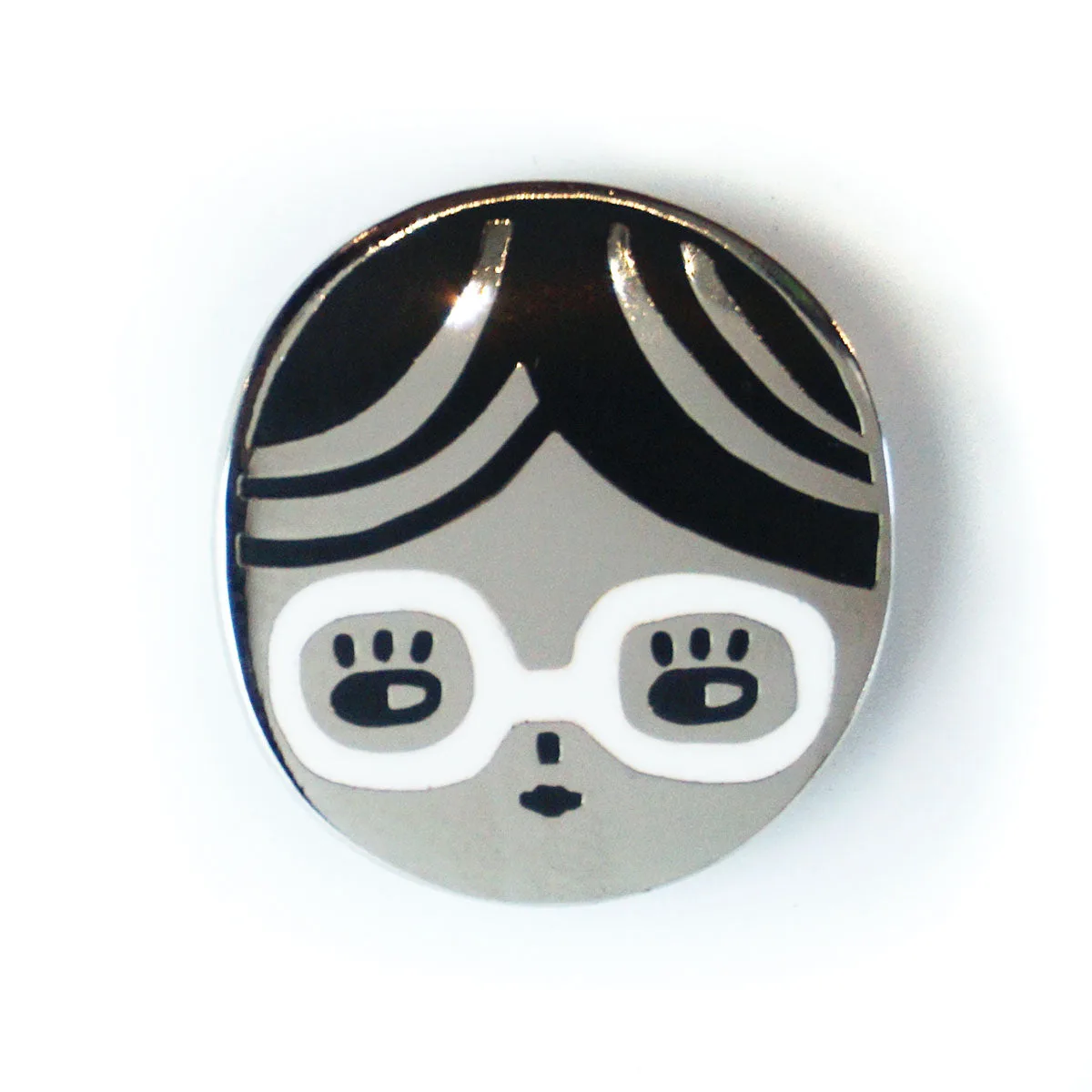
Glasses Chick Enamel Pin
-
One Tough Bitch Bulldog Pin: One Tough Bitch Bulldog Pin is hard enamel with a single back post and butterfly clasp. A single-post butterfly clasp is simple to secure; if you wear it on a busy bag, consider swapping to a locking back for extra hold.
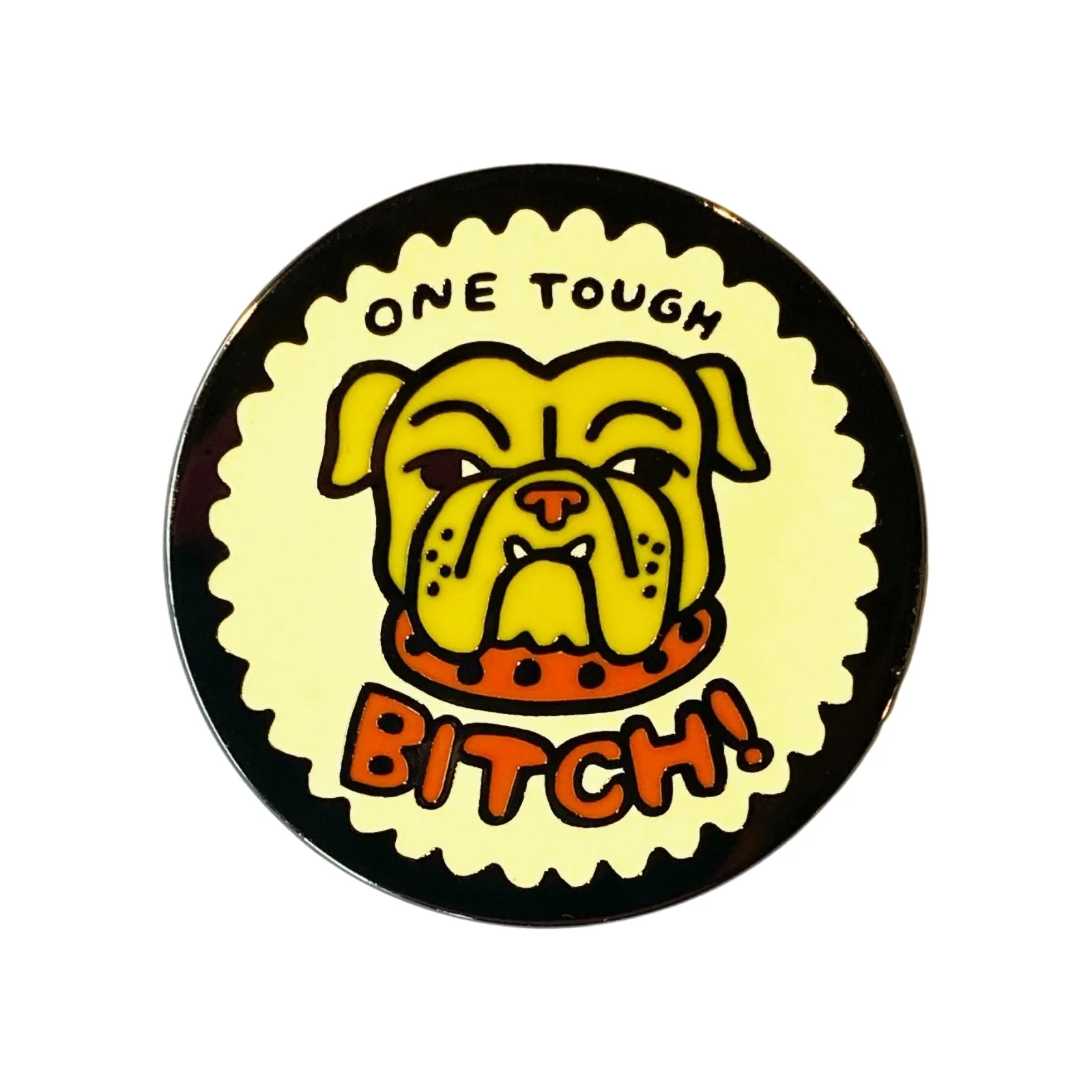
One Tough Bitch Bulldog Pin