Quick answer
Choose a 4-flute carbide end mill for finishing steel and harder materials; use fewer flutes for softer materials or roughing cuts.
Flute count trade-offs
More flutes mean more cutting edges per revolution, which allows a higher feed rate and a smoother finish on materials like steel. However, fewer flutes create larger chip pockets, so they clear debris better in soft, gummy materials like aluminum or plastics. A 2-flute end mill is common for aluminum; a 4-flute end mill is preferred for steel finishing work.
Carbide vs other materials
Carbide end mills hold an edge longer than high-speed steel (HSS), especially in abrasive or high-temperature cutting. Premium submicron grain carbide, like the material used in the 4-flute end mills, offers increased toughness and wear resistance. The trade-off is cost—carbide is more expensive than HSS—but for consistent results on steel, it is worth the investment.
Decision rules for end mill selection
- Material being cut: For steel, stainless steel, or cast iron, choose a 4-flute carbide end mill. For aluminum, brass, or plastics, use a 2- or 3-flute end mill to prevent clogging.
- Operation type: For roughing or heavy material removal, use fewer flutes (2 or 3) for better chip evacuation. For finishing or light passes, use more flutes (4 or more) for a smoother surface.
- Machine rigidity: If your bench mill has some spindle runout or is not extremely rigid, a 4-flute end mill can produce a better finish because each flute removes less material per pass, reducing vibration. Check your mill's runout specifications before selecting a 4-flute end mill for fine finishing.
Product facts
-
End Mills, 4 Flute, Carbide, Individual Sizes: Single end 4 flute center cut end geometry mill made from premium submicron grain carbide. Designed for increased chip removal rate. Tolerances: Cutting Diameter +.000/-.002, Run-Out Tolerance .0005 maximum. The tight tolerances and submicron carbide ensure consistent finishing cuts on steel with minimal runout, reducing the need for rework.
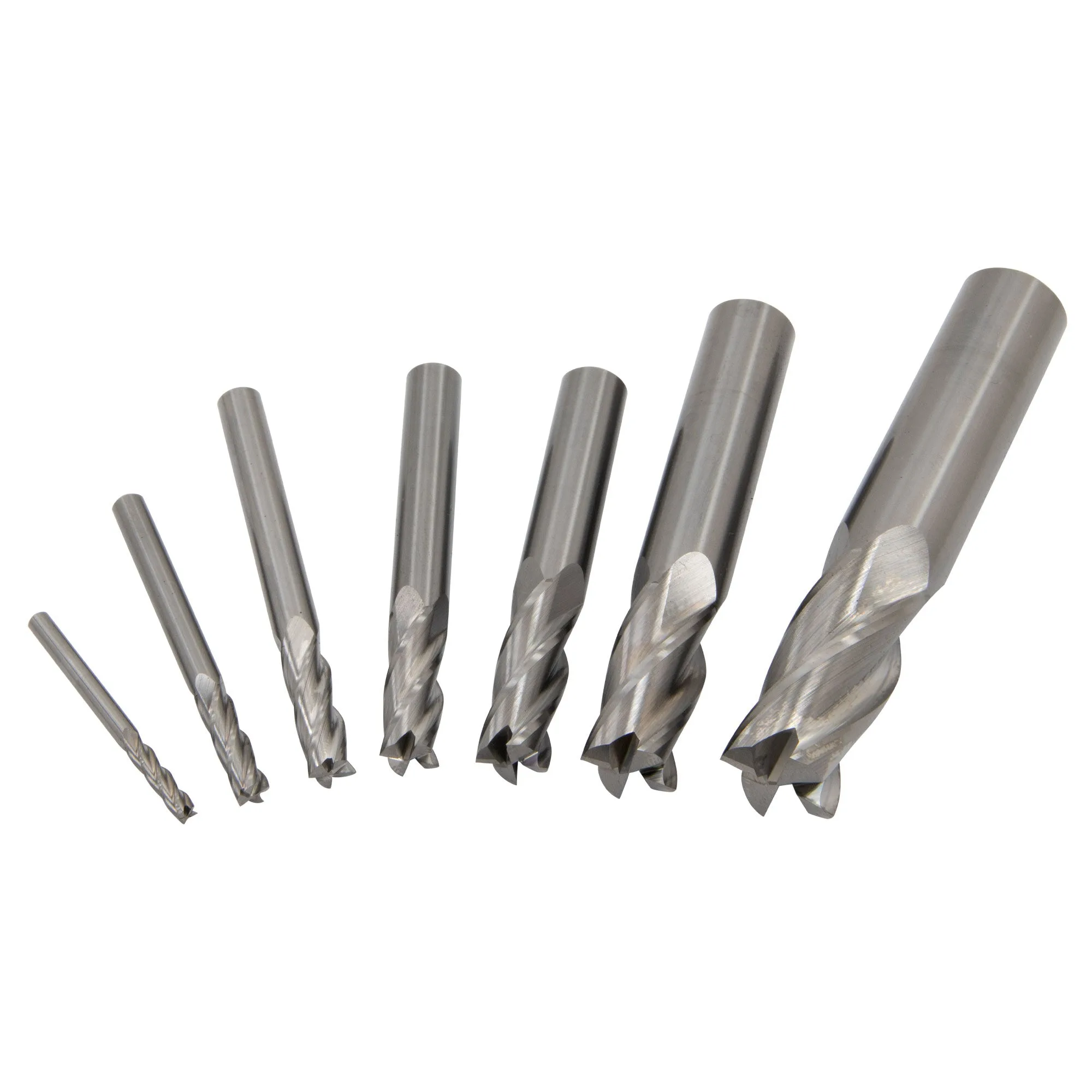
End Mills, 4 Flute, Carbide, Individual Sizes
Who should use a 4-flute carbide end mill?
Best for
- Machinists finishing steel or hardened materials on a bench mill
- Users who want a smooth surface finish with minimal secondary operations
Not for
- Roughing cuts or heavy material removal in soft metals like aluminum
- High-speed roughing passes where chip evacuation is critical