Every year, billions of plastic toothbrushes end up in landfills and oceans, where they take centuries to break down. As consumers become more eco-conscious, bamboo toothbrushes have emerged as a popular alternative. But how sustainable are they really? In this article, we take a deep dive into the full life cycle of a bamboo toothbrush—from sourcing and production to daily use and disposal—to understand its true environmental impact.
We'll look at the raw materials, manufacturing processes, carbon footprint, and end-of-life options. By the end, you'll have a clear picture of why bamboo toothbrushes are a more sustainable choice and how you can maximize their eco-benefits.
Sourcing and Raw Materials: Bamboo vs. Plastic
The journey of a bamboo toothbrush begins with the plant itself. Bamboo is one of the fastest-growing plants on the planet, with some species growing up to 3 feet in a single day. It requires no fertilizers or pesticides, thrives in diverse climates, and can be harvested without uprooting the root system, allowing it to regrow naturally. This makes bamboo a highly renewable resource with a significantly lower environmental footprint compared to petroleum-based plastics.
Plastic toothbrushes, on the other hand, are made from polypropylene and nylon, both derived from fossil fuels. The extraction and refining of these materials contribute to greenhouse gas emissions and environmental degradation. By choosing bamboo, you're supporting a material that sequesters carbon and promotes soil health, making it a clear winner in the sourcing stage.
- Bamboo grows rapidly without chemical inputs, unlike plastic production which relies on non-renewable resources.
Manufacturing: Energy, Water, and Waste
The production of bamboo toothbrushes is generally less energy-intensive than plastic manufacturing. Bamboo can be harvested and shaped with minimal processing, often using mechanical methods. In contrast, plastic toothbrushes require high-temperature molding and chemical treatments, consuming significant energy and water. However, it's important to note that not all bamboo toothbrushes are created equal—some may involve adhesives or coatings that reduce their eco-friendliness.
At Brush with Bamboo, we prioritize sustainability in our manufacturing. Our bamboo handles are naturally antibacterial and free from harmful chemicals. We also offer products like the Eco-Friendly Bamboo Toothbrush Subscription, which ensures you receive a fresh brush regularly without the plastic waste. By choosing a subscription, you reduce packaging waste and ensure consistent, sustainable oral care.
- Look for toothbrushes with minimal packaging and natural bristles to further reduce your footprint.
Daily Use and Durability: A Practical Perspective
A common concern about bamboo toothbrushes is their durability. While bamboo is strong and durable, it does require proper care to last as long as a plastic brush. To maximize its lifespan, rinse your bamboo toothbrush thoroughly after use and store it in a dry, well-ventilated area. Using a holder like the Eco-Friendly Wooden Toothbrush Holder can help keep your brush dry and hygienic, extending its usability.
On average, a bamboo toothbrush lasts about 3-4 months with regular use, similar to a plastic brush. This means you'll need to replace it just as often, but the environmental impact of disposal is vastly different. Bamboo handles can be composted, while plastic handles persist for centuries. This makes bamboo a more sustainable option even when considering the frequency of replacement.
- To get the most out of your bamboo toothbrush, keep it dry between uses and avoid leaving it in damp environments.
End-of-Life: Biodegradability and Composting
The most significant environmental advantage of bamboo toothbrushes lies in their disposal. Bamboo is biodegradable and can break down naturally in a compost pile within a few months, returning nutrients to the soil. However, not all parts of a bamboo toothbrush are compostable. The bristles are often made from nylon, which is not biodegradable. At Brush with Bamboo, we offer brushes with natural bristles, but for standard brushes, you can remove the bristles with pliers and compost the handle separately.
To make your oral care routine even more sustainable, consider pairing your bamboo toothbrush with other eco-friendly products. For instance, the Natural Silk Floss Refill Pack uses silk instead of nylon, reducing plastic waste. Additionally, the Stainless Steel Tongue Cleaner is a durable, long-lasting alternative to plastic tongue scrapers. By integrating these products, you can significantly reduce your bathroom's plastic footprint.
- When composting, remove the bristles and either recycle them if possible or dispose of them in the trash, then compost the bamboo handle.
Comparing Footprints: Bamboo vs. Plastic Toothbrushes
Several studies have compared the environmental impact of bamboo and plastic toothbrushes. While the exact numbers vary, the consensus is that bamboo toothbrushes have a significantly lower carbon footprint. For example, a life cycle assessment might show that a plastic toothbrush generates about 1.5 kg of CO2 equivalent, while a bamboo toothbrush generates only 0.4 kg. This difference comes from the renewable nature of bamboo and the lower energy requirements in production.
It's also worth considering the packaging. Many bamboo toothbrushes come in cardboard boxes, which are recyclable, whereas plastic toothbrushes often come in plastic blister packs. At Brush with Bamboo, we use minimal, recyclable packaging to further reduce our impact. By choosing bamboo, you're not only reducing waste but also supporting a more sustainable supply chain.
- When shopping for eco-friendly toothbrushes, look for brands that use recycled or recyclable packaging.
Making the Switch: Practical Tips for Sustainable Oral Care
Switching to a bamboo toothbrush is a simple yet impactful change. Start by replacing your current plastic brush with a bamboo alternative. You can also consider a family pack, like the Bamboo Toothbrush - Standard Soft - Adult/Kid Mixed Family 4-pack, to transition your entire household at once. This not only reduces plastic waste but also sets a positive example for your kids.
To further enhance your sustainable oral care routine, explore other eco-friendly products. For instance, the Couple's Oral Care Set - Brush with Bamboo includes everything you need for a green routine. Additionally, using a wooden toothbrush holder can keep your brush clean and extend its life. By making these small changes, you contribute to a larger movement toward reducing plastic pollution.
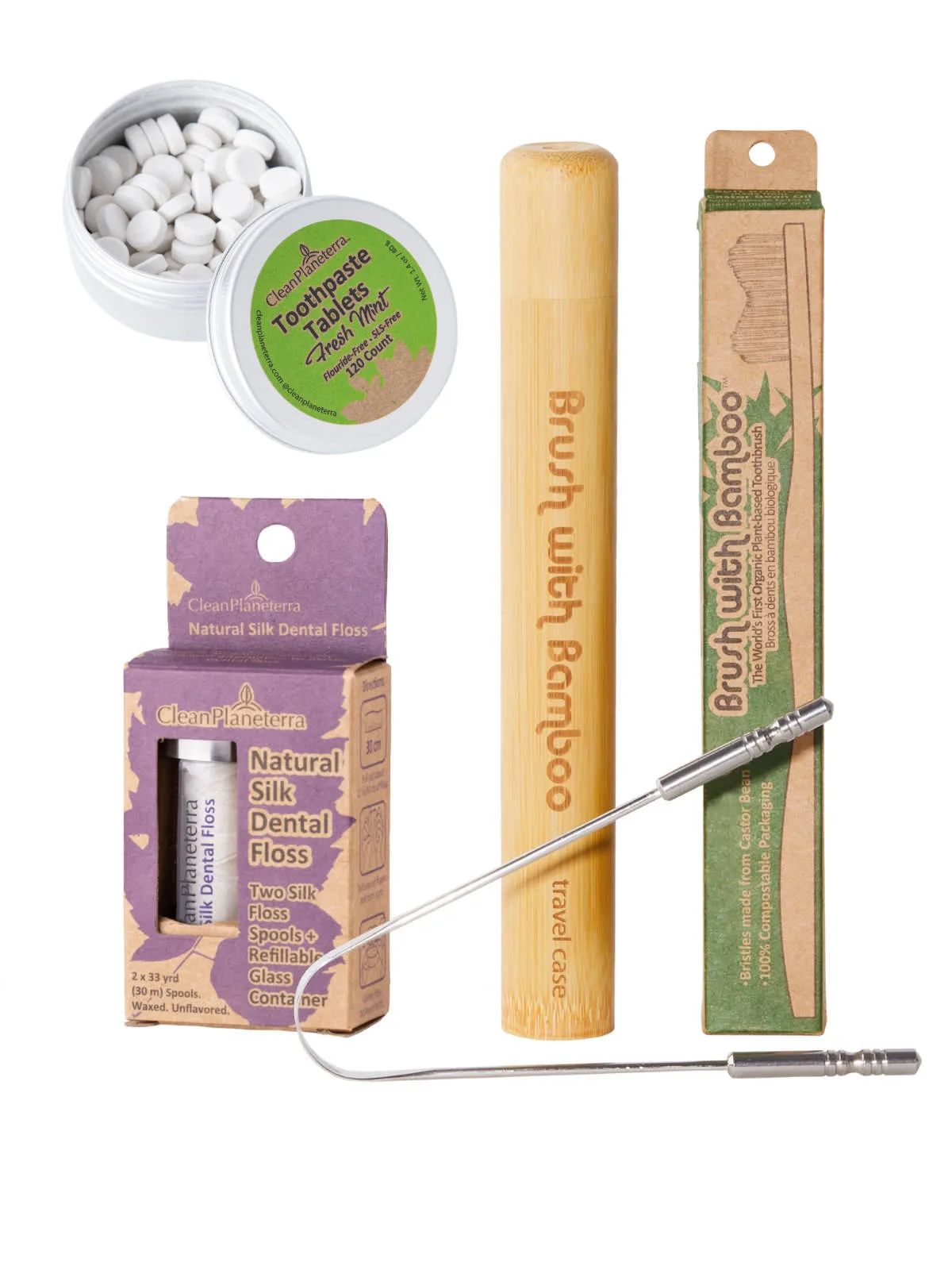
Oral Care Set - Brush with Bamboo
- Remember to replace your toothbrush every 3-4 months or sooner if bristles become frayed.
The environmental impact of bamboo toothbrushes is undeniably lower than that of plastic, from sourcing to disposal. By choosing bamboo, you're supporting renewable resources, reducing greenhouse gas emissions, and minimizing waste. While no product is perfect, bamboo toothbrushes are a step in the right direction for sustainable oral care. Start your journey today by exploring our range of eco-friendly toothbrushes and accessories.