Quick Answer
Cleaning tablets generally produce less packaging waste than liquid cleaners because they are concentrated and often sold in plastic-free refills. However, the full environmental impact depends on the entire system, including the reusable dispensers. Blueland's tablet-based system, with its glass Forever Bottles and steel tins, offers a practical way to reduce single-use plastic in your cleaning routine.
The cleaning aisle is full of bottles, and most end up in landfills or oceans. When comparing tablets vs. liquid packaging, the key is to look beyond the initial container and consider the entire lifecycle: production, shipping, use, and disposal. Tablets, being concentrated, require less packaging per use and are often shipped in lightweight, recyclable materials.
Liquid cleaners, by contrast, are mostly water, meaning you're paying to ship water and using more plastic per ounce of active ingredient. While some liquid brands offer refill pouches, they still often rely on plastic. Understanding these differences helps you make a more informed, eco-conscious choice for your home.
The Plastic Footprint of Liquid Cleaners
Most liquid cleaning products come in single-use plastic bottles. Even if the bottle is recyclable, many consumers don't recycle them properly, and the production of new plastic contributes to fossil fuel consumption and greenhouse gas emissions. The bulky nature of liquid also means more trucks and ships are needed to transport the same cleaning power, increasing the carbon footprint.
Refill pouches, while lighter, are often made of multi-layer materials that are difficult to recycle. The convenience of a spray bottle often leads to repeated purchases of the same plastic trigger, which is rarely recycled due to its complex components. This creates a cycle of waste that is hard to break.
- Liquid cleaners are typically 80-90% water, increasing shipping weight and packaging size.
- Plastic triggers and sprayers are often not recyclable curbside.
- Even 'recyclable' bottles may end up in landfills due to contamination.
How Tablets Reduce Packaging Waste
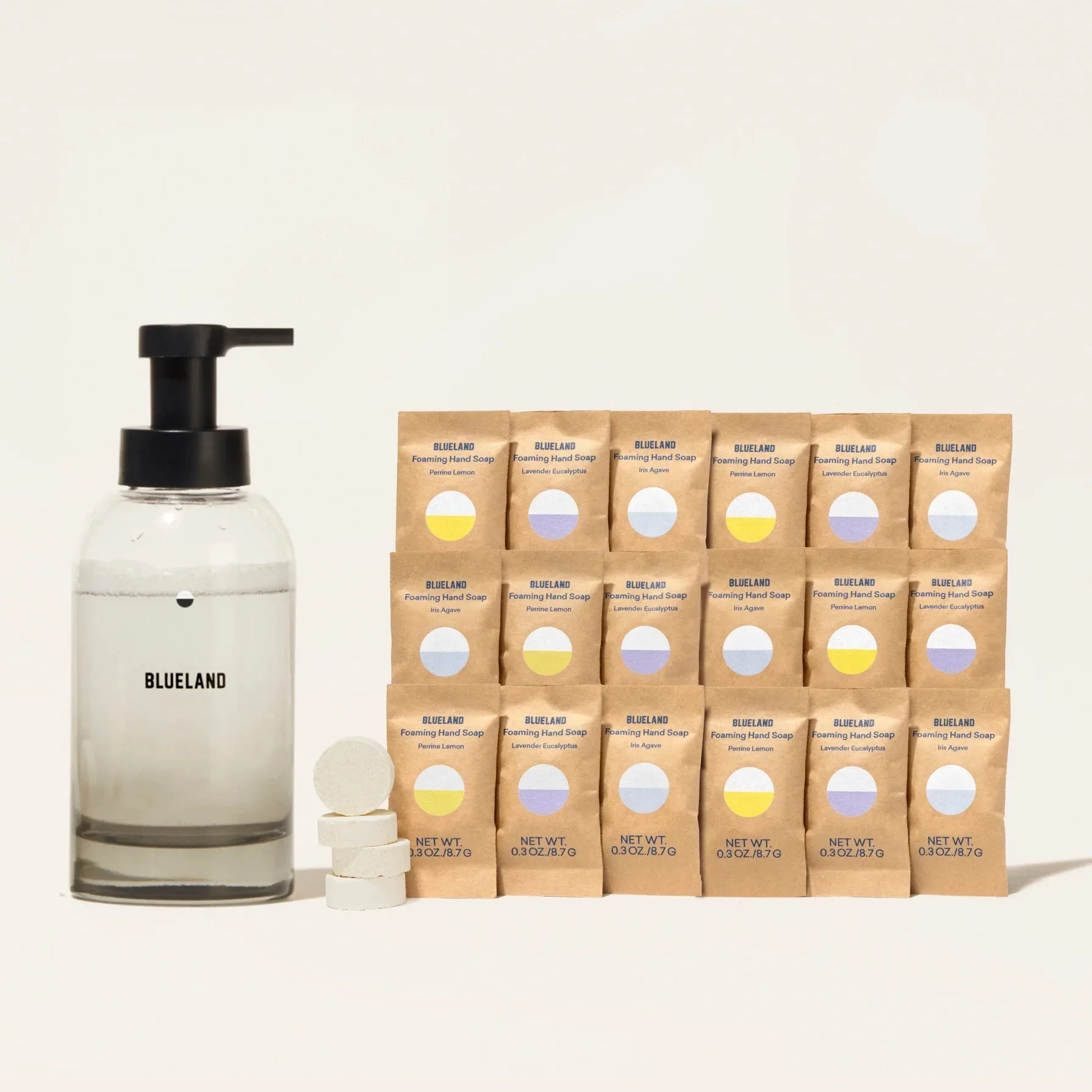
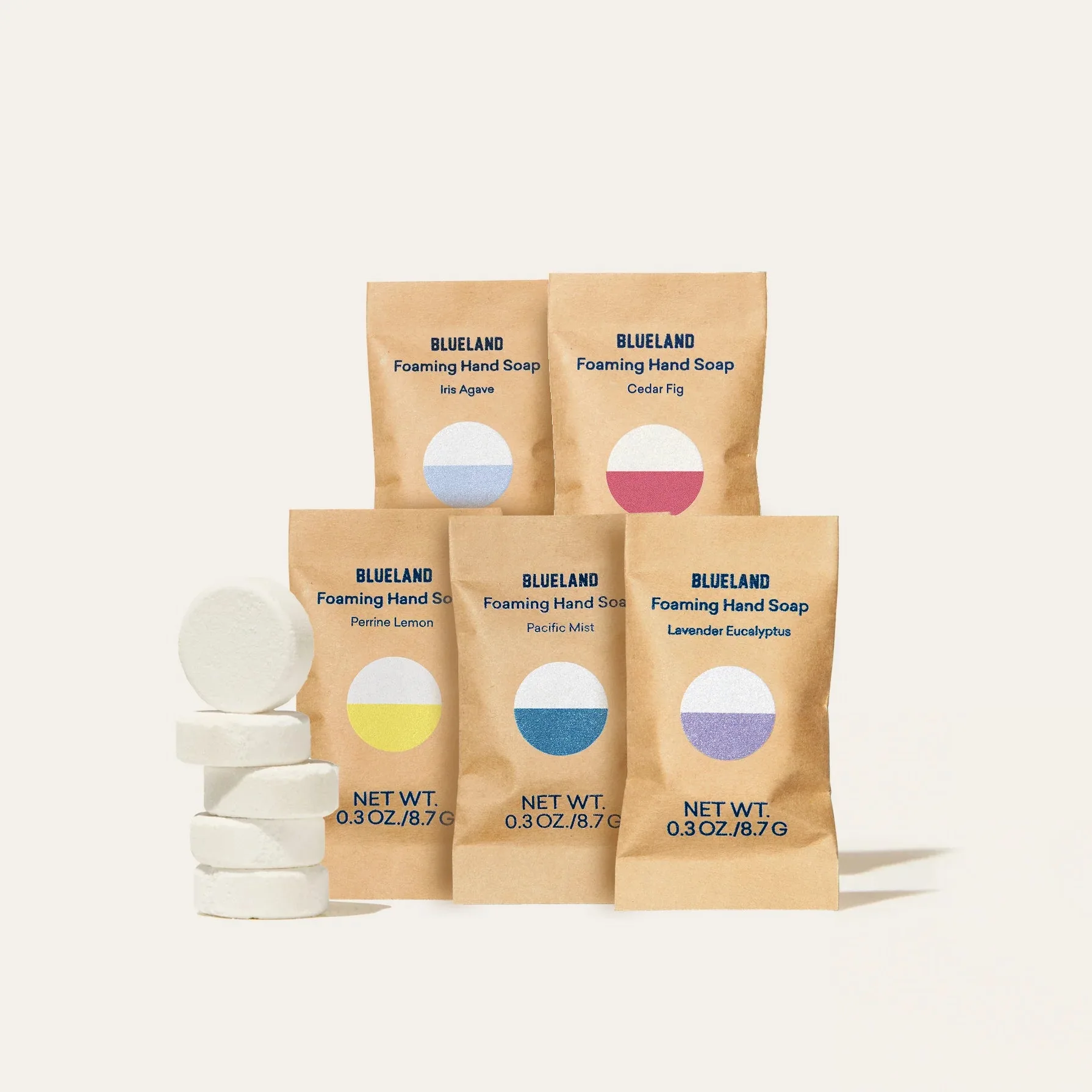
Cleaning tablets are highly concentrated, eliminating the water content and allowing for much smaller, lighter packaging. Many tablet brands, including Blueland, sell their refills in paper-based packaging or compostable materials, drastically reducing plastic waste. The tablets themselves are designed to dissolve in water, which you add at home in a reusable bottle.
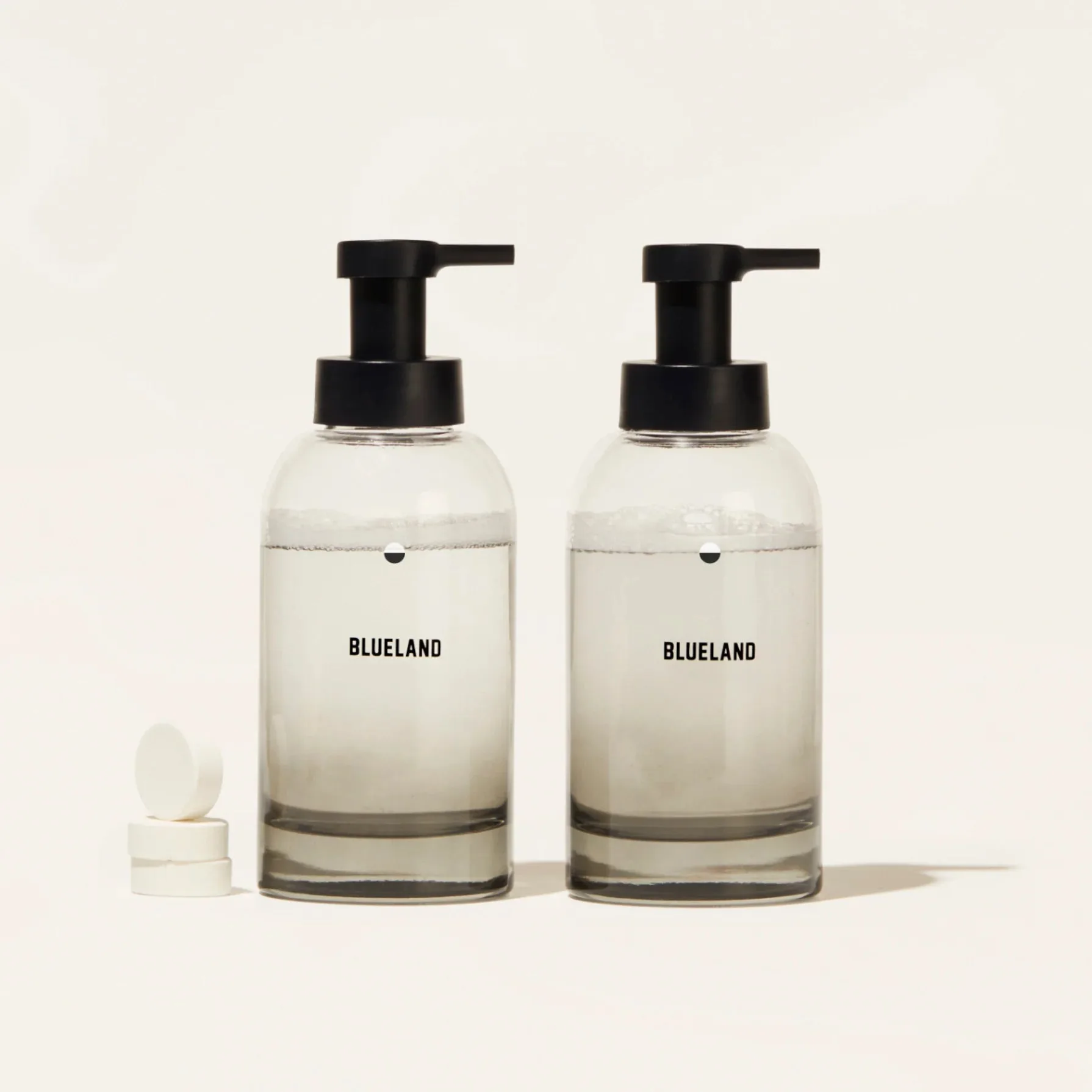
This system means you only buy the plastic bottle once and then reuse it for years. For example, Blueland's Hand Soap Forever Bottle is made of glass, which is infinitely recyclable and doesn't degrade in quality. By refilling with tablets, you avoid the need to buy a new plastic pump or bottle each time you run out.
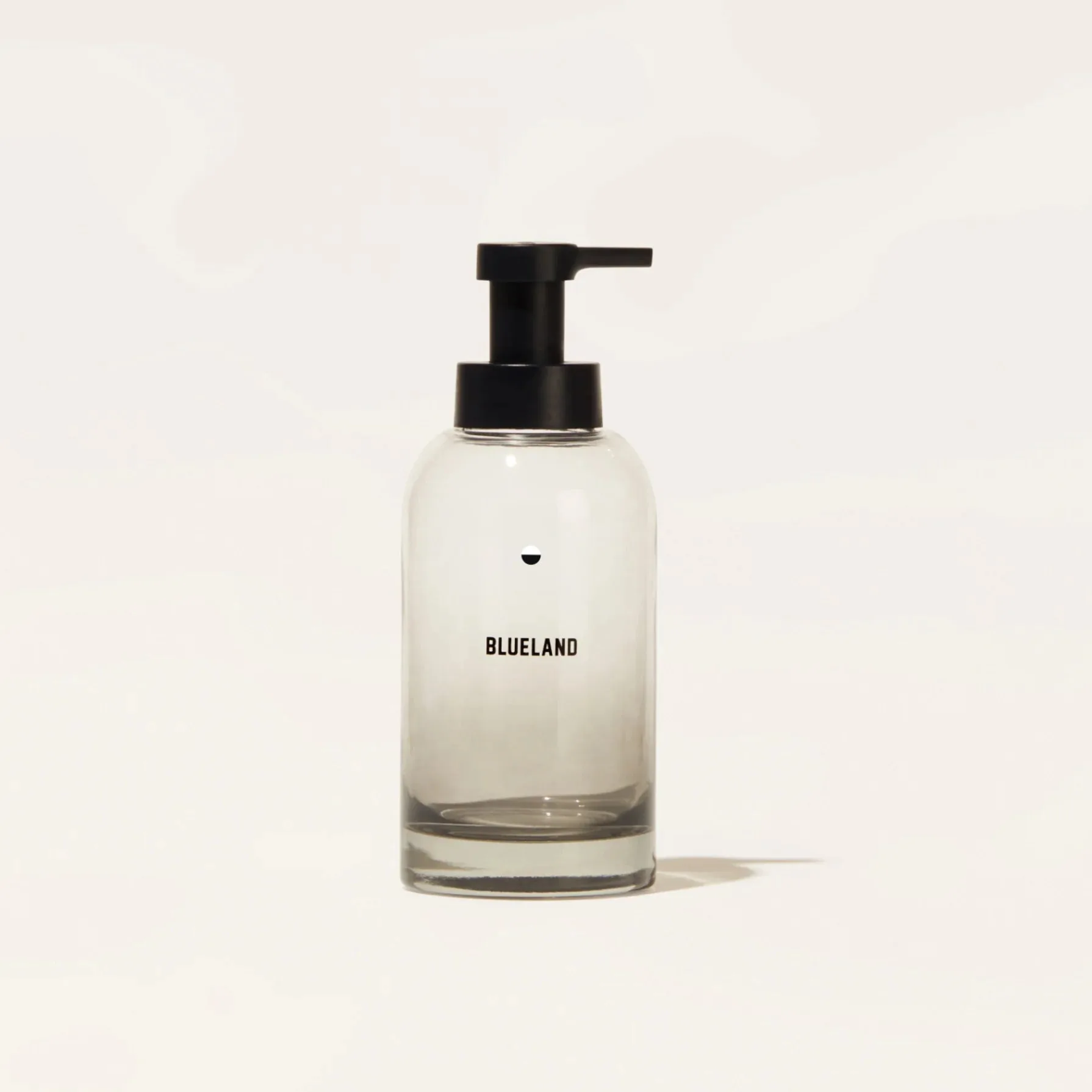
Hand Soap Forever Bottle
- Tablets reduce shipping weight and volume, lowering transportation emissions.
- Refill packaging is often plastic-free and recyclable.
- Reusable bottles and pumps can last for years with proper care.
Myth vs. Fact: Packaging Claims
- Myth: All plastic bottles are recycled.: In reality, only a small percentage of plastic is actually recycled. Many bottles end up in landfills or the ocean, and the recycling process itself is energy-intensive. Reducing plastic use is more effective than relying on recycling.
- Myth: Refill pouches are always eco-friendly.: While lighter than bottles, refill pouches are often made of multi-layer materials that are hard to recycle. They may still contribute to waste. Look for brands that use paper or compostable packaging for refills.
- Fact: Concentrated tablets reduce packaging per use.: Because tablets contain no water, they require less packaging and lower shipping emissions. When paired with reusable containers, they can significantly cut down on single-use plastic. Choose tablet-based systems with durable dispensers for maximum impact.
Products That Support a Zero-Waste Cleaning Routine
- Hand Soap Forever Bottle: This glass bottle allows for precise water measurement, giving you the visibility to fill up to the half-round with each refill. Just fill, drop, and clean for one full bottle of foamy hand soap goodness. The glass bottle is designed for repeated use, eliminating the need to buy a new plastic bottle each time. Its durability and clarity make it easy to measure water accurately, ensuring you use just the right amount of tablet.
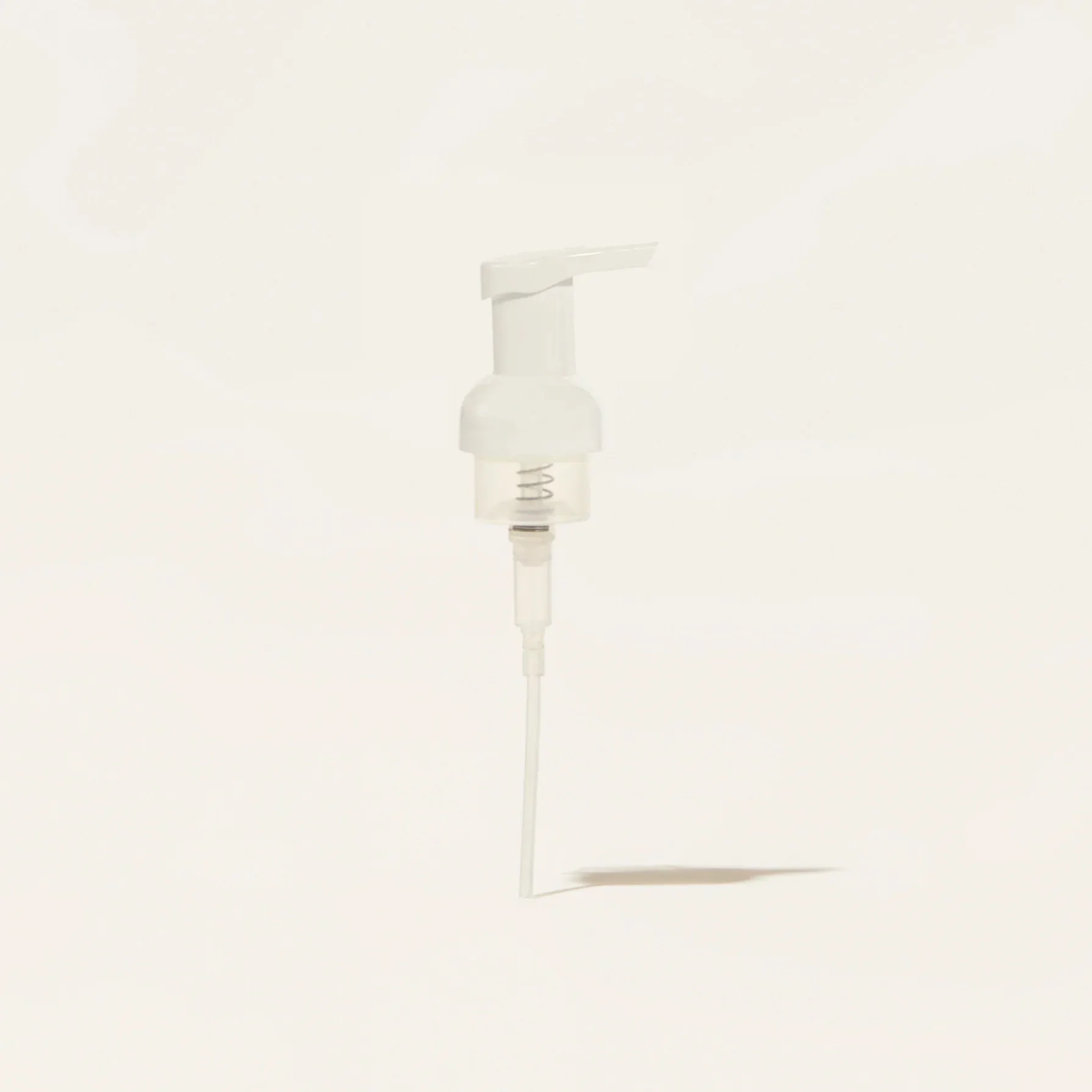
- Hand Soap Pump: Whether you’re in the mood to switch up your colors or your pump has run its course, look no further. Keep your Forever Bottle and twist on a brand new pump for the perfect foamy lather. Recycle your old pump locally or send it back to us and we can do it for you! Instead of discarding the entire bottle when the pump breaks, you can simply replace the pump. This extends the life of the glass bottle and reduces plastic waste, aligning with a zero-waste lifestyle.
- Forever Tin: Perfect for storing hand soap tablets, cleaning spray tablets, sponges, or whatever else that needs a sustainable home, our multipurpose Forever Tin is meant to last, well, forever. Store it, stack it or keep it out on display – the choice is yours! This steel tin provides a durable, attractive storage solution for your tablets, replacing single-use plastic containers. Its longevity means you won't need to repurchase storage, reducing overall waste.
When comparing the environmental impact of cleaning product packaging, tablets offer a clear advantage over liquids in terms of reducing plastic waste and transportation emissions. By choosing systems like Blueland's that feature reusable glass bottles and steel tins, you can make a meaningful difference in your home's ecological footprint. Every swap from a liquid cleaner to a tablet refill is a step toward a more sustainable future.