When you crack open a can of your favorite premium soda, do you ever wonder about the journey of its packaging? From the raw materials extracted to the energy used in production and the eventual disposal or recycling, the container that holds your beverage has a significant environmental footprint. As consumers become more eco-conscious, understanding the impact of soda packaging—glass bottles, aluminum cans, and plastic bottles—is essential for making informed choices. At Something & Nothing, we believe that great taste should go hand in hand with environmental responsibility, which is why we carefully consider our packaging options.
In this article, we’ll break down the environmental costs and benefits of each packaging material, compare their recyclability and carbon footprints, and highlight how premium soda brands are leading the way toward a more sustainable future. Whether you’re a dedicated recycler or just starting to think about your ecological impact, this guide will help you see beyond the label.
Glass Bottles: The Classic Choice with a Heavy Footprint
Glass has long been the preferred packaging for premium beverages, offering an inert, non-porous surface that preserves flavor and carbonation without leaching chemicals. It is infinitely recyclable without loss of quality, which is a major environmental win. However, glass production is energy-intensive—melting sand, soda ash, and limestone at high temperatures generates significant CO2 emissions. Transporting glass also adds to its carbon footprint because it is heavy, requiring more fuel per shipment compared to aluminum or plastic.
For soda packaging, glass bottles often come with a deposit system (known as pfand-151360">pfand-151359">Pfand in many European countries) that encourages return and reuse. This can dramatically lower the lifecycle impact by reducing the need for virgin materials. Brands like Something & Nothing that offer their Ginger & Lime in glass bottles are investing in a premium experience while also supporting circular economy models. Yet, if glass ends up in a landfill, it takes millions of years to decompose, though it remains chemically stable and non-toxic.
- Tip: Look for brands that use recycled glass (cullet) to reduce energy use by up to 30%.
Aluminum Cans: Lightweight and Highly Recyclable
Aluminum cans are the most recycled beverage container in the world, with recycling rates exceeding 70% in many regions. The metal can be recycled indefinitely without degradation, and the process uses only 5% of the energy required to produce virgin aluminum. This makes aluminum a strong contender for sustainable soda packaging. Additionally, cans are lightweight, which reduces transportation emissions and allows for efficient stacking and shipping.
However, aluminum production is highly energy-intensive and often relies on fossil fuels, especially in countries where hydropower is not available. Mining bauxite (the ore for aluminum) also causes habitat destruction and water pollution. For premium sodas, cans offer excellent protection against light and oxygen, preserving flavor. Something & Nothing’s 8 Can Taster pack is a great example of how aluminum packaging can be both convenient and eco-friendly, especially when paired with a deposit system like Pfand to boost recycling rates.
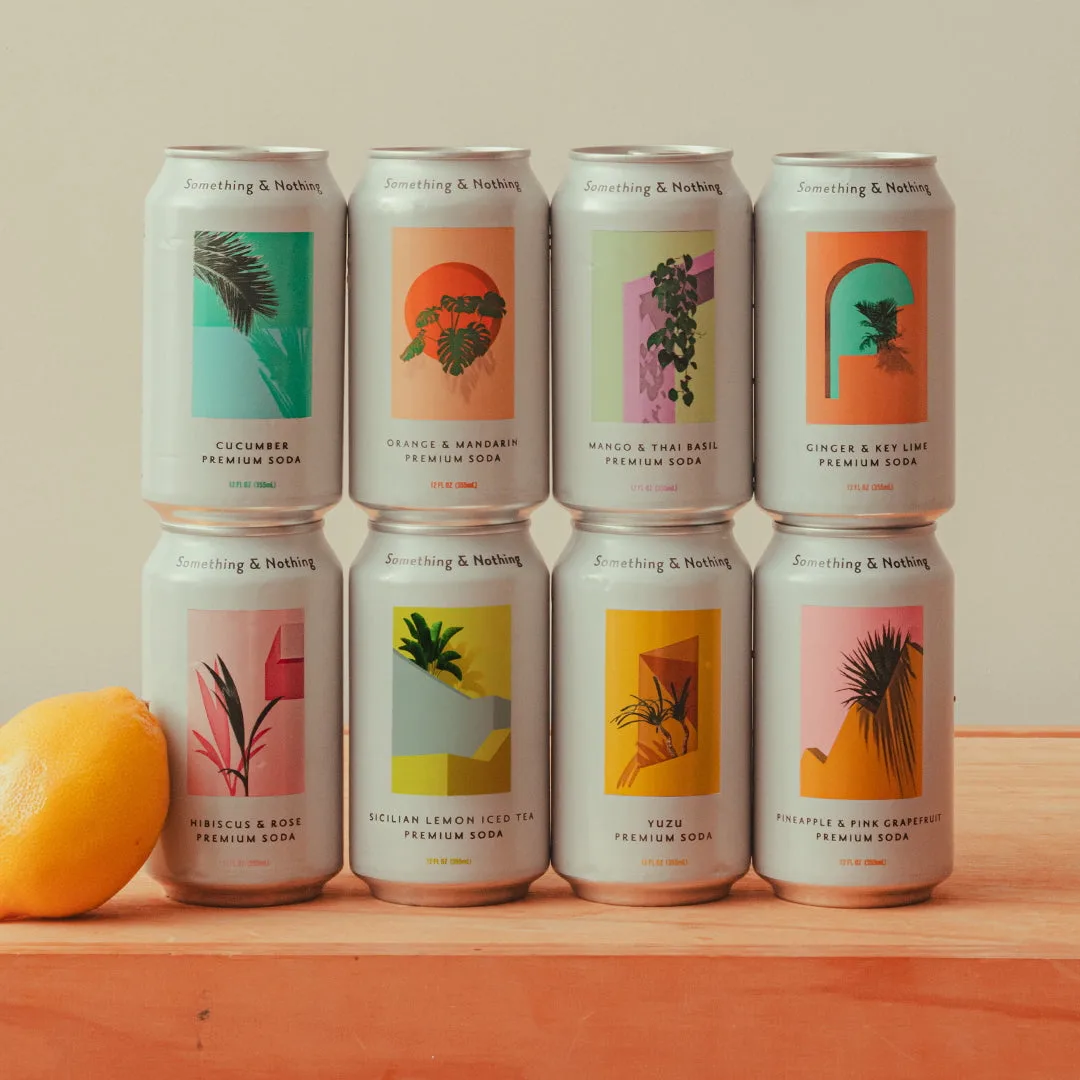
8 Can Taster
- Tip: Choose canned sodas when you’re on the go—they’re lighter and more likely to be recycled than plastic.
Plastic Bottles: Convenience at a Cost
Plastic bottles, typically made from PET (polyethylene terephthalate), are lightweight, shatterproof, and cheap to produce. These qualities have made them ubiquitous in the beverage industry. However, plastic’s environmental impact is severe: it is derived from fossil fuels, its production emits greenhouse gases, and it is notoriously difficult to recycle effectively. Most plastic bottles are downcycled into lower-quality products or end up in landfills, where they take hundreds of years to break down into microplastics.
Even when recycled, PET loses quality and often requires blending with virgin plastic. The global recycling rate for plastic bottles hovers around 30%, far lower than for aluminum or glass. For premium sodas, plastic is rarely used because it can impart off-flavors and is less aesthetically pleasing. Brands like Something & Nothing avoid plastic for their core products, instead opting for glass or aluminum. If you do purchase plastic bottles, look for those with a Pfand deposit to ensure they are captured in the recycling stream.
- Tip: Avoid single-use plastic bottles whenever possible—opt for glass or aluminum and recycle them properly.
Comparing Carbon Footprints and Lifecycle Impacts
To truly understand soda packaging environmental impact, we must look at the full lifecycle: raw material extraction, manufacturing, transportation, use, and end-of-life. Studies consistently show that aluminum cans have the lowest carbon footprint per liter of beverage, provided they are recycled at high rates. Glass bottles have a higher footprint due to weight and energy use, but reuse systems (like Pfand) can make them competitive. Plastic bottles have a moderate production footprint but a devastating end-of-life impact due to low recycling rates and persistence in the environment.
For premium soda brands, the choice of packaging also reflects brand values. Something & Nothing uses glass bottles for their flagship flavors like Ginger & Lime and Mango & Thai Basil, and aluminum cans for variety packs. They also participate in deposit systems (Pfand) to ensure containers are returned and recycled. By prioritizing materials that are either infinitely recyclable or part of a circular system, they reduce their overall environmental burden. Consumers can support this by returning bottles and cans to collection points.
- Tip: Check if your local store accepts bottle deposits—returning even a few containers per week makes a difference.
How Premium Soda Brands Are Leading the Way
Premium soda brands are often at the forefront of sustainable packaging innovation because their customers value quality and ethics. Beyond choosing glass or aluminum, many brands are reducing packaging weight, using recycled content, and eliminating plastic shrink wrap. Something & Nothing, for example, uses minimal packaging for their 8 Can Taster pack and encourages reuse through their Pfand system. They also offer merchandise like the Traveller's Tote, which promotes a reusable lifestyle.
The shift toward sustainable beverage containers is not just a trend—it’s a necessity. As climate change accelerates, every industry must reduce its carbon footprint. By supporting brands that invest in eco-friendly packaging, consumers send a powerful message to the market. Next time you reach for a premium soda, consider not just the flavor but the container it comes in. Your choice can help drive the industry toward a greener future.
Choosing sustainable packaging is one of the simplest ways to reduce your environmental impact while enjoying a premium beverage. Whether you prefer the timeless feel of glass or the lightweight convenience of aluminum, every return and recycle counts. Explore Something & Nothing’s range of premium sodas in eco-conscious packaging and taste the difference responsibility makes.