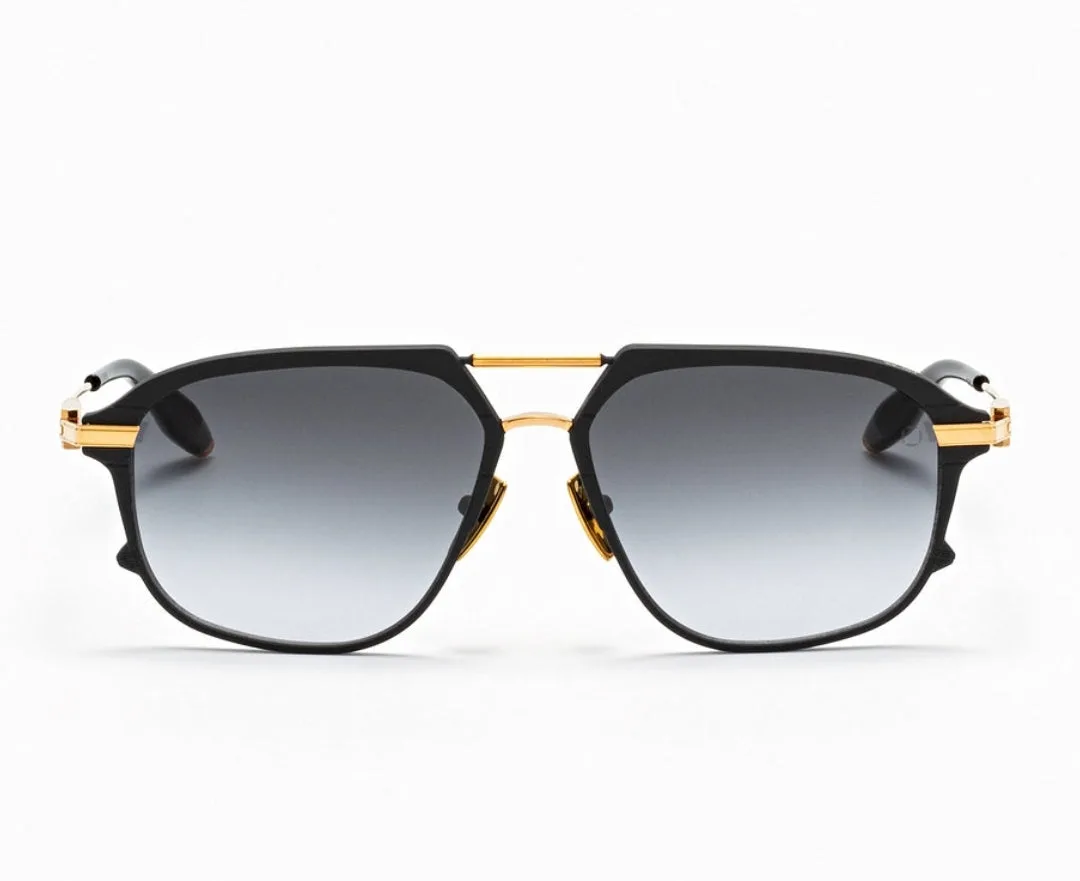
What the ERIS actually is
The Akoni ERIS is a titanium sunglass built around a co-centered pairing of two frames. That doubled structure is the design story, and it is also the practical detail that separates the ERIS from a plain single-frame sunglass: the side shields carry an artistic circle pattern that echoes the Akoni logo, so the repetition reads as part of the look rather than decoration added afterward.
Akoni describes the frame material as Japanese titanium that is lightweight yet strong, with exceptional durability claimed by the brand. The hinges use a custom titanium threaded tube screw system, the temples are custom titanium with a fluted round component, and the temple tips are Japanese acetate finished with branded titanium. Nose pads are ceramic on beta-titanium arms, and the frame is made in Japan.
ERIS specifications that shape the decision
-
ERIS: Measurements: Eye 46, Bridge 22, Temple 140. These numbers let you compare the ERIS against a frame you already own before ordering.
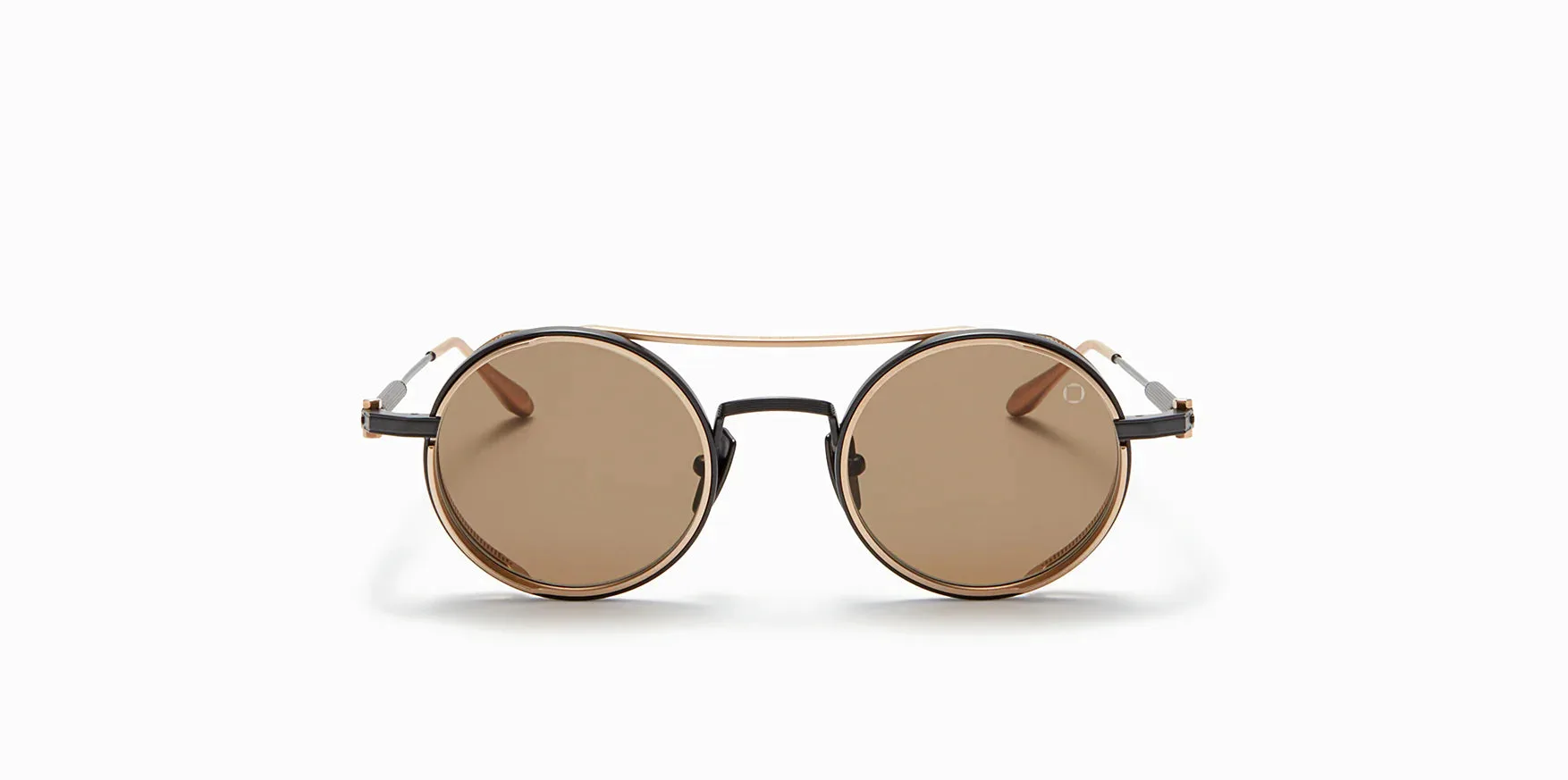
ERIS
-
ERIS: Frame construction: a co-centered pairing of two titanium frames. The doubled front is the defining visual feature, so it affects both style and how the frame sits on the face.
-
ERIS: Temple tips: Japanese acetate tipped with branded titanium. Acetate tips are the part that touches the side of your head, so this detail matters for comfort during long wear.
-
ERIS: Nose pads: ceramic with beta-titanium arms. The nose pad setup is the main contact point on the bridge, and it is worth checking against how your current glasses feel.
Reading the 46/22-140 fit
The ERIS uses a 46 eye width, a 22 bridge, and a 140 temple length. The eye and bridge figures are on the smaller side compared with many sunglass frames, while the 140 temple is a common adult length. Taken together, that points to a frame intended for a narrower face or a closer, more contained fit rather than an oversized, face-filling look.
The most reliable way to use these numbers is comparison. Take a pair of sunglasses or glasses you already wear comfortably and check the markings inside the temple arm. If your current frame is close to 46/22-140, the ERIS is likely to feel familiar. If your current pair is noticeably wider at the eye or bridge, the ERIS may sit tighter than you expect. The supplied information does not include a recommended face-width range, so the numbers are a starting point rather than a guarantee.
The ERIS frame shape and who it suits
The ERIS is defined less by a single classic silhouette than by its layered, co-centered front and the circular side-shield pattern. That makes it a statement frame: it reads as designed rather than neutral, and it draws attention at the temples as well as across the eyes. If you want sunglasses that disappear into an outfit, this is not that pair. If you want a frame that carries a look on its own, the ERIS is built for that role.
For everyday wear, the practical question is whether you want that level of detail in your daily rotation. A frame with visible side shields and a doubled front tends to feel more formal and more deliberate than a simple acetate sunglass. It pairs naturally with tailored or minimal clothing, where the frame is the one strong element. The supplied information does not confirm lens tint, polarization, or UV rating, so treat the ERIS as a style-led choice and check those details with the store before you rely on it for high-glare conditions.
Five colorways and how to choose
The ERIS is offered in five color options. Color is the main variable available at purchase, so it is worth choosing deliberately rather than defaulting to black.
- Brushed Black: The most neutral option and the easiest to wear with almost anything. A safe first choice if you want the frame shape to do the talking.
- Black Palladium/Matte Navy: A two-tone combination that softens the frame slightly and works well if you prefer cooler tones over pure black.
- Brushed White Gold: The warmest and most jewelry-like of the five. Best if you want the titanium to read as a visible material rather than a dark outline.
- Black Iron: A darker, more industrial finish that suits the architectural, co-centered construction.
- Matte Navy Blue: The least expected option and a good choice if black feels too severe but you still want a low-key frame.
Everyday wear: what to expect from the build
The ERIS is assembled from titanium, Japanese acetate, and ceramic, with a custom screw system at the hinges. Those materials are chosen for strength and low weight, and the brand's claim of lightweight durability is consistent with that combination. For daily wear, the practical benefit is a frame that should not feel heavy across the bridge during a long day.
The care side matters just as much. The supplied information does not include a cleaning procedure or storage instructions for the ERIS, so the honest advice is to follow the care guidance that comes with the frame and avoid assuming that titanium makes the lenses or coatings more forgiving. The acetate temple tips and ceramic nose pads are the parts most likely to collect skin oils, and they are also the parts where rough handling shows first. A case and a soft cloth remain the basics, even when the catalog does not spell them out.
Is the ERIS the right pair for you?
Use these checks to decide before you commit to a frame at this price.
- Choose the ERIS if: You want a distinctive titanium sunglass with a layered front and visible side-shield detail, your current frame measures close to 46/22-140, and you are comfortable with a closer fit rather than an oversized one.
- Look elsewhere if: You need a wide, face-filling frame, you want a plain single-frame silhouette, or you need confirmed lens tint, polarization, or UV specifications before buying. The supplied information does not confirm those lens details for the ERIS.
- Check before ordering: Compare the 46/22-140 measurements with a pair you already own, confirm your preferred colorway from the five options, and ask the store about any lens or care details the catalog does not list.