Two tools, two different jobs
The Escali Versi Digital Coffee Scale and the Escali Infrared Surface and Folding Probe Digital Thermometer solve separate problems in coffee brewing. The scale measures mass for consistent coffee-to-water ratios; the thermometer measures surface and internal temperatures. Your first purchase should match the job you most need to control.
If you already weigh beans but guess at water temperature, the thermometer fills a gap. If you track temperature but eyeball your coffee dose, the scale brings repeatability. Neither replaces the other, but one may be more urgent for your current setup.
What the Escali Versi Coffee Scale offers
-
Escali® Versi Digital Coffee Scale: The Versi Digital Coffee Scale features an automatic timer function, automatic tares, and manual modes for easy pour over control. These functions help you replicate pour over recipes without juggling separate timers or manual tare steps.
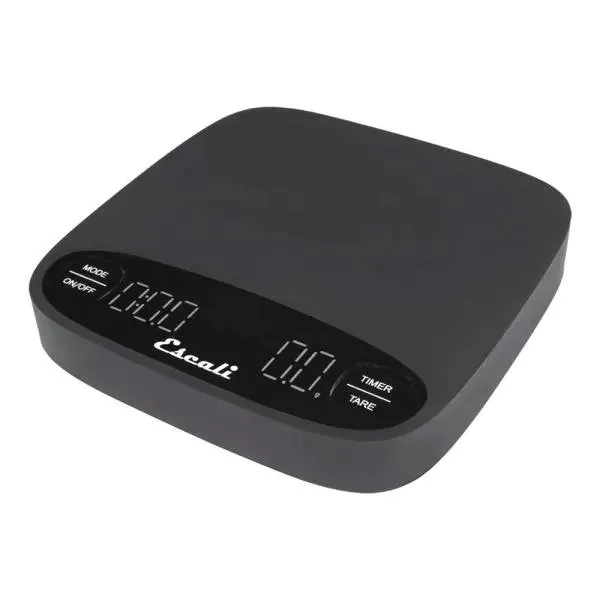
Escali® Versi Digital Coffee Scale
-
Escali® Versi Digital Coffee Scale: 4 pre-programmed pour over modes are designed specifically for coffee and tea drinkers, allowing you to be in control throughout the brewing process. If you brew pour over or tea regularly, these modes can simplify your workflow and reduce guesswork.
-
Escali® Versi Digital Coffee Scale: The super-bright digital LED display is easy to read in any environment and the tough rechargeable lithium-ion battery allows for up to 16 hours of continuous use. A readable display and long battery life matter during early-morning brews or long sessions.
How the Versi's modes change your brewing
The Versi has two automatic modes (PR1/PR3), a manual mode (PR2), and a ratio mode (PR4). PR1 is a fully automatic pour over mode with two automatic tares and an automatic timer function. PR2 is a manual mode with tare and timer functions performed manually. PR3 features a fully automatic pour over mode with one automatic tare and an automatic timer, and PR4 is a ratio mode with two automatic tares and no timer function.
These modes are not just bells and whistles—they change how much attention you need to pay during brewing. If you want the scale to handle taring and timing while you focus on pouring, PR1 or PR3 may suit you. If you prefer full control, PR2 lets you tare and time manually. PR4's ratio mode helps if you think in coffee-to-water ratios rather than absolute weights.
What the Escali Infrared Thermometer offers
-
Escali® Infrared Surface and Folding Probe Digital Thermometer: The Escali Infrared Surface and Folding Probe Digital Thermometer combines dual surface and probe utility with a compact design. One tool covers both surface temperature checks (like a grill grate) and internal temperature readings, which is handy if you also cook.
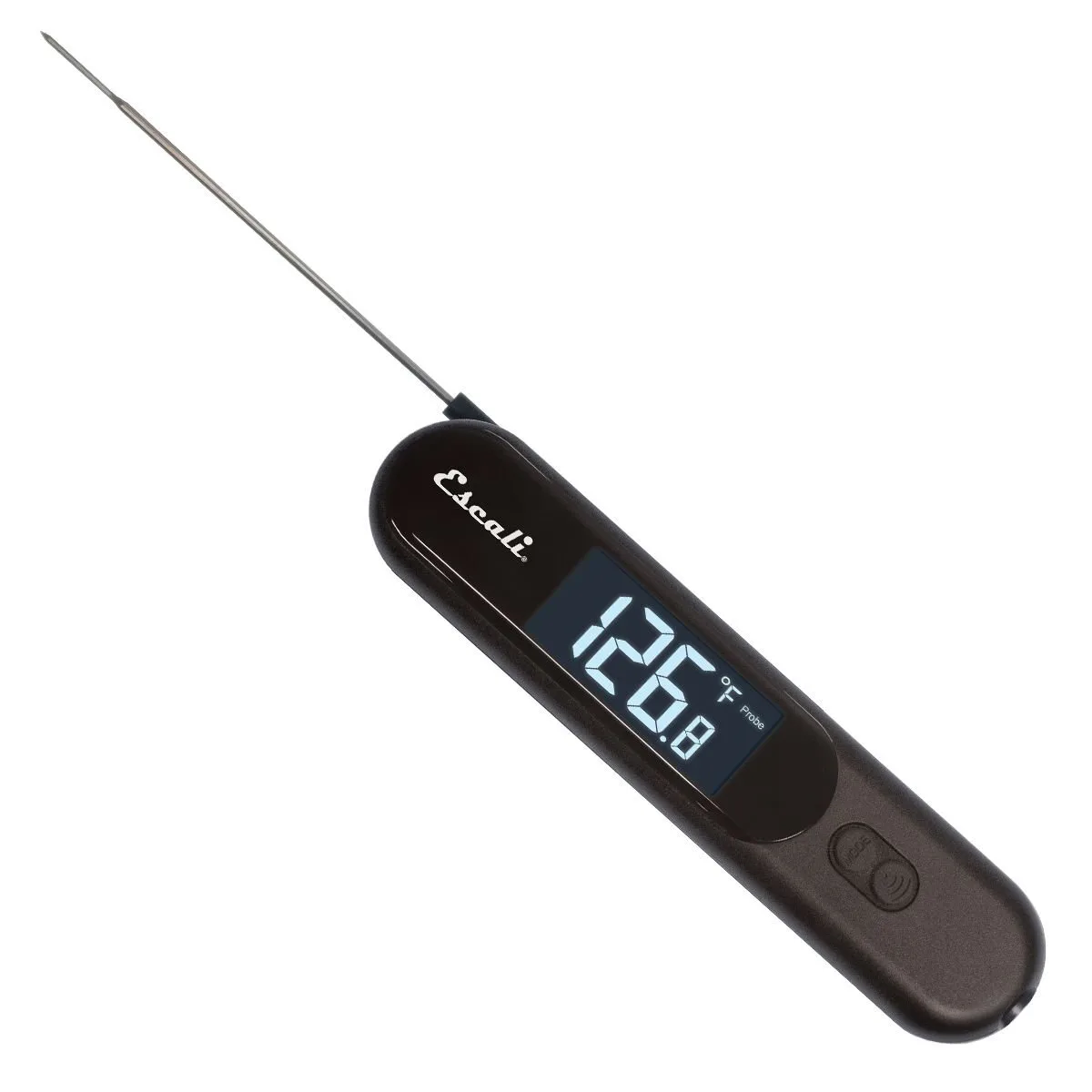
Escali® Infrared Surface and Folding Probe Digital Thermometer
-
Escali® Infrared Surface and Folding Probe Digital Thermometer: In IR mode, the 5:1 distance to target ratio provides safety when measuring extremely hot surfaces. If you check hot equipment like kettles or griddles, the IR mode lets you measure from a safer distance.
-
Escali® Infrared Surface and Folding Probe Digital Thermometer: The folding probe design can be used from 45°-180° to measure in a variety of cooking situations, and allows the probe to be easily stored. Flexible probe angles help you reach into different containers, and folding storage keeps the tool compact.
When temperature matters more than weight
If your coffee tastes inconsistent and you suspect water temperature is the culprit, the infrared thermometer gives you data. It can measure the surface temperature of your kettle or brewing vessel, and the probe mode can check the internal temperature of liquids or food. The Scan and Hold function helps you hone in on specific areas by holding the measurement button to scan an area then releasing when you've identified a specific spot.
However, the supplied information does not specify a temperature range or accuracy for this thermometer, so you'll need to rely on the manufacturer's documentation for precise brewing targets. What the record does confirm is that the thermometer is designed for quick readings in both IR and probe modes.
Side-by-side: which solves your immediate problem?
- Primary function: Scale: measures weight for dose and yield. Thermometer: measures surface and internal temperature.
- Brewing workflow: Scale: integrates with pour over via automatic tares and timers. Thermometer: spot-checks heat at any stage.
- Best for: Scale: brewers who want repeatable coffee-to-water ratios. Thermometer: brewers who need to verify water or equipment temperature.
- Also useful for: Scale: tea weighing and general kitchen measuring. Thermometer: cooking and grilling temperature checks.
- What the records don't confirm: Scale: no capacity or resolution listed in the supplied facts. Thermometer: no temperature range or accuracy listed.
A practical way to decide
Start by identifying the weakest link in your current routine. If you already have a reliable way to measure water temperature—like a temperature-controlled kettle—but you still guess at coffee weight, the Escali Versi Coffee Scale is the logical first buy. Its automatic modes can streamline your pour over process.
If you already weigh your coffee but have no idea whether your water is at the right temperature, the Escali Infrared Thermometer gives you the missing data. It's also a more versatile kitchen tool if you cook, thanks to its dual IR and probe design.
If you're new to both, consider which variable you can control more easily right now. A scale is often the foundation of consistent brewing because it standardizes dose and yield. But if your kettle lacks temperature control, a thermometer may deliver more immediate improvement.
What the records do not tell you
The supplied information for the Escali Versi Coffee Scale does not include capacity, resolution, or dimensions. For the Escali Infrared Thermometer, temperature range, accuracy, and battery type are not listed. These details may be available in the manufacturer's documentation, but they are not part of the verified evidence here.
Neither product record includes specific brewing instructions or recommended temperatures. You'll need to follow your own recipe or the manufacturer's guidance for precise settings.