Two Wireless Microcontrollers for Different Builds
When you're choosing between the ESP8266 and the newer ESP32-C6, the right pick depends on your project's specific needs. Both are capable wireless microcontrollers, but they serve different roles. The ESP8266 is a long-established Wi-Fi SoC with strong community support, while the ESP32-C6 adds more modern features like Matter and Thread support. Here we compare the Hobby Components ESP8266 Breakout Module with mLink Header and the ESP32-C6 Super Mini Expansion Board to help you decide.
ESP8266 Breakout Module: Proven and Breadboard-Friendly
-
ESP8266 Breakout Module with mLink Header: The Hobby Components ESP8266 breakout module incorporates an ESP8266 (ESP-07) wireless microcontroller and breaks out its IO pins to a single in-line header, making it breadboard or prototyping board friendly. This design simplifies wiring and testing on a breadboard, ideal for quick prototypes and learning projects.
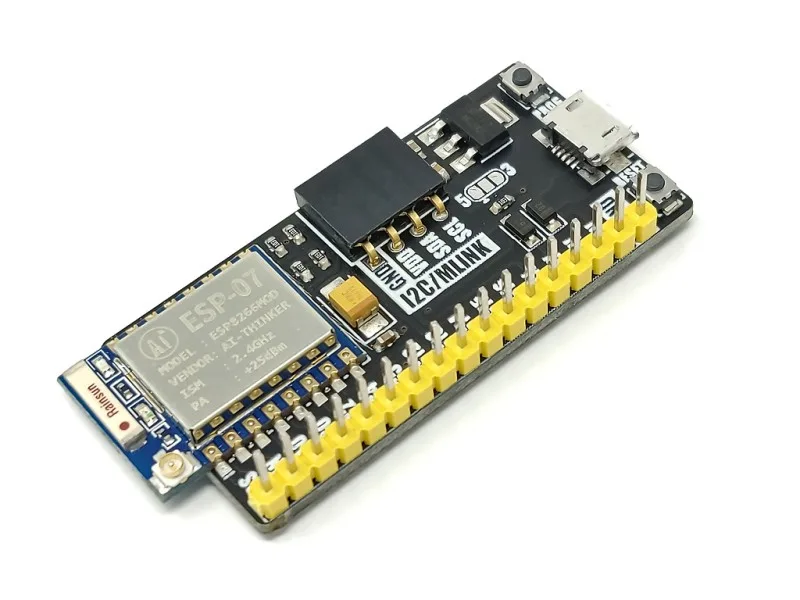
ESP8266 Breakout Module with mLink Header
-
ESP8266 Breakout Module with mLink Header: The module includes an mLink header, allowing easy expansion via mLink modules. It also has a level shifter on the serial interface so both 5V and 3.3V TTL USB adapters can be safely connected. mLink compatibility means you can add displays, keypads, relays, and sensors without soldering. The level shifter gives you flexibility in choosing a USB adapter voltage.
ESP32-C6 Super Mini Expansion Board: Compact and Modern
-
ESP32-C6 Super Mini Expansion Board: The ESP32-C6 Super Mini Expansion Board is a compact breakout board designed to enhance the Super Mini development board's capabilities, making it ideal for a wide range of projects. Its small footprint and breakout design let you prototype with the ESP32-C6's advanced features (Bluetooth 5, Zigbee, Thread, Matter) in a space-efficient way.
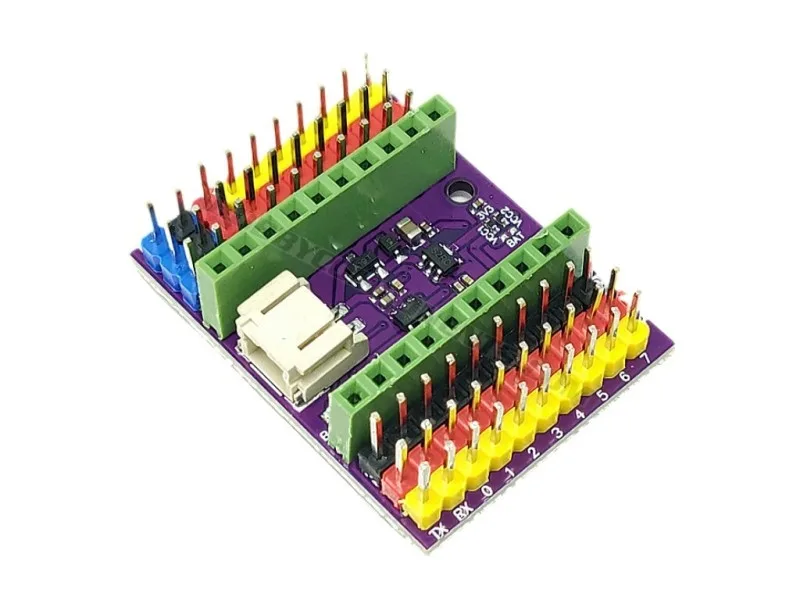
ESP32-C6 Super Mini Expansion Board
Key Differences at a Glance
The ESP8266 breakout module is a mature, breadboard-optimized board with mLink expansion and a level shifter for flexible voltage. The ESP32-C6 expansion board is designed for the newer ESP32-C6 Super Mini, targeting projects that need the latest wireless protocols and a compact form factor.
If your project relies on the well-documented ESP8266 ecosystem and you value easy breadboarding with mLink modules, the ESP8266 breakout is a solid choice. If you need the ESP32-C6's modern connectivity (Matter, Thread, Zigbee) and are working with the Super Mini form factor, the expansion board is the better fit.
Both modules have their place. The ESP8266 offers a proven path with abundant code examples and community support. The ESP32-C6 brings future-ready wireless standards. Your decision should align with the wireless protocol requirements and your preferred prototyping method.
- Wireless Protocol: ESP8266: Wi-Fi (802.11 b/g/n). ESP32-C6: Wi-Fi 6, Bluetooth 5, Zigbee, Thread, Matter.
- Prototyping Style: ESP8266: Breadboard-friendly with single in-line header and mLink expansion. ESP32-C6: Compact breakout board for Super Mini, no mLink mentioned.
- Voltage Flexibility: ESP8266: level shifter allows both 5V and 3.3V USB adapters. ESP32-C6: voltage details not supplied.
Making Your Choice
Start by listing the wireless protocols your project requires. If you only need classic Wi-Fi, the ESP8266 breakout module is cost-effective and well-supported. If you plan to use Matter, Thread, or Zigbee, the ESP32-C6 Super Mini Expansion Board is the modern path.
Next, consider your prototyping environment. The ESP8266 breakout's mLink header and breadboard-friendly layout make it easy to connect sensors and displays without soldering. The ESP32-C6 expansion board is more compact and suited for space-constrained builds with the Super Mini.
Both modules are available at Hobby Components. The ESP8266 Breakout Module with mLink Header offers a proven, expandable platform, while the ESP32-C6 Super Mini Expansion Board opens the door to the latest IoT standards. Choose the one that matches your project's wireless needs and your preferred way of building.