Quick answer
Buy the Essential Bag Making Reference Tool Book if you want a compact, at-the-machine bag construction reference that covers tips and step-by-step guidance for making bags look professional. Skip it if you already own a thorough bag-making library or prefer full-length project books with complete patterns.
What a pocket-sized reference actually solves
A bag sewing book for beginners often doubles as a project book, with patterns and long tutorials. A reference tool book works differently: it is designed to be kept nearby while you sew, so you can check a technique or construction step without leaving your machine. That format matters most when you already have a pattern and fabric cut but need help with order of assembly, finishing, or professional-looking details.
The trade-off is depth. A compact reference is not a substitute for a full pattern collection or a comprehensive technique encyclopedia. If you expect complete bag patterns with every measurement included, check the product description carefully before buying; the supplied catalog facts describe tips, techniques, and step-by-step guidance, not a pattern pack.
When a bag construction reference is worth it
The value of any bag making book worth it decision comes down to how often you will open it. A reference earns its place if you sew bags regularly, if you often pause mid-project to confirm a step, or if you are moving from simple totes to structured bags and want guidance on professional finishes. It is also useful if you learn better from a concise written reference than from long video tutorials.
For beginners, the strongest case is confidence: a bag sewing book for beginners that explains techniques step by step can reduce unpicking and wasted materials. For experienced sewists, the case is speed and consistency—having a trusted reference within reach rather than searching online mid-seam.
When you can skip it
If you already own several bag-making books with full patterns and technique chapters, a pocket-sized reference may duplicate what you have. The same applies if you rarely sew bags or if you prefer learning entirely from video. In those cases, put the money toward fabric, interfacing, or hardware instead.
Also consider format. A compact reference is convenient at the machine but offers less room for extensive photos or multiple full projects. If you want a single book that teaches a whole bag from start to finish, a project-based pattern book is the better fit.
Decision rules for buying a bag making reference book
- You sew bags more than once a month: Buy it. Frequent bag makers get repeated value from a bag construction reference because they can confirm steps without interrupting their workflow. Count your bag projects from the last three months before deciding.
- You are a beginner with no bag-specific book: Buy it if you already have a pattern and want technique guidance. Skip it if you need complete patterns included; this is a reference, not a pattern collection. Check whether your pattern already includes detailed construction steps.
- You own two or more bag-making books: Compare contents first. If your existing books already cover tips, techniques, and step-by-step guidance, a pocket reference may be redundant. List the techniques you actually look up most often before adding another book.
- You prefer video learning: Skip it unless you want a written backup at the machine. A sewing reference tool book is most useful to sewists who read and refer to printed steps. Be honest about whether you will open a printed reference mid-project.
- You want professional-looking results on a budget: Buy it if finishing details are your weak point. At the catalog price of USD 13.17, it costs less than most bag hardware kits and can prevent costly fabric mistakes. Compare the price against the cost of one ruined cut of fabric.
Product facts
-
Essential Bag Making Reference Tool Book: Pocket-sized reference guide by Jessica Barrera, founder of Sallie Tomato, covering tips, techniques, and step-by-step guidance for handmade bags. Its compact format is built for quick checks during sewing rather than long project tutorials, so it suits sewists who already have a pattern.
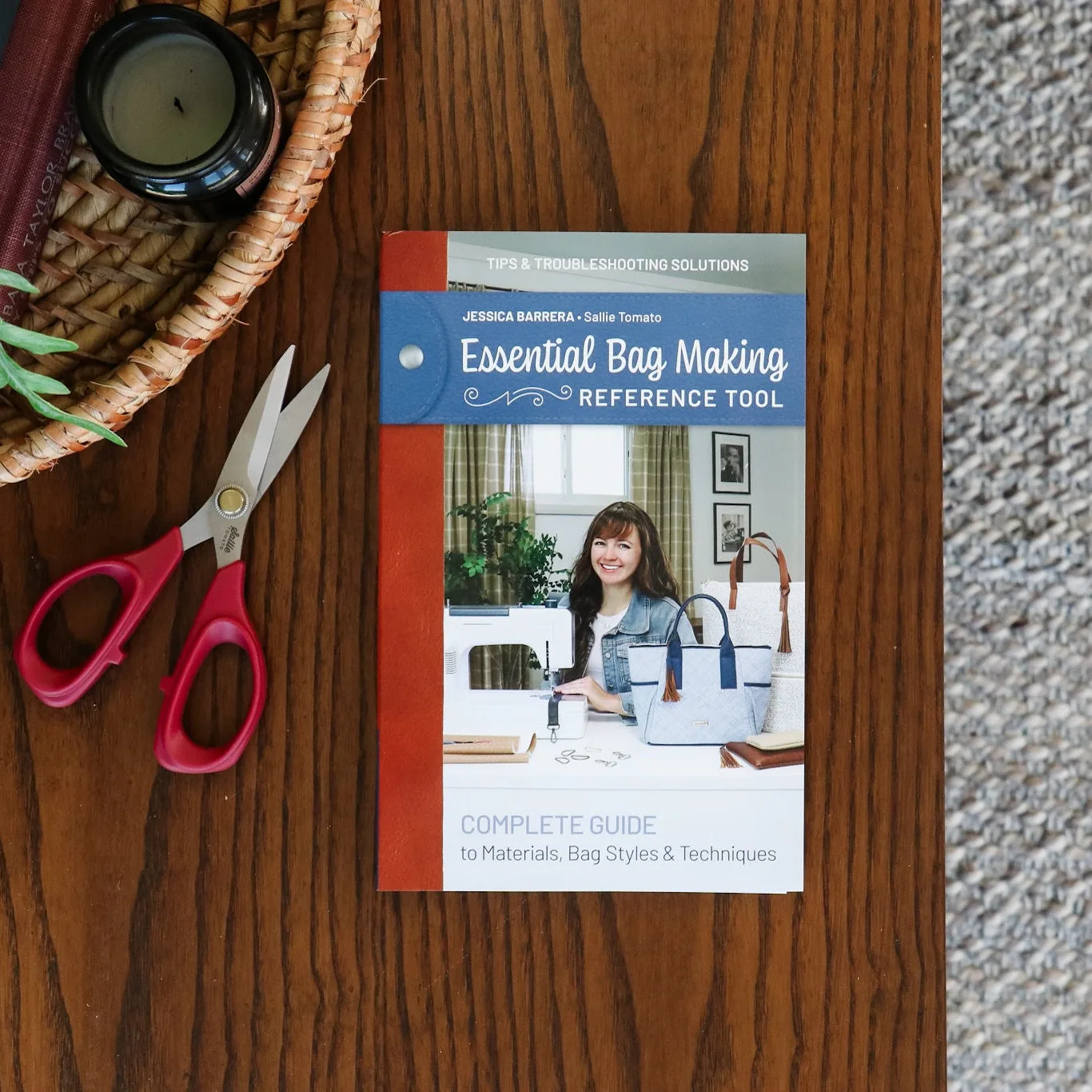
Essential Bag Making Reference Tool Book
Who this book fits
Best for
- Beginner bag sewists who already have a pattern and want step-by-step technique guidance
- Experienced sewists who want a compact bag construction reference at the machine
- Sewists who prefer written instructions over video tutorials
Not for
- Sewists who need complete bag patterns included in the book
- People who already own a comprehensive bag-making library
- Sewists who learn exclusively from video and rarely use printed references