Quick answer
Most home kitchens need three knives: an 8-inch chef's knife for the bulk of prep, a 3.5- to 4-inch paring knife for in-hand work, and a serrated bread knife for crusty loaves and tomatoes. If you cook proteins often, add a utility knife. Buy those four as a set only when the set's blade mix matches how you actually cook.
The essential kitchen knives list
Start with the chef's knife. It handles onions, squash, cabbage, and most proteins, so it earns its place before anything else. A paring knife covers hulling strawberries, trimming green beans, and peeling garlic. A serrated bread knife cuts through crust without crushing the crumb. A utility knife sits between chef's and paring: long enough for slicing chicken breasts or a sandwich, short enough for herbs.
- Chef's knife: 8 inches for most adults; the workhorse for 70% of prep.
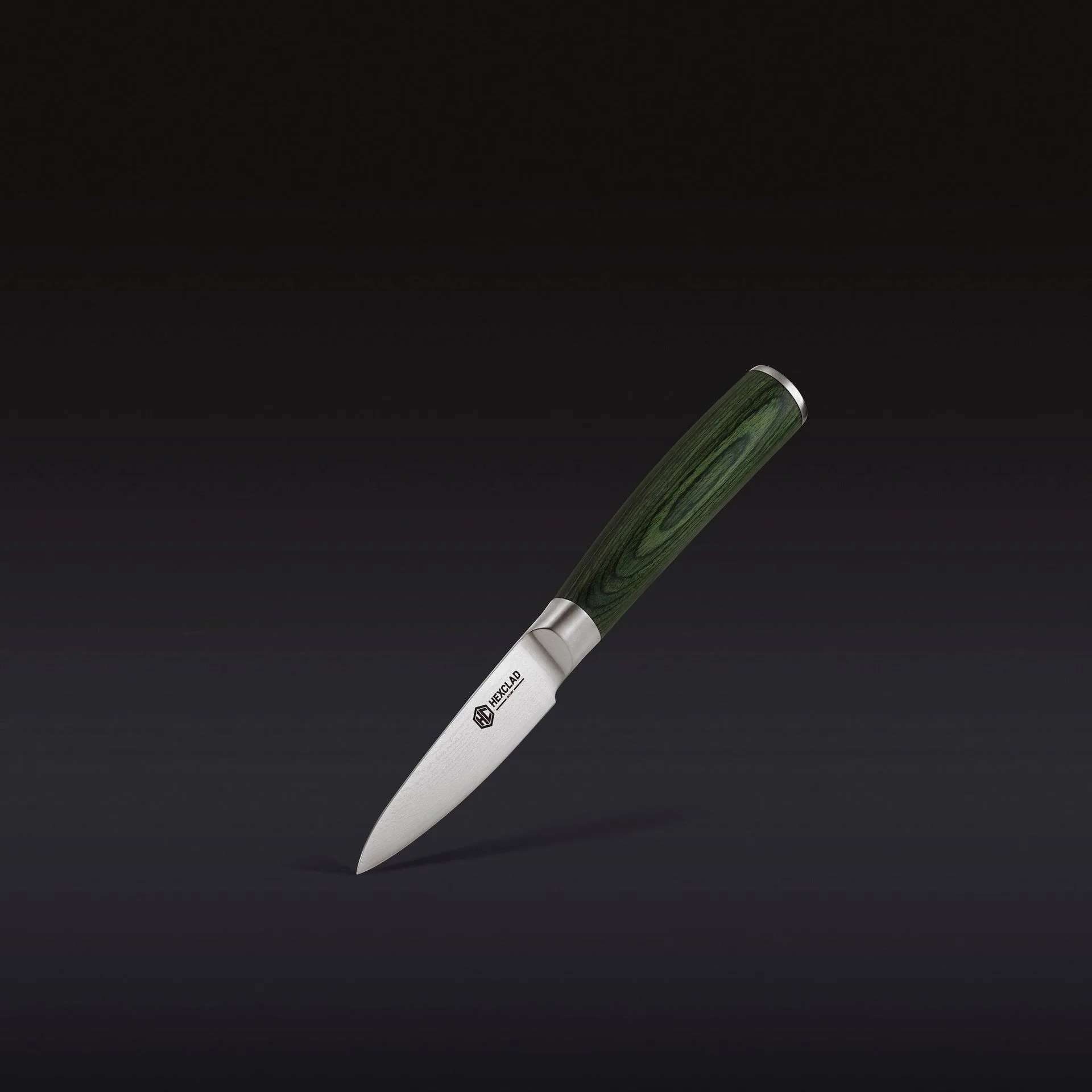
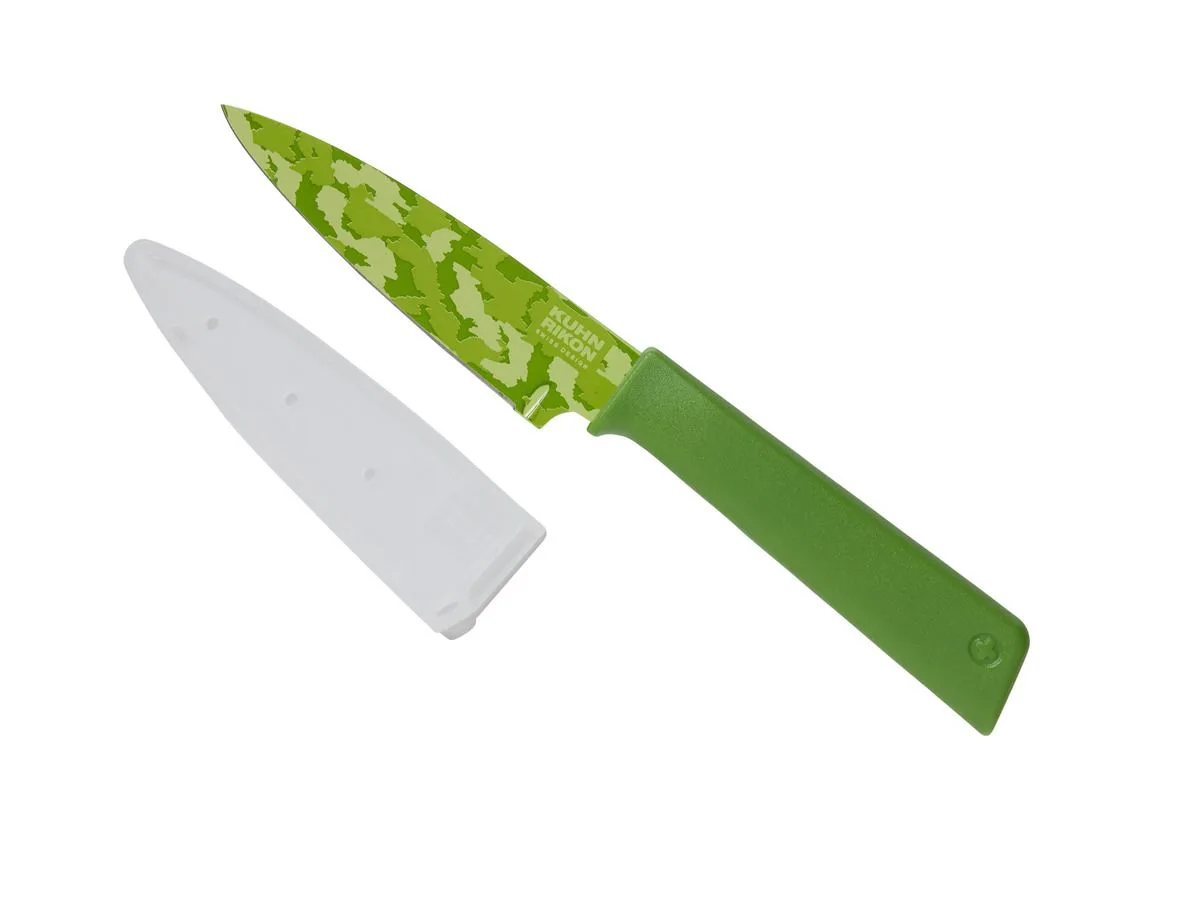
- Paring knife: 3.5 to 4 inches; for hand-held and detail work.
- Serrated bread knife: for bread, tomatoes, and citrus.
- Utility knife: 5 to 6 inches; bridges chef's and paring for proteins and sandwiches.
Chef knife vs utility knife: which does what
The chef's knife is heavier and longer, so it powers through dense vegetables and rock-chopping herbs. The utility knife is shorter and lighter, which makes it easier for beginners to control when slicing cooked proteins, herbs, or a sandwich. If you already own a chef's knife, a utility knife adds control, not redundancy. If you only own a utility knife, you will struggle with butternut squash and cabbage.
How many knives do you need before buying a set
Count the knives you actually touch in a week. If that number is three or four, a four- to six-piece set costs less per blade and gives you a block or storage solution. If you only reach for one chef's knife, buy that knife alone and add a paring knife later. Sets save money per knife but only when you will use most of the blades; a set with three knives you never pick up is not a saving.
What to check before you buy a Damascus knife set
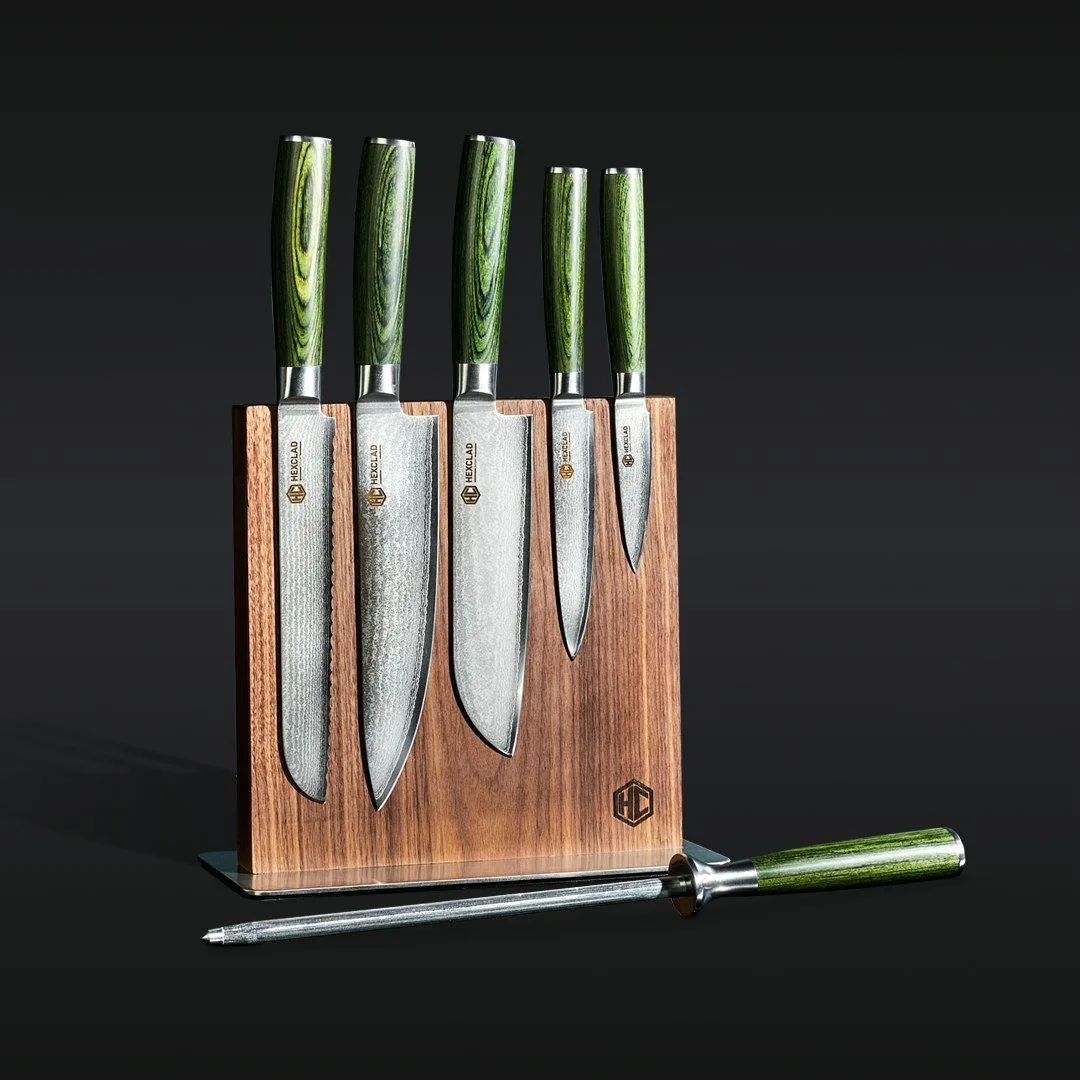
Damascus steel refers to layered steel, and the layer count and hardness affect edge retention and care. Look for the Rockwell rating and sharpening angle, because harder, thinner edges hold sharpness longer but chip more easily if you twist or pry. Pakkawood handles treated against shrinking resist loosening over years of washing. A double-sided magnetic walnut block keeps edges from knocking together in a drawer.
Decision rules for your knife drawer
- Rule 1: Buy the chef's knife first: If you cook four or more dinners a week, an 8-inch chef's knife is the only blade you cannot substitute. Add a paring knife second. Skip any set that does not include a chef's knife you will actually hold.
- Rule 2: Add a utility knife when you slice proteins: If you cook chicken, fish, or sandwiches more than twice a week, a 5-inch utility knife gives you more control than a chef's knife for those jobs. A utility knife is an addition, not a replacement for the chef's knife.
- Rule 3: Buy a set only when you will use four or more blades: Sets lower the cost per knife, but only if you will use the paring, utility, and serrated blades. Otherwise buy individually. Count your weekly knife touches before you compare set prices.
- Rule 4: Match the edge to your care habits: A 12-degree, 60+ Rockwell edge stays sharp but chips if you pry or leave it wet. If you want a knife you can abuse, choose a softer, thicker blade. Hard, thin edges reward careful storage and hand washing.
Knives that fit this list
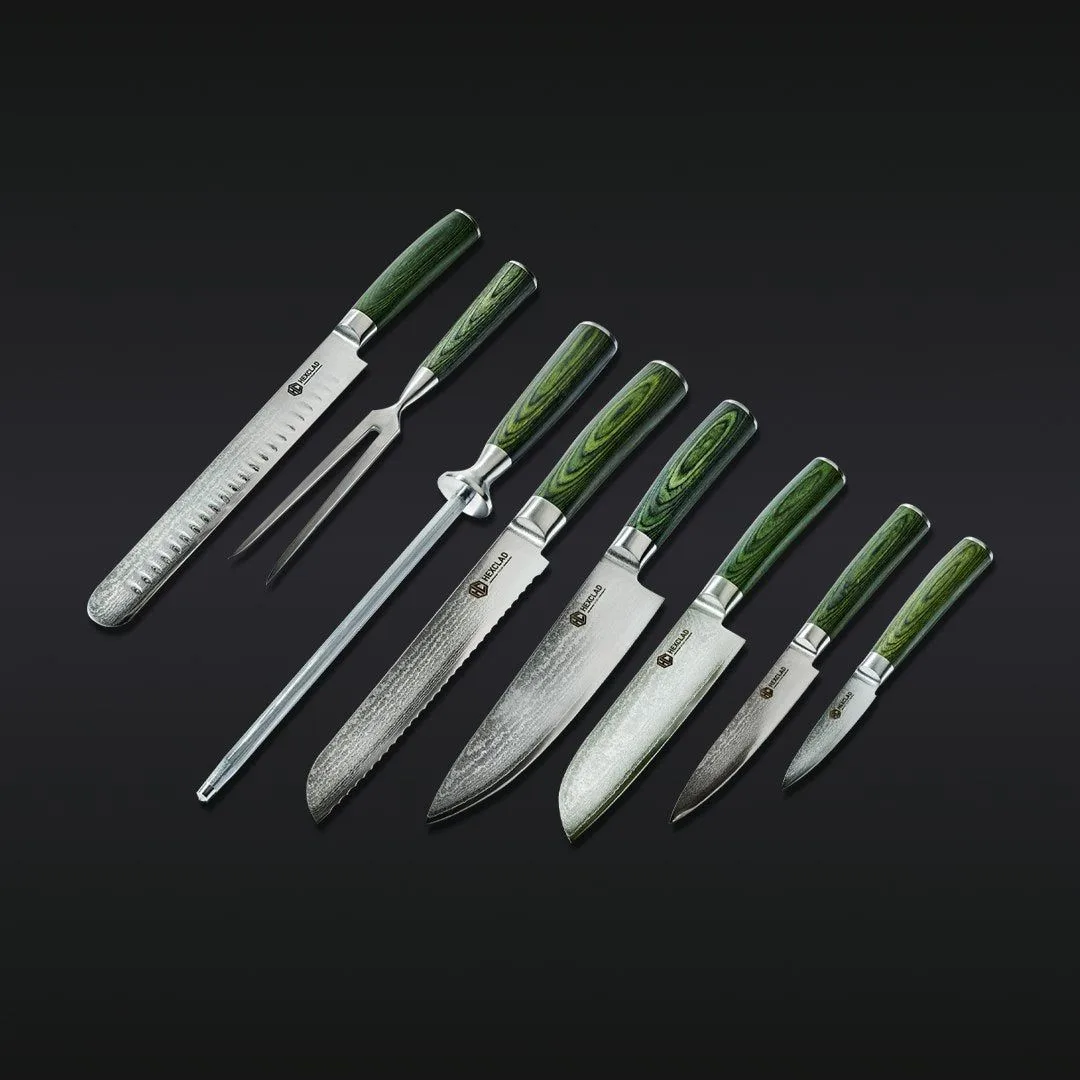
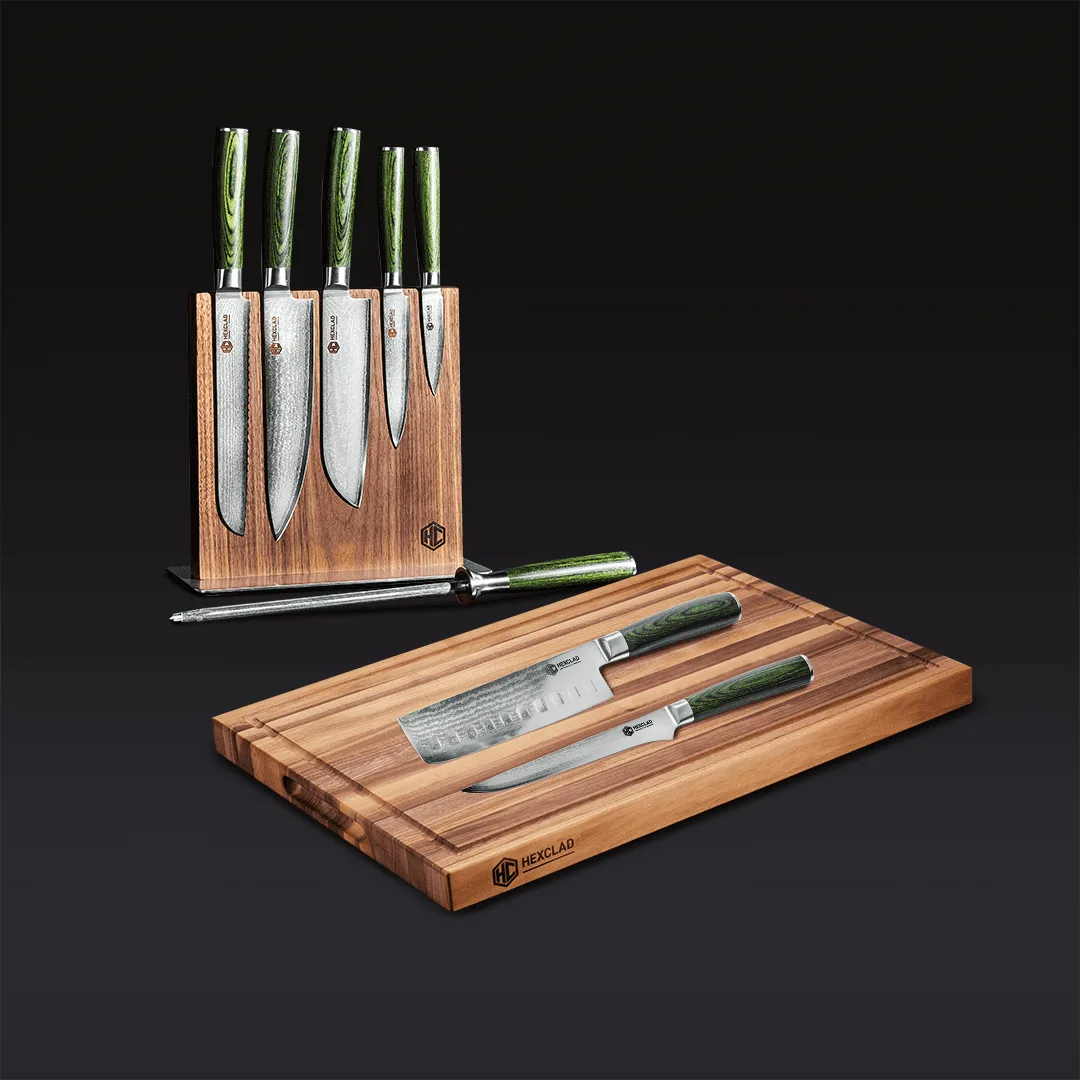
- Essential Damascus Steel Knife Set, 6-pc (Green): Essential Damascus Steel Knife Set, 6-pc (Green) uses 67 layers of Damascus steel, a 12-degree blade sharpness, and Rockwell ratings of 60 or higher, with ergonomically designed pakkawood handles treated with anti-shrinking technology. The 12-degree edge and 60+ Rockwell hardness mean the set holds a keen edge for slicing, but the thin, hard edge needs a wood or magnetic block rather than a loose drawer.
- Damascus Steel Utility Knife, 5": Damascus Steel Utility Knife, 5" is built with hybrid construction that combines Japanese knife-making techniques with German engineering principles, and it is described as a smaller, easy-to-handle knife for everyday prep. It covers the utility-knife slot in the essential list, so a beginner can slice proteins, herbs, or a sandwich with more control than a full chef's knife allows.
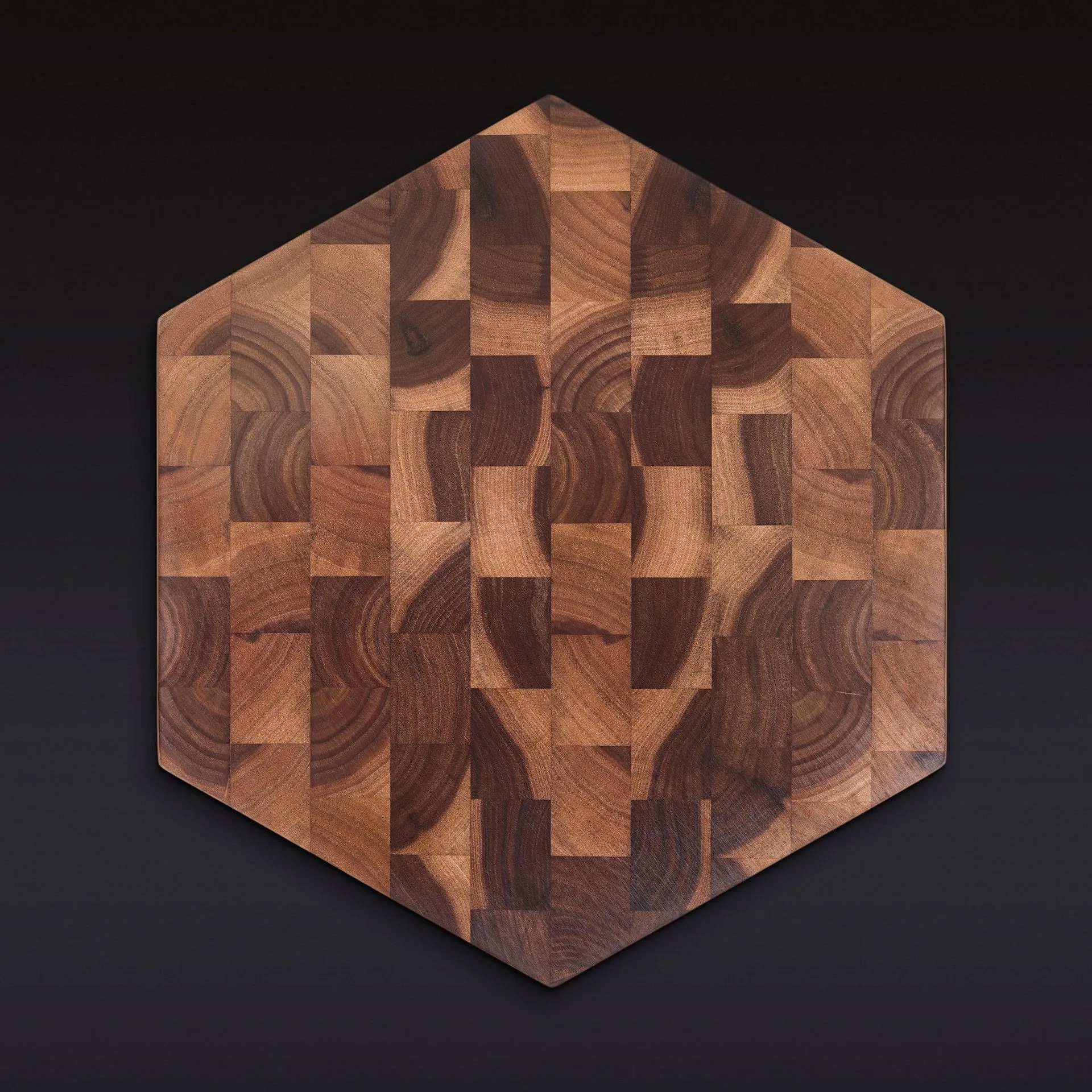
- Steak Knife & Bistecca Plate Set, 8-pc (Green): Steak Knife & Bistecca Plate Set, 8-pc (Green) pairs four Japanese Damascus steel steak knives with four Bistecca Steak Plates modeled after the cutting boards used for Bistecca Fiorentina, and the wood surface protects the blades. If steak night is a regular event, this covers the table-service knife you would otherwise add separately, and the wood plates give the edges a safe surface.
- Sous-Chef Cutlery Bundle, 10-pc: Sous-Chef Cutlery Bundle, 10-pc includes top-of-the-line Japanese Damascus steel knives with a double-sided magnetic walnut block plus a nakiri blade. The magnetic walnut block solves storage for the whole set, and the nakiri adds a vegetable-focused blade for anyone who preps a lot of produce.
Who this list fits
Best for
- Home cooks building a first serious knife collection who want a clear list instead of a 15-piece block.
- Cooks who slice proteins and vegetables several times a week and want a chef's knife plus a utility knife.
- Anyone upgrading to Damascus steel who will hand wash and store knives on a block or magnetic strip.
Not for
- Cooks who only ever use one knife and will not maintain a thin, hard edge.
- Anyone who leaves knives soaking in the sink or tosses them loose into a drawer.
- Shoppers who want a single do-everything blade and will not add a paring or serrated knife.