Two specialist diets, one shared foundation
Evie Urinary Care and Evie Digestive Care are both grain-free dry cat foods built around hydrolysed protein. That shared foundation — protein broken into small peptides using a natural enzymatic process derived from papaya — makes the protein more efficiently absorbed and reduces the antigenic load, meaning it's less likely to provoke immune reactions that can underlie food sensitivities or systemic inflammation. Both recipes achieve 92% protein digestibility, above the FEDIAF standard of 80%, and both are formulated by pet nutritionists and approved by licensed veterinarians.
But the two recipes diverge in their functional ingredients, targeting different health priorities. Here is what the supplied evidence tells us about each.
What the evidence confirms
-
Evie Digestive Care: The primary protein is hydrolysed turkey (40% freshly prepared). The recipe includes FOS and MOS prebiotics to feed beneficial gut bacteria, support a balanced microbiome, and help reduce compounds that contribute to unpleasant stool odour. It also contains cellulose for firm stools and L-carnitine for energy metabolism. These ingredients directly target digestive comfort — prebiotics for gut flora balance, fibre for stool quality, and hydrolysed protein for easy absorption.
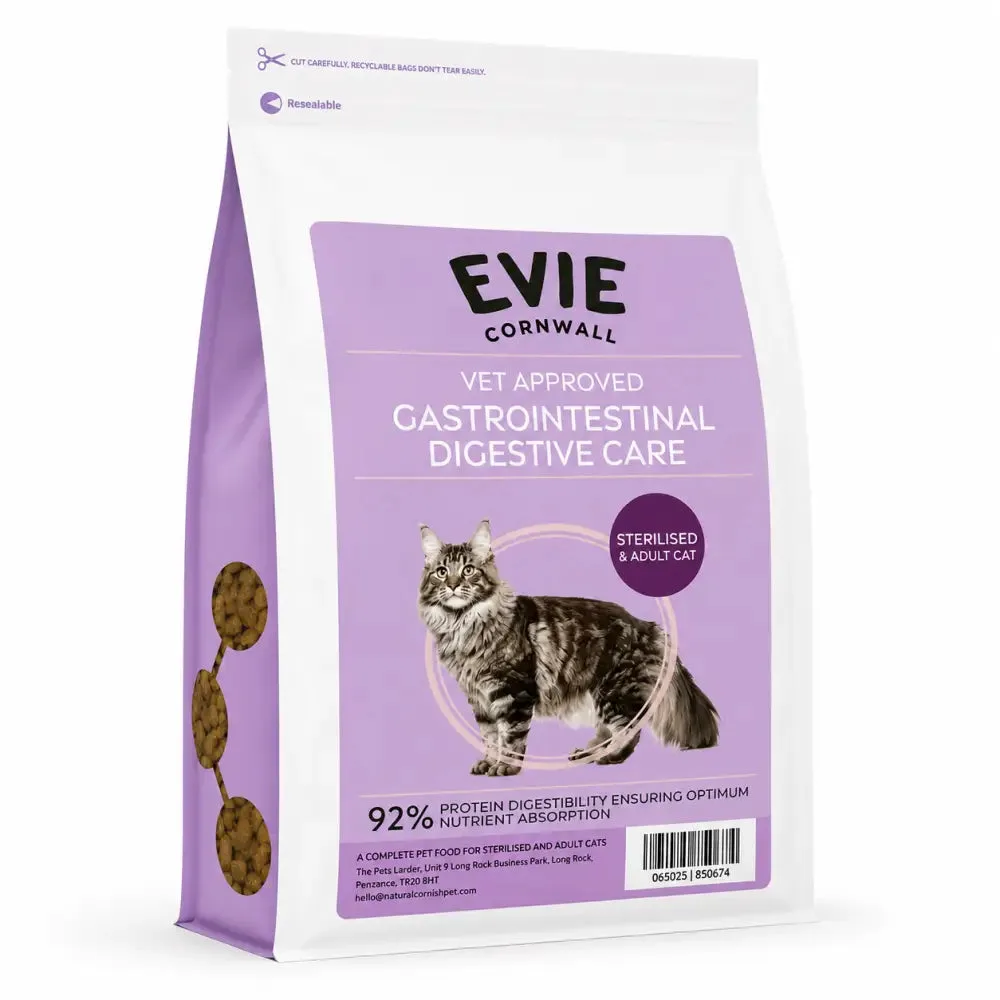
Evie Digestive Care
-
Evie Urinary Care: The primary protein is hydrolysed chicken (40% freshly prepared). It includes a UriTract™ blend of cranberry, camomile, and rosehips. In a 2025 feeding study, 90% of cats fed this diet achieved optimal urine pH (6.0–6.6), which helps minimise the risk of both struvite and calcium oxalate crystals. The cranberry helps prevent bacteria from adhering to the bladder lining, camomile reduces stress (a known urinary trigger), and the pH study provides direct evidence of urinary tract support.
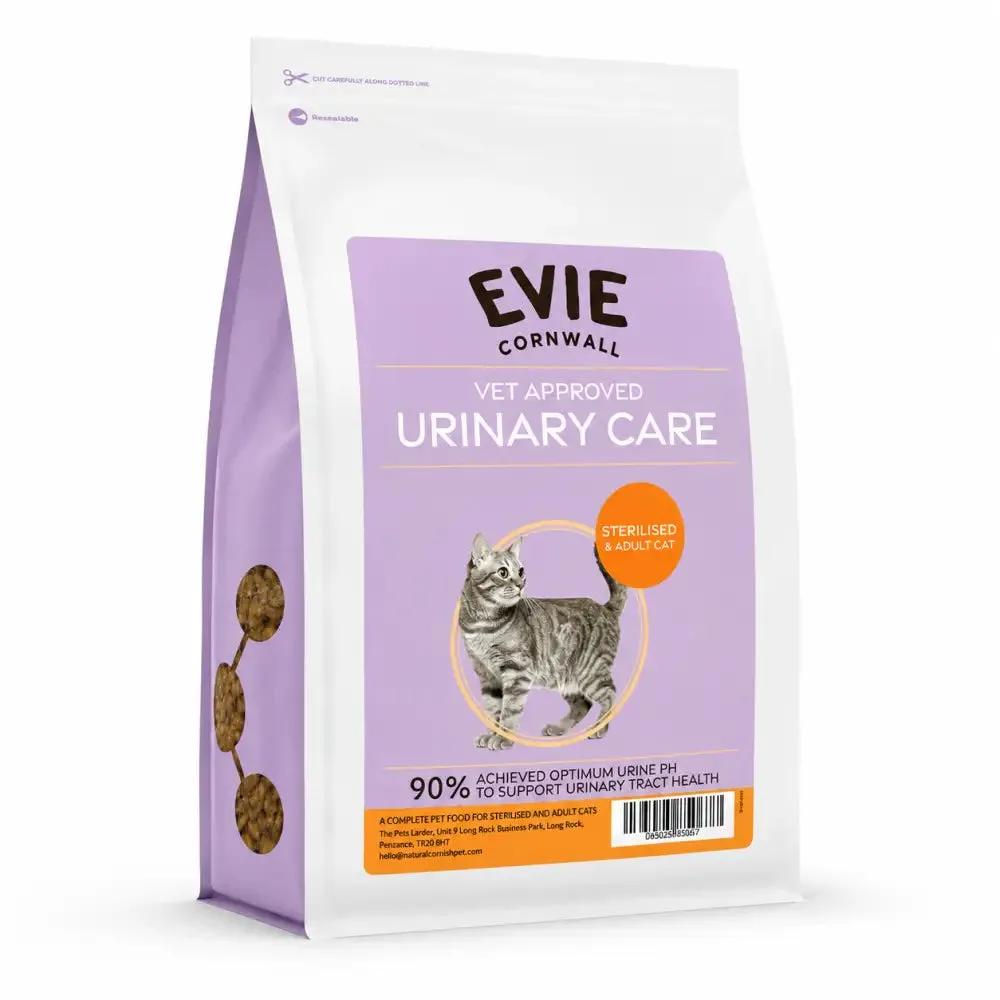
Evie Urinary Care
Digestive Care vs Urinary Care: key differences
- Primary protein source: Digestive Care uses hydrolysed turkey; Urinary Care uses hydrolysed chicken. Both are freshly prepared and hydrolysed.
- Functional blend: Digestive Care includes FOS and MOS prebiotics, cellulose, and L-carnitine. Urinary Care includes UriTract™ (cranberry, camomile, rosehips), chicory, and L-tryptophan.
- Collagen content: Digestive Care contains 4.6% collagen for intestinal lining support; Urinary Care contains 3.7%.
- Caloric density: Digestive Care provides 354.5 kcal/100g; Urinary Care provides 362.5 kcal/100g — a minor difference.
- Feeding study evidence: Digestive Care has a protein digestibility study from West Pomeranian University of Technology. Urinary Care has a urine pH study from Kennel 'De Morgenstond'.
What is not confirmed by the supplied information
Neither product record includes specific feeding amounts, transition instructions, or medical treatment claims. The evidence for Digestive Care does not confirm it resolves any diagnosed digestive condition, and the evidence for Urinary Care does not confirm it treats or prevents urinary tract infections. Both records advise discussing suitability with a vet if your cat has a diagnosed condition.
Both foods are available in 1.5 kg and 5 kg sizes. Kibble shape and size are identical: small hearts, 5 mm × 10 mm.
How to choose between them
Choose Evie Digestive Care if your cat has a sensitive stomach, inconsistent stool quality, or a history of food sensitivities. The prebiotic blend and higher collagen content are directly aimed at gut comfort and regular digestion.
Choose Evie Urinary Care if your cat has had urinary issues (such as cystitis, like the shop founder's cat Louis), or if you want to proactively support urine pH and bladder health. The UriTract™ blend and stress-reducing L-tryptophan are specific to that goal.
If your cat has neither issue, either food provides a high-digestibility, grain-free diet — but the functional ingredients are specialised, so pick the one that matches your cat's actual needs rather than assuming both are interchangeable.