Why the comparison matters for your sitting posture
If you spend hours at a desk, the choice between an exercise ball chair and a regular office chair can feel like a fork in the road. One promises active sitting that engages your core; the other offers stable lumbar support. Neither is a magic fix for posture, and the right pick depends on your routine, your space, and how much you are willing to adjust.
This comparison looks at what each option actually does for posture, not what the marketing says. You will see where the exercise ball chair has an edge, where a regular chair still wins, and how to decide without guessing.
What an exercise ball chair does for posture
An exercise ball chair replaces a fixed seat with an unstable surface. Your body has to make micro-adjustments to stay balanced, which can encourage a more upright position and reduce the tendency to slouch. The NEUMEE Exercise Ball Chair, for example, inflates to 65 cm and is described as promoting active sitting and developing your core during work.
The key word is can. The ball does not force good posture; it creates conditions where your muscles have to work. If you already have good core awareness, the ball can help maintain it. If you tend to collapse into a C-curve, the ball may let you do that too, just with more wobble.
What a regular chair offers for posture
A well-adjusted office chair provides stable support for your lower back, hips, and thighs. The seat pan and backrest work together to keep your spine in a neutral position, especially if the chair has adjustable lumbar support, armrests, and seat height.
For many people, a regular chair is easier to use correctly because the support is passive. You sit, adjust the settings once, and the chair holds you. The tradeoff is that your core muscles are not actively engaged, and after long hours, you may shift into poor positions without noticing.
Exercise ball chair vs regular chair: key posture differences
- Core engagement: An exercise ball chair requires constant micro-adjustments, which can strengthen your core over time. A regular chair does not engage core muscles actively, relying instead on external back support.
- Stability and support: A regular chair offers fixed lumbar and pelvic support, which is predictable and easy to maintain. An exercise ball chair has no backrest; you must rely entirely on your own muscle control to maintain upright posture.
- Ease of use for beginners: A regular chair works immediately for most people. An exercise ball chair requires an adjustment period, and the supplied instructions recommend inflating to maximum capacity on first use, then allowing 24 hours before final inflation.
- Risk of poor posture: On a ball chair, slouching still happens if your core is weak or you are fatigued. On a regular chair, slouching is common but can be reduced with proper adjustment and lumbar support.
When an exercise ball chair makes sense for posture
An exercise ball chair is a good choice if you already have reasonable core strength and want to add movement to your workday. It can help you avoid the stiffness that comes from sitting still for hours. The NEUMEE ball chair is also noted as suitable for beginners and professionals, and its anti-burst design means it deflates slowly if punctured, which adds a layer of safety.
If you have back pain or a diagnosed postural issue, an exercise ball chair is not a substitute for medical advice or a properly fitted office chair. The instability can aggravate existing problems if your core is not ready.
When a regular chair still wins
A regular office chair remains the better option for long, focused work sessions where you need stable support. It is also more practical for shared workspaces, because you do not need to inflate or adjust a ball. For anyone with hip, knee, or lower back conditions, the predictable support of a chair is usually safer.
That said, no chair prevents posture problems on its own. Even the best office chair requires you to sit consciously and take breaks.
What the NEUMEE Exercise Ball Chair provides for posture
-
NEUMEE Exercise Ball Chair, Workout Ball for Fitness, Large Size 65 cm: The ball chair is described as promoting active sitting and developing your core during work. Active sitting is the main mechanism by which a ball chair can improve posture over time.
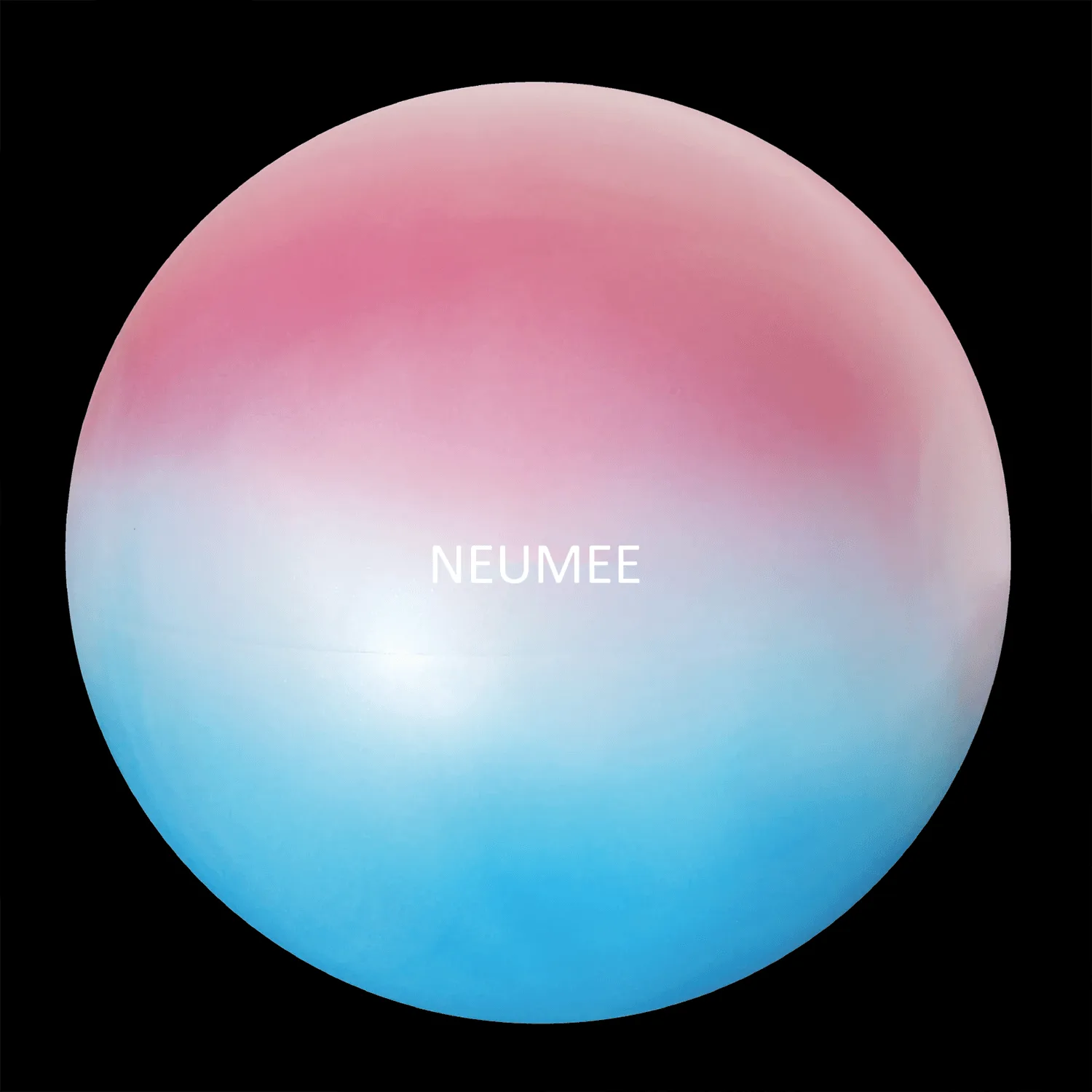
NEUMEE Exercise Ball Chair, Workout Ball for Fitness, Large Size 65 cm
-
NEUMEE Exercise Ball Chair, Workout Ball for Fitness, Large Size 65 cm: The ball has been independently quality tested to bear loads up to 750 lbs. This load capacity means the ball can support most adults safely during active sitting.
-
NEUMEE Exercise Ball Chair, Workout Ball for Fitness, Large Size 65 cm: The set includes an air pump and plug remover, and the ball is intended to be inflated to maximum capacity on first use. Proper inflation is critical for stability and posture support. Under-inflation can make the ball too soft and reduce its effectiveness.
Making your choice: practical steps
Start by assessing your current posture habits and any existing discomfort. If you have back pain, consult a professional before switching to a ball chair. If you are generally healthy and want to add core engagement, an exercise ball chair can be a useful tool, but plan for a gradual transition.
Whichever you choose, remember that no seat replaces the need to move regularly. Stand, stretch, and change positions throughout the day.