Quick answer
Backpressure is not a performance feature; it is a restriction. What actually shapes response, tone, and drivability is exhaust gas velocity, pipe diameter, and muffler layout. A well-designed catback manages those variables instead of chasing a backpressure number.
Few exhaust topics cause more confusion than backpressure. It gets blamed for lost torque, credited with making engines feel strong, and used to sell everything from tiny pipes to straight-through mufflers. The exhaust backpressure myth survives because it mixes a real physical effect with a wrong explanation.
The useful question is not how much backpressure you have, but how well your system moves exhaust gas across the rpm range you actually drive. That comes down to pipe diameter, routing, and muffler design. We will separate the claims from the design facts.
Myth: Backpressure helps torque
Verdict: false. Backpressure is resistance to flow, and resistance costs power. The reason some stock systems feel strong down low is not the backpressure itself but the gas velocity in a smaller pipe. Velocity helps scavenging, which is the process of using moving exhaust gas to pull the next charge out of the cylinder.
When you reduce restriction without changing pipe size, you usually gain flow without losing velocity. That is why a well-matched catback can improve response instead of hurting it. The tradeoff appears when pipe diameter grows too far for the engine's airflow, because velocity drops and low-rpm response can soften.
- Judge a system by its pipe diameter and muffler layout, not by a backpressure number.
- If low-rpm response matters most, avoid oversized piping for your engine's airflow.
Myth: Bigger pipe is always better
Verdict: only up to a point. Pipe diameter is a tuning tool. A 3-inch system can flow more than a 2.5-inch system, but the larger pipe also slows gas velocity at low rpm. On a small-displacement engine, that can make the car feel softer off idle even though peak flow improves.
The right diameter depends on how much exhaust the engine actually produces. A turbocharged 1.5L and a 2.0L naturally aspirated engine do not need the same pipe. This is why catalog systems are developed for specific applications rather than sold as one universal size.
- Match pipe diameter to your engine and power goals, not to the biggest number available.
- A diameter that is too small restricts top-end flow; too large can cost low-rpm velocity.
Exhaust scavenging explained without the hand-waving
Scavenging is the useful effect people confuse with backpressure. As exhaust pulses leave the cylinder, they create a low-pressure wave that can help draw in fresh air and fuel. Pipe diameter, length, and merge points influence how well that wave works at a given rpm.
This is why a catback is not just a noise device. A resonated midpipe, a specific split to dual pipes, or a straight-through muffler all change how pulses travel. The goal is to keep velocity high enough to scavenge while removing unnecessary restriction.
- Scavenging is about pulse velocity and timing, not about holding pressure in the system.
- Muffler and midpipe design change scavenging behavior more than most people expect.
Myth: Catbacks create backpressure problems
Verdict: misleading. A catback replaces the factory rear section, and its job is to manage flow and sound. Whether it helps or hurts depends on its design. A system with dual oval mufflers and a resonated midpipe will behave differently from one that eliminates the factory muffler entirely.
For example, the Sports Touring Catback Exhaust - Acura Integra DE4 [2023+] uses a 3-inch resonated midpipe that bolts to the OEM front overpipe, then splits to dual 2.5-inch piping and dual mufflers. That layout is intended to add exhaust note without being overbearing, which is a flow-and-tone decision rather than a backpressure target.
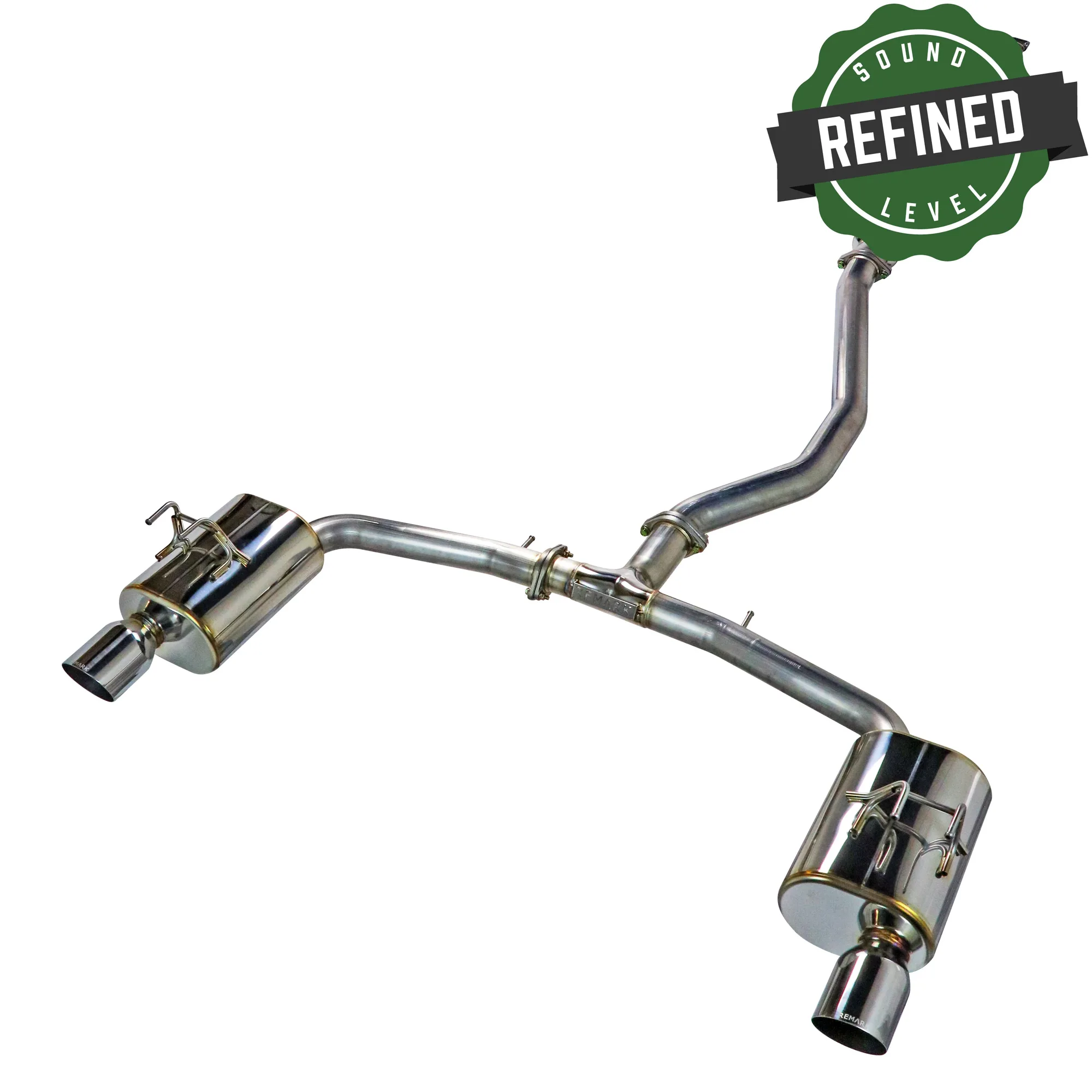
Sports Touring Catback Exhaust - Acura Integra DE4 [2023+]
- Ask what the catback changes: pipe size, muffler type, and routing.
- A resonated midpipe and dual mufflers usually mean a more controlled tone than a muffler-delete design.
What actually changes performance and feel
Three variables do most of the work: pipe diameter, muffler design, and routing. Diameter sets flow capacity and velocity. Muffler design sets restriction and tone. Routing, including whether the system is single or dual, affects how pulses merge and how the car sounds inside the cabin.
The Link Loop Catback Exhaust - Honda Civic Sport Sedan [2022+] is a clear example of routing as a design choice. It converts the original single exit to a dual exit with 4.0-inch tips on both sides, uses a LINK LOOP design to control the exhaust note, eliminates the OE muffler, and sits on the louder side of the spectrum. That is a tone and flow decision, not a backpressure fix.
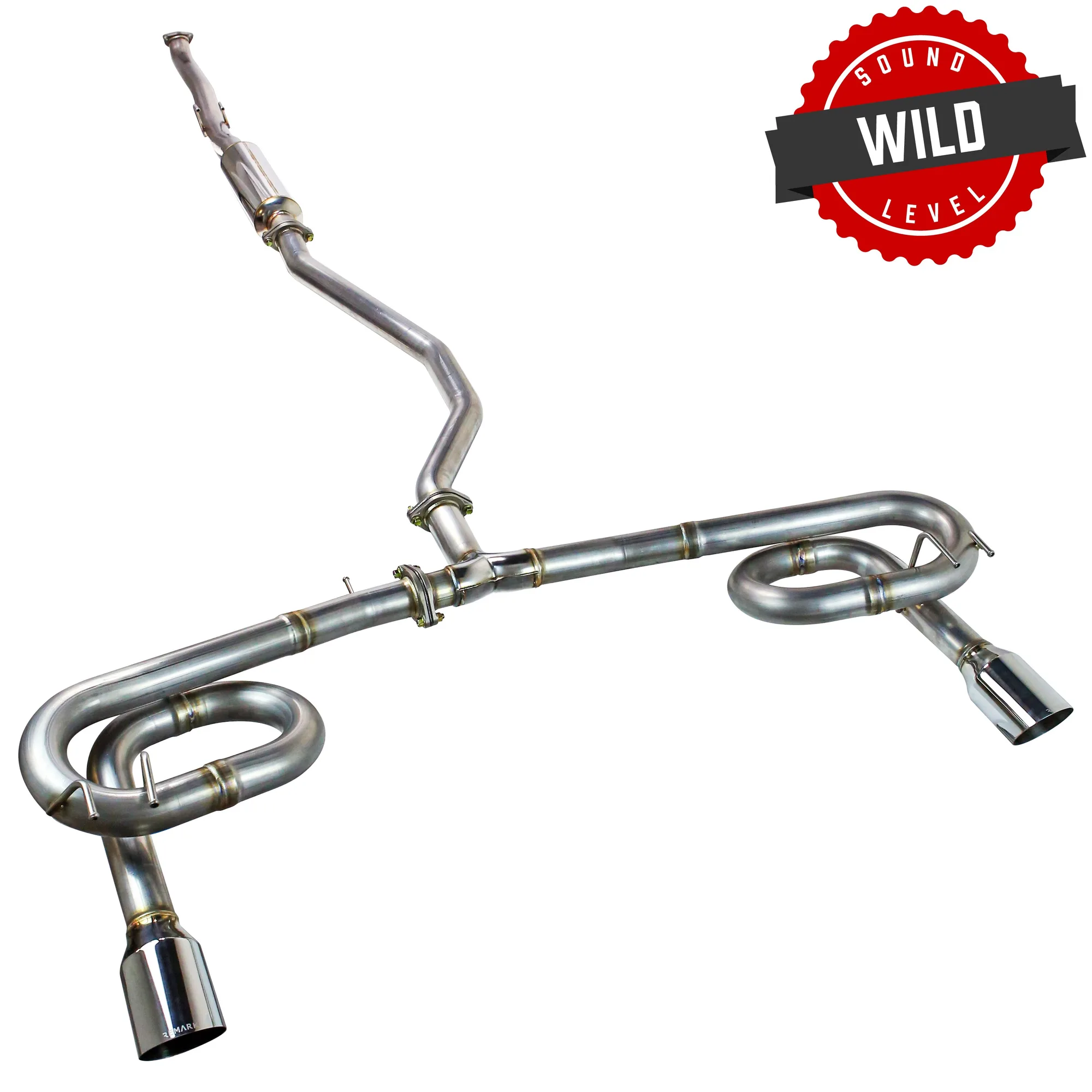
Link Loop Catback Exhaust - Honda Civic Sport Sedan [2022+]
- Decide your priority first: quiet refinement, a moderate increase in note, or an aggressive tone.
- Then choose the pipe size and muffler layout that supports it.
How to choose without falling for the myth
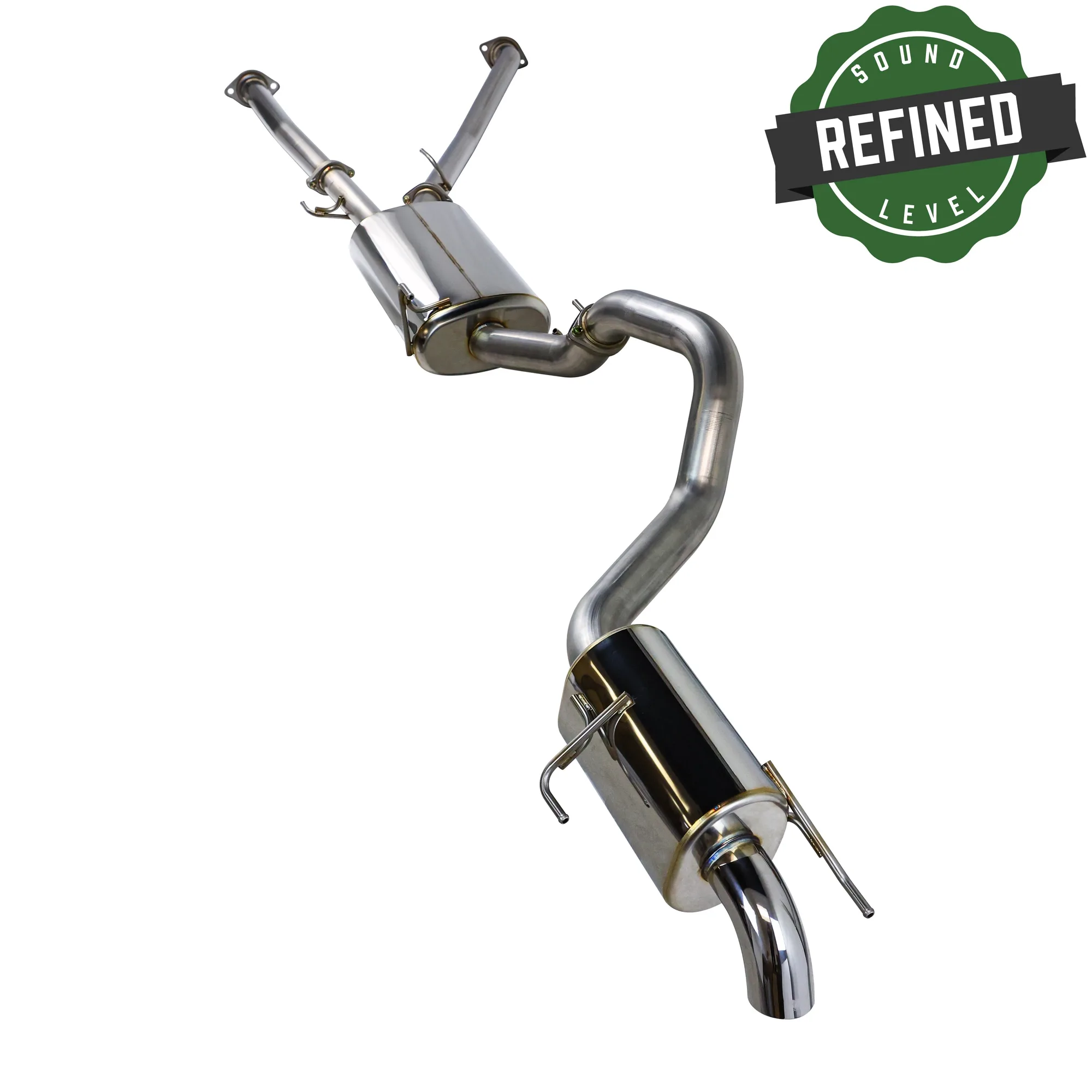
Start with your engine and your daily driving. If you want a subtle, deep note on a larger vehicle, a system like the Bold Performance - Lexus GX 550 Quiet Spec Catback (2024+) uses two muffler canisters in a layout similar to the OEM exhaust, with dual 2.5-inch mandrel bent inlet pipes feeding a single large-body high-flow muffler and an additional 3-inch straight-through muffler at the rear. That is designed for control, not maximum volume.
If you want a more aggressive character, a system that eliminates the factory muffler will deliver it, but expect more presence at cruise. The honest tradeoff is always between flow, tone, and comfort. No backpressure number replaces that judgment.
- Quiet spec and touring systems prioritize control; muffler-delete designs prioritize aggression.
- Match the system to the way you use the car most of the time.
Verdicts on common exhaust claims
- Backpressure helps torque: False. Backpressure is resistance. What helps low-rpm response is exhaust gas velocity, which is influenced by pipe diameter and routing. Stop chasing backpressure; tune pipe size and velocity instead.
- Bigger pipe is always better: Only up to a point. A larger pipe flows more but slows velocity, which can soften low-rpm response on a small-displacement engine. Match diameter to your engine's airflow, not to the biggest available size.
- Catbacks create backpressure problems: Misleading. A catback changes pipe size, muffler design, and routing. Whether it helps or hurts depends on those choices, not on a backpressure number. Evaluate the design, not the label.
- Scavenging is the same as backpressure: False. Scavenging uses exhaust pulse velocity to help pull in the next charge. Backpressure is simply flow resistance. Velocity and timing matter; pressure does not help.
Catalog examples that show the design choices
- Sports Touring Catback Exhaust - Acura Integra DE4 [2023+]: 304 stainless steel catback with a 3-inch resonated midpipe that bolts to the OEM front overpipe, then splits to dual 2.5-inch piping and dual oval mufflers with 4-inch slant cut tips. The resonated midpipe and dual mufflers are chosen to add note without being overbearing, showing that layout controls tone more than a backpressure target.
- Link Loop Catback Exhaust - Honda Civic Sport Sedan [2022+]: Developed for the 2022+ Civic Sport Sedan with 2.0L NA engine, converts the original single exit to a dual exit with 4.0-inch tips on both sides, uses a LINK LOOP design to control the exhaust note, eliminates the OE muffler, and is on the louder side of the spectrum. This is a routing and tone decision. Removing the OE muffler increases presence, which is a real tradeoff rather than a backpressure benefit.
- Bold Performance - Lexus GX 550 Quiet Spec Catback (2024+): Quiet spec 3-inch catback with two muffler canisters in a layout similar to the OEM exhaust, dual 2.5-inch mandrel bent inlet pipes feeding a single large-body high-flow muffler, an additional 3-inch straight-through muffler at the rear, and a single 3.0-inch turndown tip. The two-muffler layout is designed for a subtle, deep note. It shows that adding mufflers can control sound without making backpressure the goal.
Backpressure is a restriction, not a feature. If you want better response and a tone you enjoy, focus on pipe diameter, muffler design, and routing. Those are the variables that actually shape how your car drives and sounds.