Quick answer
Replace any exhaust bolt or nut that is corroded, rounded, or stretched, and replace every gasket and locking nut each time a joint is opened. If you are doing exhaust bolts replacement on a daily-driven car, assume the original hardware is single-use and budget for a fresh exhaust hardware kit before you start.
How do I know a gasket or bolt is actually failing?
A failing gasket usually shows up as a cold-start tick that fades as the metal warms and expands, a puff of exhaust soot around the flange, or a rasp that gets louder under load. A failing bolt or nut shows up differently: it may be visibly rusted, have a shiny stretched shank, or spin freely without clamping. If a nut backs off and the joint loosens, you will hear a flutter under the floor rather than a steady tone. Treat any of these as a signal to inspect before the leak erodes the flange face.
Can I reuse exhaust bolts and gaskets?
Gaskets are one-time-use. Once compressed, a composite gasket takes a set and will not seal reliably a second time, and metal gaskets that have been heat-cycled often leak at the fold. Bolts and nuts are a judgment call: if they are clean, undamaged, and thread smoothly by hand, they can sometimes be reused, but locking nuts and any hardware showing corrosion should be replaced. Reusing a stretched bolt is false economy because it will not hold torque.
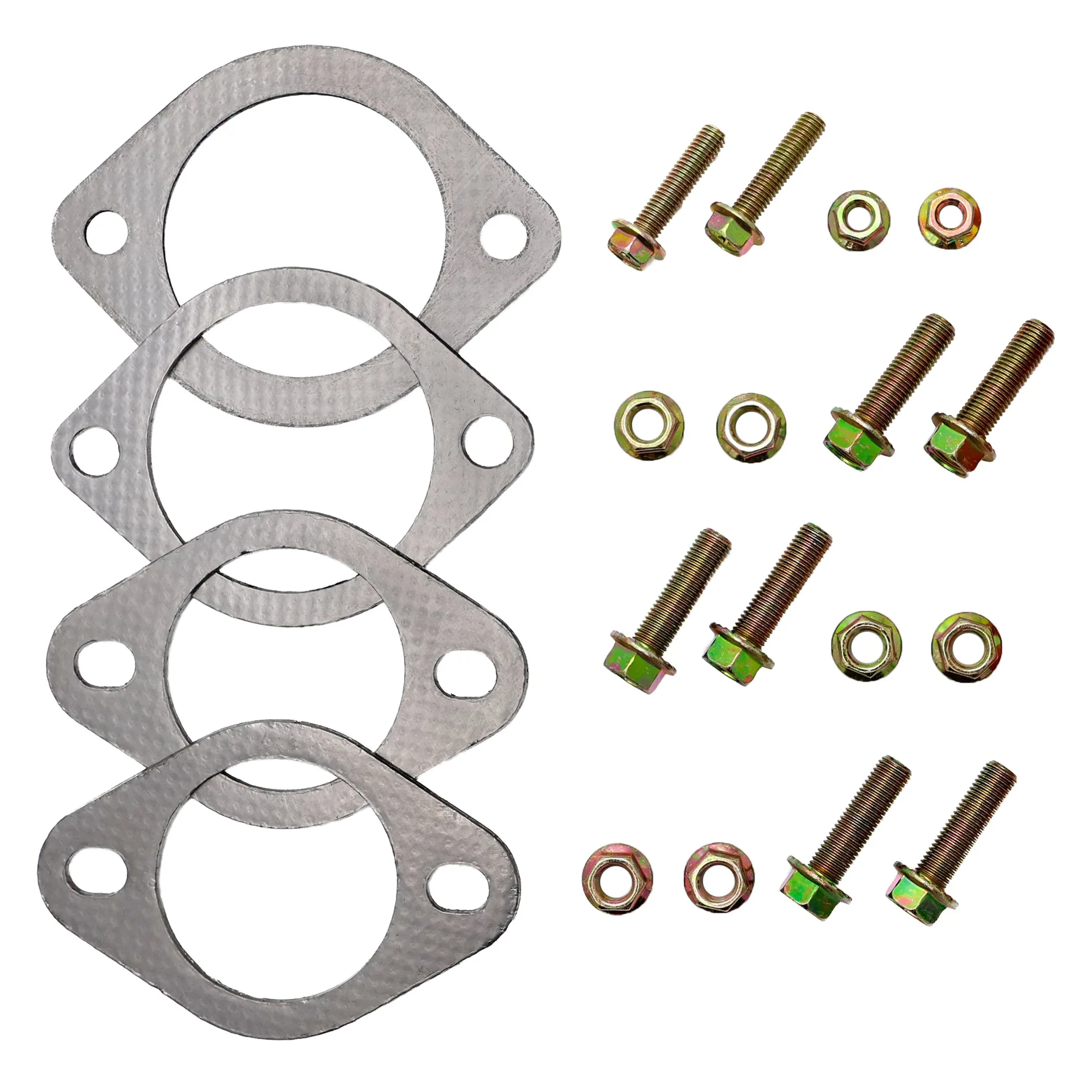
If you are replacing a midpipe or opening a flange you have already touched once, plan on a fresh set. A midpipe gasket set with matching hardware removes the guesswork and lets you finish the job in one session instead of hunting for a matching nut mid-install.
What do I need for a leak fix at home?
Before you start, confirm the leak location with a cold-start inspection and a soapy-water check around the joint. You will need penetrating oil applied a day ahead, a breaker bar, the correct six-point socket or wrench, a wire brush, and replacement hardware. If the leak is at a flange, the fix is usually a new gasket and fresh bolts rather than tightening the old ones tighter. Overtightening crushes the gasket and can warp the flange, which turns a small leak into a permanent one.
What torque should I use on exhaust nuts?
Torque specs vary by fastener size and material, so there is no single number that is safe for every exhaust joint. The practical approach is to tighten in a star pattern in stages, then re-check after the first few heat cycles. For M8 and M10 hardware, staying within the manufacturer's spec for that size is safer than guessing by feel. If no spec is available for your specific kit, tighten evenly until the joint is snug and the gasket is compressed, then stop. Over-torquing is a more common cause of leaks than under-torquing.
How do I remove seized exhaust bolts without breaking them?
Soak the fastener with penetrating oil for several hours, ideally overnight, and apply heat from a torch only if you can do so safely away from fuel lines and wiring. Use a six-point socket rather than a twelve-point to avoid rounding the head, and turn steadily rather than jerking. If the nut still will not move, stop and reassess: snapping a bolt leaves you drilling out a stud, which is far more work than replacing the hardware. For heavily corroded factory hardware, cutting the bolt and replacing it is often faster than fighting it.
Exhaust hardware FAQ
Do I need a full exhaust hardware kit or just a gasket?
If the bolts come out clean and undamaged, a gasket alone can be enough. If they are corroded or you are working on a car that has seen several winters, buy the kit so you are not reusing compromised hardware. Match the kit to the joint you are opening, not to the whole car.
How often should exhaust gaskets be replaced?
Every time the joint is separated. Gaskets do not reseal reliably after being compressed and heat-cycled, even if they look intact. New gasket every open joint.
Can I drive with a small exhaust leak?
A small leak can grow as hot gases erode the flange, and it can push exhaust into the cabin. Fix it before it becomes a larger repair. Do not wait on a leak at the flange.
What size are REMARK replacement bolts?
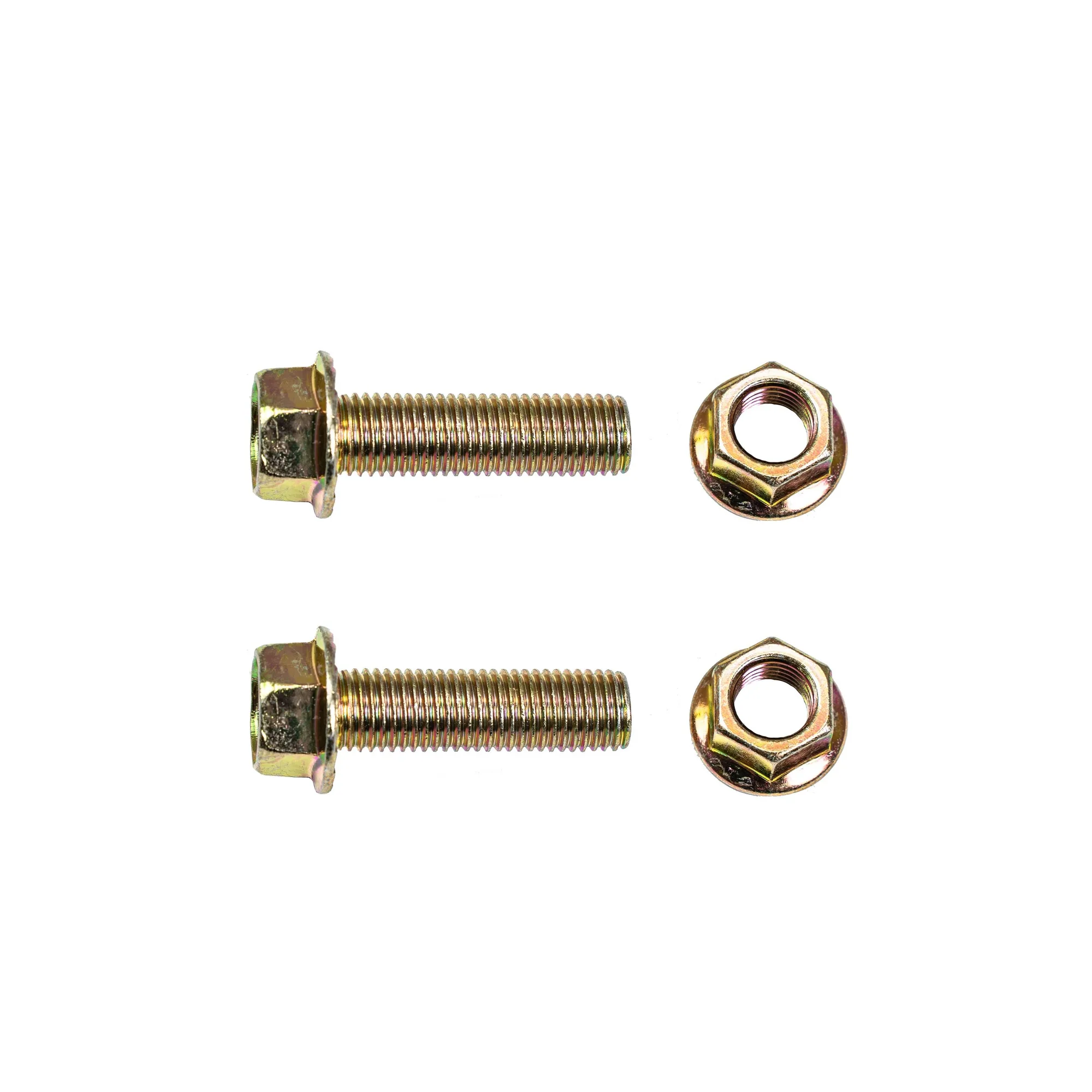
M10 x 1.25 and M8 x 1.25, both 35mm long, plus an M5 x 0.8 buttonhead set sold in six-piece packs for tip covers. Check pitch and head size before ordering.
Hardware that fits the job
- Replacement Gasket and Hardware Set - Subaru Midpipe Kit WRX/STi [2015+]: Replacement gasket and hardware kit for Subaru WRX/STi midpipe kits, part numbers RO-CPVA-N, RO-CPVA-C, RO-CPVB-N, and RO-CPVB-C. It includes the gaskets and hardware with the same fitment as the original kit, and current kits use thick composite gaskets rather than the metal gaskets used in older kits. If you are opening a midpipe joint on a 2015+ WRX or STi, this is the exact midpipe gasket set to pair with the job, and the composite gasket is the version to expect on a current replacement.
- Replacement REMARK Exhaust Bolts & Nuts: REMARK exhaust replacement bolts and nuts in M10 x 1.25 (35mm length, 14mm hex head), M8 x 1.25 (35mm length, 12mm hex head), and M5 x 0.8 buttonhead (8mm length, sold only as 6pcs for REMARK tip covers). No returns or exchanges accepted. Matching the thread pitch and head size to your joint prevents cross-threading and rounding, and the M5 set is specific to tip covers rather than flange hardware.