Quick Answer
Most exhaust leaks after a cat-back install come from the joints you just assembled, not from the muffler or piping itself. Re-torque the flange hardware, replace any crushed or missing gasket, and reposition clamp-style connections so the clamp sits over the pipe overlap. If a leak persists at a welded seam or the muffler body, stop and have a shop pressure-test the system rather than adding sealant.
Start With the Symptom, Not the Parts
A cold-start tick that fades as the pipe warms usually points to a flange or donut gasket that is not fully seated. A steady hiss under load that scales with rpm is more often a slip-joint or clamp connection that is not fully inserted. A rhythmic flutter that speeds up with engine rpm is a gasket leak at a port or manifold connection. A metallic buzz or rattle that appears only at certain rpm is usually a hanger or heat shield touching the body, not a true leak. Write down where you hear it, when it appears, and whether it changes with temperature; that single note narrows the cause faster than any parts swap.
Flange and Donut Gasket Leaks
Flange leaks are the most common post-install complaint because the two mating surfaces must be clean, flat, and pulled together evenly. If you reused an old donut gasket, it has already taken a compression set and will not reseal at the new angle. Install a fresh gasket, clean both flange faces with a wire brush, and tighten the bolts in a cross pattern in stages rather than fully torquing one side first. A donut gasket that is cocked in its seat will leak on one side only, which is why the tick is often louder from one wheel well.
Clamp and Slip-Joint Leaks
Clamp-style connections leak when the clamp is positioned over the slot instead of over the solid overlap, or when the pipe is not inserted to the full depth marked by the manufacturer. Loosen the clamp, push the pipe in until it bottoms, then slide the clamp back so it sits entirely over the overlapped section. Band clamps spread load more evenly than U-bolts and are less likely to crush the pipe, but a U-bolt that has already dented the pipe will not seal even after repositioning. If the pipe is distorted, cut the damaged section and replace it rather than stacking clamps.
Rattles That Mimic a Leak
A rattle can sound like a leak through the floor pan. Check hanger alignment first: the isolators should hold the pipe with clearance on all sides, and no hanger should be pulled tight against the body. Tap the system with a rubber mallet along its length and listen for contact points. Heat shields, fuel lines, and sway bar links are frequent culprits because a new cat-back often changes pipe routing slightly. Fixing a rattle is a matter of bending a hanger or adding an isolator, not replacing gaskets.
When to Stop and Get Help
Stop and consult a shop if the leak is at a welded seam, the muffler body, or the converter, because those are not serviceable joints. Stop if you smell exhaust inside the cabin, since that is a safety issue regardless of the source. Stop if the check engine light is on with a lean or catalyst code, because a leak upstream of the oxygen sensor can skew fuel trim and the fix is diagnostic, not mechanical. For a California emissions vehicle, a leaking or failed converter must be replaced with a CARB-compliant unit; a universal or non-compliant converter will not pass inspection even if it seals.
Leak Diagnosis by Symptom
- Cold-start tick that fades when warm: Listen at the flange or donut gasket with the engine cold. A tick that quiets as metal expands indicates a gasket that is not fully compressed or is seated at an angle. Replace the gasket, clean both faces, and torque in a cross pattern. If the tick remains, the flange may be warped.
- Steady hiss that rises with rpm: Inspect clamp and slip joints for a clamp sitting over the slot or a pipe not inserted to full depth. Feel for escaping air with a gloved hand while the engine idles. Reposition the clamp over the overlap and reseat the pipe. Replace any pipe that a U-bolt has crushed.
- Rhythmic flutter that tracks engine speed: This pattern points to a gasket leak at a port or manifold connection rather than a cat-back joint. Check for a missing or blown-out gasket at the head pipe. If the flutter persists after gasket replacement, stop and have the flange surface checked for flatness.
- Metallic buzz or rattle at specific rpm: Tap along the system with a rubber mallet and look for contact with heat shields, body panels, or suspension parts. Check hanger isolators for preload. Adjust or replace the hanger rather than chasing a leak that is not there.
- Exhaust smell inside the cabin: This is a safety stop. Do not continue driving to diagnose. Any leak that allows exhaust into the passenger compartment needs immediate professional attention. Stop and have the system pressure-tested before further driving.
Parts That Reduce Recurring Leaks
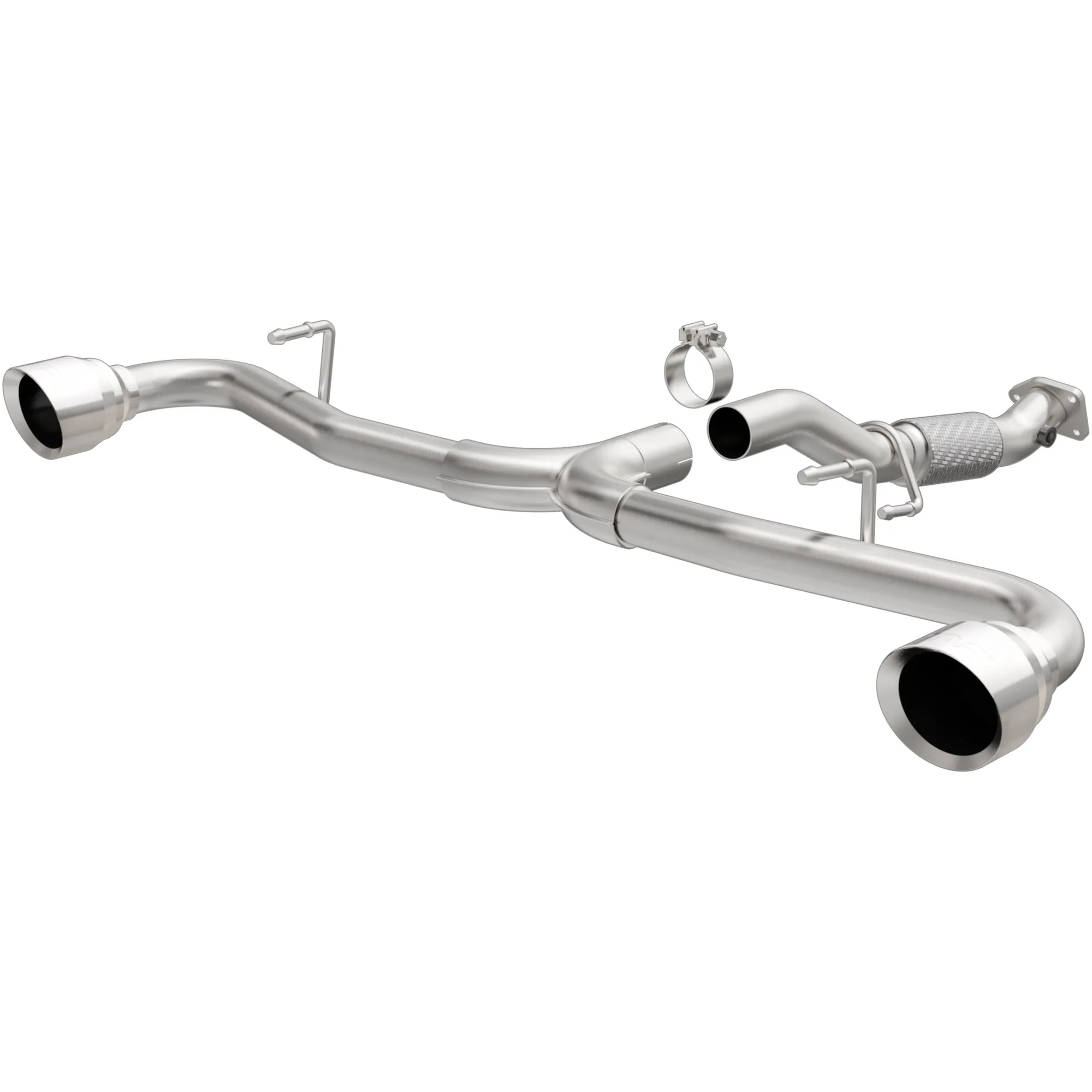
- MagnaFlow 2015-2020 Alfa Romeo 4C 1.7L Sport Series Cat-Back Performance Exhaust System 19292: MagnaFlow 2015-2020 Alfa Romeo 4C 1.7L Sport Series Cat-Back Performance Exhaust System 19292 is made of durable stainless steel and built using CNC precision robotic manufacturing techniques, backed by a limited lifetime warranty. Precision-built stainless piping and flanges hold their shape better than mild steel, so joints are less likely to distort and leak after repeated heat cycles.
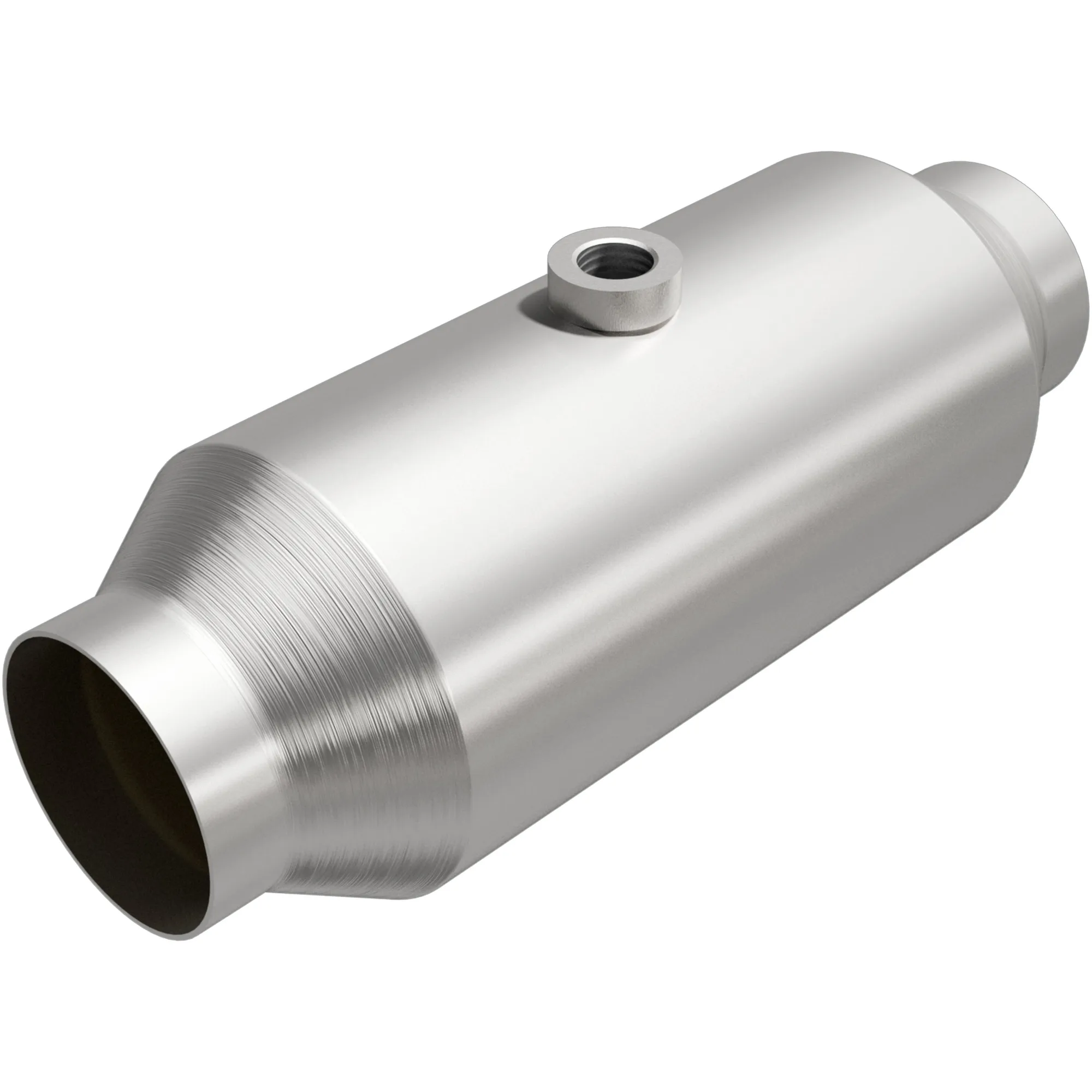
- MagnaFlow California Grade CARB Compliant Direct-Fit Catalytic Converter 5571510: MagnaFlow California Grade CARB Compliant Direct-Fit Catalytic Converter 5571510 uses free-flowing mandrel-bent tubing and corrosion-resistant stainless steel, and installs without cutting or welding. If a leak traces to a failed converter on a California emissions vehicle, a direct-fit CARB-compliant replacement restores both the seal and the legal compliance in one step.