Quick answer
A catback exhaust that keeps the factory catalytic converter and all emissions sensors in place will normally pass an exhaust emissions test, because it changes piping and mufflers after the converter. Problems start when you remove or replace the cat with a high flow unit that isn't CARB-compliant, trigger a check engine light, or create visible smoke or excessive noise. Prep by scanning for codes, confirming readiness monitors are set, and checking local noise and visual rules before you test.
You installed a catback, the car sounds great, and now the registration renewal says emissions test required. The good news is that most catback systems sit downstream of the catalytic converter, so they don't change what comes out of the tailpipe in a way a sniff test usually cares about. The bad news is that inspections also check for check engine lights, readiness monitors, and sometimes visual presence of emissions equipment.
This guide separates what actually causes a failure from what usually doesn't, gives you a prep routine that takes about 20 minutes, and tells you when to stop modifying and choose a different path. It applies to common platforms like the 2022+ Honda Civic and 2023+ Acura Integra, but the logic holds for any modern car.
What an emissions test actually checks
Most state or regional programs run one of two tests: a tailpipe sniff test that measures hydrocarbons, carbon monoxide, and nitrogen oxides, or an OBD-II scan that looks for stored trouble codes and readiness monitor status. Many areas do both. The sniff test cares about what leaves the tailpipe, so a catback that keeps the factory cat usually passes because the converter is doing the same job it did before.
The OBD-II side is where aftermarket exhaust work can bite you. If you removed the catalytic converter, installed a test pipe, or used a high flow cat that isn't certified for your state, the rear oxygen sensor may read differently and set a P0420 catalyst efficiency code. That code alone can fail an inspection even if the tailpipe is clean.
- Check your state or province rules first: some only do OBD-II, some do tailpipe, some do both.
- A check engine light is an automatic fail in most OBD-II inspection programs.
- Readiness monitors must be 'ready' or 'complete' before the scan; clearing codes right before a test can leave them incomplete.
Catback vs. high flow cat: which one triggers failures
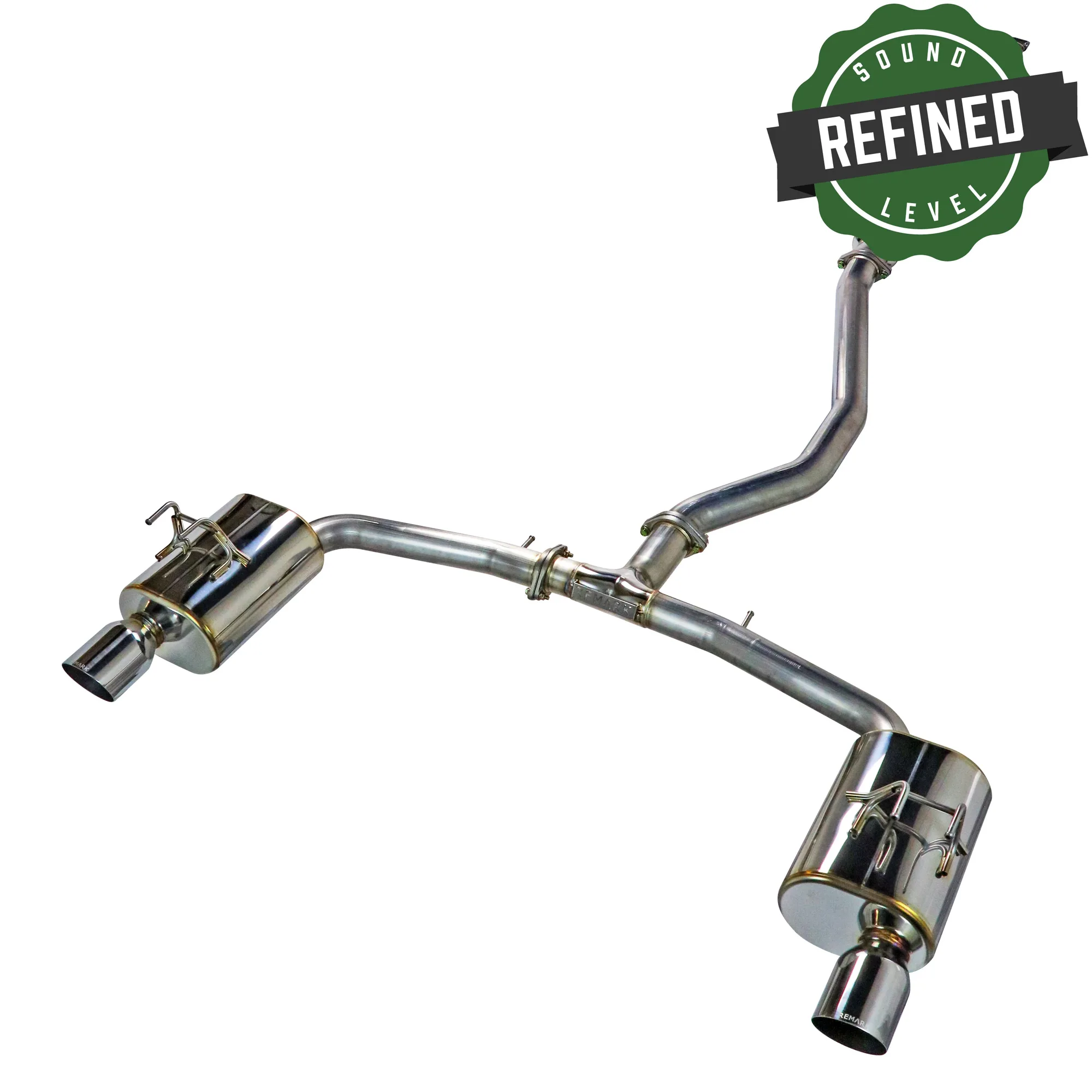
A catback replaces the piping and mufflers from the catalytic converter back. It does not change the converter itself, so on a properly running engine it typically doesn't change emissions enough to fail a tailpipe test. That's why catback emissions concerns are usually about noise and visual checks, not the actual gas readings. If your catback is a full 304 stainless system that bolts to the factory front overpipe, like the Sports Touring Catback Exhaust for the 2022+ Civic Si, EX, and Touring, the emissions-relevant hardware stays stock.
A high flow cat replaces the factory converter with a less restrictive unit. Some are legal in certain states and some are not, and the difference often comes down to CARB approval or an EPA-compliant stamp. A high flow cat emissions failure usually happens because the unit isn't certified for your area, or because the rear O2 sensor reads outside the expected range and sets a code. If you need to pass a strict visual or OBD-II inspection, a high flow cat is the part to be most careful with.
- Keep the factory cat if you want the least risk at test time.
- If you run a high flow cat, confirm it is legal for your state and that no P0420 code is pending.
- A catback with a resonator, like REMARK's Sports Touring design, can keep noise in check for areas with sound limits.
Symptoms, likely causes, and fixes
If you fail, the fix depends on the symptom. A check engine light with a P0420 code points to the converter or rear O2 sensor, not the catback. A failed tailpipe reading on hydrocarbons often means the engine is running rich or misfiring, which is a tune or maintenance issue. A failed visual inspection usually means a missing cat, a non-certified high flow unit, or a missing O2 sensor bung.
Corrective action should match the cause. For a P0420 with a factory cat still in place, check for exhaust leaks before the rear O2 sensor and confirm the sensor is functioning. For a high flow cat that won't pass, the realistic options are reinstalling the factory cat for test day or choosing a certified unit. For a noise fail, adding a resonator or a quieter axleback section is often enough. Don't clear codes and drive straight to the test; the readiness monitors need drive cycles to set.
- Scan for pending and stored codes before you go; pending codes can still fail you.
- Fix exhaust leaks before the rear O2 sensor, as they can skew catalyst efficiency readings.
- If you have a tune, confirm it doesn't disable or alter emissions-related monitors.
Emissions test prep: a 20-minute routine
Start with an OBD-II scan. You want no stored codes, no pending codes, and all readiness monitors set except maybe evap on some cars. If you recently cleared codes or disconnected the battery, drive a mixed cycle of city and highway for a few days to let monitors complete. Then check for visible smoke at idle and rev, and listen for exhaust leaks or rattles that an inspector might flag.
Next, confirm your exhaust hardware is present and secure. That means the cat is there, O2 sensors are plugged in, and the system is not leaking at flanges or slip joints. If you have a valved or adjustable exhaust, set it to the quiet mode if your area has a sound limit. Finally, check tire pressures and make sure the gas cap seals, because a loose cap can set an evap code that fails the scan.
- Drive at least 50-100 miles of mixed driving after any code clear or battery disconnect.
- Check for exhaust leaks at the front pipe and midpipe flanges, especially after a recent install.
- If your car has a loud cold start, let it idle down before the test to avoid a noise flag.
When to stop modifying and choose another path
If you live in a state with strict visual and OBD-II checks, and you want a catless or non-certified high flow setup, the honest answer is that you may not pass without reinstalling stock parts for test day. That's a decision point: either keep a stock cat and front pipe on the shelf for inspections, or choose a catback-only build that leaves the emissions hardware alone. Chasing a passing result with sensor spacers or a tune that masks codes is risky and can fail a visual check.
For most daily drivers, the practical path is a catback that keeps the factory converter, a resonator if noise is a concern, and a scan before every test. That gives you sound and a little performance without turning emissions testing into a yearly project. If you need more flow than that, talk to a local shop that knows your state's rules before you buy parts.
- Keep your stock cat and front pipe if you run a high flow unit and need to pass annually.
- Avoid sensor spacers or code-masking tunes as a long-term solution; they can fail visual inspections.
- If you're unsure, ask your inspector what they check before you modify further.
Diagnosis: match the failure to the fix
- Check engine light with P0420 after a catback: The catback itself is unlikely to cause this because it sits after the converter. Look for an exhaust leak before the rear O2 sensor, a failing sensor, or a converter that was already marginal. Fix the leak or sensor first. If the factory cat is still in place and in good condition, repair the leak or sensor and re-check readiness.
- Failed tailpipe reading with a high flow cat: A non-certified high flow cat can increase emissions enough to fail a sniff test, and it may set a catalyst efficiency code. Confirm the unit is legal for your state and that no codes are pending. If it still fails, reinstall the factory cat for test day or switch to a certified high flow unit.
- Visual or noise inspection failure: Missing cat, unplugged O2 sensors, or a system that exceeds local sound limits will fail a visual or noise check even if the tailpipe is clean. A resonated catback like the Sports Touring design can help with tone. If noise is the issue, add a resonator or run a quieter axleback section; if the cat is missing, you need a stock or certified replacement.
Products that keep emissions hardware intact
- Sports Touring Catback Exhaust - Honda Civic Si / EX / Touring FE1 [2022+]: Full 304 stainless steel catback with dual oval mufflers and 4-inch slant cut tips; the 3-inch resonated midpipe bolts directly to the OEM front overpipe and necks down to mate to the OEM flange. Because it connects to the factory front overpipe and leaves the catalytic converter in place, this is a lower-risk choice for emissions testing than a system that replaces the cat. The resonated midpipe also helps control noise for areas with sound limits.
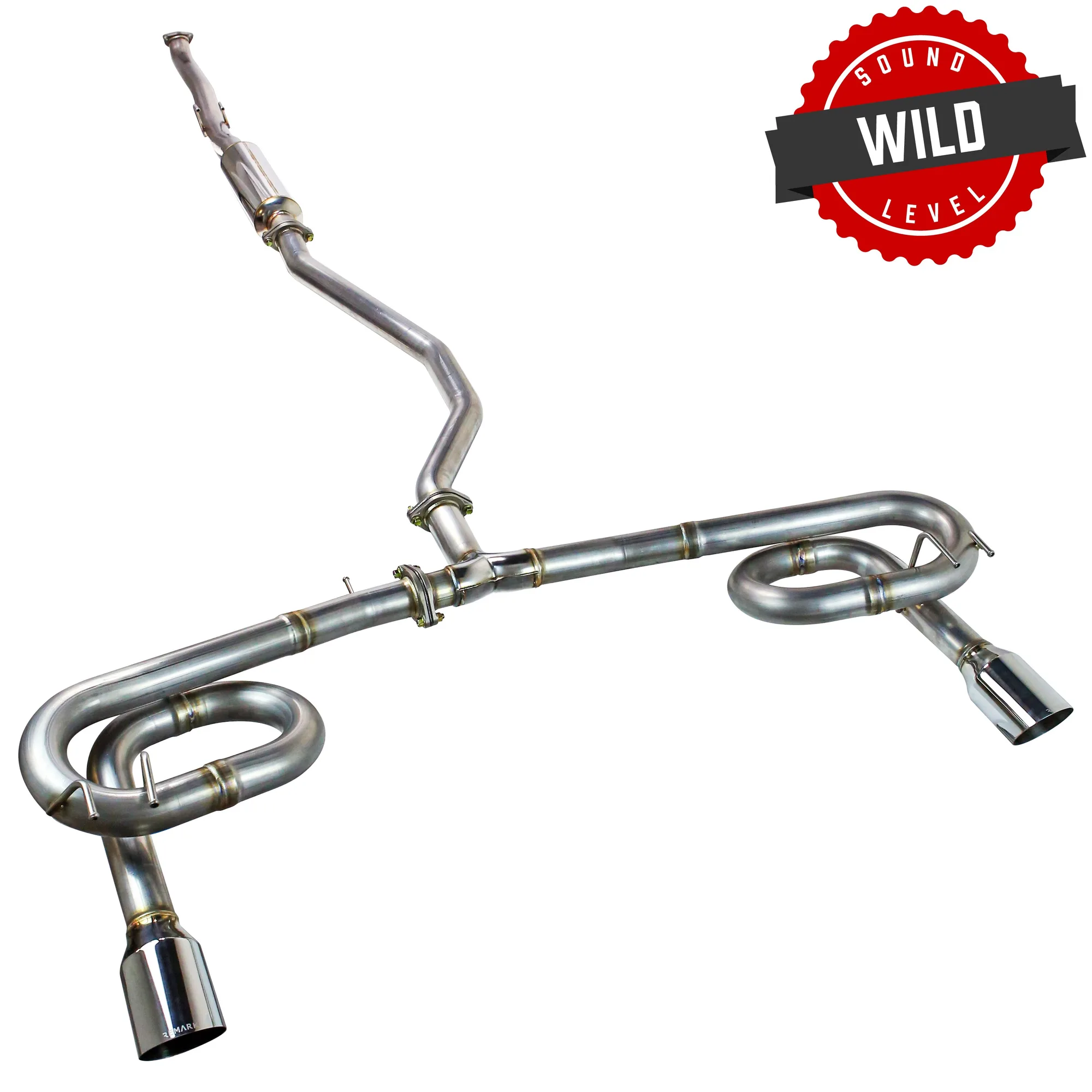
- Link Loop Catback Exhaust - Honda Civic Sport Sedan [2022+]: Developed for the 2022+ Civic Sport Sedan with the 2.0L NA engine; converts the original single exit to a dual exit with 4.0-inch tips, eliminates the OE muffler, and is on the louder side of the spectrum. This system keeps the factory catalytic converter, so the emissions-relevant hardware stays stock, but the louder tone means you should check local noise limits before an inspection. If your area enforces sound, this may need a resonator or a quieter setup for test day.
Emissions testing doesn't have to be a barrier to enjoying your exhaust. Keep the factory catalytic converter, choose a catback that bolts to the stock front pipe, scan for codes before you go, and let the readiness monitors set. If you want more flow than that, keep stock parts for test day or verify your local rules first. A few minutes of prep beats a failed inspection and a re-test fee.