Quick answer
Exhaust rust starts when moisture, salt, and heat cycles attack unprotected steel. Surface rust on hangers or flanges is often harmless, but flaking scale, pinholes, or a hollow rattle mean the part is failing. Replace rusted mufflers, pipes, or converters before leaks reach the cabin or damage nearby components. Stainless steel exhaust systems resist corrosion longer and are the most reliable prevention step.
Exhaust rust is rarely a sudden failure. It builds quietly through short trips, winter road salt, and condensation that never fully evaporates. By the time you hear a new drone or see brown flakes under the car, the damage is usually past the point of a simple cleanup.
This guide separates normal surface rust from structural corrosion, explains which prevention habits actually work, and tells you when to stop patching and replace the part. It covers both stock replacement exhaust and stainless steel performance options so you can choose based on how long you plan to keep the vehicle.
What Causes Exhaust System Corrosion
Exhaust systems live in one of the harshest environments on a vehicle. They cycle from ambient temperature to several hundred degrees and back every time you drive, and that expansion and contraction works moisture into seams, welds, and hanger rods. Condensation is a normal byproduct of combustion, so even a perfectly running engine produces water inside the pipes.
Road salt, brine, and coastal air accelerate the process. Salt holds moisture against bare steel and breaks down the oxide layer that would otherwise slow rust. Short trips make it worse because the exhaust never gets hot enough, long enough, to boil that moisture out. The parts that fail first are usually the muffler, the rear pipe, and flange areas where water pools.
- Short, repeated trips trap condensation; a longer drive now and then helps dry the system.
- Winter road salt is the single biggest accelerator of exhaust rust in cold climates.
- Flanges, hangers, and muffler seams corrode before the straight sections do.
Symptoms: Surface Rust vs. Structural Failure
Light brown discoloration on a muffler or pipe is normal and does not mean the part is about to fail. Structural corrosion looks different: the metal scales, flakes, or feels soft when you press it with a screwdriver. A rusted exhaust pipe often develops pinholes that whistle or hiss at idle, and a muffler can rot from the inside out until it rattles like something is loose inside.
Pay attention to where the rust is, not just how much you see. Scale on a thick cast flange is less urgent than pitting on a thin pipe wall. If a hanger has rusted through, the whole system can shift and stress the remaining joints, turning a small repair into a full replacement.
- Surface rust: uniform brown color, metal still solid under a screwdriver.
- Structural rust: flaking, pitting, soft spots, or holes that leak exhaust.
- A rattling muffler often means internal baffles or the outer shell have corroded.
Exhaust Rust Prevention That Actually Works
You cannot stop rust forever on a daily driver, but you can slow it down significantly. The most effective habit is driving long enough to fully heat the exhaust at least once a week. That burns off condensation that would otherwise sit in the muffler and low spots. If you live where roads are salted, rinse the underside of the car, including the exhaust, after winter storms.
When a part does need replacement, choose materials that match your climate and how long you plan to keep the vehicle. Aluminized steel is affordable but has a shorter service life in salt-heavy regions. Stainless steel exhaust benefits include much better resistance to corrosion and heat, which is why it is common on performance systems and long-life replacements.
- Drive at highway speed for 20–30 minutes regularly to evaporate trapped moisture.
- Rinse road salt off the exhaust and undercarriage when temperatures are above freezing.
- Inspect hangers and flanges yearly; catching rust there prevents bigger failures.
When to Replace a Rusted Muffler or Pipe
Replace the part when rust has created a leak, a rattle, or a soft spot you can push through. A rusted muffler replacement is usually straightforward because mufflers are bolt-on or clamped in place. Pipes are similar if the flanges and hangers are still solid, but once the surrounding hardware is scaled, replacing the whole section is often faster and cheaper than trying to save it.
If the rust is limited to a hanger or a heat shield, a small repair can buy time. If the converter, resonator, or multiple pipe sections are involved, a complete direct-fit kit is the more reliable path. Direct-fit kits include the gaskets and clamps you need and are engineered to meet or exceed original specifications, which removes the guesswork of cutting and clamping universal parts.
- Replace when you find holes, deep pitting, or a rattle that will not go away.
- Repair only when rust is isolated to a hanger, shield, or clamp.
- Choose a direct-fit kit when more than one section is compromised.
Stainless Steel Exhaust Benefits and Material Choices
Stainless steel resists corrosion because it contains chromium, which forms a protective oxide layer on the surface. That layer slows rust even when the metal is exposed to moisture and salt. The tradeoff is cost: stainless systems typically cost more up front than aluminized steel, but they often outlast the vehicle in harsh climates.
For a daily driver in a salt state, stainless is usually worth it. For a fair-weather car, a quality aluminized replacement can be a reasonable budget choice. If you are upgrading for sound and flow at the same time, a stainless performance system gives you both corrosion resistance and a freer-flowing design.
- Stainless steel is the best defense against long-term exhaust system corrosion.
- Aluminized steel is acceptable in dry climates but fails faster with road salt.
- Performance systems often use stainless because it handles both heat and moisture.
Rust Diagnosis Checklist
- Surface rust only: Brown discoloration with solid metal underneath. Clean it lightly and monitor at each oil change. No replacement needed yet; keep driving and recheck in a few months.
- Flaking or soft metal: Scale, pitting, or a screwdriver pushes through the pipe or muffler wall. Exhaust may hiss or leak. Replace the affected section; a patch will not hold on thin, compromised metal.
- Rattle or hollow sound: Internal baffles or the muffler shell have corroded and separated. The part is structurally failing. Replace the muffler; choose stainless if you want to avoid a repeat failure.
- Multiple sections rusted: Converter, resonator, and pipes all show heavy corrosion, and the hardware is scaled. Use a direct-fit kit instead of chasing individual parts; it includes the gaskets and clamps.
Replacement Options That Resist Rust
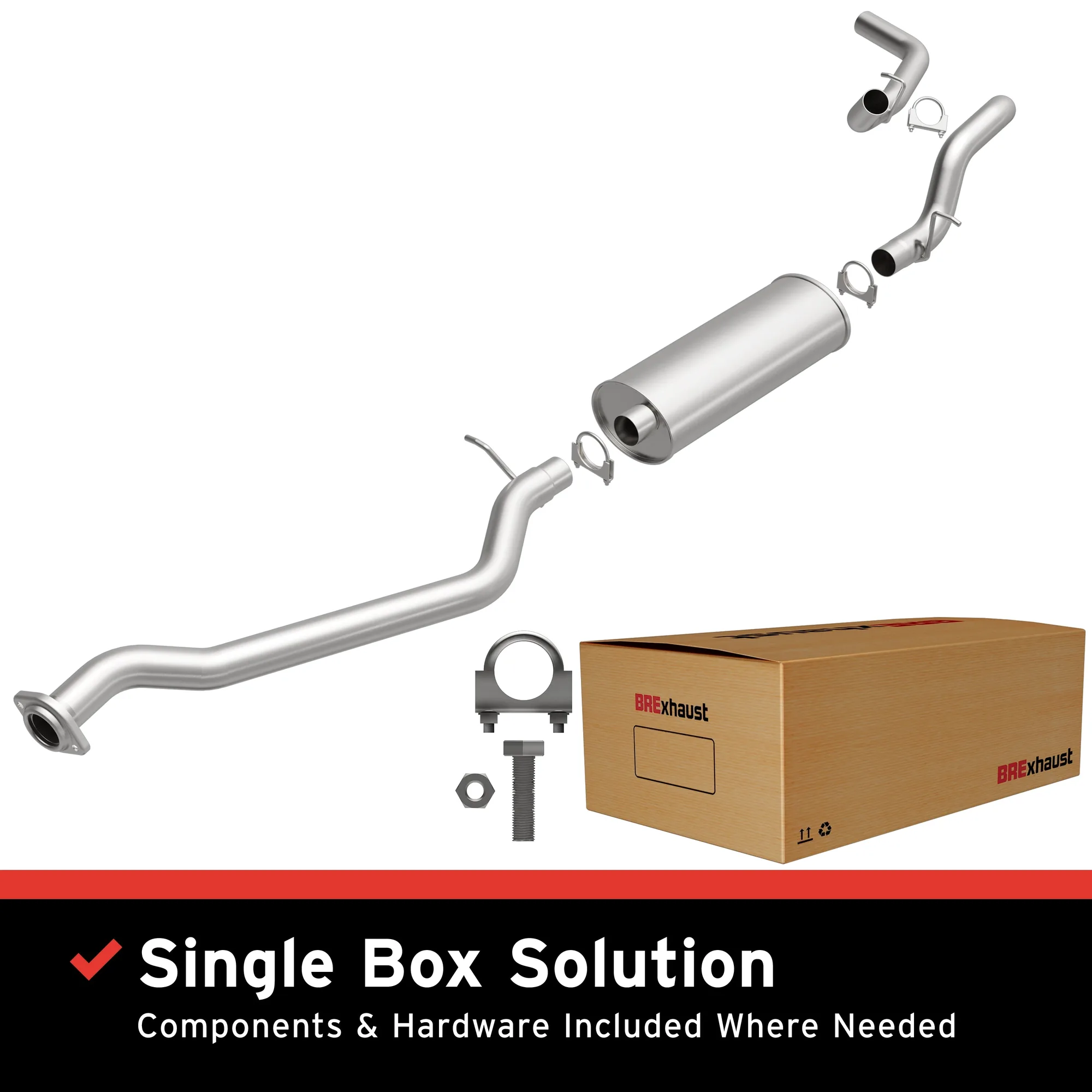
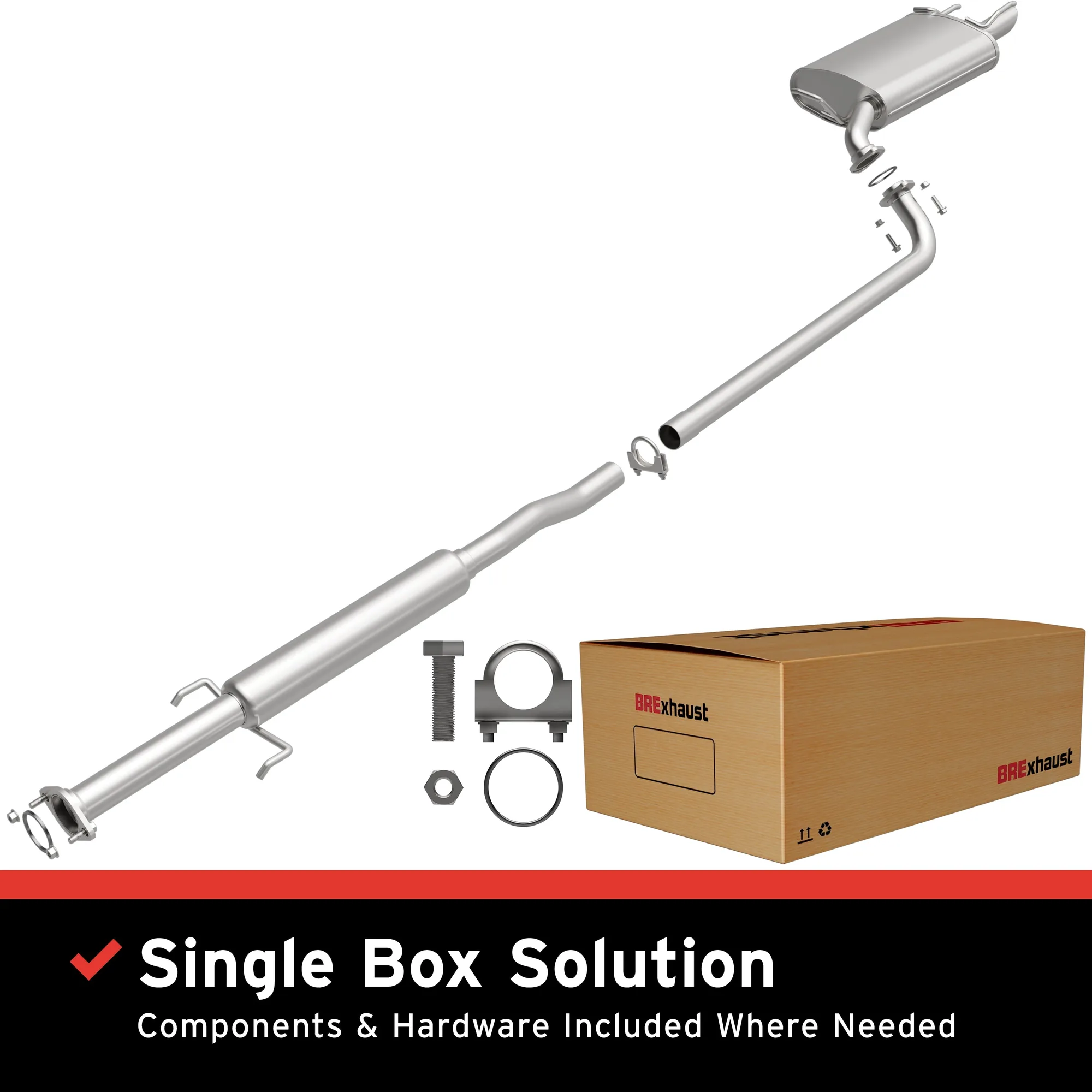
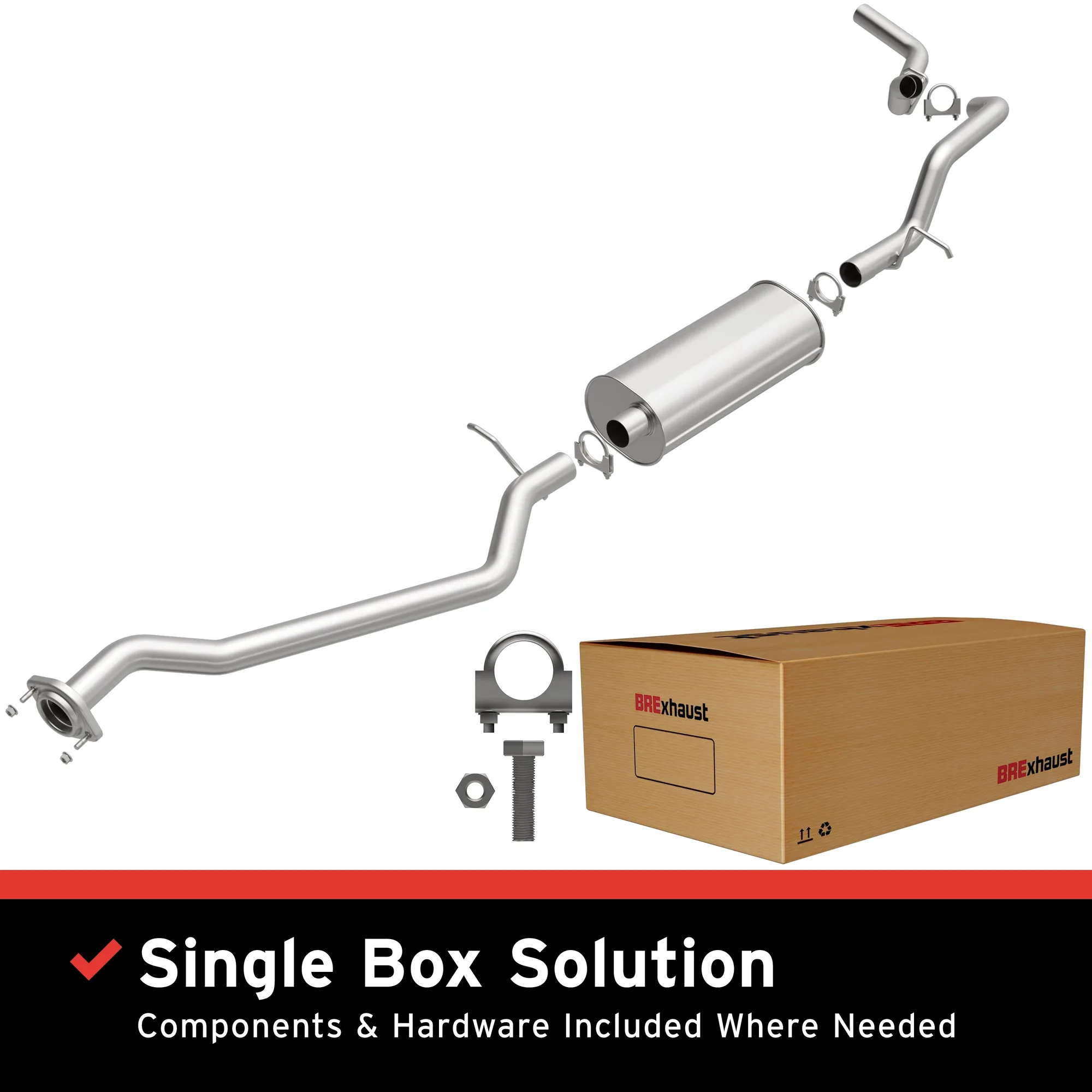
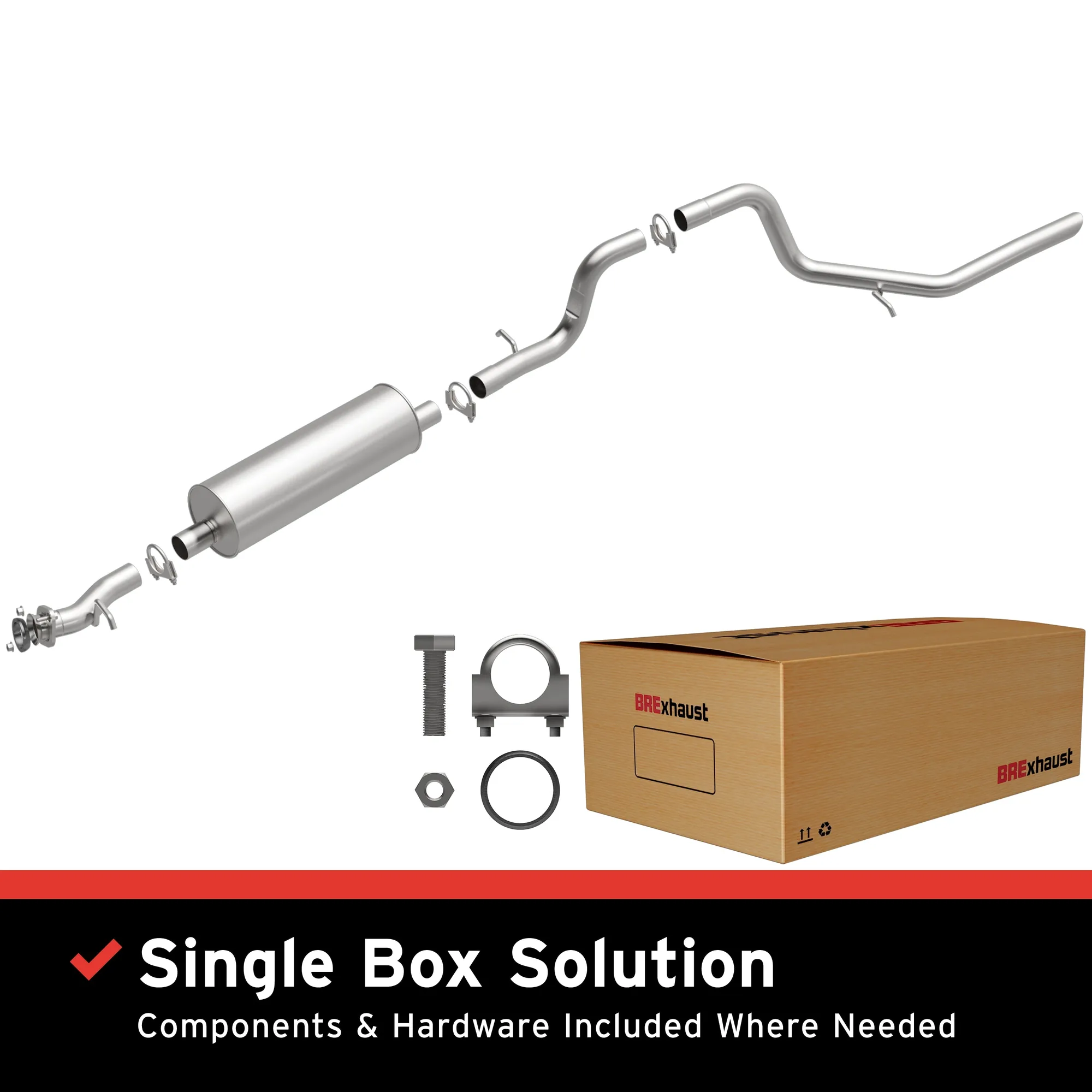
- https://magnafloweb.com/products/106-0503-brexhaust-direct-fit-exhaust-system-kit-106-05-6258dd5fa6ea7d18ca1f9147-2681681https://magnafloweb.com/products/brexhaust-direct-fit-exhaust-system-kit-2-73fd2fa124aab8b8c8cdc546-2677833https://magnafloweb.com/products/brexhaust-direct-fit-exhaust-system-kit-3-602d358c0030bf5eb23a2b57-2677839https://magnafloweb.com/products/brexhaust-direct-fit-exhaust-system-kit-4941c9d01f498b711561ed6e-2677844BRExhaust Direct-Fit Exhaust System Kit 106-0503: BRExhaust Direct-Fit Replacement Exhaust Kit 106-0503 takes the guesswork out of replacing your exhaust system while providing a reliable and high-quality alternative to the OEM exhaust. You will find all of the gaskets and clamps needed to get the job done in the carefully packaged box. 106-0503's precision mandrel bent pipes facilitate superior exhaust flow compared to the crush-bent pipes commonly used in the aftermarket. A complete direct-fit kit with gaskets and clamps replaces rusted sections in one job and avoids reusing corroded hardware that would fail again.
- MagnaFlow 5 in. x 8 in. x 18 in. Oval Straight-Through Performance Exhaust Muffler Offset/Center: The MagnaFlow 5 X 8in. Oval Straight-Through Performance Exhaust Muffler 12254 is engineered to enhance your ride with a healthy helping of our signature exhaust sound and dyno-proven performance thanks to its free-flowing straight-through perforated stainless steel core wrapped in stainless steel mesh and acoustic fiber fill. The reversible, universal 2/2in. diameter inlet/outlet Straight-Through layout allows you to configure it for your specific application. If your muffler has rusted through but the pipes are still solid, a stainless straight-through muffler is a durable replacement that also improves flow and sound.
- MagnaFlow Street Series Performance Exhaust System 15816: The MagnaFlow Ford Mustang Street Series Crossmember-Back Performance Exhaust System 15816 brings enhanced engine sound and dyno-proven performance to your 3.3L, 4.1L, 4.7L, 5.0L, 5.8L, 6.4L, 7.0L Ford Mustang with a healthy helping of our deep, resonant signature exhaust note at Moderate exterior and Mild interior sound levels. Thanks to its durable, corrosion resistant stainless steel design, this Ford Mustang exhaust is built to last. A stainless crossmember-back system replaces the rust-prone factory exhaust with a corrosion-resistant design and a moderate sound level that stays comfortable inside.
Exhaust rust is a slow process you can manage with better driving habits, seasonal rinsing, and material choices. When corrosion reaches the point of leaks, rattles, or soft metal, replace the part with a direct-fit or stainless option rather than patching it. That keeps the repair reliable and protects the rest of the system from the same fate.