Quick answer
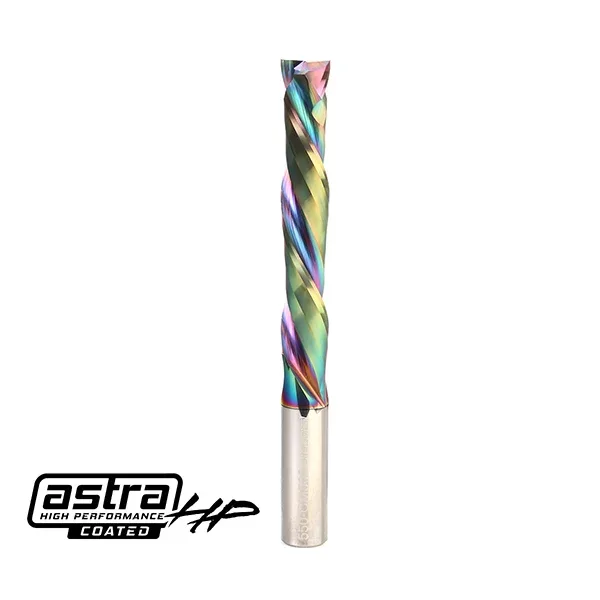
For deep 3D contours and rounded profiles, choose the 1/2″ extra-long ball nose end mill; for deep mortises, pockets, and straight-walled cuts, choose the 1/2″ extra-long square end mill; for clean top and bottom edges in plywood and laminates, choose the 1/2″ extra-long compression end mill. All three share a 3″ length of cut, so geometry and overall length decide the job.
The real trade-off is reach versus rigidity
Every extra-long end mill trades stiffness for reach. The 3″ length of cut is the common ground here; the difference is overall length. The 6″ OAL ball nose gives the most reach, while the 5″ OAL square and compression bits reduce deflection because there is less unsupported tool hanging below the collet. If your workholding allows a shorter bit, the shorter bit will usually cut cleaner.
That trade-off matters most in deep passes. A long reach CNC end mill can reach the bottom of a deep pocket, but any side load pushes the tip off course. Use the shortest overall length that clears your stock and fixtures, and take lighter radial passes as depth increases.
Where each geometry earns its place
Ball nose geometry leaves a rounded bottom and is the right choice for contoured 3D surfaces, cove-like profiles, and deep rounded pockets. Square geometry leaves a flat bottom and sharp internal corners, which suits mortises, straight-walled pockets, and joinery. Compression geometry combines up-cut and down-cut flutes so the top and bottom edges of plywood and laminates stay clean through a deep pass.
The trade-off is that no single geometry does all three well. A ball nose cannot cut a flat-bottomed mortise cleanly, a square bit cannot produce a rounded contour without stepping over, and a compression bit is wasted on solid wood where edge tear-out is not the concern.
When the 6″ OAL ball nose is worth the extra reach
The 6″ overall length is the differentiator when your spindle or fixture blocks access to a deep contour. That extra inch of reach compared with the 5″ bits comes with more deflection risk, so reserve it for jobs where a 5″ bit physically cannot reach. If a 5″ bit clears the work, the shorter tool is the safer default.
Trade-off decision rules
- Ball nose vs square for deep pockets: If the pocket bottom must be flat with sharp internal corners, use the square end mill. If the pocket is rounded or contoured, use the ball nose. Do not substitute one for the other and expect the same floor finish. Check the pocket drawing for a flat floor before choosing geometry.
- 6″ OAL vs 5″ OAL reach: Measure from the collet face to the deepest point of cut. Choose the 6″ ball nose only when a 5″ bit cannot reach; otherwise the 5″ square or compression bit reduces deflection. A shorter overall length is a rigidity gain, not a compromise.
- Compression for deep plywood passes: Use the compression end mill when a single deep pass must leave clean top and bottom edges in plywood or laminate. For solid wood or roughing, the square bit is the simpler choice. Compression geometry pays off only when edge quality on both faces matters.
Product facts
-
1/2″ Extra-Long Ball Nose End Mill – 3″ Cut – 6″ OAL: 6″ overall length with a 3″ length of cut, solid carbide, AstraHP coated. This is the longest-reach option here, so it suits deep 3D contours and rounded pockets where shorter bits cannot clear the fixture.
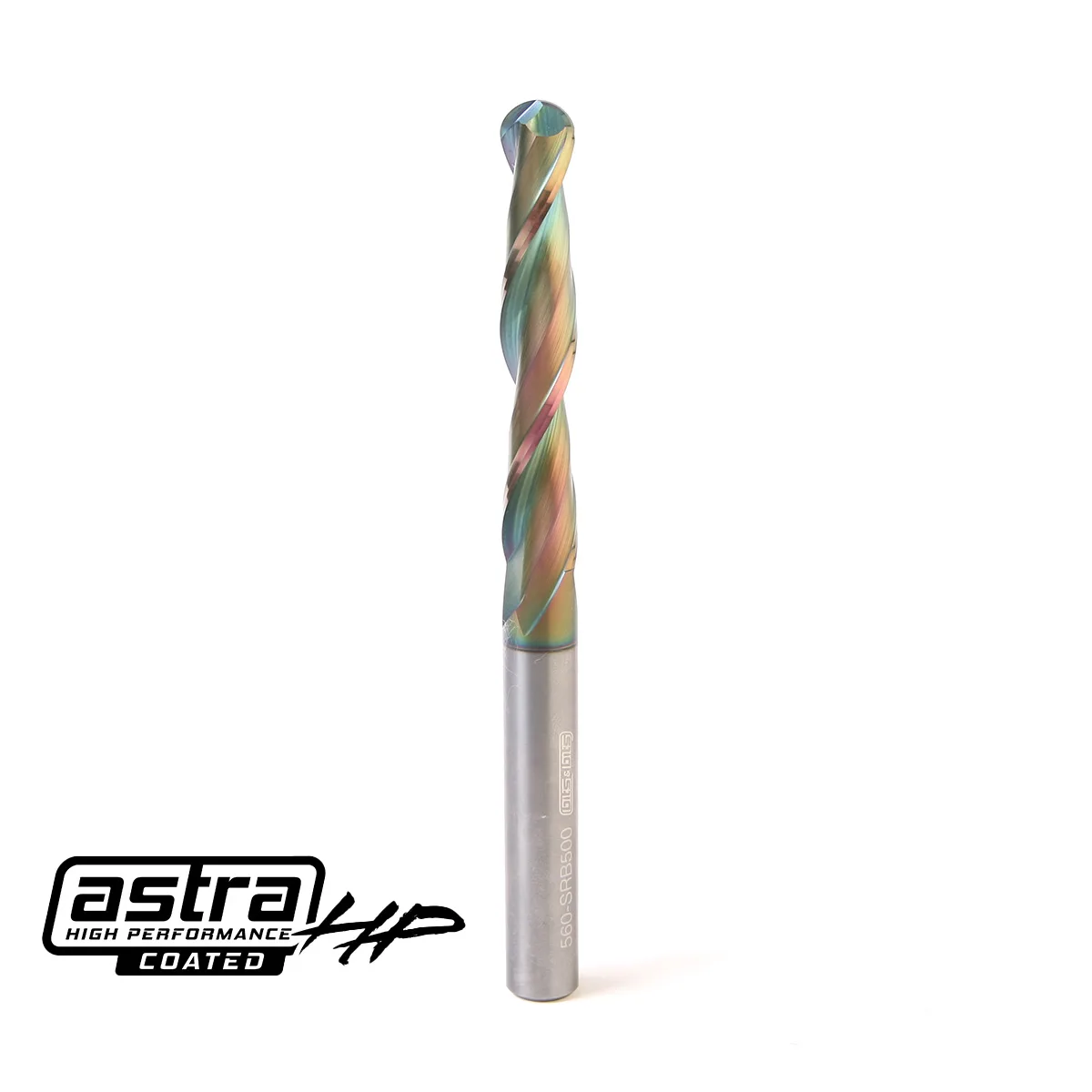
1/2″ Extra-Long Ball Nose End Mill – 3″ Cut – 6″ OAL
-
1/2″ Extra-Long End Mill – 3″ Cut – 5″ OAL: 5″ overall length with the same 3″ length of cut; the shorter overall length reduces deflection. For deep mortises and flat-bottomed pockets, this square bit gives the same cutting depth with less flex than a longer tool.
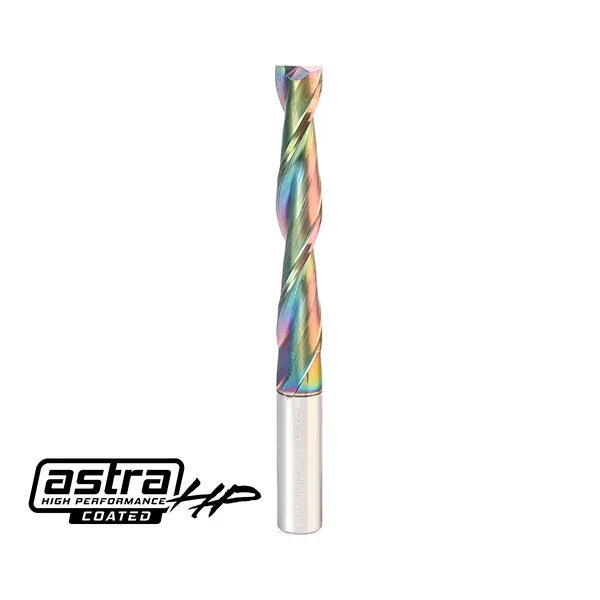
1/2″ Extra-Long End Mill – 3″ Cut – 5″ OAL
-
1/2″ Extra-Long Compression End Mill – 3″ Cut – 5″ OAL: 5″ overall length compression end mill with AstraHP coating, designed for clean passes in wood, plywood, and laminates. Choose this when deep passes in plywood or laminate must leave both top and bottom edges clean without a second finishing operation.
Which bit fits your job
Best for
- CNC users cutting deep 3D contours or rounded pockets who need maximum reach
- Woodworkers cutting deep mortises, flat-bottomed pockets, or straight joinery
- Shops cutting plywood or laminates where top and bottom edges must stay clean in one deep pass
Not for
- Shallow cuts where a standard-length bit would be more rigid
- Jobs that require a flat-bottomed mortise from a ball nose bit
- Roughing solid wood where edge tear-out is not a concern