Quick answer
Clean your F3 Flashlight Copper gently with a soft cloth and mild soap, dry it thoroughly, and apply a thin coat of wax or oil to slow patina. Avoid harsh polishes and abrasive pads that can scratch the copper or remove the protective finish.
Why copper needs a different care routine
Copper reacts with air, moisture, and skin oils to form a patina—a natural darkening that many EDC enthusiasts enjoy. Unlike aluminum or titanium, copper is softer and more prone to scratches, and it can develop verdigris (green spots) if left damp. Your F3 Flashlight Copper will age uniquely, but without basic upkeep, patina can become uneven or turn into corrosion in crevices.
The F3’s copper body is also a functional part of the light—it helps dissipate heat. Keeping the surface clean and free of heavy oxidation ensures the light continues to look good and function reliably.
When to polish and when to let patina grow
There’s no single right answer: some prefer a bright, polished look, while others like the character of a darkened patina. If you want to preserve the original shine, polish lightly every few weeks. If you enjoy the aged look, simply clean off dirt and oils and let the patina develop. Avoid over-polishing, which can wear down edges and remove the protective clear coat if your F3 has one (check your specific model).
Step-by-step copper care routine
- Wipe down after each carry: Use a soft microfiber cloth to wipe the copper body and lens area, removing fingerprints and skin oils. Common mistake: using paper towels or rough fabric, which can leave micro-scratches. Keep a dedicated cloth in your EDC pouch for quick wipes.
- Deep clean every few weeks: Mix a drop of mild dish soap in warm water. Dampen a soft cloth and gently rub the copper surface. Avoid submerging the light or getting water into the emitter or switch. Dry immediately with a clean cloth. Common mistake: using abrasive cleaners or scrubbing pads—these remove patina unevenly and scratch the metal. Never use vinegar or ammonia-based cleaners; they can discolor copper.
- Address green spots (verdigris) promptly: If you see green residue in crevices, dip a cotton swab in a little lemon juice or white vinegar, dab the spot, then wipe clean and dry. Follow with a light polish if needed. Common mistake: ignoring verdigris—it can spread and pit the copper over time. Rinse the swab area with a damp cloth to neutralize acids, then dry completely.
- Polish only when desired: To restore shine, use a non-abrasive copper polish (like a jeweler’s cloth) and rub gently in one direction. Work in small sections and buff off residue. Common mistake: over-polishing or using power tools—this removes too much material and can round edges. Polish at most once a month if you want a bright finish; otherwise skip.
- Protect with wax or oil: Apply a very thin coat of Renaissance wax or a drop of mineral oil to the clean, dry copper. Buff with a soft cloth. This slows oxidation and adds a subtle sheen. Common mistake: applying too much—excess wax attracts dust and feels greasy. Reapply protection after every deep clean or polish.
- Store and carry smartly: Keep your F3 in a pouch or pocket away from keys and coins to minimize scratches. For long-term storage, clean and wax the light, then place it in a dry area with a silica gel pack. Common mistake: storing in a damp place or leaving batteries inside for months—remove the 14500 cell if not used for extended periods. Check stored lights every few months for patina or battery leakage.
Product facts
-
F3 Flashlight Copper: Offered with Samsung LH351D 5000K or Nichia 219c 4000K LED options and a Qlite driver with low-medium-high operation. Emitter choice affects tint and heat output; the simple driver means fewer mode gaps, so you can focus on maintaining the copper body without worrying about complex electronics.
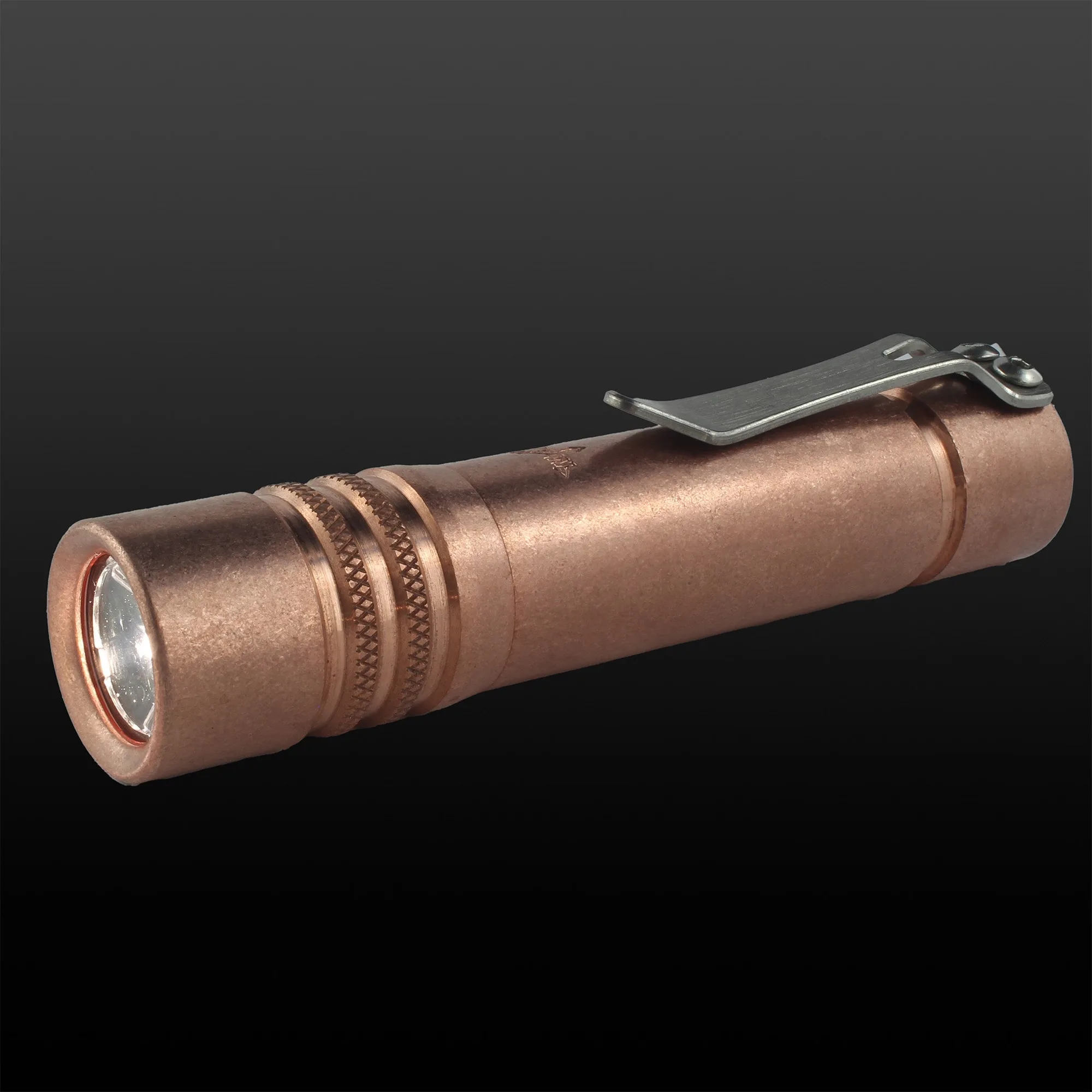
F3 Flashlight Copper