What you are actually buying
The Iconic Australian Fairy Bread Tea Towel is a printed kitchen towel built around a specific memory: birthday tables, white bread, butter and a mountain of rainbow sprinkles. The design is described as a vibrant tribute to one of Australia's most iconic treats, designed in Australia and intended to celebrate homegrown culture.
That framing matters for the buying decision. This is not a neutral linen tea towel you buy purely for drying performance. It is a souvenir and gift object with a strong point of view, and the record positions it as durable, practical and beautiful in everyday kitchens while also doubling as home décor wall art.
The record behind the decision
-
TEA TOWEL - ICONIC AUSTRALIAN FAIRY BREAD: Made from high-quality, absorbent fabric This is the only fabric specification supplied. It supports everyday kitchen use, but it does not confirm fibre content, weight, dimensions or washing instructions.
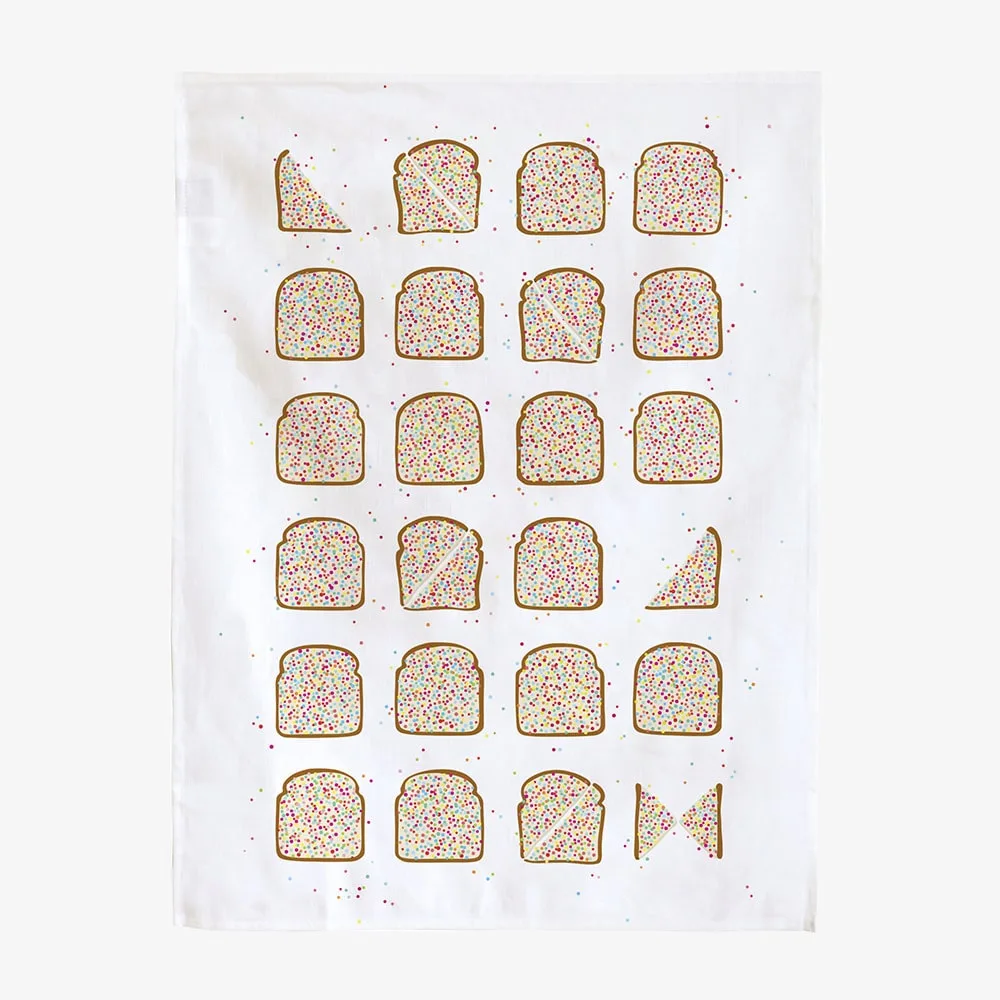
TEA TOWEL - ICONIC AUSTRALIAN FAIRY BREAD
-
TEA TOWEL - ICONIC AUSTRALIAN FAIRY BREAD: Designed in Australia, celebrating homegrown culture The design origin is explicit, which is central to its appeal as an Australian food souvenir tea towel rather than a generic print.
-
TEA TOWEL - ICONIC AUSTRALIAN FAIRY BREAD: Durable, practical, and beautiful in everyday kitchens The record frames it as a working towel, not only a display piece, so you can justify using it rather than storing it.
-
TEA TOWEL - ICONIC AUSTRALIAN FAIRY BREAD: Doubles as home décor wall art This is the stated basis for styling it beyond the drying rack, including hanging or framing.
-
TEA TOWEL - ICONIC AUSTRALIAN FAIRY BREAD: The ultimate Australian gift or souvenir for a local or tourist The record explicitly supports gifting to both locals and visitors, which helps you match it to a recipient.
Where the supplied information stops
The record does not include fibre composition, towel dimensions, washing temperature, drying method, ironing guidance, colourfastness information or a care label transcription. It also does not state allergen or food-safety claims, which is expected for a textile but worth noting because the design references food.
Treat those as open questions rather than confirmed features or confirmed omissions. If you need exact measurements for a specific rail or frame, or a guaranteed washing routine, check the product page or the physical care label before you commit. For a low-cost decorative towel, that gap is usually manageable; for a carefully planned gallery wall, it is worth resolving first.
Who this towel suits, and who should choose differently
- The Australian gift sender: The record names locals and tourists as the intended audience. If you are sending a small, flat, easy-to-post piece of Australian nostalgia overseas, this fits that brief better than a bulky souvenir.
- The birthday-table nostalgic: Fairy bread is a specific childhood reference. If the recipient grew up with it, the print does emotional work that a plain striped towel cannot.
- The kitchen decorator: Because the record supports wall-art use, it can hang as a colourful feature rather than sit folded in a drawer.
- The performance-first cook: If you need a towel with confirmed fibre, weight and absorbency specifications, this record does not give you enough to compare it on those terms. Choose a towel with fuller technical detail instead.
- The minimalist kitchen: The design is described as vibrant and fun-loving. If your kitchen is restrained, this will be a deliberate pop of colour, not a background piece.
Everyday towel or display piece?
The record supports both roles, but they pull in different directions. Decide which one you want before you buy, because it changes how you treat the towel.
- As an everyday towel: Use it for drying and wiping as the record's practical framing suggests. Accept that repeated use and washing will put wear on a printed design, and that the supplied information does not include a care routine to protect the print.
- As wall art: Hang or frame it so the fairy bread design stays visible. This preserves the print and leans on the record's stated décor use, but it removes the towel from daily kitchen duty.
- As a gift: Buy it to give, not to use first. The record positions it as a ready-made Australian souvenir, and a fresh, unused towel reads better as a present.
Styling it without hiding the print
The design is the point, so place it where the full pattern can be seen rather than bunched on a rail.
- Hang it flat and full-width: A rail or hook that lets the towel fall open shows the whole design, matching the record's wall-art claim.
- Frame it for a gift: Framing turns a tea towel into a finished present. Check the towel's dimensions first, since the record does not supply them.
- Pair it with a birthday table: Use it as a backdrop for a fairy bread platter or party spread, where the print's reference makes sense in context.
- Keep it away from heavy staining tasks: The record gives no stain-removal guidance, so reserve this towel for lighter duty if you want the print to stay presentable.
The trade-off worth accepting
At a catalog price of USD 17.92 against a comparison price of USD 28.00, this sits in affordable-gift territory. The honest trade-off is that you are paying for a specific, well-executed Australian food memory rather than for documented textile specifications. The record confirms absorbent fabric, Australian design, everyday practicality and wall-art potential; it does not confirm fibre, size or care details.
If the fairy bread reference lands with your recipient, that trade-off is easy to accept. If you need a towel you can confidently bleach, boil or measure to the centimetre, the supplied information does not get you there, and a more technically documented towel is the safer buy.