Quick answer
Start with a versatile, medium-length lash in a natural or wispy style. Look for a flexible band and lightweight material to make application easier. Match the lash shape to your eye shape for the most comfortable fit.
Why lash material and band flexibility matter for beginners
The band is the part that touches your eyelid. A stiff, thick band is harder to bend to your eye curve and more likely to lift at the corners. Beginners should look for lashes with a thin, flexible band that softens after a few seconds of warming. Materials like synthetic silk or mink (faux) are lighter and less irritating than some thicker plastics.
How eye shape affects your lash choice
Round eyes can handle a longer lash at the outer corner to create a cat-eye effect. Hooded or monolid eyes often benefit from a lash that is shorter in length overall and has a bit of curl to open the eye. Small or deep-set eyes should avoid very long lashes (12mm+) across the entire band because they can overwhelm the eye and touch the brow bone.
If you have small eyes, choose a lash with a shorter length (8-10mm) and a natural taper. Avoid heavy, thick bands that take up lid space.
The trade-off between natural and dramatic styles
Natural lashes (e.g., wispy, spaced-out strands) are more forgiving to apply and blend seamlessly with your own lashes. They are ideal for daytime wear and beginners because mistakes are less visible. Dramatic styles (e.g., volume, crisscross, or winged) give a bolder look but require more precise placement and trimming. They also need stronger adhesive to hold the weight.
Decision rules for choosing your first false lashes
- Rule 1: Match lash length to your eye size: Measure your natural lash length. For small eyes, pick lashes with a maximum length of 10mm. For medium to large eyes, 10-12mm is safe. Avoid 14mm+ until you have practice. If you are unsure, start with 8-10mm natural lashes.
- Rule 2: Choose a flexible, thin band: A clear or invisible band is usually thinner and more flexible than a black plastic band. It bends to your eye curve and is easier to apply without gaps. Look for lashes labeled 'invisible band' or 'flexible band'.
- Rule 3: Prefer a wispy or spaced-out style: Wispy lashes have gaps that let your natural lashes show through, making the look softer and more forgiving. Solid strip lashes are heavier and harder to blend. Wispy lashes are the best false lashes for small eyes or beginners.
- Rule 4: Trim the lash to fit your eye width: Hold the lash against your eyelid from the inner corner to the outer corner. Trim from the outer end only (never the inner corner) in small increments until it fits without poking the inner corner. Always cut a lash shorter than you think you need.
Product facts
-
Icon: The Icon lash is described as dark and velvety, intense and tightly packed. It is available in different lengths. This style offers a dramatic, full look, which is best for intermediate users who want high impact. Beginners may find the dense band harder to trim and apply cleanly.
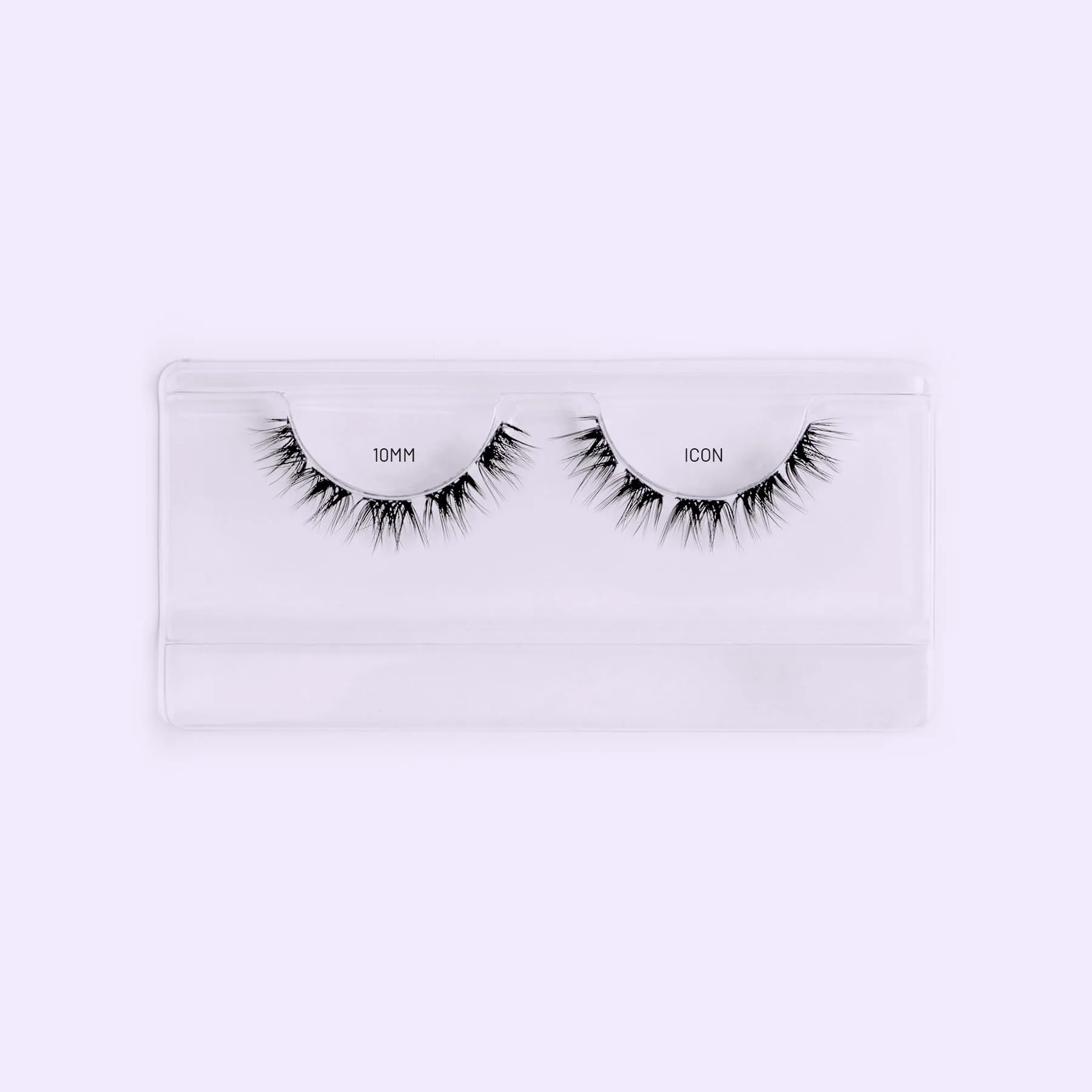
Icon
Who this advice works for
Best for
- First-time false lash buyers who want a natural, easy application
- People with small or medium eyes who need a comfortable fit
- Anyone looking for easy to apply false lashes for everyday wear
Not for
- Experienced users who want a dramatic, high-volume lash look
- People with very large or protruding eyes who need extra length or curl