Quick answer
Start by sorting the large random-cut pieces into edge, cat, and flower-field piles, then build the border first and fill in the eight cats before the background. This order keeps a small piece count puzzle manageable and makes the Easy Handling pieces work in your favor.
Why a 275-piece random cut changes your sorting plan
Random-cut puzzles do not follow a predictable grid, so pieces that look like they belong on an edge may actually sit in the middle. With only 275 pieces, you can afford to be more flexible: sort by color and subject first, then refine as you go. The large pieces show plenty of detail, which helps you match a cat's whiskers or a flower petal without guessing.
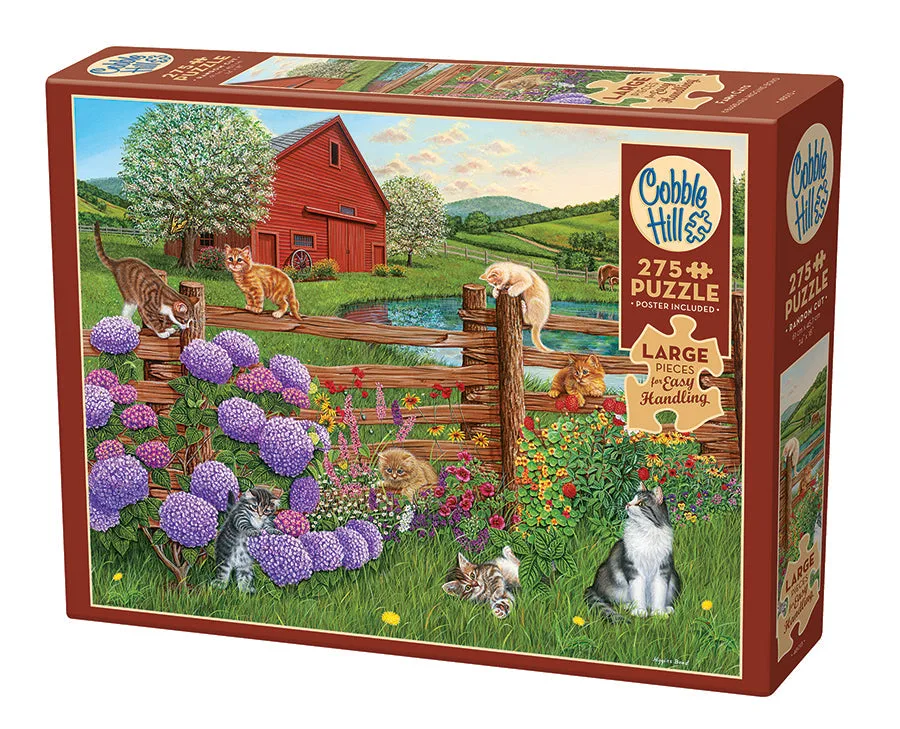
Keep the box lid or poster visible while you sort. The Farm Cats scene has eight cats spread across a flower field, so grouping by cat face, body, and background flower color gives you three clear starting points instead of one overwhelming pile.
When to work the border versus the cats first
Most beginners build the border first, and that still works here. But if the flower field has large stretches of similar color, start with the cats' faces instead to build momentum. The trade-off is that skipping the border can leave you with a loose frame later, so if you go cat-first, set edge pieces aside in a separate tray rather than mixing them back in.
Step-by-step build plan for Farm Cats
- Sort into three piles: Separate edge pieces, cat pieces (faces, paws, tails), and flower-field background pieces. Common mistake: sorting only by edge versus middle and ignoring the cat-versus-flower split, which leaves you with a large undifferentiated pile. Use small bowls or trays so the three piles stay separate as you build.
- Build the border first: Assemble the edge pieces into a frame, leaving the corners for last if they are hard to identify. Common mistake: forcing a piece into the border because it has one straight side; random-cut pieces can have straight-looking sides that belong inside. If a border piece does not fit cleanly, put it back in the middle pile rather than forcing it.
- Assemble the cats before the flowers: Start with the most distinct cat face and build outward using the fur patterns and whiskers. Common mistake: trying to place cat pieces into an incomplete flower background before the cat itself is solid. Complete one cat at a time, then connect the cats to the border.
- Fill the flower field in sections: Work the remaining background in small color clusters rather than scanning the whole field at once. Common mistake: picking up a piece, trying it in several spots, and putting it back in the wrong pile. Keep a 'not sure' tray for pieces you have tried twice; revisit it only after a section is nearly full.
- Do a final fit check: Before you consider the puzzle complete, press gently along the border and between cats to confirm every piece sits flush. Common mistake: leaving a piece slightly raised because it looks close enough. A flush surface means the puzzle is ready to display or store without pieces shifting.
Product facts
-
Farm Cats | Easy Handling 275 piece: Farm Cats is an Easy Handling 275 piece puzzle with large pieces and a random cut. The larger pieces are easier to pick up and place, which reduces hand strain and makes the puzzle a practical choice for newcomers or casual cat lovers.
Farm Cats | Easy Handling 275 piece