Start with the puzzle on the table, not in the toy box
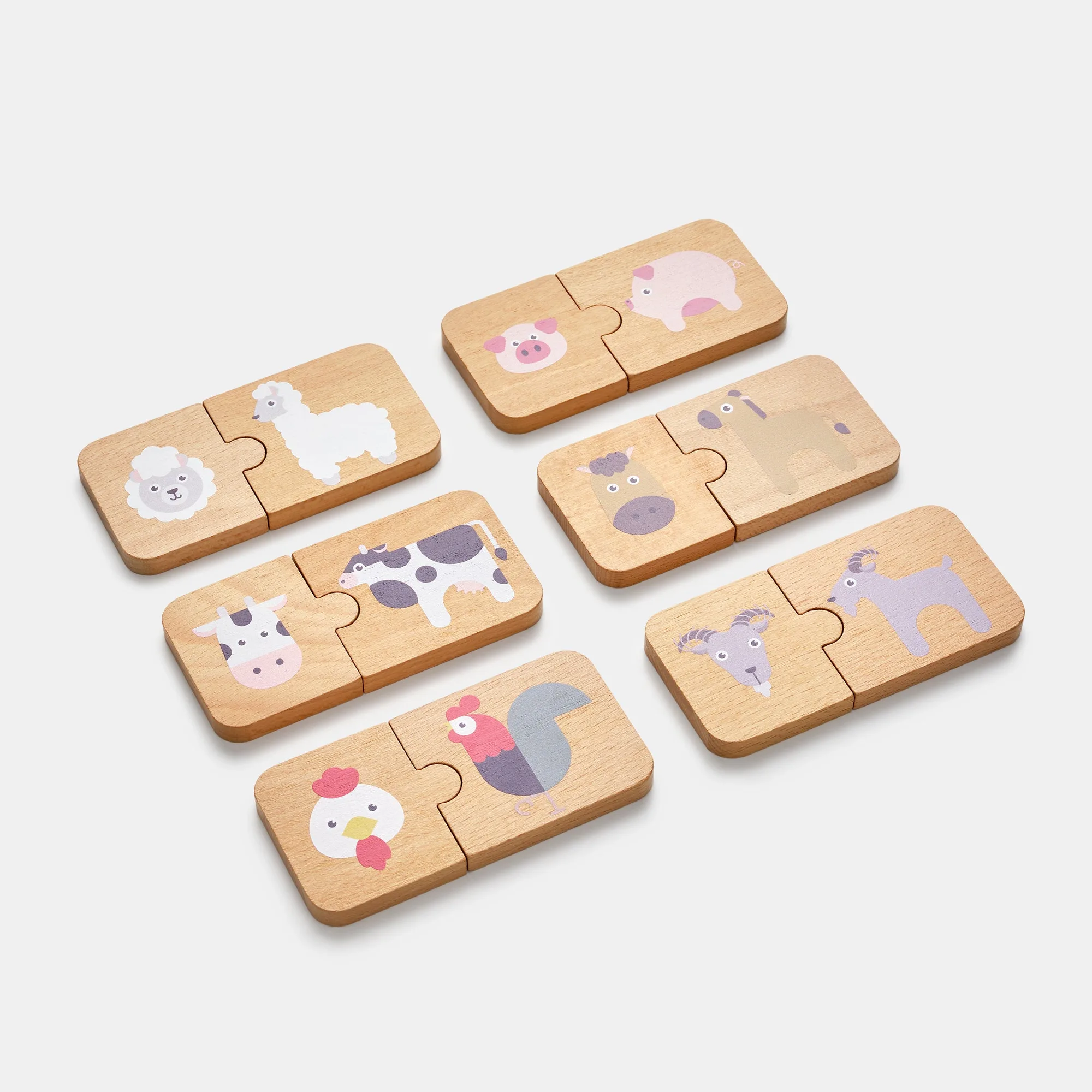
A first puzzle works best when the setup is simple and the child can reach every piece without help. The Farm puzzle is an animal-shaped wooden puzzle sized for small hands, so the first step is choosing a flat, stable surface at toddler height where the puzzle can stay out between play sessions.
The puzzle requires no assembly, so you can go from box to play in one step. Set out the base and the pieces together, then let your child explore before you introduce any rules or goals.
Farm puzzle facts that shape your setup
-
Farm puzzle: Toy size: 4.72 x 2.36 x .35 inches | 12.00 x 6.00 x .90 cm The compact footprint fits on a small table or highchair tray, so you do not need a dedicated playroom to get started.
Farm puzzle
-
Farm puzzle: Material: MDF. All paint is environmentally friendly and non-toxic. Knowing the material helps you choose a cleaning approach and set expectations for how the puzzle feels in small hands.
-
Farm puzzle: FOR KIDS: 12m+ The listed age range gives you a starting point for when to introduce the puzzle, though every toddler's readiness varies.
-
Farm puzzle: No assembly required. You can skip setup steps and focus on how you present the pieces to your child.
How to introduce the Farm puzzle in four short steps
Keep the first session short and follow your child's interest. These steps work for a toddler who is new to puzzles.
- 1. Place the base on a flat surface: Set the puzzle base down at a height your child can reach comfortably. A low table, a sturdy tray, or the floor works well. Keep the pieces within arm's reach.
- 2. Let your child handle the pieces first: Before showing where pieces go, let your toddler pick up, turn, and feel the animal shapes. This builds familiarity with the pieces and gives you a sense of which shapes they reach for.
- 3. Show one piece at a time: Place one piece partway into its spot and invite your child to finish it. One piece keeps the task manageable and lets them experience success early.
- 4. Follow their lead on when to stop: If your child loses interest or starts stacking pieces instead of fitting them, let the play shift. The puzzle will be there for the next session.
Farm animal puzzle play ideas that grow with your toddler
The animal shapes give you more than one way to play. These ideas work alongside the puzzle's stated focus on shape and color recognition, problem-solving, creativity, and fine motor skills.
- Name the animals: Pick up a piece and say the animal name. Pause and see if your child repeats it or points to the matching spot.
- Sort by color: Group pieces by color before fitting them. This turns the puzzle into a simple sorting game and supports color recognition.
- Match shape to space: Hold up a piece and ask your child to find where it belongs. This is the core problem-solving task of the puzzle.
- Tell a short farm story: Use the animal pieces as characters in a simple story. This extends play beyond fitting pieces and encourages creativity.
What the supplied product information does not cover
The supplied information does not list a piece count, specific animal names, or care instructions for cleaning the puzzle. It also does not describe storage. If you need those details, check the product listing or packaging before you buy or before you plan a cleaning routine.
The puzzle's stated benefits, such as developing fine motor skills and hand-eye coordination, are general descriptions from the product information. They are not a guarantee of developmental outcomes for every child.