Quick Answer
Choose the Type-A if you want an OEM-style bar with a factory R1/R2 look and universal USDM/JDM fitment. Choose the Type-B if you need extra clearance for an engine swap like an LS, 3-rotor, or 2JZ, plus a master cylinder brace.
Why the difference matters
The FD3S chassis responds well to a front strut tower bar, but not every bar clears every engine bay setup. The Type-A and Type-B look similar at a glance, yet they serve different purposes. The Type-A is an OEM-style reimagining of the R1/R2 bar, so it suits stock or mildly modified cars. The Type-B is a motor-swap-style bar with raised clearance for large engine conversions.
Both bars are made from Ti-64 titanium and weigh around 2 pounds, so you get the stiffness of a metal brace without adding meaningful weight to the nose. The finish options (burnt or matte) are cosmetic, but they affect how the bar looks when you pop the hood.
Fitment and compatibility
Fitment is the biggest separator between the two bars. The Type-A fits all USDM and JDM FD3S models from 1993-2002, making it the safer choice if you have a JDM import or a US-market car. The Type-B fits all USDM models in the same year range, but it does not explicitly list JDM fitment. If you own a JDM FD3S and are considering the Type-B, confirm the strut tower layout before ordering.
The Type-B also includes a master cylinder brace, which the Type-A does not mention. That brace adds a small amount of rigidity to the brake master cylinder area, which can improve pedal feel under hard braking. It is a functional bonus, but it also means the bar has a more complex shape.
Type-A vs Type-B: Trade-offs at a Glance
- Engine bay clearance: Type-B provides extra clearance for large engine swaps like LS, 3-rotor, and 2JZ. Type-A has a lower profile that suits stock engines. If you are unsure about a future swap, the Type-B leaves more room to grow.
- Fitment range: Type-A fits both USDM and JDM FD3S models. Type-B fits USDM models only, so JDM owners should verify compatibility before ordering. JDM owners should default to the Type-A unless they have confirmed the Type-B fits their chassis.
- Extra hardware: Type-B includes a master cylinder brace. Type-A does not list one, so it is a simpler bar with a more classic look. If brake feel is a priority, the Type-B's brace is a useful addition.
- Aesthetic: Both bars are available in burnt or matte titanium finishes. The Type-A adds an RX-7 badge for a factory-inspired look. Choose the finish that matches your engine bay theme; the badge on the Type-A is a subtle styling cue.
Product Facts
-
Mazda RX-7 [FD3S] Titanium Front Strut Tower Bar - Type-B: The Type-B is a motor-swap-style strut bar with increased clearance for LS, 3-rotor, and 2JZ swaps, plus a master cylinder brace. It weighs a bit over 2 pounds and fits all USDM 1993-2002 FD3S models. If you are planning or have already done an engine swap, this bar clears the taller valve covers and intake manifolds that would hit a standard bar.

Mazda RX-7 [FD3S] Titanium Front Strut Tower Bar - Type-B
-
Mazda RX-7 [FD3S] Titanium Front Strut Tower Bar - Type-A: The Type-A is an OEM-style strut bar that reimagines the R1/R2 bar, complete with an RX-7 badge. It weighs around 2 pounds, fits all USDM and JDM 1993-2002 FD3S models, and is available in a burnt titanium finish. For a stock or lightly modified FD3S, this bar gives a factory-like appearance and universal fitment without the extra clearance you may not need.
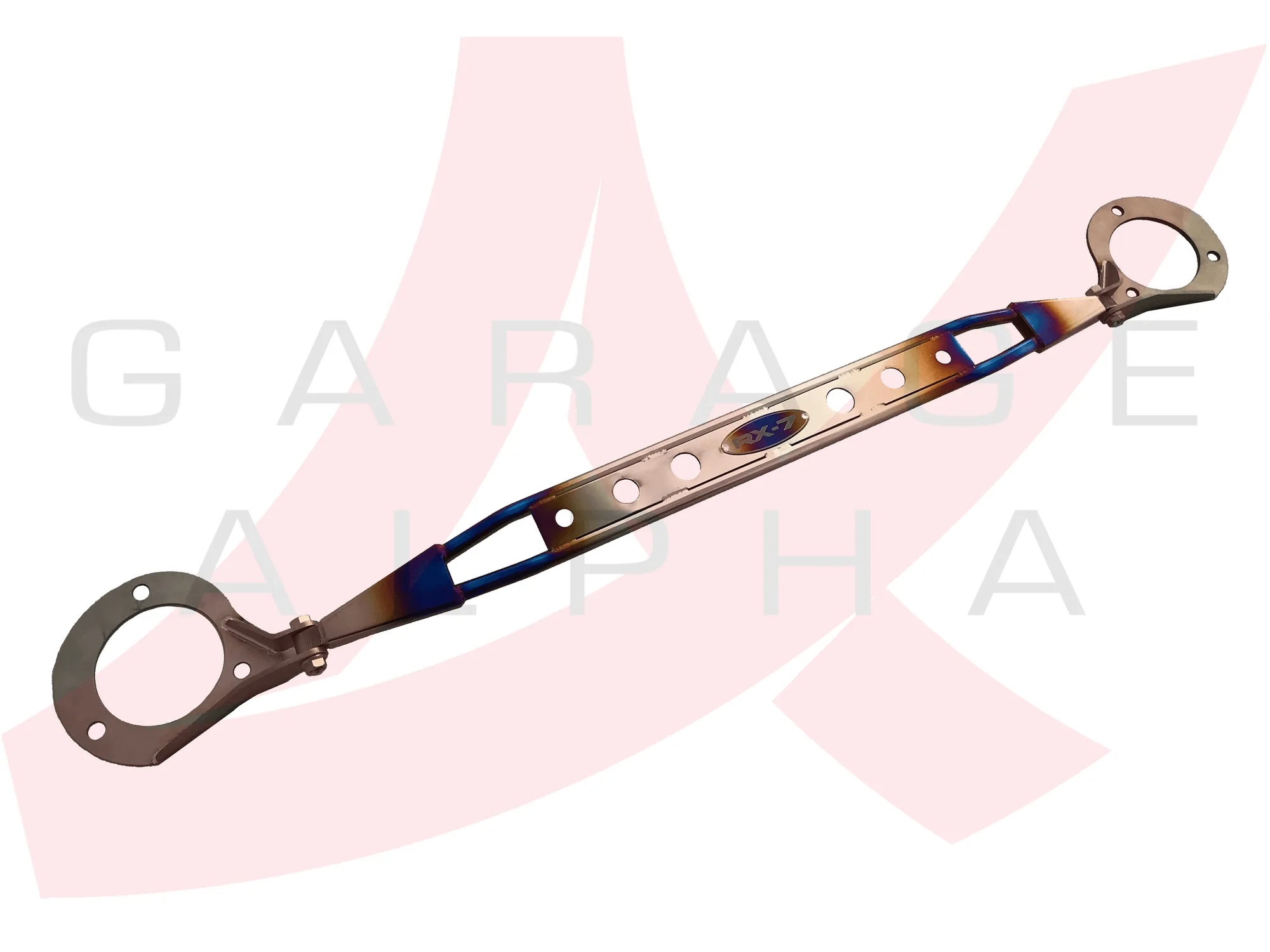
Mazda RX-7 [FD3S] Titanium Front Strut Tower Bar - Type-A
Which Bar Fits Your Build?
Best for
- Stock or lightly modified FD3S owners who want a factory-style bar with universal USDM/JDM fitment
- Drivers who prefer a clean, OEM-inspired look with the RX-7 badge
Not for
- Builds with LS, 3-rotor, or 2JZ swaps that need extra clearance and a master cylinder brace
- JDM owners who cannot confirm the Type-B fits their chassis