Why the ingredient list matters more than the front label
Fertility gummies are often marketed with emotional language about conception and family building. That copy can be encouraging, but it rarely tells you what you need to compare products. The useful information sits in the supplement facts panel: which nutrients are included, how much of each, and what a serving actually is.
This guide focuses on how to read a fertility gummy label, which preconception nutrients are commonly discussed, and where a product record leaves questions unanswered. It does not replace advice from your doctor or fertility specialist, and it does not promise that any gummy will help you conceive.
Ingredients shoppers commonly look for in preconception gummies
The nutrients below appear in many fertility-oriented supplements. Their presence on a label is a starting point for a conversation with your clinician, not proof of an effect on pregnancy.
- CoQ10: A nutrient often included in fertility supplements. If a gummy lists CoQ10, check the amount per serving and whether the label states a serving size.
- Ashwagandha: An adaptogenic herb that appears in some fertility blends. Its inclusion is a personal decision; ask your doctor whether it fits your health history and any medications you take.
- Inositol: A compound commonly discussed in preconception nutrition, especially in myo- and D-chiro forms. A gummy that lists inositol should specify the form and amount per serving if you want to compare it meaningfully.
- Folate or folic acid: A standard preconception nutrient. If a fertility gummy does not state its folate content, you may need a separate prenatal vitamin or a different product to cover that gap.
- Vitamin D, B12, and other basics: Some gummies include general vitamins alongside fertility-specific ingredients. More ingredients is not automatically better; overlapping with a prenatal can lead to unnecessary duplication.
What a fertility gummy label should confirm before you buy
A trustworthy label gives you enough detail to compare products without guesswork. Look for a supplement facts panel with amounts per serving, a clear serving size, and a full ingredient list that separates active nutrients from sweeteners and other excipients.
Check whether the product states a suggested use and whether it includes any warnings or allergen information. If a listing only repeats marketing phrases and never gives amounts, you cannot judge whether it is a good fit for your routine or whether it duplicates what you already take.
What the Female Fertility Support Gummies record confirms
-
Female Fertility Support Gummies: The product is described as a gummy alternative to fertility pills for women, featuring a blend that includes CoQ10 and Ashwagandha. This tells you the formula is positioned around two recognizable fertility-adjacent ingredients, so you can decide whether those are ingredients you want to discuss with your clinician.
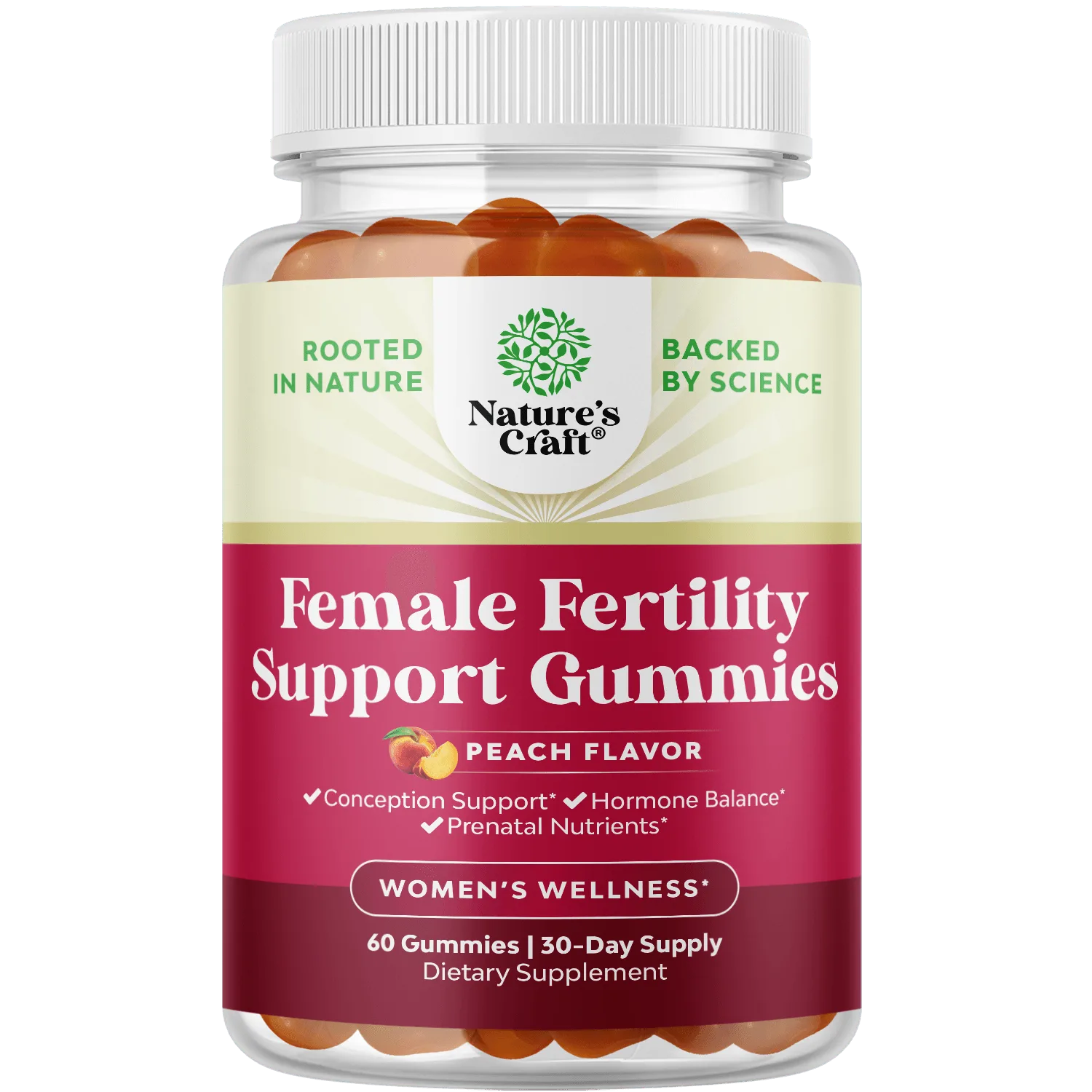
Female Fertility Support Gummies
-
Female Fertility Support Gummies: The listing also describes inositol gummies made with a combination of fertility support nutrients intended to support conception for her. Inositol is a common preconception ingredient, but the supplied record does not state the form or amount per serving, so you cannot compare doses from this information alone.
-
Female Fertility Support Gummies: The product is available in a 60-count option. Count matters for routine planning. A 60-count bottle may suit a short trial or a two-month supply depending on the serving size, which the supplied record does not specify.
Where the supplied record stops short
The supplied information for Female Fertility Support Gummies does not include a supplement facts panel, serving size, suggested use, or safety warnings. It also does not confirm folate content, inositol amounts, or whether the formula is intended to replace a prenatal vitamin.
That absence is a limitation of this record, not proof that the product lacks those details on its actual label. Before buying, read the full product label and ask the manufacturer or your healthcare provider about anything that is unclear.
A practical way to compare fertility gummies
Use the same checklist for every product so you are comparing like with like.
- 1. Write down your non-negotiables: Decide which nutrients you specifically want, such as CoQ10, inositol, or folate, and which you prefer to avoid. This keeps you from being swayed by long ingredient lists.
- 2. Find the amounts per serving: If a label gives only a proprietary blend total, you cannot tell how much of each ingredient you would get. Treat that as a comparison problem, not automatically a bad product.
- 3. Check the serving size: Gummies often require two or more per serving. A 60-count bottle may last one month or two depending on the serving size, so calculate the real cost per serving.
- 4. Look for overlap with your prenatal: If you already take a prenatal vitamin, compare its nutrient amounts with the gummy to avoid excessive duplication, especially for fat-soluble vitamins and minerals.
- 5. Ask about suitability: If you have a medical condition, take medication, or are working with a fertility specialist, review the ingredient list with them before adding any supplement.
The honest trade-off with gummy formats
Gummies can be easier to take consistently than capsules or tablets, which matters for any daily routine. The trade-off is that gummies often contain added sugars or sweeteners and may have lower doses of certain nutrients than capsule formulas because of volume limits.
That does not make gummies a poor choice, but it does mean you should compare the supplement facts panel rather than assuming a gummy delivers the same amounts as a pill. If a specific dose is important to you, a gummy may not be the right format, or it may need to be paired with another product under professional guidance.