Two fermented bottles, two different flavor directions
Eaten Alive makes both of these hot sauces through fermentation, but they head in opposite directions. The Smoked Sriracha leans on oak-smoked peppers, garlic, and onion for a tangy, mild sriracha profile. The Raw Kimchi Hot Sauce blends house kimchi, kimchi-brined chillies, and gochugaru for a sharper, kimchi-forward kick. Neither is a generic vinegar-hot-sauce shortcut; the fermentation is the point in both bottles.
If you want a first bottle that works almost anywhere, start with the Smoked Sriracha. If you already like kimchi and want a sauce that tastes like it, start with the Raw Kimchi. That is the short answer. The rest of this comparison explains why, and where the labels leave questions open.
Smoked Sriracha vs Raw Kimchi at a glance
Both are 150ml bottles from the same fermented range, but their ingredients and suggested uses differ in ways that matter for pairing.
- Flavor base: Smoked Sriracha: smoked red pepper, smoked chilli, smoked onion, garlic, and chilli miso. Raw Kimchi: fermented capsicum, house kimchi, gochugaru, organic miso, onion, and garlic.
- Heat level: Smoked Sriracha is described as mild. Raw Kimchi is described as a fusion with a kick; no Scoville rating is supplied for either.
- Allergens: Both contain soy. Smoked Sriracha lists soy via chilli miso; Raw Kimchi lists soy via kimchi and organic miso.
- Suggested uses: Smoked Sriracha: chicken, fish, vegetables, dressings, salsa. Raw Kimchi: eggs and avocado, mayo, sandwiches.
- Fermentation style: Both are fermented. Smoked Sriracha vegetables are smoked before fermenting; Raw Kimchi uses kimchi-brined chillies and gochugaru.
Smoked sriracha taste: what to expect from the first bottle
The Smoked Sriracha is built for people who want smoke and tang rather than pure heat. The vegetables are smoked over oak before fermentation, so the smoke is part of the base, not a flavoring added at the end. Garlic, onion, and chilli miso add savory depth. The result is described as a tangy, mild sriracha, which makes it a low-risk first fermented hot sauce if you are unsure about heat.
Use it where you would use a normal sriracha but want more smoke: roasted chicken, fish, or vegetables, or whisked into a dressing or salsa. It is also the more versatile of the two for everyday cooking because the flavor is broad rather than specifically Korean.
What the Smoked Sriracha record confirms
-
Fermented Hot Sauce Smoked Sriracha 150ml: Ingredients: smoked red pepper, smoked chilli, smoked onion, raw cider vinegar, garlic, dry chilli, chilli miso (rice koji, soybeans, chilli paste, chilli powder, salt), sugar, salt. Allergens: Soy. The soy allergen comes from chilli miso, so anyone avoiding soy should note this before buying.
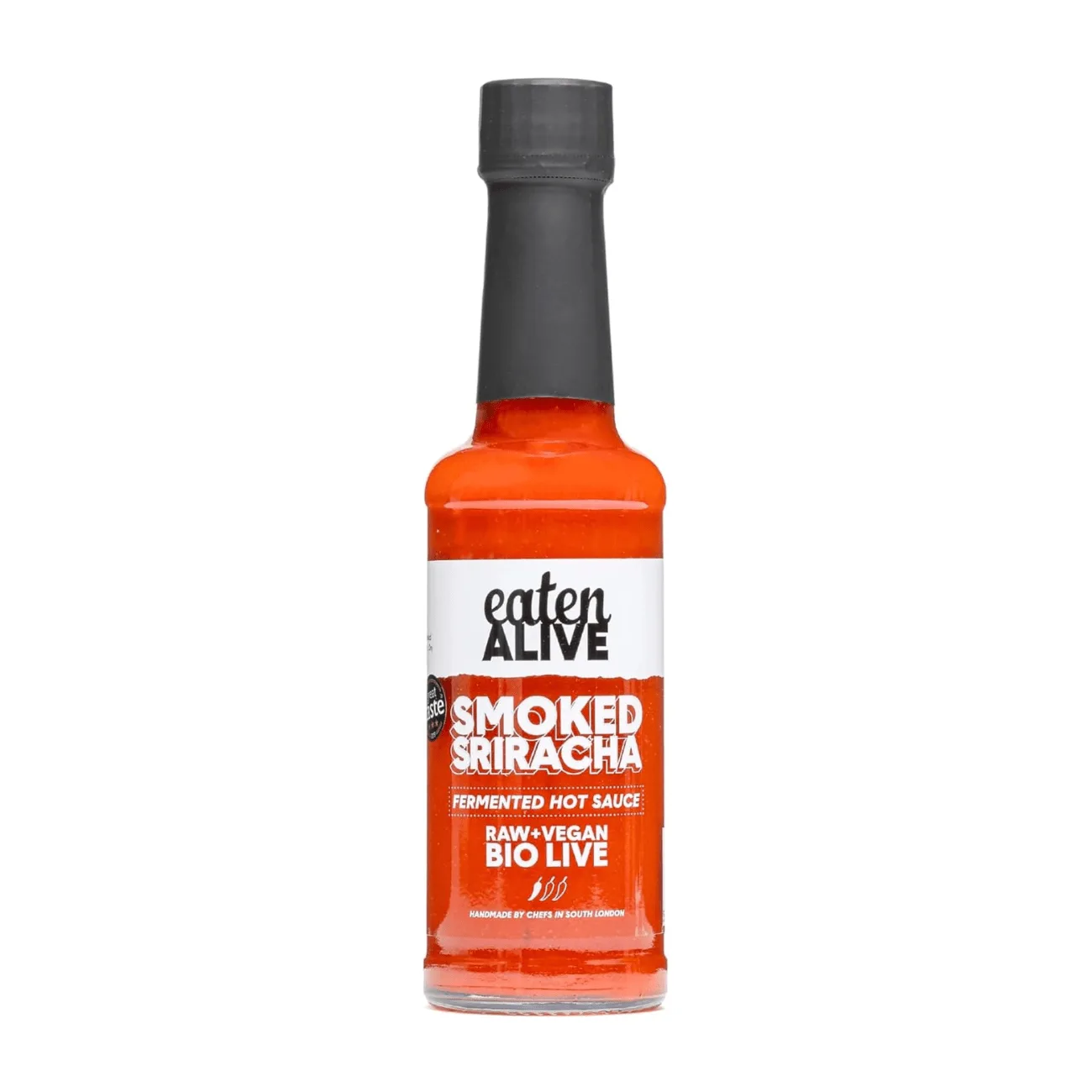
Fermented Hot Sauce Smoked Sriracha 150ml
-
Fermented Hot Sauce Smoked Sriracha 150ml: We smoke all the veg before fermenting and blending into a tangy, mild sriracha sauce. Confirms the smoke is applied before fermentation and that the heat level is mild, not extreme.
-
Fermented Hot Sauce Smoked Sriracha 150ml: Packed with hot and sweet peppers smoked over oak, combined with garlic and onions, then slowly fermented. Suggested for chicken, fish, or vegetables, and for adding to dressings or salsa. Gives concrete pairing ideas and shows the sauce is designed for cooking and condiment use, not just dipping.
Raw kimchi hot sauce uses: when the kimchi bottle is the better pick
The Raw Kimchi Hot Sauce is for people who already enjoy kimchi and want that flavor in sauce form. It combines house kimchi, kimchi-brined chillies, peppers, and traditional gochugaru, so the kimchi tang and chilli character come through together. The suggested uses are specific: eggs and avocado for brunch, stirred into mayo, or splashed over a sandwich. That makes it a condiment for finishing rather than a general cooking sauce.
If you are new to fermented hot sauce, this is the more adventurous bottle. If you already keep kimchi in the fridge, it is the more obvious first choice because the flavor reference is familiar.
What the Raw Kimchi record confirms
-
Raw Kimchi Hot Sauce 150ml: Ingredients: fermented capsicum, kimchi (contains soy), raw cider vinegar, sugar, chilli powder, organic miso (soy, water, salt), onion, salt, and garlic. Soy appears twice, via kimchi and organic miso, so this bottle is not soy-free.
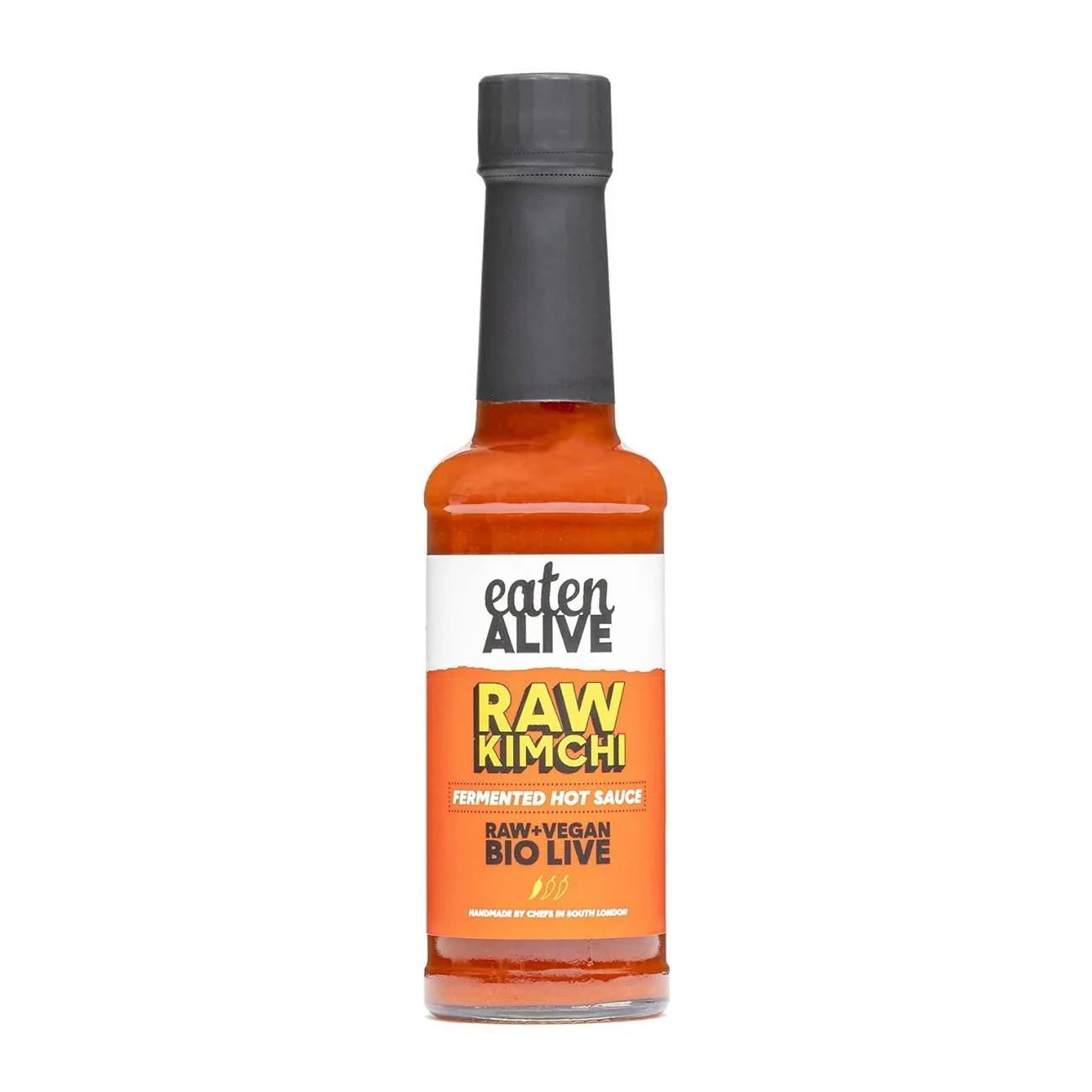
Raw Kimchi Hot Sauce 150ml
-
Raw Kimchi Hot Sauce 150ml: Our house kimchi with kimchi-brined chillies, peppers, and traditional gochugaru (dried Korean chilli) all blended into the perfect fusion of our two passions. Explains the flavor base: kimchi and gochugaru, not a generic chilli blend.
-
Raw Kimchi Hot Sauce 150ml: Try it with eggs and avocado for the perfect brunch accompaniment; add to mayo or just splash it all over a sandwich. Gives clear, specific pairing ideas so you can judge whether it fits your meals.
Is fermented hot sauce spicy? Heat and fermentation in both bottles
Fermentation does not automatically mean extreme heat. The Smoked Sriracha is explicitly described as mild, while the Raw Kimchi is described as having a kick but no Scoville rating is supplied for either bottle. If you are sensitive to heat, the Smoked Sriracha is the safer first purchase. If you want a sharper chilli edge, the Raw Kimchi is the more likely match.
Both records describe the fermentation process as giving savory, complex flavor and rounded chilli heat. That is a flavor description, not a heat guarantee. The labels do not provide a numerical heat scale, so treat any heat expectation as approximate.
Fermented hot sauce storage: what the records do and do not say
Neither product record supplies specific storage instructions, shelf life, or a required refrigeration period. The only direction supplied is to add the sauce to your best recipes. Because these are fermented products, it is reasonable to treat them as living condiments, but the catalog does not confirm an exact storage rule. Check the bottle label when it arrives for the manufacturer's guidance rather than relying on a general assumption.
The same caution applies to shelf life after opening. The records do not state it, so we cannot compare the two bottles on that basis. If storage length matters to you, that is a gap in the supplied information, not a difference between the products.
Kimchi hot sauce pairing and smoked sriracha pairing: match the bottle to the meal
Pair the Smoked Sriracha with chicken, fish, vegetables, dressings, or salsa. Its smoky, tangy profile works as a cooking sauce and a finishing sauce. Pair the Raw Kimchi with eggs and avocado, mayo, or sandwiches. It is a brunch and sandwich condiment first.
If you want one bottle that covers the widest range of meals, the Smoked Sriracha is the more flexible choice. If you want a bottle that makes a specific meal, like eggs or a sandwich, taste more interesting, the Raw Kimchi is the more targeted pick. Neither is better in the abstract; they solve different flavor problems.
Which bottle should you try first?
Start with the Smoked Sriracha if you want a mild, smoky, tangy sauce that works across chicken, fish, vegetables, and dressings, and if you prefer a lower-risk introduction to fermented hot sauce. Start with the Raw Kimchi if you already like kimchi, want a sharper chilli kick, and plan to use it on eggs, avocado, mayo, or sandwiches.
Both contain soy, so neither suits a soy-free diet. Both are 150ml bottles, which is a reasonable size for trying a new fermented sauce without committing to a large bottle. The catalog does not supply heat ratings or storage timelines, so choose based on flavor direction and intended use rather than on unconfirmed claims.