Why This Comparison Matters
When you need reliable fire starting and emergency illumination gear, the choice often comes down to an all-in-one kit versus assembling your own components. The F.I.R.E. Kit (Fire Illumination Readiness Equipment Kit) bundles multiple fire starting tools with signaling, warmth, and utility items. A DIY approach lets you handpick each piece but requires more planning and may cost more per item. This article compares the F.I.R.E. Kit's contents with what you'd typically gather in a custom fire starting kit, so you can decide which route fits your gear bag and preparedness level.
What the F.I.R.E. Kit Includes
-
F.I.R.E. Kit (Fire Illumination Readiness Equipment Kit): The F.I.R.E. Kit contains 1 x Ferro Rod Striker, 2 x Black Beard Fire Starter, 1 x Hi Vis Polarshield Survival Blanket, 4 x Adhesive Visi Pad (2 Red / 2 Green), 4 x 6" Chem Light Sticks (2 Red / 2 Green), 1 x Compass / Whistle Combo Lanyard, 2 x Mini Duct Tape Rolls, 1 x Roll of 550 lb 50 ft Paracord, 1 x All Weather Poncho Olive Drab Green, 1 x Wire Saw Kit, 1 x Mini Shears, 1 x Write In Rain Note Pad w/ Pen. This single kit covers fire starting, signaling, warmth, shelter, cutting, cordage, and note-taking. For someone building a custom kit, sourcing each of these items separately would take more time and likely cost more than the F.I.R.E. Kit's catalog price of $106.49.
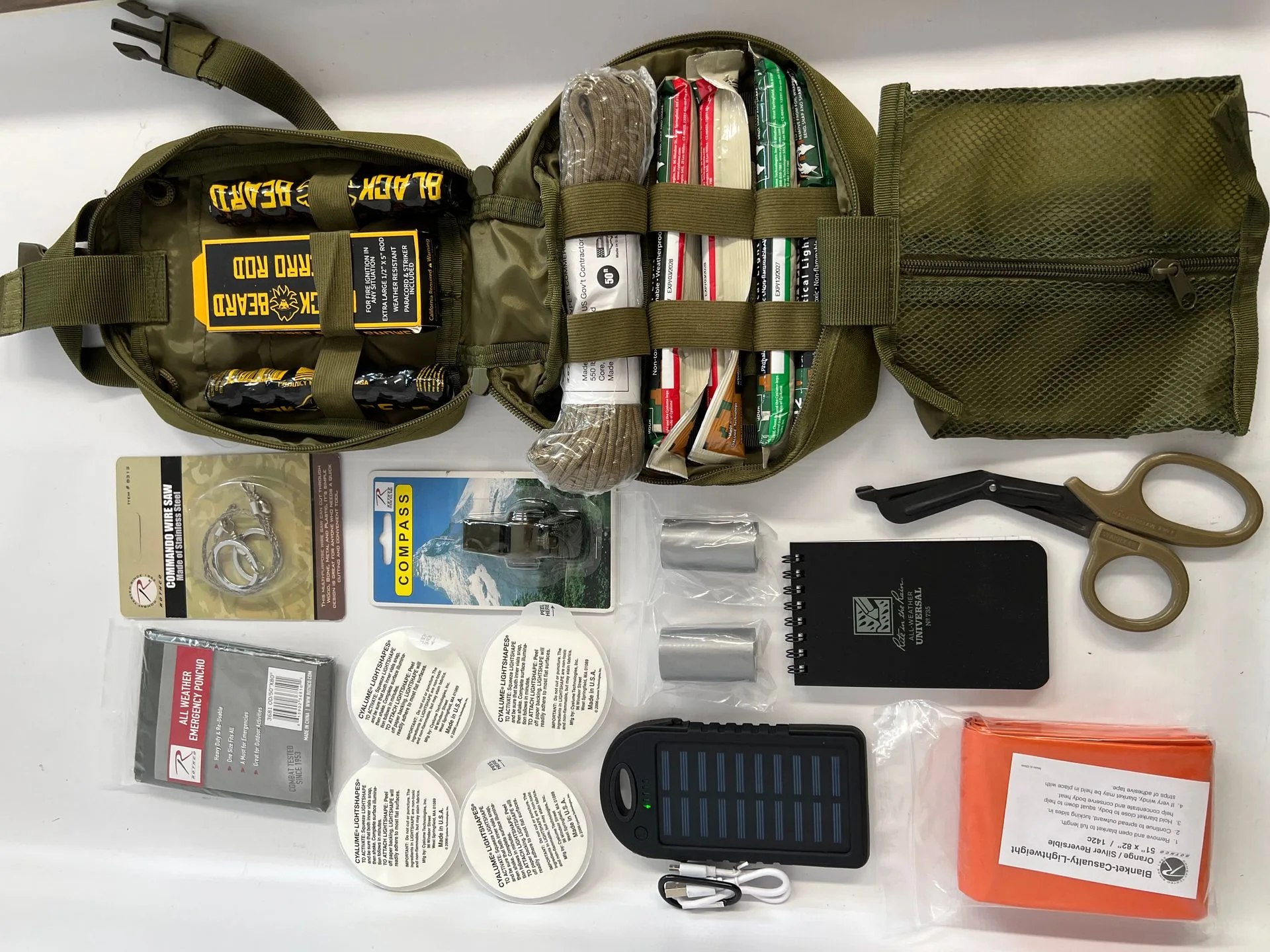
F.I.R.E. Kit (Fire Illumination Readiness Equipment Kit)
F.I.R.E. Kit vs. DIY Fire Starting Kit: Key Differences
The table below highlights where the F.I.R.E. Kit excels and where a custom approach might give you more flexibility.
- Fire Starting Tools: F.I.R.E. Kit includes a Ferro Rod Striker and two Black Beard Fire Starters—reliable spark and tinder sources. A DIY kit could include a lighter, matches, or a magnesium bar, but you'd need to buy each separately.
- Signaling & Lighting: The kit provides four 6" chem light sticks and four adhesive Visi Pads (red/green). A custom kit might add a flashlight or signal mirror, but chem lights are passive and work without batteries.
- Warmth & Shelter: Includes a Hi Vis Polarshield Survival Blanket and an All Weather Poncho. A DIY kit might use a space blanket and a tarp, but the F.I.R.E. Kit bundles both in one package.
- Utility & Repair: Two mini duct tape rolls, 50 ft of 550 lb paracord, a wire saw, and mini shears. These are common survival items, but gathering them individually adds cost and weight.
- Navigation & Communication: A compass/whistle combo lanyard is included—two tools in one. A DIY kit might use a separate compass and whistle, taking up more space.
- Cost & Convenience: The F.I.R.E. Kit is priced at $106.49 (catalog comparison $149.99). Buying all 14+ items separately could easily exceed that, and you'd need to research each component.
When the F.I.R.E. Kit Makes Sense
If you want a grab-and-go solution that covers fire starting, illumination, and basic survival needs in one package, the F.I.R.E. Kit is hard to beat. It's especially useful for vehicle kits, bug-out bags, or as a gift for someone new to preparedness. The included compass/whistle, chem lights, and adhesive Visi Pads add signaling capability that a basic fire starting kit often lacks.
When a Custom Fire Starting Kit Might Be Better
If you already own some of these items—like a poncho, paracord, or duct tape—building your own fire kit lets you avoid duplicates and focus only on what you need. A custom kit also allows you to choose premium versions of specific tools (e.g., a ferro rod with a larger striker or a high-lumen flashlight instead of chem lights). However, you'll spend more time sourcing and may end up paying more per item without the bundle discount.
What the Supplied Information Does Not Cover
The product record does not specify the weight of the F.I.R.E. Kit, the burn time of the chem light sticks, or the exact material of the survival blanket. If these details matter for your pack weight or specific use case, you may need to contact the manufacturer or check individual item specs. For most emergency kits, the included items provide a solid baseline.