Pre-walkers or first shoes? Start with your baby's stage, not the label
The difference between pre-walker shoes and first shoes comes down to what your baby is doing, not how old they are. Pre-walkers are designed for babies who are not yet walking independently — they keep feet warm and protected while allowing natural movement. First shoes are for babies who are pulling up, cruising, or taking those first wobbly steps and need a bit more structure underfoot.
If your baby is still mostly crawling or just beginning to bear weight, a pre-walker is the right choice. If they are confidently pulling to stand and moving along furniture, look for a first shoe with a flexible sole that still lets them feel the ground. The Start-Rite Baby Jack sits in the pre-walker category: its lightweight, flexible sole is designed for maximum flexibility and sensory feedback, which suits babies who are not yet walking solo.
What the Start-Rite Baby Jack actually offers
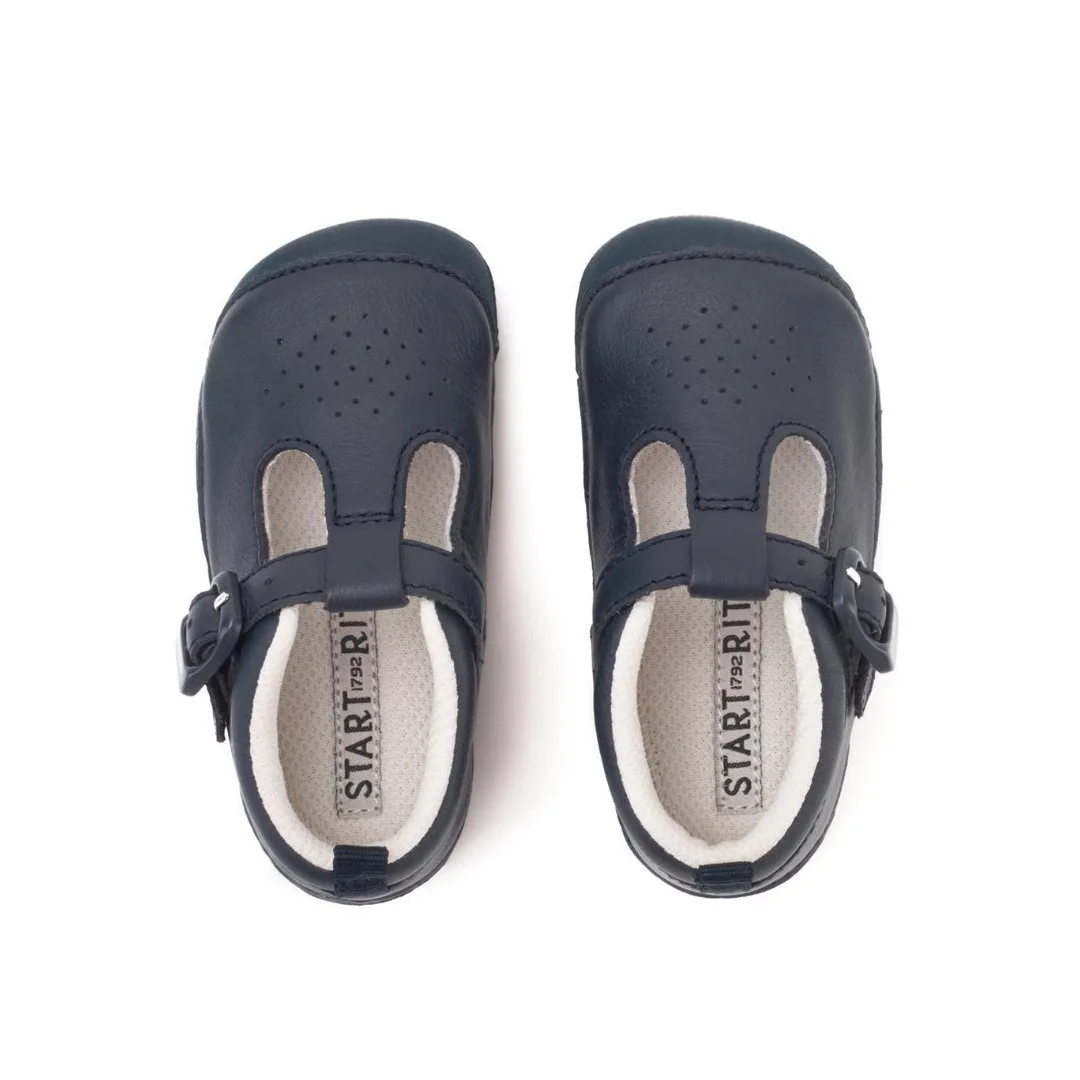
The Baby Jack is a classic T-bar design with a buckle fastening, made from supple navy blue leather with a cushioned insole and padded ankles. The breathable mesh lining helps keep feet fresh, and the soft leather upper is intended for barefoot comfort without rubbing. The buckle is highly adjustable, which helps you get a secure fit over a chubby or square foot — a common challenge with baby shoes.
Crucially, the sole is lightweight and flexible, not stiff. That is the key feature that separates a pre-walker from a hard-soled first shoe. For a baby who is not yet walking, a flexible sole lets the foot move naturally and gives sensory feedback through the sole. Once your baby is walking confidently outdoors, you may want a first shoe with slightly more protection, but the Baby Jack remains a good choice for early steps on uneven or rough surfaces.
Baby Jack fit details from the product record
-
Start-Rite: Baby Jack T-Bar Pre-Walker Shoes - Navy Blue: Multi-width and half-size fittings to give a precision fit. Baby feet vary in width as much as length. Being able to choose a width fitting (F, G, or other) and half sizes means you can get closer to a true fit rather than sizing up for width and ending up with a shoe that is too long.
Start-Rite: Baby Jack T-Bar Pre-Walker Shoes - Navy Blue
-
Start-Rite: Baby Jack T-Bar Pre-Walker Shoes - Navy Blue: Available sizes include UK 2 F, UK 2 G, UK 2.5 F, UK 2.5G, UK 3 F, UK 3 G, UK 3.5 F, 3.5G, UK 4 F, UK 4 G, and 4.5F. This range covers first-shoe sizes with both F and G width options in several lengths. If your baby is between sizes, the half sizes let you avoid a shoe that is noticeably too big.
-
Start-Rite: Baby Jack T-Bar Pre-Walker Shoes - Navy Blue: Secure, highly adjustable buckle fastening. A buckle with multiple adjustment points is easier to fit over a high instep or chubby foot than a slip-on or velcro strap, and it stays put once fastened.
-
Start-Rite: Baby Jack T-Bar Pre-Walker Shoes - Navy Blue: Uppers made using the softest leathers for niggle-free barefoot comfort. Soft leather reduces the risk of rubbing on delicate skin, which matters when a baby is not yet able to tell you a shoe is uncomfortable.
How to use the baby shoe sizing guide for the Baby Jack
Start-Rite provides a size guide and conversion chart, so measure your baby's feet at the end of the day when they are at their largest, and measure both feet — one is often slightly bigger. Use the larger measurement to choose the size. The Baby Jack comes in half sizes and multiple widths, so you can fine-tune the fit rather than guessing.
If you are unsure between two sizes, remember that the flexible sole and adjustable buckle give a little room for adjustment, but you should not size up dramatically. A pre-walker that is too long can trip a baby who is just starting to move. The half-size options exist precisely so you can get a close fit. If your baby has particularly chubby or square feet, the G width may suit better than F; the product record notes the Baby Jack is designed to fit snug to square and chubby feet.
When to move on from pre-walkers to first shoes
There is no fixed age for switching from pre-walkers to first shoes. The signal is developmental: when your baby is walking independently and confidently, and especially when they are walking outdoors on pavements, gravel, or rough ground, a first shoe with a slightly thicker, more protective sole becomes useful. Until then, a pre-walker like the Baby Jack gives the flexibility and sensory feedback that early movers need.
If your baby is cruising furniture but not yet walking solo, the Baby Jack is still appropriate — its flexible sole will not hinder them. Once they are taking independent steps and you want a shoe for outdoor walking, look for a first shoe with a more substantial sole while still checking that it bends easily at the ball of the foot. The Baby Jack can serve as a indoor or soft-ground shoe during that transition.
What the product record does not confirm
The supplied information does not state a specific age range for the Baby Jack, nor does it confirm suitability for newborns or safe-sleep use. It also does not include care instructions beyond the general note to contact the store for assistance. If you need guidance on cleaning the leather or treating scuffs, ask the store directly rather than assuming a method. The record also does not confirm whether the shoe is suitable for children with orthotic inserts or specific foot conditions — check with a healthcare professional if that applies to your child.