Quick answer
Start with your band size and cup size measured at home, then choose one everyday bra and one underwear style that match your usual necklines. If you are unsure, pick a demi or wireless style first because they are more forgiving on fit. Timpa's Alice Demi Bra and Alice Bandeau Bra are practical first purchases for smaller busts.
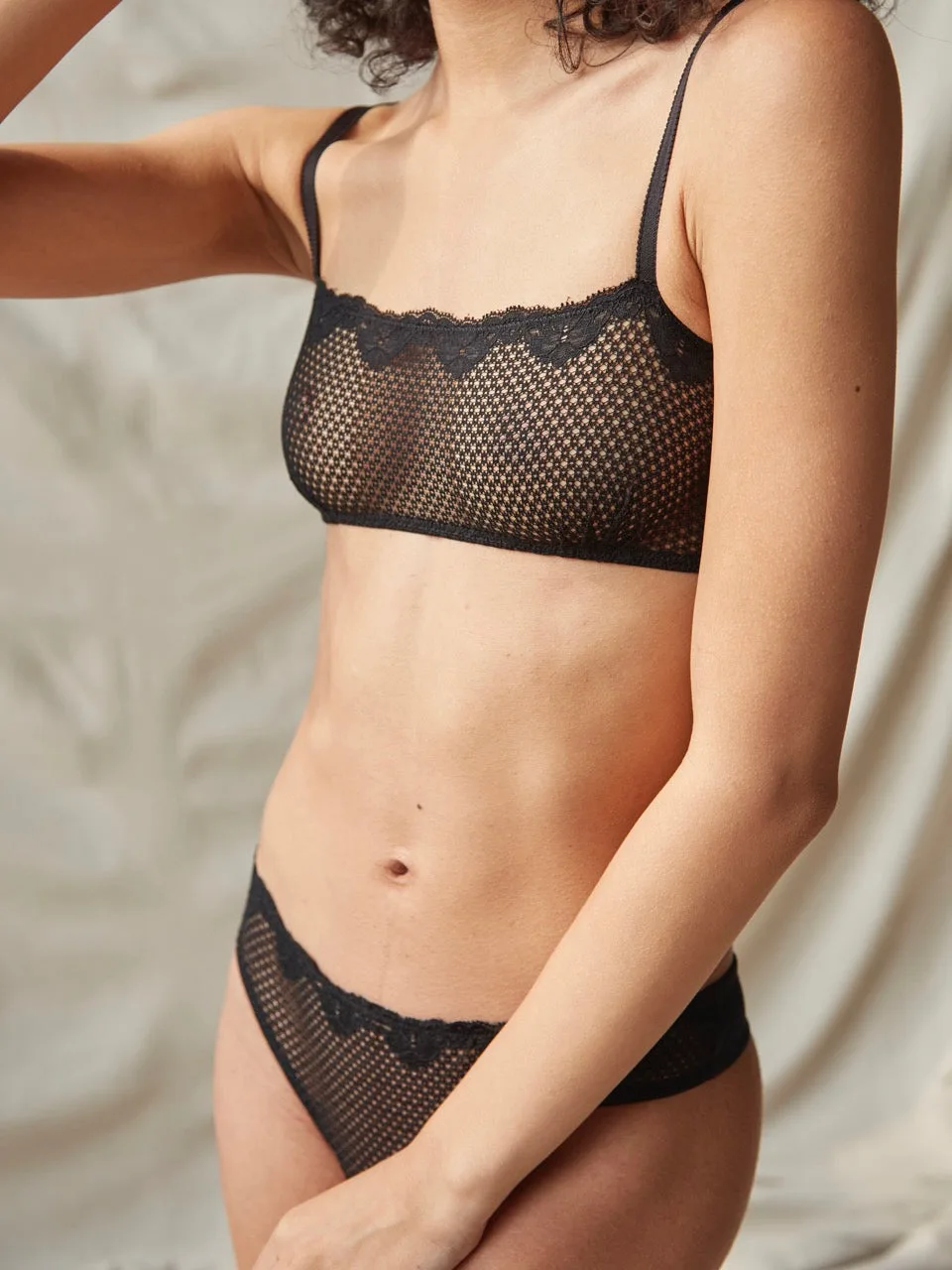
Alice Bandeau Bra
Buying your first bra can feel like a test with no study guide. The good news: you only need a few measurements and a clear idea of what you will wear it under. This first bra buying guide walks you through the decisions that actually matter, from band fit to cup shape, so you can shop with confidence instead of guessing.
We will keep the jargon low and the trade-offs honest. You will learn how to buy your first bra in a way that works for your body and your wardrobe, not just for a mannequin. Along the way, we will point to real Timpa styles that fit the beginner bra guide brief.
Start With Two Measurements, Not Ten
You only need two numbers to begin: your underbust measurement (snug around your ribcage) and your bust measurement (around the fullest part). The difference between them gives you a starting cup size. This is not a final verdict, but it narrows the field fast. Most first-time buyers get lost because they skip this step and shop by sight alone.
Write the numbers down and keep them in your phone. When you try bras, adjust the band first, then the cups. If the band rides up in the back, go down a band size. If the cups gap or dig in, change the cup size, not the band. That order solves most fit problems.
- Measure without a bra or in a non-padded bra for the most accurate underbust number.
- If you are between band sizes, choose the larger band and smaller cup as a starting point for comfort.
Pick One Everyday Shape Before You Branch Out
Your first bra should handle your most common outfits, not your most extreme ones. A demi bra works under crewnecks, button-downs, and most T-shirts because the lower coverage stays hidden. A wireless bra is a strong first choice if you want comfort and easy sizing. Plunge and padded styles are better as a second purchase once you know your size.
For smaller busts, demi and wireless cuts often fit better out of the gate because they do not rely on heavy padding or deep cups. If you wear a lot of low-cut tops, a plunge bra is worth trying, but treat it as a targeted tool rather than your daily default.
- Buy your everyday bra first, then add a plunge or padded style for specific outfits.
- If you are unsure between two sizes, order both and return the one that fits worse—check the return policy first.
Understand Fabric and Padding Trade-Offs
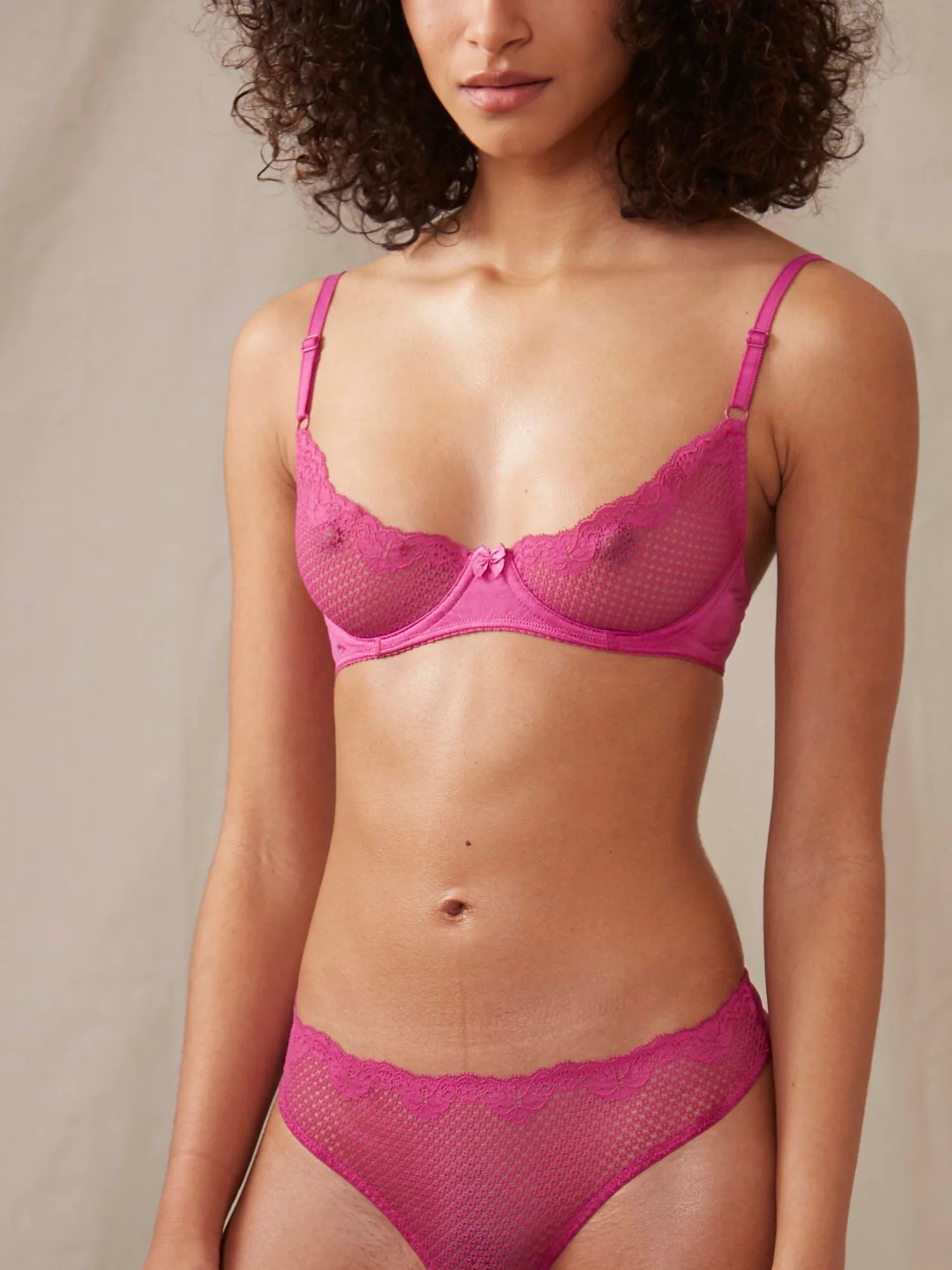
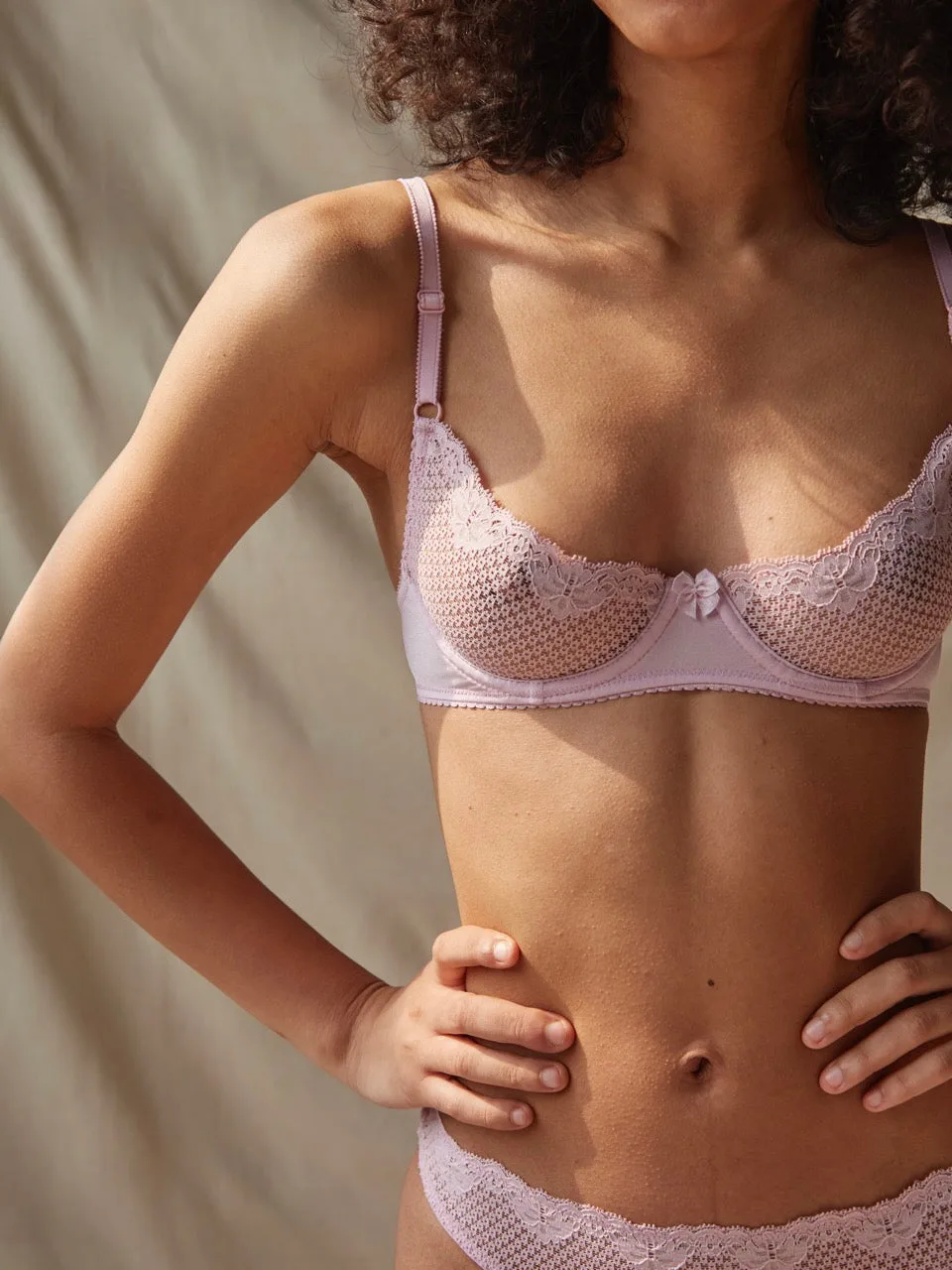
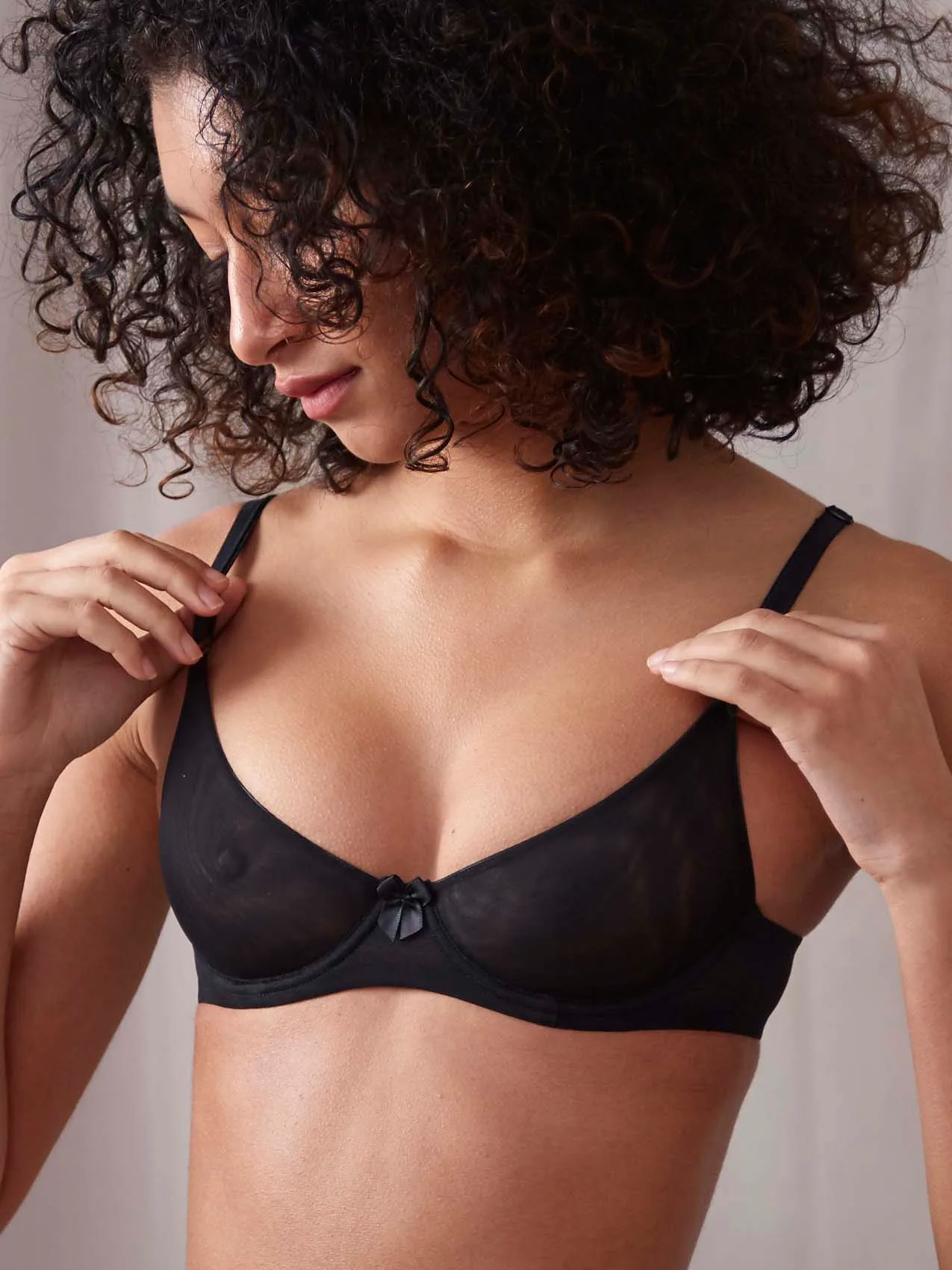
Lace looks delicate but can be strong when it is a single panel with no middle seam, like the Alice Demi Bra. Mesh, used in the Natacha Demi Bra, gives a smoother look under thin fabrics and creates a subtle visual effect without foam. Neither is better; they simply serve different wardrobes. Lace tends to feel more decorative, while mesh disappears more easily under knits.
Padding adds volume and smooths the shape, but it also adds care requirements. If you want a rounded look without gaps, light foam padding in a half-cup style can help. If you prefer zero padding, choose an unlined or mesh style. Be honest about how much maintenance you will actually do.
- Choose unlined or mesh if you want the lowest-maintenance care routine.
- Choose light padding if you want a smoother shape under fitted tops and do not mind hand washing.
Match Underwear to the Bra, Not the Other Way Around
Your first bra purchase often comes with a matching underwear decision. A Brazilian cut sits low and shows a bit more cheek, while a brief offers more coverage. Neither is wrong; it depends on what feels comfortable and what you wear. If you are buying your first set, start with one bra and one underwear style that you will actually reach for.
Sizing matters here too. Some Brazilian styles run small, so check the product notes before ordering. If you are between sizes, size up for comfort. A set that fits well gets worn; a set that pinches stays in the drawer.
- Buy one bra and one underwear style first, then expand once you know your size.
- Read the fit notes on each product page—some styles run small and need a size up.
Try On With Your Real Clothes
The fastest way to know if a bra works is to try it under the tops you wear most. A bra that looks fine in the mirror can show lines under a thin T-shirt or peek out under a scoop neck. Bring two or three tops to your try-on session, or keep them nearby if you are trying on at home.
Check three things: the band stays level in the back, the cups lie flat against your ribcage without gaping, and the straps stay put when you move your arms. If any of those fail, adjust the size or try a different style. Do not force a fit because the color is nice.
- Test the bra under your most-worn neckline before deciding.
- If the band rides up, go down a band size; if cups gap, go down a cup size.
Decision rules for your first bra purchase
- If you want one bra for most days: Choose a demi or wireless style in your measured size. Demi bras like the Alice Demi Bra work under many necklines and are easy to fit. Start with one everyday bra before adding specialty styles.
- If you wear low-cut tops often: Add a plunge bra as a second purchase. It centers the bust and stays hidden under deep V necklines, but fit is less forgiving. Buy plunge after you know your size, not as your first bra.
- If you want zero padding: Choose an unlined lace or mesh style. The Natacha Demi Bra uses double-layered mesh for a smooth look without foam. Unlined styles are lower maintenance and feel lighter.
- If you are between sizes: Size up in band and down in cup as a starting point, or order two sizes if returns are allowed. Check final sale policies first. Never force a fit—adjust the size, not your body.
Timpa styles that work well for first-time buyers
- Alice Demi Bra - Sale: Bestselling demi bra with a soft underwire, delicate stretch lace, and a single-panel cup with no middle seam. The single-panel cup reduces bulk and irritation, making it a comfortable everyday option for a first bra.
- Alice Bandeau bra: Wire-free bandeau in signature stretch lace with fully adjustable, sewn-on straps and an unlined, straight-across silhouette. A good choice if you want a simple, comfortable first bra without underwire, especially for smaller busts.
- Natacha Demi bra: Double-layered lightweight mesh demi bra with a moiré visual effect and no foam padding. Offers a smooth, seamless look under clothes without padding, ideal if you prefer a natural shape.
- Alice Brazilian: Low-rise cheeky Brazilian with soft crochet lace back and opaque stretch microfiber front; runs small, so size up. A matching underwear option that feels comfortable and looks cohesive, but requires sizing up for the right fit.
Who this first bra guide is for
Best for
- First-time bra buyers who want a clear starting point
- Smaller busts looking for comfortable, well-fitting everyday bras
Not for
- Shoppers looking for heavily padded or push-up styles
- Those who already know their exact size and preferred brand
Your first bra does not have to be perfect—it just has to fit well enough to teach you what you like. Start with your measurements, choose one everyday style, and test it under your real clothes. Once you know your size, adding a plunge or padded bra becomes much easier. Timpa's demi and wireless options give you a solid place to begin.