Quick answer
Wash Fissler stainless steel with warm water, mild dish soap, and a soft sponge, then dry immediately. Treat rainbow heat tint and white mineral spots with a vinegar soak or a stainless cleaner, and polish only when the surface looks dull.
Why heat tint and white spots appear
Rainbow-colored heat tint and chalky white spots are surface films, not damage to the steel. Heat tint comes from minerals and oxygen reacting with the surface during high-heat cooking, while white spots usually come from hard-water minerals left behind after washing or boiling.
Both respond to mild acid, so you rarely need abrasive scrubbing. Scouring powders and steel-wool pads can dull the finish and leave scratch marks that trap residue over time.
When the dishwasher is a reasonable shortcut
Dishwasher use is a convenience trade-off, not a cleaning upgrade. High heat, long cycles, and harsh detergents can leave water spots and gradually dull a polished exterior, so reserve the dishwasher for days when hand washing is impractical and dry the pieces promptly afterward.
Step-by-step Fissler stainless steel care routine
- Cool, then wash: Let the pan cool until it is safe to handle, then wash with warm water, a small amount of mild dish soap, and a soft sponge or non-scratch scrubber. Common mistake: plunging a hot pan into cold water, which can warp the base and makes cleaning harder. Never hear a sizzle when the pan meets the water.
- Soak stuck-on food: If food clings, fill the pan with warm soapy water and let it sit for 10 to 15 minutes, then wipe with a soft sponge. Avoid metal scouring pads, which scratch the surface and create places for residue to collect. Soak first; scrub only with non-scratch tools.
- Remove heat tint: For rainbow discoloration, soak the pan in a mixture of one part white vinegar to three parts water for about 10 minutes, then wash and rinse. Checkpoint: if the tint remains, a dedicated stainless steel cleaner is the next step, not more vinegar. Vinegar lifts tint without abrasion.
- Dissolve white mineral spots: White spots from hard water usually lift with the same vinegar soak or a paste of baking soda and water applied briefly. Rinse thoroughly afterward so no residue remains. Rinse until the water sheets evenly.
- Dry immediately: Towel-dry the pan right after rinsing, including the rim and base. Air-drying leaves water marks, especially in hard-water areas. Dry the base too, not just the interior.
- Polish for shine: When the exterior looks dull, apply a small amount of stainless steel polish with a soft cloth, buff in the direction of the grain, then wipe away residue. Common mistake: polishing a hot pan or using too much product, which leaves a cloudy film. Polish cool metal with a light touch.
Product note
-
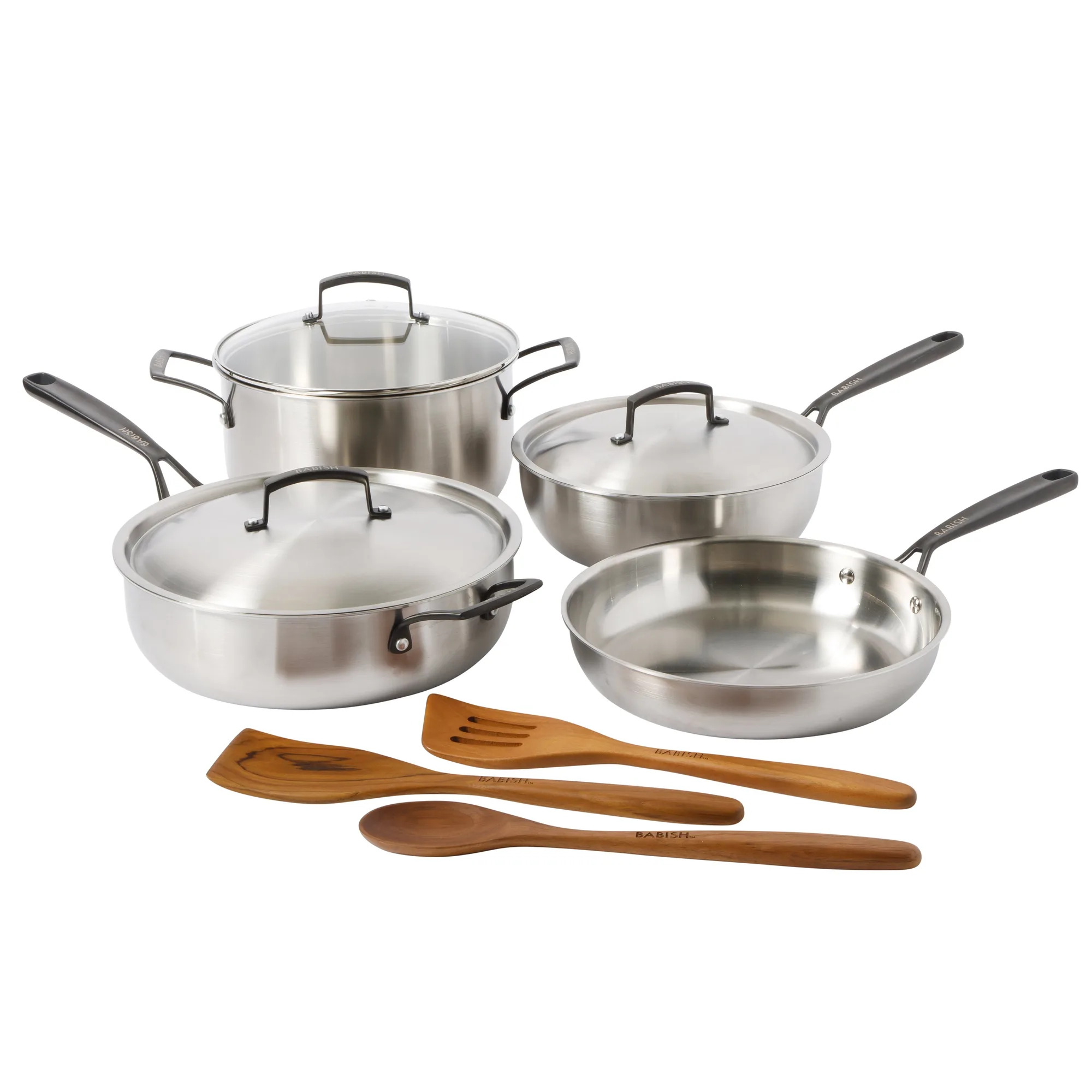
M5 Pro-Ply 10-Piece 5-Ply Stainless Steel Cookware Set | Oven Safe: The M5 Pro-Ply 10-Piece Set has a rivet-free interior that creates a clean, easy-to-wipe cooking surface. With no rivets to trap food, routine washing takes less scrubbing and the pan dries more thoroughly.
M5 Pro-Ply 10-Piece 5-Ply Stainless Steel Cookware Set | Oven Safe
M5 Pro-Ply 10-Piece 5-Ply Stainless Steel Cookware Set | Oven Safe