Quick answer
A soaker hose waters unevenly when water pressure is too low, the hose is kinked or clogged, or it's placed on a slope. Start by checking your tap pressure and straightening the hose. If the problem persists, flush the hose or shorten its run.
Why soaker hoses can water unevenly
Soaker hoses rely on steady, moderate water pressure to push water evenly through tiny pores along their length. If the pressure drops below the hose's design range, the far end gets little or no water. Slopes also cause gravity to pull water downhill, leaving the uphill section dry. Clogs from soil or mineral deposits can block sections, creating dry spots.
Step-by-step troubleshooting guide
Start by checking your outdoor tap. Turn it on fully and see if the flow seems weak. If you have multiple hoses or attachments connected, remove them and test the soaker hose alone. A soaker hose typically needs 10–25 PSI to work properly. If your home's pressure is lower, consider using a shorter hose or a pressure regulator designed for drip irrigation.
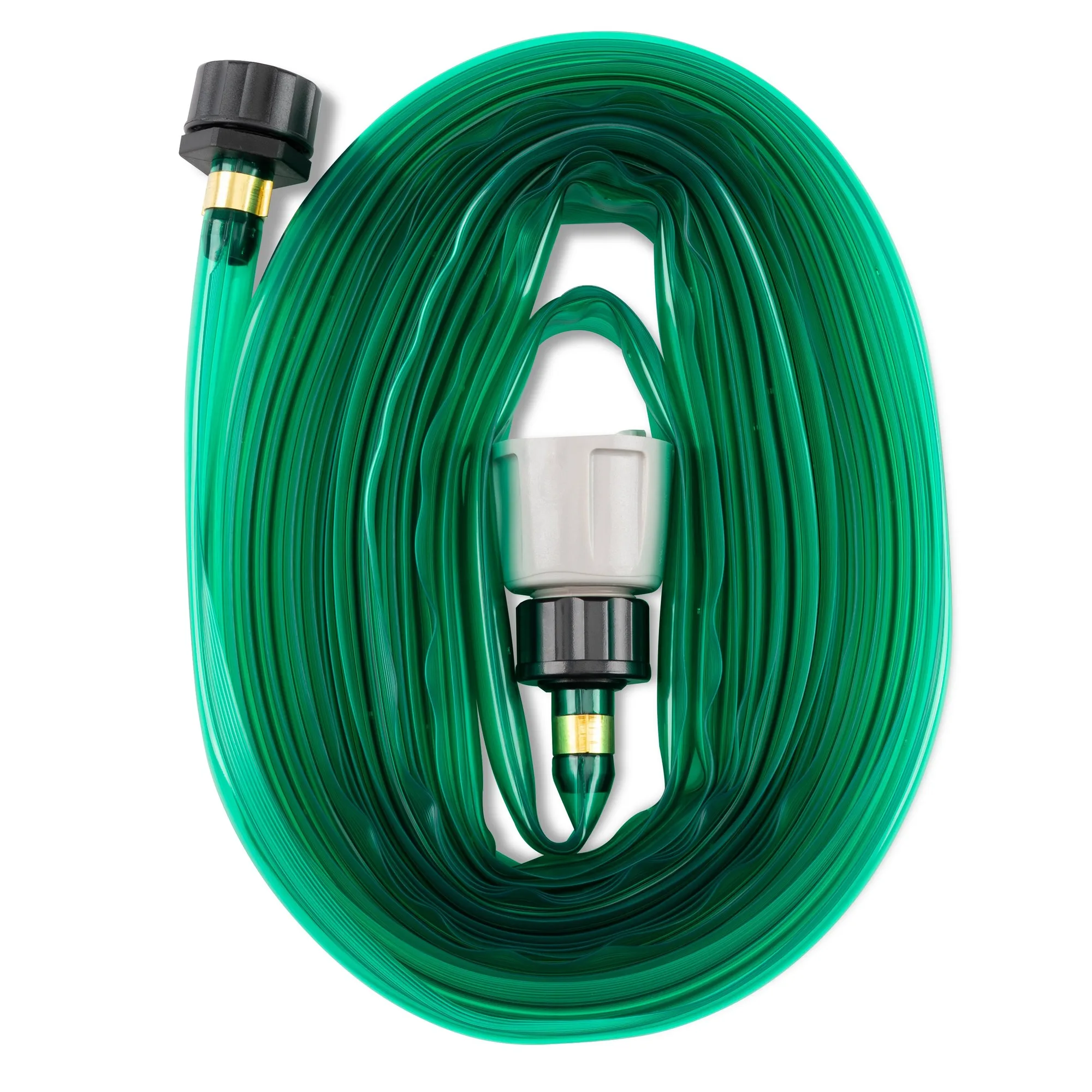
Next, inspect the hose for kinks, sharp bends, or twists. Straighten it out and lay it as flat as possible. If the hose is on a slope, run it across the slope (contour) instead of downhill to reduce gravity effects. For long runs over 7.5 meters, the water may not reach the end. The Hoselink 7.5m Soaker Hose is designed for areas up to 4 meters wide, so using it within its intended length helps maintain even coverage.
If pressure and layout are fine, clogs are the likely culprit. Disconnect the hose and hold one end up to a faucet. Run water through it backward for 30 seconds to flush out debris. For stubborn mineral buildup, soak the hose in a vinegar solution (1 part white vinegar to 3 parts water) for an hour, then rinse thoroughly.
When to replace your soaker hose
If you've tried flushing, adjusting pressure, and relaying the hose without improvement, the hose may have internal damage or permanent clogging. Older hoses can also develop cracks that leak water unevenly. At that point, replacing the hose is more reliable than continued troubleshooting.
Diagnosis checklist for uneven soaker hose watering
- Symptom: Some plants are dry while others are wet; water pools at the start of the hose but not at the end.
- Likely cause: Low water pressure, kinked hose, slope, or clogged pores from soil or minerals. Check pressure first — it's the most common cause.
- Corrective action: Turn tap fully on, remove extra attachments, straighten hose, flush backward, or shorten the run. For slopes, run hose across the slope. If flushing doesn't work, try a vinegar soak.
- Stop or choose another option: If the hose still waters unevenly after all steps, replace it. A damaged or permanently clogged soaker hose cannot be repaired reliably. Consider a new soaker hose designed for your garden size.
Product that helps with even watering
- 7.5m Soaker Hose: The Hoselink 7.5m Soaker Hose is ideal for watering areas up to 4 metres wide (2 metres either side). Simply place the soaker hose in your garden, connect it to your garden hose and it will do the rest! Made from high quality materials and manufacturing processes, the soaker hose features small holes along its length to ensure even watering and coverage. This hose is designed for even coverage when used within its recommended length and width, reducing the chance of uneven watering caused by excessive run length.