Quick answer
Most faded prints on Kappa Sig tees and printed stoles come from heat, harsh detergent, and abrasion in the wash, not from age. Wash printed items inside out in cold water and air-dry them, and reserve color-restoring dye pens for small scuffs only. Once a print is cracked, chalky, or flaking, no home method brings it back, so stop treating it and replace the piece.
Confirm what is actually fading before you treat it
Hold the item next to a window in daylight and compare the print to the surrounding fabric. A print that looks dull but still feels smooth and flexible is usually surface fading from detergent residue and sun exposure, and it often responds to a gentle re-wash. A print that looks chalky, feels stiff, or shows fine cracks has lost binder, and that damage is permanent.
Check the fabric too, not just the ink. If the cotton around the graphic has faded evenly while the print stayed dark, you have a garment-dye problem, not a print problem, and print-specific fixes will not help. This distinction decides whether you spend time treating the item or start shopping for a replacement.
Stop the two habits that cause most print fading
Heat is the single biggest cause. Hot water, a hot dryer, and a hot iron all break down the plastisol or water-based ink binder that holds pigment to cotton. Cold water and air-drying solve most of the problem before it starts, and they cost you nothing.
The second habit is abrasion. Zippers, buttons, and heavy denim rubbing against a printed graphic in the wash act like sandpaper. Washing printed tees and stoles separately from hardware-heavy items, or turning them inside out, removes most of that friction. Skip fabric softener and dryer sheets as well, because the waxy coating they leave behind dulls print color over time.
Safe fixes for mild surface fading
For a print that is merely dull rather than damaged, rewash the item alone in cold water with a small amount of gentle liquid detergent, then air-dry it flat away from direct sun. This removes detergent film and softener buildup that can make colors look hazy.
For small scuffed areas on a dark graphic, a fabric marker matched to the print color can touch up tiny spots. Test it on an inside hem first, apply in thin layers, and let it cure fully before wearing. This works on small marks, not on large faded fields, and it will not match a print that has faded unevenly across the whole design.
Printed stole vs embroidered stole: different care rules
Printed stoles and embroidered stoles fail in different ways, so they need different handling. A printed stole fades when the ink binder breaks down, so heat and abrasion are the enemies. An embroidered stole uses thread, which does not fade the same way but can snag, pill, or pull, so the risk there is mechanical damage rather than color loss.
For embroidered pieces, wash inside out in a mesh bag on a gentle cycle and never scrub the stitching directly. If a thread pulls, do not cut it; use a blunt needle to work it back through from the reverse side. Treating an embroidered stole with print-restoring products is wasted effort because the color sits in the thread, not in a printed layer.
Diagnosis: symptom, cause, fix, and stop point
- Symptom: print looks hazy but feels smooth: Detergent film, fabric softener residue, or mild sun fading on an intact print. Rewash cold and alone with gentle detergent, then air-dry flat out of direct sun. If color improves after one wash, repeat the routine going forward and skip softener entirely.
- Symptom: print is chalky, stiff, or finely cracked: The ink binder has broken down from heat or repeated hot drying. There is no home method that rebuilds binder once it fails. Stop treating the item. Demote it to a workout or yard-work shirt and replace it for events.
- Symptom: small scuff or scratch on a dark graphic: Localized ink loss from abrasion. A color-matched fabric marker applied in thin layers can mask small spots after a patch test on an inside hem. If the marker does not match after curing, leave it alone rather than layering more color.
- Symptom: fabric faded but print still dark: Garment dye loss, not print failure. Print-specific fixes will not help, and dyeing the whole garment risks staining the graphic. Choose another option: replace the piece or reserve it for low-visibility wear.
Kappa Sig tees built for everyday print wear
- Kappa Sig Tropical Tee: Made of 100% pre-shrunk ringspun cotton with a relaxed fit. Pre-shrunk ringspun cotton holds its shape through repeated cold washes, so the print sits on a stable surface instead of stretching and cracking as the shirt shrinks.
- Kappa Sig Stay Winning Football Short Sleeve Tee: Printed on a Comfort Colors tee in ivory with the Kappa Sigma Stay Winning football design. Ivory and other light garment colors show print fading less obviously than dark shirts, which makes them a lower-maintenance choice if you wash casually.
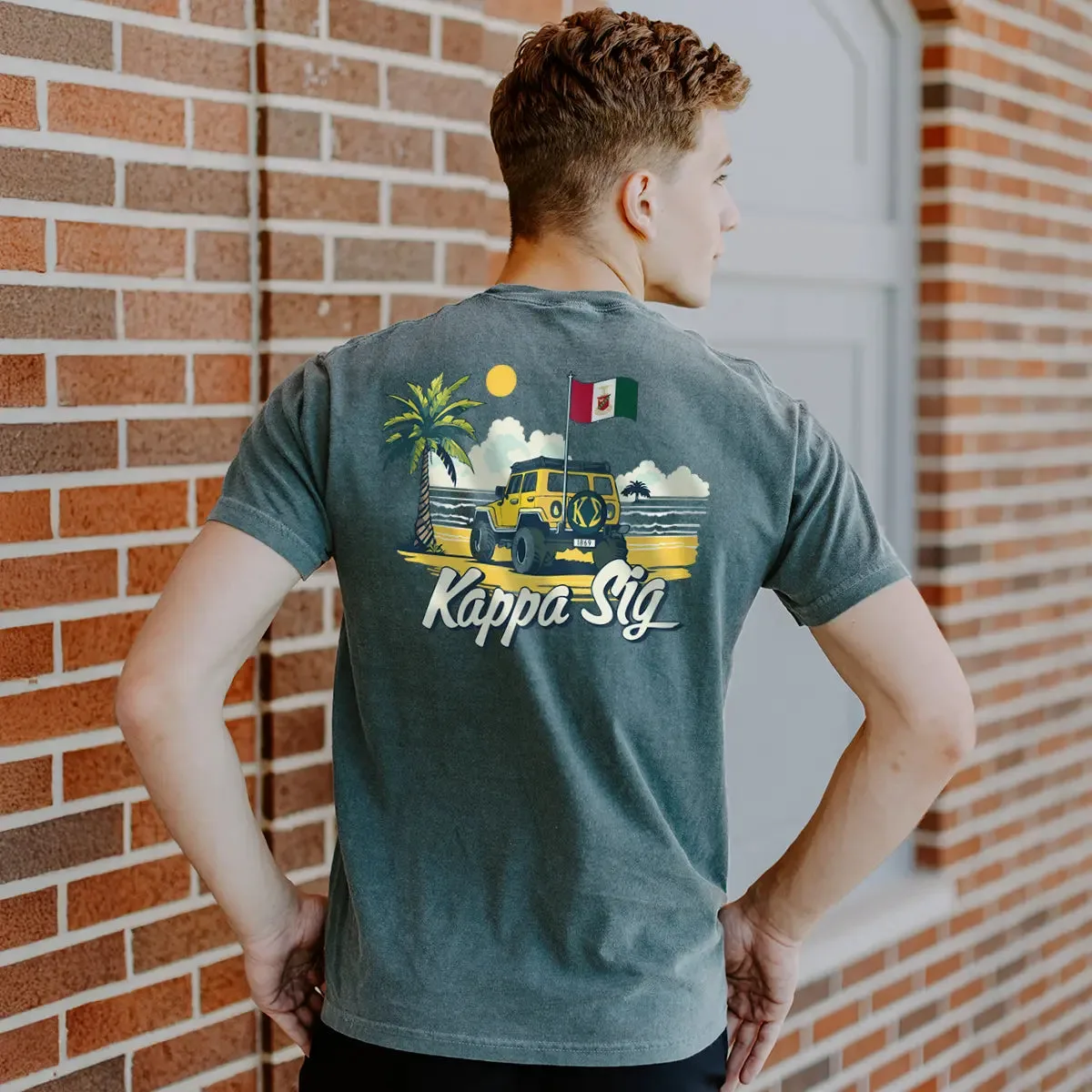
- Kappa Sig Coastal Cruiser Short Sleeve Tee: Features a coastal graphic with a Jeep on sandy shores and the Kappa Sig flag, available in multiple sizes. Large multi-color graphics like this one have more ink area to protect, so inside-out washing and air-drying matter more than they would on a small single-color print.