Why Resin Bullet Dice May Roll Differently
Resin bullet dice, like the Vampire Hunter’s Reckoning Resin Bullet Dice Set from FanRoll by Metallic Dice Games, are shaped like classic bullets. This unique shape can affect how they tumble and land compared to standard polyhedral dice. The elongated, tapered design may lead to more slides or less chaotic bouncing, which some players interpret as unbalanced rolling.
It is important to distinguish between a die that is physically unbalanced (weight distribution off) and one that simply behaves differently due to its shape. The supplied information does not confirm manufacturing defects or weight inconsistencies for this set. If your dice feel off, the first step is to check for visible issues like trapped air bubbles or uneven surfaces.
Check for Common Causes Before Tuning
Before attempting any correction, rule out simple causes that can mimic imbalance.
- Surface debris or residue: A bit of dust, oil, or residue from the mold can stick to the die face, altering its roll. Clean the dice with a soft, damp cloth and dry thoroughly.
- Uneven table surface: A warped or textured rolling surface can make any die appear unbalanced. Test on a flat, smooth surface like a dice tray.
- Die shape and rolling style: Bullet-shaped dice have a higher center of gravity and may not tumble as much as standard poly sets. Try a more vigorous roll to see if the behavior changes.
What the Catalog Confirms About the Vampire Hunter Set
-
Resin Bullet Poly Dice Set: Vampire Hunter: Each die in this full polyhedral set is shaped like a classic bullet and cast in sleek silver-toned resin, accented with dramatic blood splatter detailing. The bullet shape is intentional and part of the design's aesthetic. The resin casting process can sometimes introduce small air bubbles, but the catalog does not confirm any defects for this set.
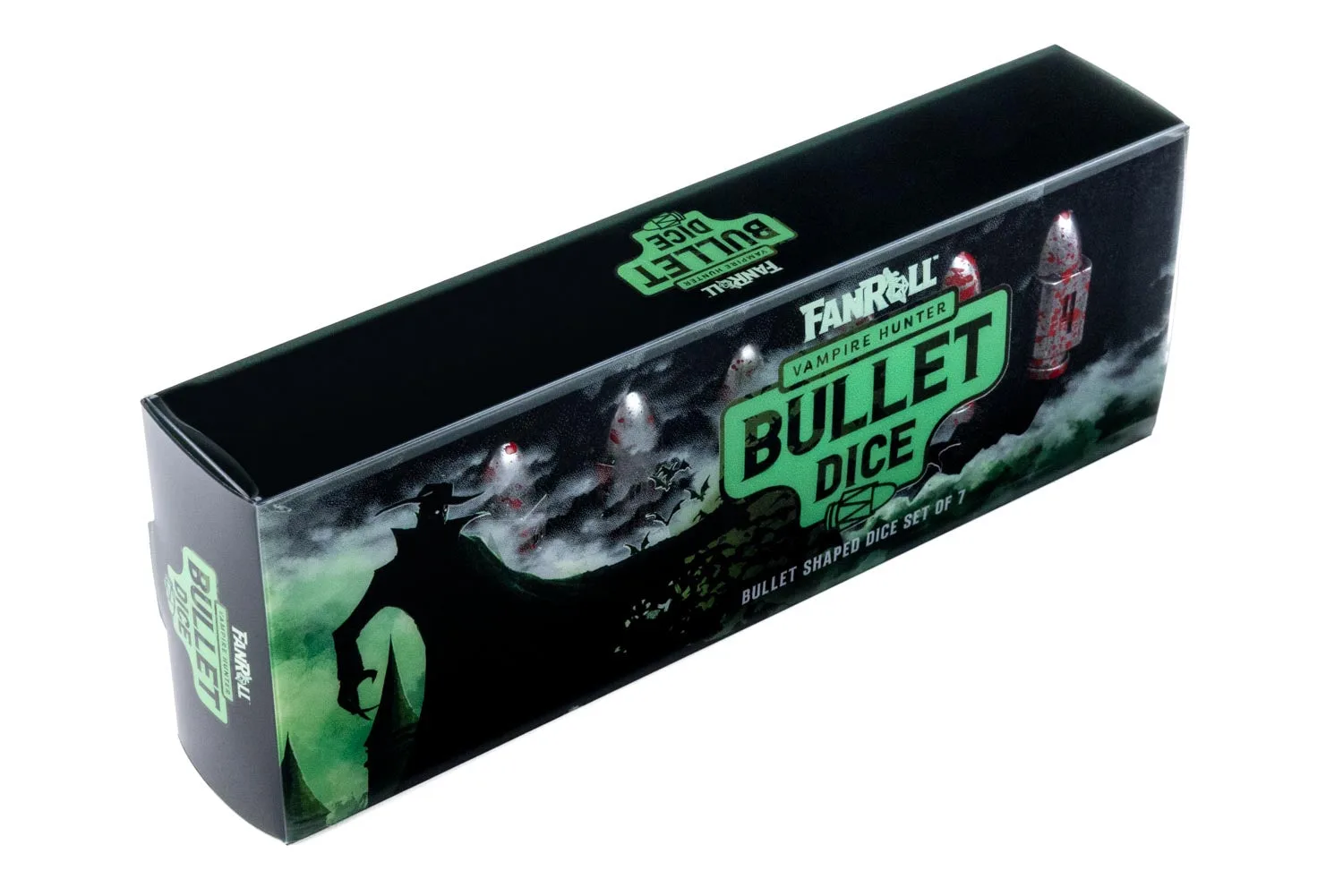
Resin Bullet Poly Dice Set: Vampire Hunter
-
Resin Bullet Poly Dice Set: Vampire Hunter: Designed to evoke the tools of a relentless hunter, these dice balance gothic style with dependable performance. The set is marketed as offering dependable performance, suggesting that any rolling quirks are likely shape-related rather than manufacturing flaws.
How to Test for Actual Imbalance
To determine if a die is truly unbalanced, perform a float test. Fill a glass or bowl with room-temperature water and add enough salt (about 2 tablespoons per cup) to make the die float. Gently submerge the die and nudge it to spin. If the same face consistently floats upward, the die may have an internal void or weight imbalance. However, note that the catalog does not provide specific instructions for this test or confirm its reliability for resin bullet dice.
If you find a consistent bias, you can try a gentle correction: lightly sand the heavier side with fine-grit sandpaper (1000+ grit) to remove a tiny amount of material. Work slowly and check often. For bullet-shaped dice, focus on the flat faces rather than the tapered tip to avoid altering the shape too much.
When to Accept the Design Quirks
Many players enjoy the unique rolling behavior of thematic dice. The Vampire Hunter set's bullet shape gives it a distinctive table presence that fits the gothic hunter theme. If your dice pass the float test and roll consistently within a normal range, the variation you notice may simply be the character of the design. In that case, no fix is needed.
If you are still unsatisfied, consider using these dice for games where precision is less critical, or keep them as a display piece. The catalog does not offer a return or replacement policy for rolling preferences, so understanding the design's nature helps set expectations.