Quick Answer
Choose a flannel top when you need warmth and a brushed, cozy feel for cooler days. Choose a woven top when you want lightweight breathability and an airy look for mild weather or indoor wear. Both are made from GOTS-certified 100% organic cotton, so the real decision comes down to season, layering, and how much care you want to do.
What Actually Sets Flannel and Woven Tops Apart
Flannel and woven tops can look similar on a hanger, but the fabric construction changes how they feel and perform. Flannel is brushed cotton, which gives it a soft, slightly fuzzy surface that traps a bit of warmth. Woven cotton is smooth and lightweight, so it drapes more and lets air move through. That single difference drives most of the practical choices you'll make: which season to wear it, whether it works as a base layer or a top layer, and how it holds up in the wash.
For baby girls, this matters because their comfort range is narrow. A top that's too warm leads to fussiness and overheating; one that's too thin leaves them chilly during stroller walks or early mornings. Matching the fabric to the day's plan is easier than trying to adjust later.
Warmth and Breathability: Which Fabric for Which Day
Flannel's brushed surface makes it the better pick for cool fall mornings, air-conditioned rooms, and outdoor time when you want a single layer to do more. It's also a natural choice for layering under a jacket or cardigan without adding bulk. Woven tops, by contrast, are the better pick for mild days, indoor play, and anytime you want a light layer that won't cling. They're breathable and airy, which helps during active play or in warmer rooms.
If you're building a small capsule, one flannel top and one woven top cover most of the temperature range you'll face in fall and spring. You don't need five of each.
Design Details That Affect Daily Dressing
The details on each top are not just decorative; they change how easy it is to dress a wiggly baby. Flannel tops often use pull-on styling with elasticized cuffs and side slits, which helps with movement and makes the top easier to get over the head. Woven tops frequently use a back button closure, which can make dressing simpler for some babies but adds a small step. Neither is universally better; it depends on whether your baby tolerates overhead dressing or prefers a front or back opening.
Ruffles, puff sleeves, and high-low sweeps are common on both styles. These are comfortable as long as the fit is right, but they can add bulk under a tight jacket. If you plan to layer, check that the sleeves and shoulders don't bunch.
Care and Longevity for Each Fabric
Both flannel and woven organic cotton are machine washable, but they age differently. Brushed flannel can pill or lose some of its softness over time if washed with heavy items or dried on high heat. Woven cotton tends to hold its shape and smoothness well, though it can wrinkle more if left in the dryer. For both, washing cold and laying flat or tumble drying low helps them last through hand-me-downs.
If you want the lowest-maintenance option, woven tops generally need less fuss. If you love the cozy feel of flannel, a small amount of extra care keeps it soft.
Layering Strategies That Work
For baby tops for layering, start with the fabric that matches the base temperature. On a cool day, a flannel top works as the visible layer over a short-sleeve bodysuit, or under a denim jacket. On a mild day, a woven top can be the only layer indoors and then go under a light cardigan for outside. The goal is to avoid trapping too much heat against the skin, which is the most common layering mistake.
If you're not sure, choose the lighter option and add a layer. It's easier to add a cardigan than to cool a baby down once they're overheated.
Trade-Offs at a Glance
- Warmth vs. Breathability: Flannel traps more warmth; woven cotton lets more air through. Pick flannel for cool days and woven for mild or indoor days. Match the fabric to the day's temperature, not the outfit.
- Dressing Ease vs. Simplicity: Flannel tops often pull on with side slits; woven tops may use a back button. Both work, but one may suit your baby's tolerance better. If overhead dressing is a struggle, a back button can help.
- Care Effort vs. Longevity: Brushed flannel can pill if washed with heavy items or dried hot; woven cotton wrinkles more but holds its shape. Wash cold and dry low to get the most wears from either fabric.
Two Organic Tops That Show the Difference
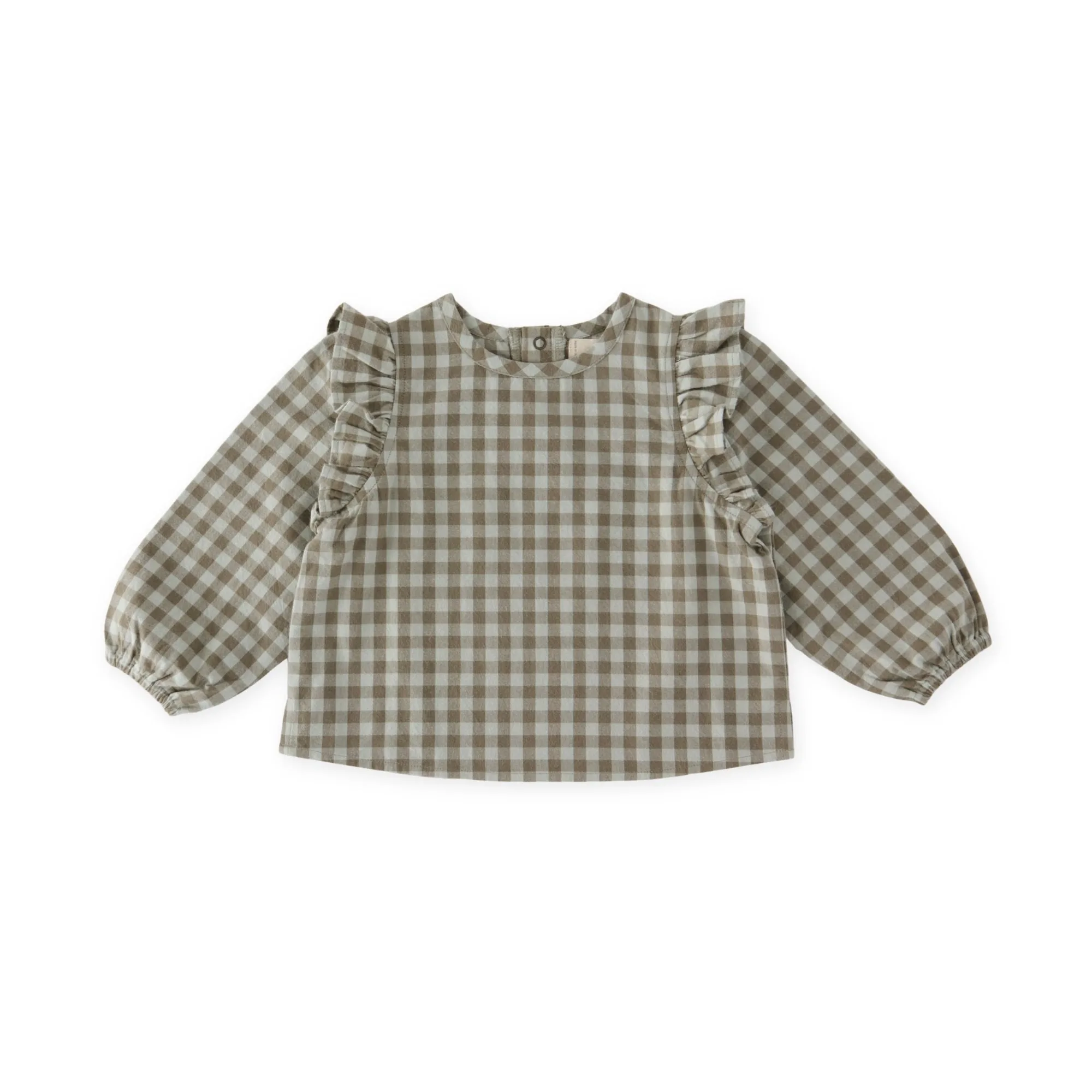
- Flannel Ruffle Top - Thistle/Light Thistle: Made from GOTS-certified 100% organic brushed cotton and washed for extra softness, with shoulder ruffles, puff sleeves, elasticized cuffs, side slits, and a high-low sweep. The brushed cotton gives warmth for cooler days, while the elasticized cuffs and side slits make it easier to move and dress a squirmy baby.
- Flannel Ruffle Top - Sage/Light Sage: Same GOTS-certified 100% organic brushed cotton construction as the Thistle version, with the same ruffle, puff sleeve, and side slit details. If you like the flannel feel but want a different color, this is the same top in a sage palette, so the fit and care are identical.
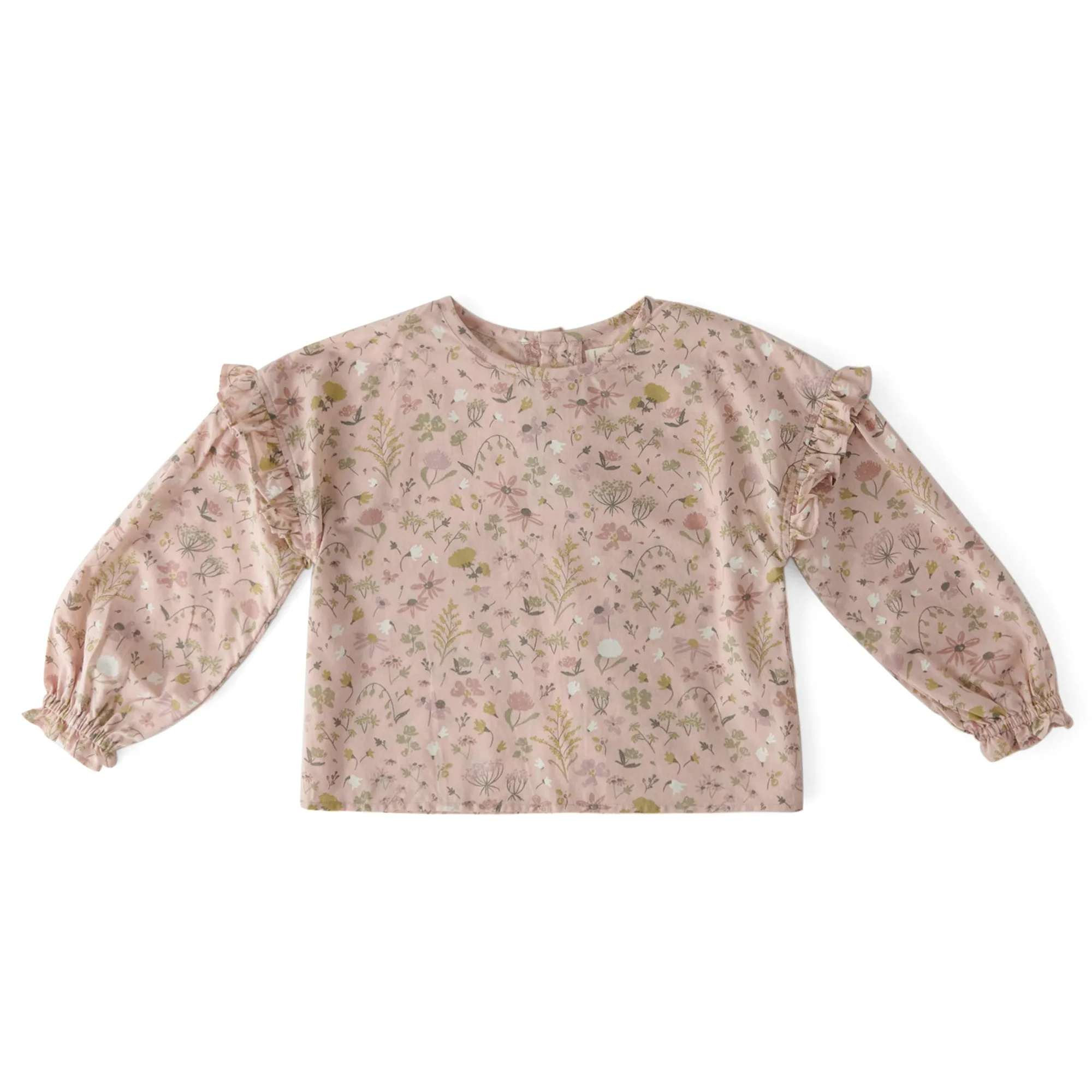
- Woven Flutter Top - Wildflower: Made from soft, lightweight woven organic cotton in the Wildflower print, with shoulder ruffles, elasticated cuffs, puff sleeves, and a back button closure. The lightweight woven fabric is breathable for mild days, and the back button makes dressing easier if your baby dislikes pull-on tops.
Which One to Choose
Best for
- Cool fall mornings and air-conditioned rooms where you want one warm layer
- Babies who do well with pull-on tops and need room to move
- Parents who want a cozy, brushed feel in an organic cotton top
Not for
- Hot summer days or very warm indoor play, where a lightweight woven top is more comfortable
- Babies who dislike overhead dressing and do better with a back button closure
- Parents who want the lowest-maintenance wash routine, since flannel needs a bit more care