Quick answer
For building speech faster, start with vocabulary cards that show nouns and adjectives your child can label, then add action verb cards once single words are consistent. The 208 Vocabulary Flash Cards Set offers the widest word range for mixed practice, while the 104 Animals Flash Cards Set for Speech Therapy is a focused, lower-cost entry point. Action verb cards are the better next step for combining words into phrases.
What each card type actually trains
Vocabulary cards train labeling and recognition. They typically show a single object, animal, or food with a bold word, so a child practices matching a spoken word to a picture and then saying it. The 208 Vocabulary Flash Cards Set includes 104 pairs of nouns, adjectives, and verbs, which means you can work on opposites and go-together relationships in the same session. That variety keeps attention longer than a single-category deck.
Action verb cards train sentence building. Instead of naming a thing, the child describes what someone is doing, which pushes them from single words into short phrases like 'boy running' or 'girl eating.' The 104 Action Verbs Flash Cards use realistic photos and cover action verbs and phrasal verbs, so they are designed for that next step. If your child already labels common objects, verb cards will move speech forward faster than adding more nouns.
How to sequence them for faster speech
Use one deck at a time for two weeks, then mix. Start with a vocabulary deck and pull 8 to 10 cards that match your child's interests. Say the word, wait five seconds, and accept any approximation. Once your child labels most of those cards without a model, introduce action verb cards in the same session. Keep the old vocabulary cards nearby so you can pair a noun with a verb, such as 'dog' plus 'running.'
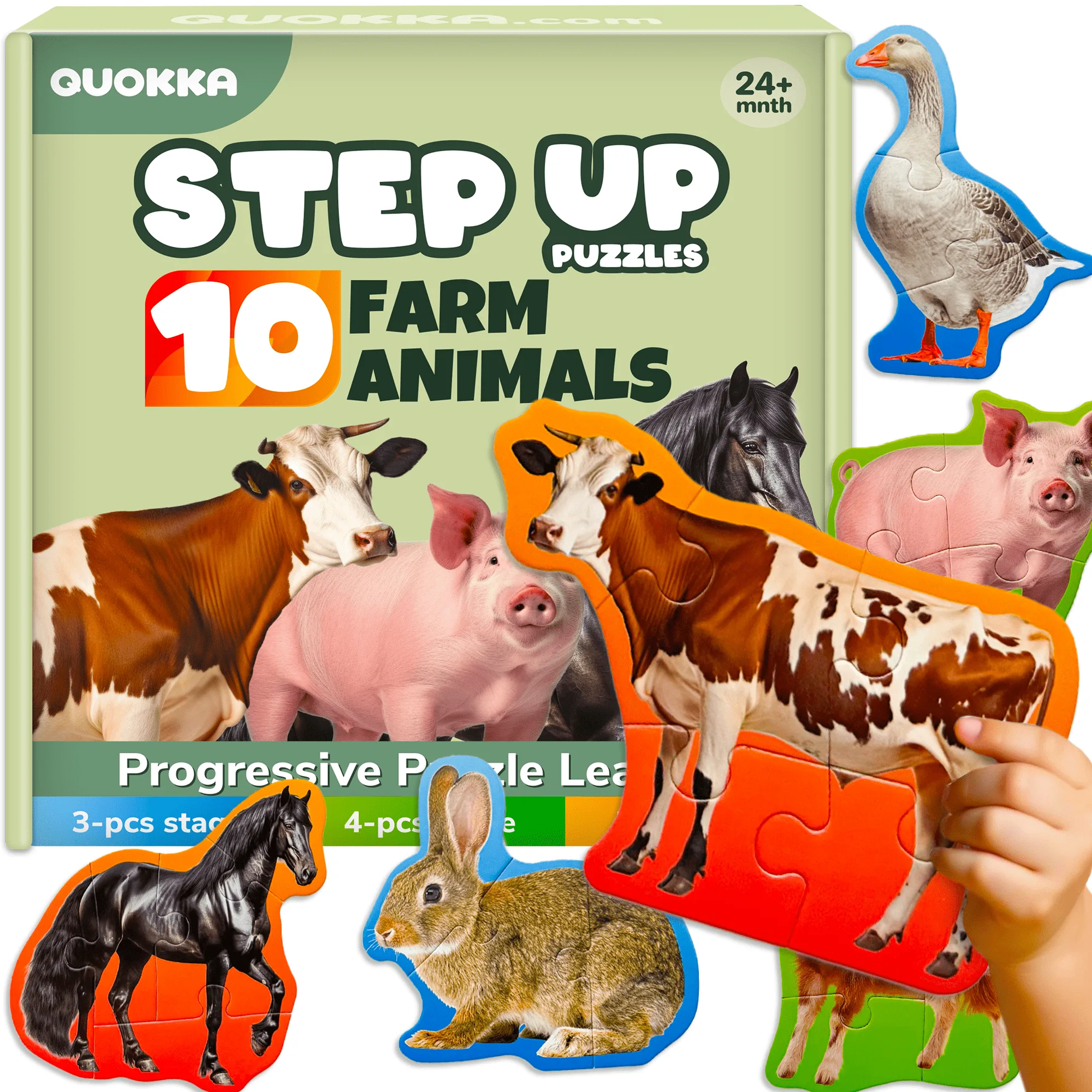
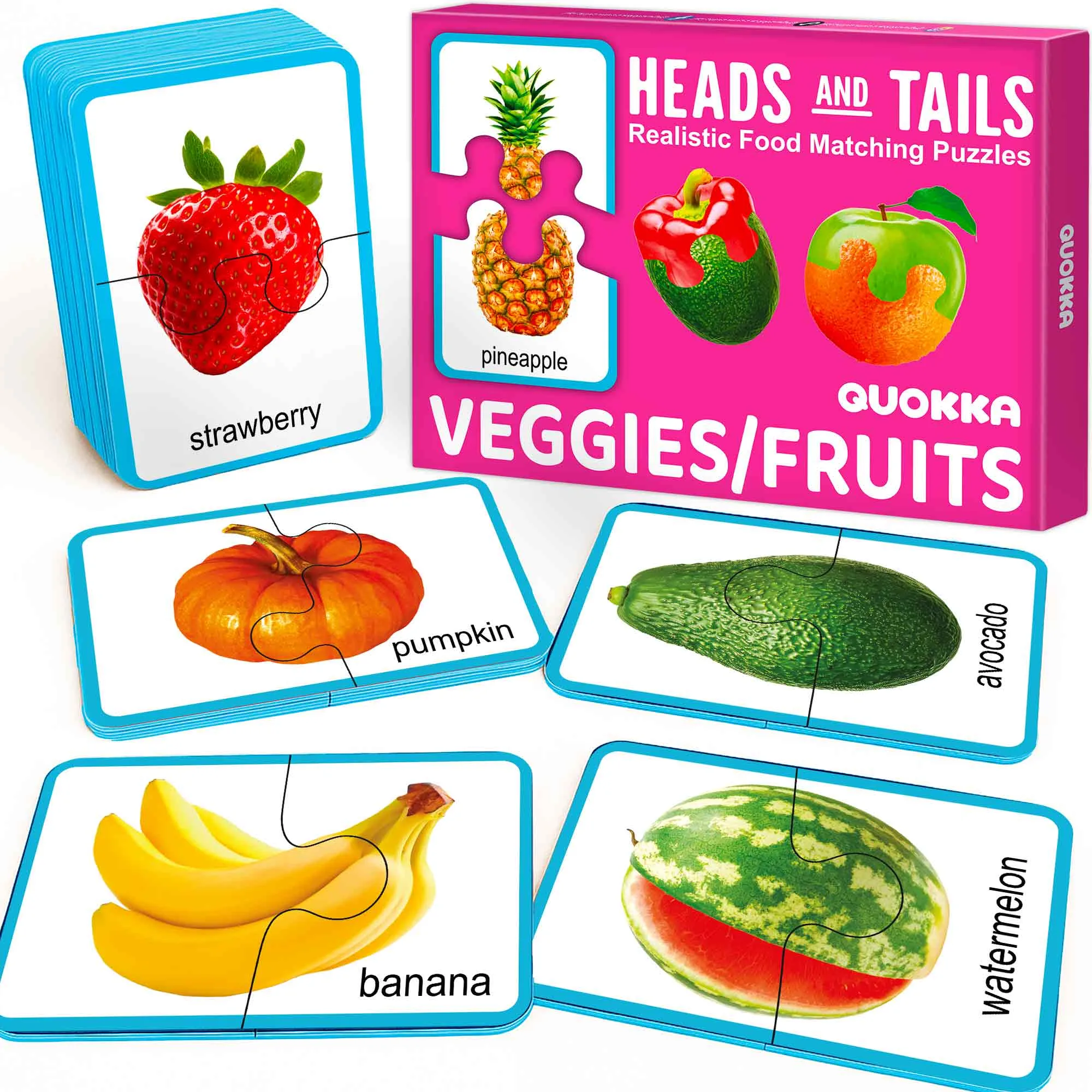
For toddlers who are not ready for verbal drills, a matching card game for toddlers works as a bridge. The Matching Puzzle for Toddlers has 16 realistic fruit and vegetable pairs, and the physical matching action builds attention and turn-taking before you expect spoken labels. Use it as a warm-up, then move to cards.
What the catalogs do and do not tell you
The supplied product records list card counts, image style, and general skill focus, but they do not list card dimensions, cardstock weight, rounded corners, or included storage boxes. If those details matter for your setting, check the individual product page before buying. For a home or small classroom, the available facts are enough to choose between a broad vocabulary deck and a focused verb deck.
Trade-offs to weigh before you buy
- Breadth vs depth: The 208 Vocabulary Flash Cards Set covers more word types, including adjectives and verbs, but a broad deck can overwhelm a child who is just starting. The 104 Animals Flash Cards Set is narrower and easier to pace. Choose breadth if your child already labels common objects; choose depth if they need repetition with one category.
- Labeling vs sentence building: Animal and object cards get a child naming things. Action verb cards get a child describing actions, which is the step that produces phrases. Buying only nouns can leave you stuck at single words. Plan to own at least one noun deck and one verb deck if phrase building is the goal.
- Structured drill vs play: Flash cards are direct practice and depend on an adult prompting. The Matching Puzzle for Toddlers is child-led matching play, which builds attention and turn-taking but does not require speech. Use puzzle play as a warm-up or break, not as a replacement for card practice when speech is the target.
Product facts that affect your choice
- 208 Vocabulary Flash Cards Set | Go Together & Opposites Matching Card Game: 208 Vocabulary Flash Cards Set includes 104 pairs of nouns, adjectives, and verbs with jumbo-sized cards, large bold fonts, and realistic images. The pair format lets you practice opposites and go-together connections, and the large print supports group or classroom use where everyone needs to see the card.
- 104 Animals Flash Cards Set for Speech Therapy: 104 Animals Flash Cards Set for Speech Therapy uses realistic jumbo cards with bold fonts and covers nouns from daily objects, animals, and foods. This is a focused, lower-cost way to build noun vocabulary before adding verbs, and the realistic images reduce confusion between similar animals.
- 104 Action Verbs Flash Cards for Speech Therapy – Educational for Kids: 104 Action Verbs Flash Cards include vibrant photo action cards, cover action verbs and phrasal verbs, and are compact and portable for on-the-go learning. Portability makes them easy to use in short sessions during transitions, and the verb focus is what moves a child from single words to two-word phrases.
- Matching Puzzle for Toddlers - 16 Realistic Pairs Fruits Veggies: Matching Puzzle for Toddlers has 16 sturdy two-piece puzzles with realistic fruits and veggies, suggested for ages 1–3 to explore matching and ages 3–5 to reinforce names and memory. It gives younger children a hands-on matching card game for toddlers that builds joint attention before you expect spoken vocabulary.
Which should you choose?
Best for
- Parents starting speech practice at home who want one deck with nouns, adjectives, and verbs: 208 Vocabulary Flash Cards Set
- A lower-cost first step focused on animal and object naming: 104 Animals Flash Cards Set for Speech Therapy
- Children who already label objects and need to build two-word phrases: 104 Action Verbs Flash Cards
- Toddlers ages 1–3 who need matching and attention practice before verbal drills: Matching Puzzle for Toddlers
Not for
- Children who still mouth or tear cards and need durable, chew-safe materials rather than paper cards
- Buyers who need a specific card size, cardstock weight, or storage box, since those details are not listed in the supplied catalog facts
- Families looking for a fully independent activity, because flash card practice works best with an adult prompting and modeling