Quick answer
Set a balanced table by starting with a clean linen base, placing flatware in order of use from the outside in, and choosing serveware that matches the meal's scale. For most casual dinners, a simple three-piece flatware setting per person and two or three serving pieces in the center is enough.
Start with linens that ground the setting
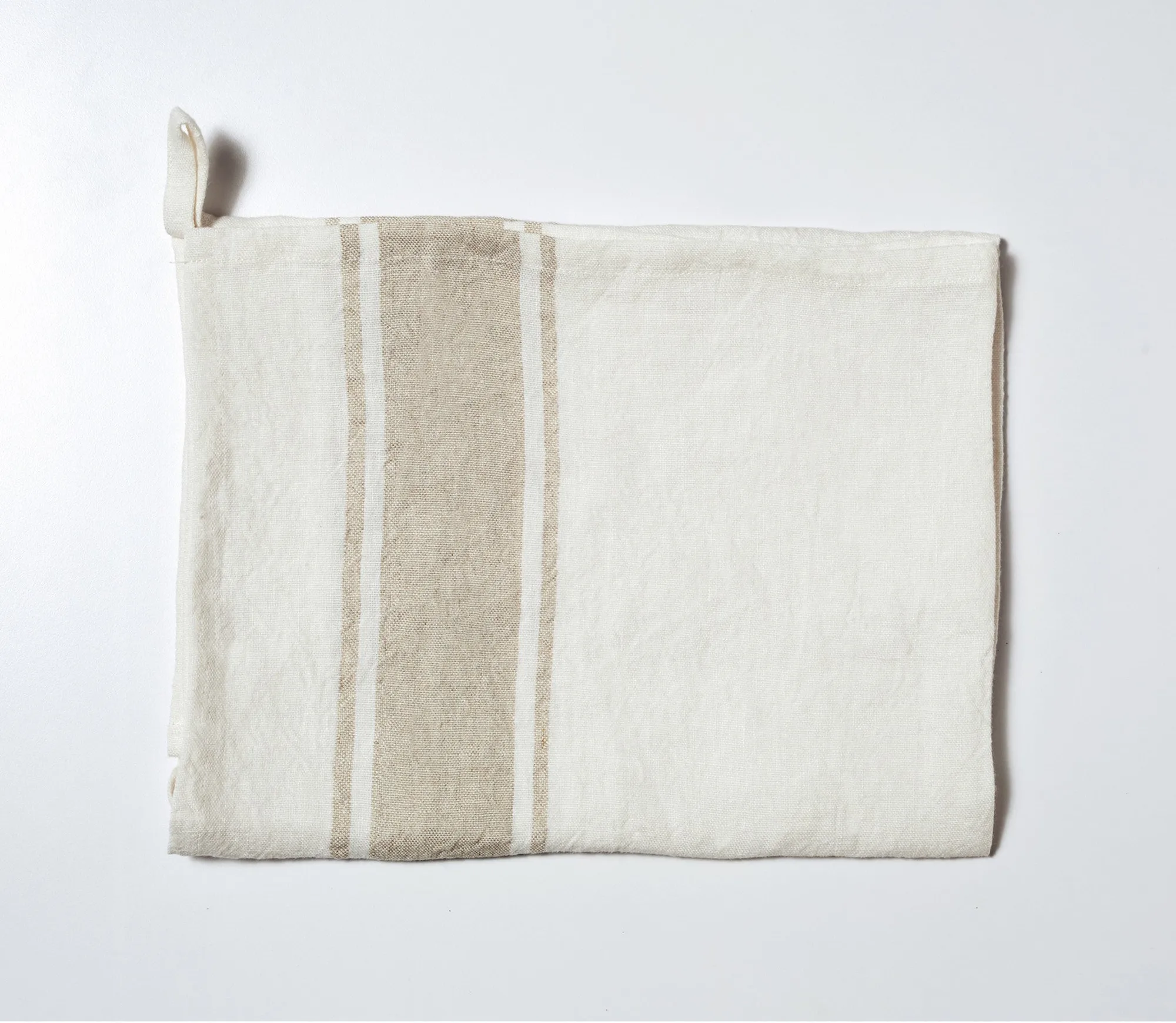
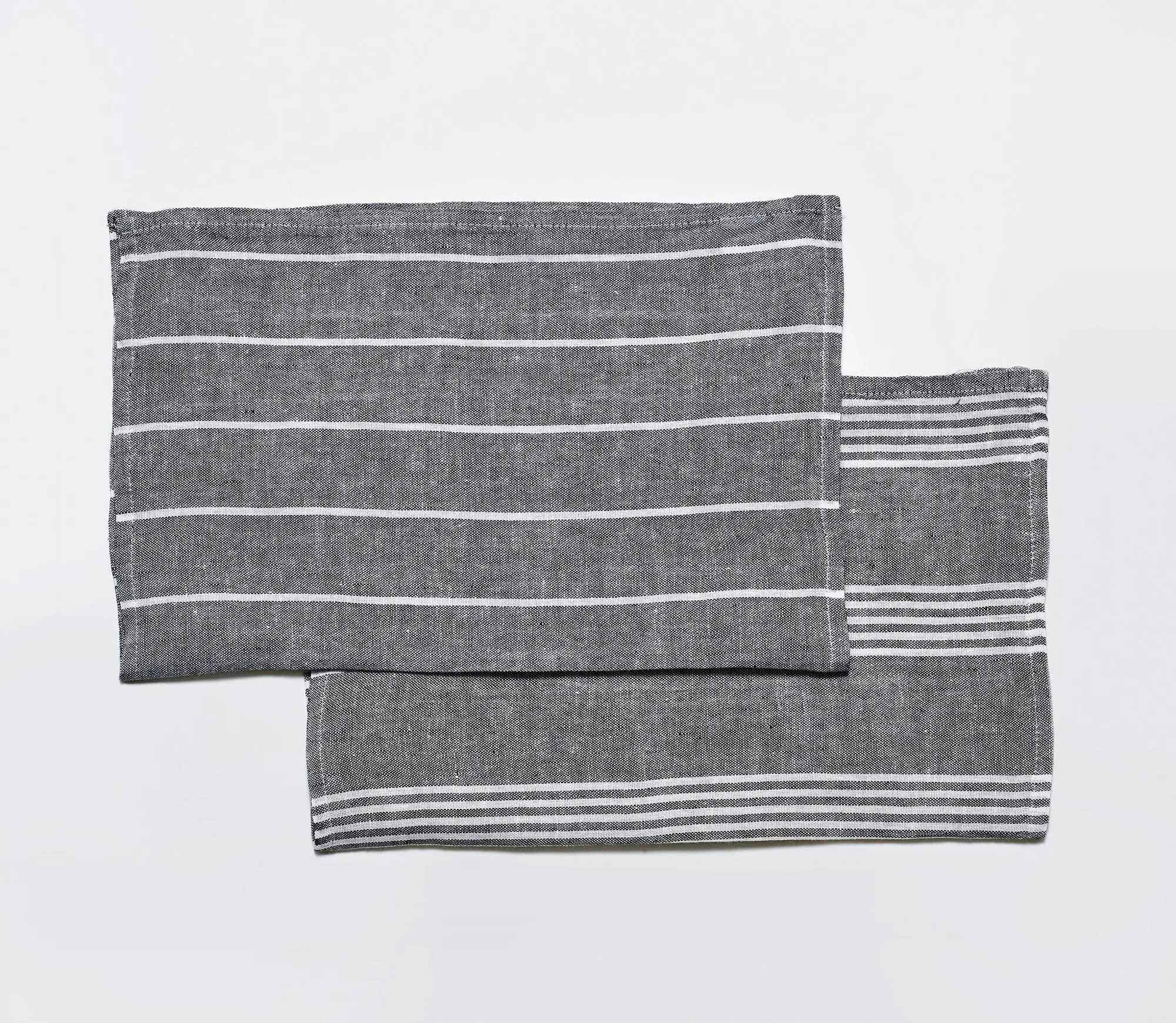
A table linen does more than protect the surface; it defines the visual weight of the setting. For everyday meals, a washed linen kitchen towel folded under a plate can act as a casual placemat, while a full tablecloth signals a more formal tone. Snowe's Kitchen Towel Set offers a range of neutral stripes that can be mixed across place settings without competing with flatware or serveware.
Place flatware in order of use
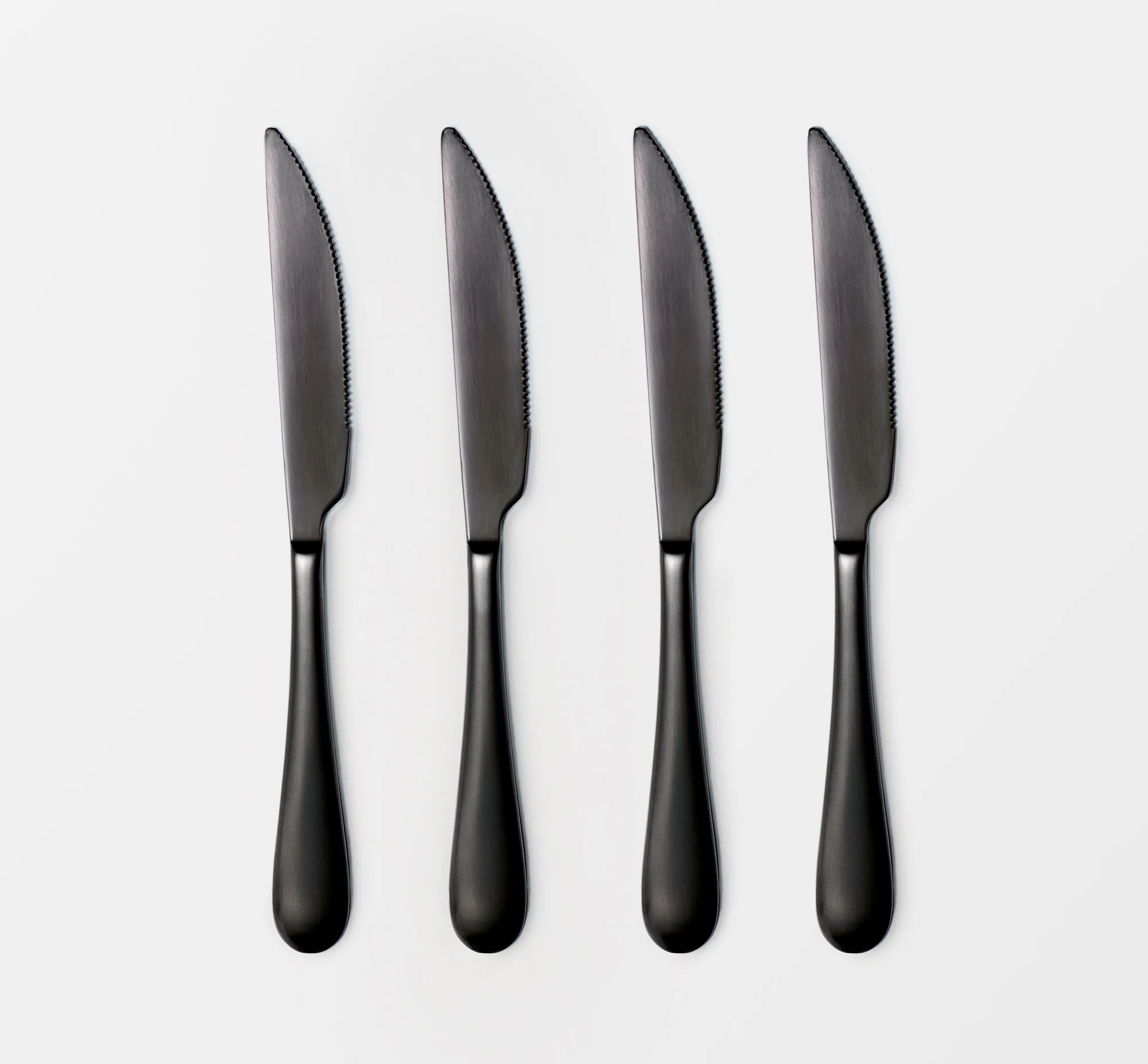
The flatware placement guide is simple: forks go to the left of the plate, knives and spoons to the right. Arrange pieces from the outside in, so the first utensil used is farthest from the plate. For a casual dinner table setup, you rarely need more than a fork, knife, and spoon per person. If you are serving steak or lamb chops, a dedicated steak knife earns its place; Snowe's Steak Knives - Set of 4 have a balanced handle that feels secure without being heavy.
Choose serveware that matches the meal
Serveware for entertaining should scale with the food. A large platter for a roast, a shallow bowl for grains, and a small dish for condiments cover most dinners. Avoid overcrowding: leave space between pieces so guests can reach without knocking into neighbors. If your table is small, use one multifunctional piece instead of three.
Add a functional accent with a chef's towel
A chef's towel can bridge the gap between kitchen and table. Snowe's Chef's Towel - Original Stripe has a clever tie that lets it double as an apron, so you can move from cooking to serving without changing gear. Draped over a chair or folded near the center, it adds texture without formal fuss.
Step-by-step table setting
- Lay the linen base: Place a tablecloth or individual placemats. For a casual look, use a folded kitchen towel as a placemat. Check that linens are wrinkle-free and centered. Common mistake: using a tablecloth that is too small, leaving bare edges that look unfinished.
- Position the plate: Set a dinner plate about an inch from the table edge. If serving soup or salad, stack a smaller bowl on top. Checkpoint: the plate should be centered in the place setting with even space on all sides.
- Place flatware: Put forks to the left of the plate (salad fork outside, dinner fork inside). Place the knife to the right with the blade facing the plate, and the spoon to the right of the knife. For steak, swap the knife for a steak knife. Common mistake: placing the knife blade facing outward, which can be unsafe and looks incorrect.
- Add serveware: Arrange serving dishes in the center or on a sideboard. Use one large platter for the main, one bowl for a side, and a small dish for condiments. Leave space between pieces. Checkpoint: guests should be able to reach at least one serving piece without asking for it to be passed.
- Finish with glassware and napkins: Place a water glass above the knife. Fold a napkin and set it on the plate or to the left of the forks. If using a chef's towel as a napkin, tie it loosely. Common mistake: overcrowding the setting with extra glasses or utensils that won't be used.
Product facts
- Kitchen Towel Set: Italian washed linen kitchen towels in a range of neutrals with timeless stripes, described as chic, soft, and extra durable. These towels can serve as casual placemats or napkins, adding a soft neutral layer that won't compete with flatware patterns.
- Steak Knives - Set of 4: Set of 4 steak knives with a strong, sharp, well-balanced design for steak or lamb chops. A dedicated steak knife improves the dining experience for meat courses and signals a thoughtful table setting.
- Chef's Towel - Original Stripe: Chef's towel with a clever tie that allows it to double as an apron, softening over time. This towel adds practical versatility for hosts who move between kitchen and table, reducing the need for separate aprons.