Quick answer
For soft wires up to 1.5 mm where you need a clean, square end, a flush-cut wire guillotine is the better choice. A benchtop shear is more versatile for thicker or sheet material, but it won't give the same precision on fine wires.
Why the end shape matters
When you cut wire with pliers, the blades pinch the metal and leave a wedge-shaped end. For solder joints, butt joints, or batch components, that wedge means a poor fit and a weak joint. A flush-cut guillotine shears the wire at 90 degrees, leaving a flat, square face every time. This consistency is a big advantage when you're making multiples of the same component.
What a benchtop shear does differently
A benchtop shear is a general-purpose cutting tool. It can handle thicker wire and sheet metal, which a guillotine designed for soft wires cannot. However, its blade action is less precise on fine wires, and it may not produce the same clean, square cut. If your work mixes wire and sheet, a shear gives you more flexibility, but you may need to file or sand the cut ends to get a true square finish.
Trade-offs to consider
The main trade-off is precision versus versatility. A flush-cut wire guillotine is a specialist tool: it does one job very well, but only for soft wires up to 1.5 mm. A benchtop shear is a workhorse that handles a wider range of materials, but it demands more skill to get a clean cut on fine wire. Also, think about your bench space. A guillotine is compact and can sit alongside your other bench tools, while a shear might need more room.
How to choose: guillotine vs shear
- Need a clean, square end every time?: Choose a flush-cut wire guillotine. It shears soft wire at 90 degrees, leaving a flat face perfect for solder joints and butt joints. If you often make components in batches, the guillotine's consistency saves you filing time.
- Cutting a mix of wire and sheet?: A benchtop shear is more versatile. It can handle thicker wire and sheet metal, but you may need to finish the cut ends with a file. Weigh the convenience of one tool against the extra finishing work.
- Working with wire thicker than 1.5 mm?: The guillotine is not suitable. Use a shear or another cutting tool rated for that thickness. Check your wire gauge before buying to avoid a tool that's too limited.
Product facts
-
Flush-Cut Wire Guillotine — Benchtop Shear for Soft Wires up to 1.5 mm Diameter: The Flush-Cut Wire Guillotine is a benchtop shear designed for soft wires up to 1.5 mm diameter (14 gauge). This means it's ideal for fine jewellery work where a clean, square cut is essential, and it won't handle thicker or harder wires.
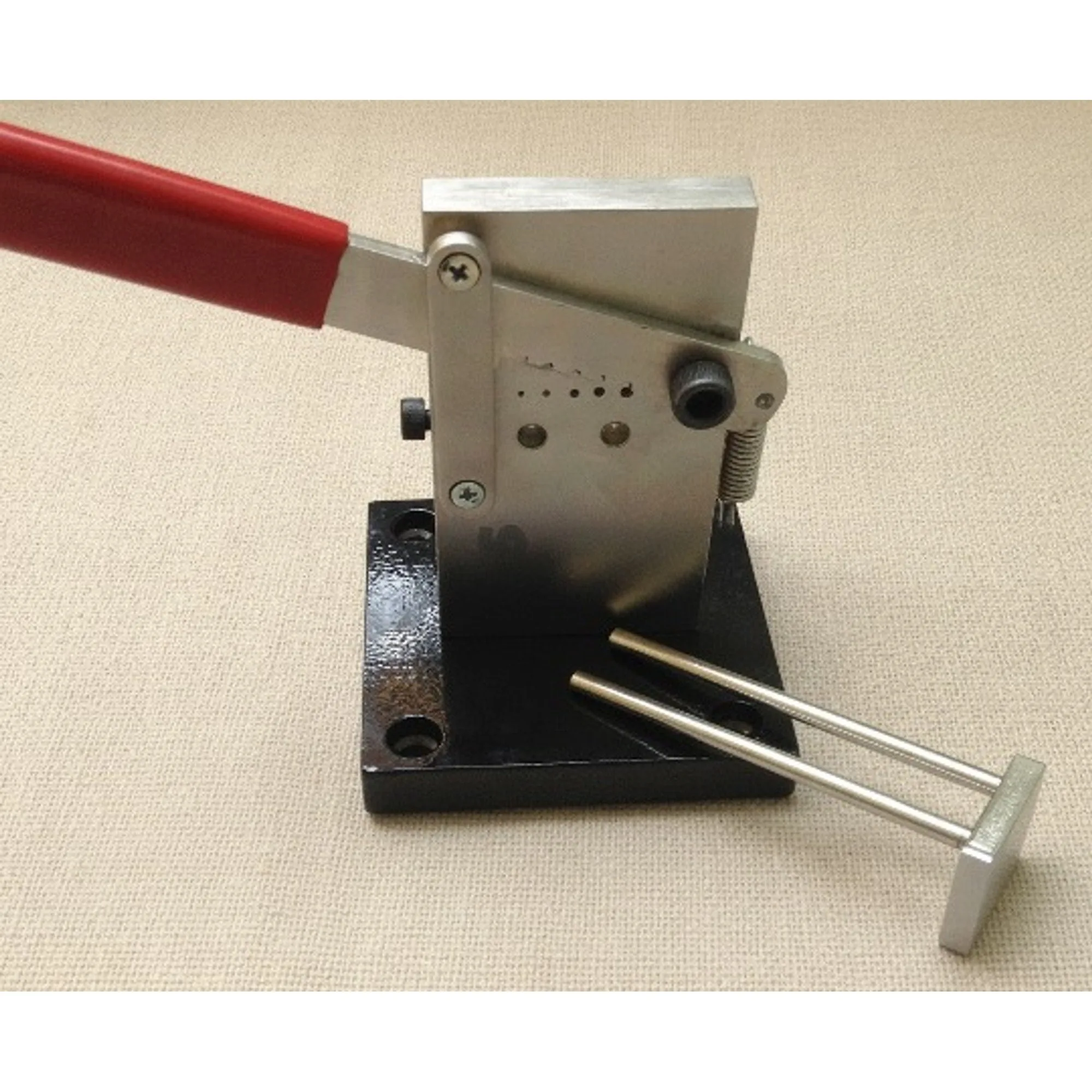
Flush-Cut Wire Guillotine — Benchtop Shear for Soft Wires up to 1.5 mm Diameter
Who should buy which?
Best for
- Jewellers who need clean, square ends on soft wires up to 1.5 mm for soldering or assembly
- Bench workers who make repeated components and want consistent cuts without filing
Not for
- Crafters who cut a wide range of wire gauges or sheet metal and need one tool for everything