Quick answer
Choose a flush mount when the ceiling is low, the room is a walkway, or the fixture must stay out of sight lines. Choose a pendant when the ceiling is high enough to hang the fixture with clearance and you want the light itself to define the space. For most homes, the deciding number is ceiling height: below 8 feet, flush mount is the safer default; at 8 feet and above, pendants become practical in the right spots.
The clearance rule that decides most rooms
Measure from the floor to the ceiling, then subtract the fixture drop and the clearance you need underneath. A pendant over a table or island should leave roughly 30 to 36 inches between the bottom of the fixture and the surface below, while a pendant in an open walkway needs about 7 feet of clearance from the floor. If those numbers do not fit, a flush mount is the honest answer.
This is why low ceiling lighting options are usually flush mounts, semi-flush mounts, or recessed lights rather than pendants. A pendant that hangs too low becomes a head-bumping hazard, and one hung too high loses its purpose as a focal point.
- Ceiling below 8 feet: flush mount or semi-flush is usually the practical choice.
- Ceiling 8 to 9 feet: pendants work over tables and islands but need careful drop measurement.
- Ceiling 9 feet and above: pendants can hang freely and still leave generous clearance.
Match the fixture to what the room actually does
A flush mount spreads light broadly across a room and stays out of the way, which suits hallways, closets, laundry rooms, bathrooms, and bedrooms with standard ceilings. A pendant concentrates light downward and becomes a visual anchor, which suits kitchen islands, dining tables, entryways, and stairwells where you want a deliberate focal point.
The trade-off is control. Flush mounts are easy to live with but rarely dramatic. Pendants give you more control over direction and style, but they demand more planning: drop length, spacing, and the number of fixtures all affect how the room feels.
- Choose flush mount for circulation spaces and rooms where the ceiling should recede.
- Choose pendant where you want the fixture to be part of the design.
- In kitchens, pendants over an island and a flush mount in the surrounding circulation area often work together.
Read the product specs before you commit
Once you know which type fits, compare the details that actually change the installation. Look at the mounting type, the lamping, whether a bulb is included, and the certifications for damp locations if the fixture is going in a bathroom or covered porch. A fixture rated for damp locations gives you more placement freedom than one that is not.
Lead time matters too. Some fixtures ship in 2 to 3 weeks, which is fine for a planned renovation but frustrating for an urgent replacement. Check dimensions against your ceiling height and room width before ordering, and confirm the mounting plate matches your existing junction box.
- Confirm UL or cUL damp-location rating if the fixture will see moisture.
- Check whether the bulb is included so you can budget for lamping.
- Compare depth, width, and height against your actual ceiling and room dimensions.
Decision rules for ceiling fixtures
- If the ceiling is under 8 feet: Use a flush mount or semi-flush fixture in circulation areas and over tables. Skip pendants unless the fixture is over a surface where no one walks underneath. Low ceiling lighting options should protect headroom first and style second.
- If the ceiling is 8 to 9 feet: Pendants are workable over islands, tables, and entryways, but measure the drop so the bottom of the fixture leaves 30 to 36 inches over a table and about 7 feet over a walkway. Measure twice; a pendant that clears a table by 30 inches can still block a doorway.
- If the ceiling is 9 feet or higher: Pendants can hang lower and larger without crowding the room. Use them to define zones, and use flush mounts in the surrounding circulation areas. High ceilings give you permission to use pendants as the main design feature.
- If the room is a hallway, closet, or laundry: Choose a flush mount. These spaces need even, unobtrusive light and cannot afford a fixture that hangs into the path of traffic. When in doubt in a walkway, flush mount is the safer choice.
- If the room is a kitchen island or dining table: Choose a pendant or a shallow chandelier. Center it over the surface, and for multiple fixtures, space them evenly and keep the bottom edges aligned. Pendants over a table should light the surface, not the ceiling.
Fixtures that fit these rules
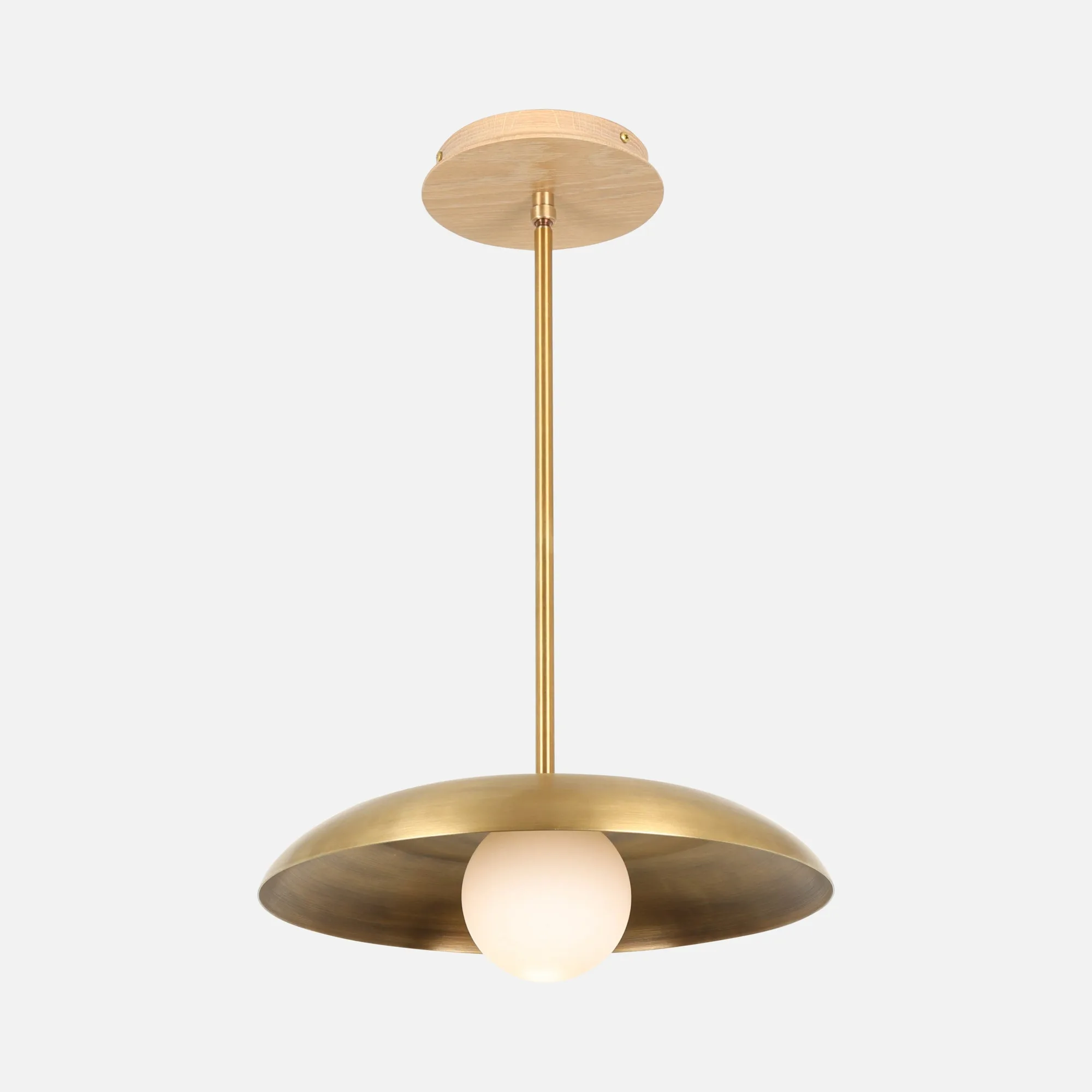
- Jessamine Pendant: The Jessamine Pendant uses a spun metal shade with a petite opal glass globe, a signature hardwood canopy, and includes a 550-lumen E26 bulb. Because the bulb is included and the opal globe diffuses light softly, this pendant suits dining tables and islands where you want a warm, finished look without an extra shopping step.
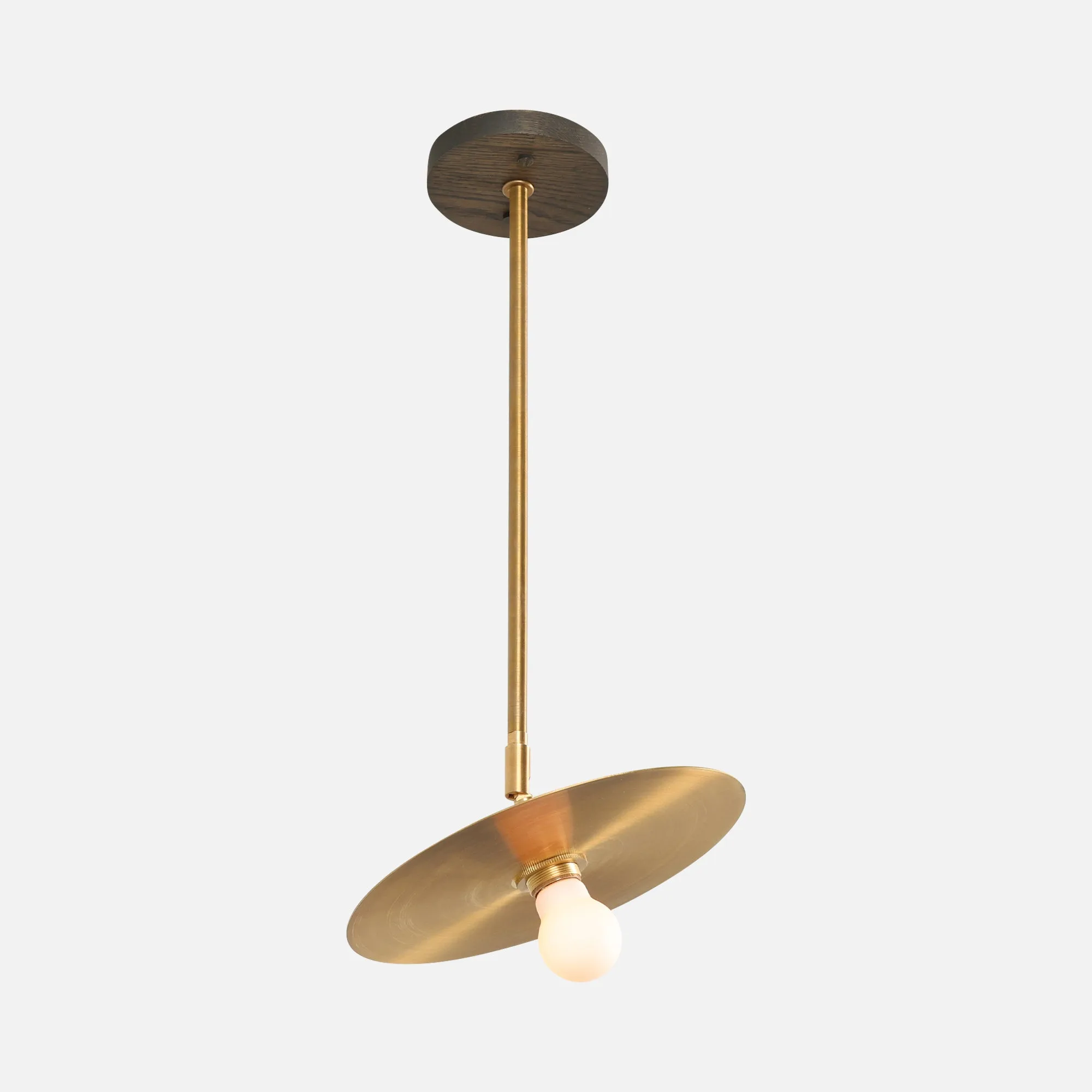
- Galileo Pendant 10": The Galileo Pendant 10" has a circular disc shade with a bare E26 bulb (60W, bulb not included) and is finished by hand and assembled in South Carolina. The open disc design gives bright, direct light, so it works well over a kitchen island or entryway where you want a crisp focal point and are comfortable choosing your own bulb.
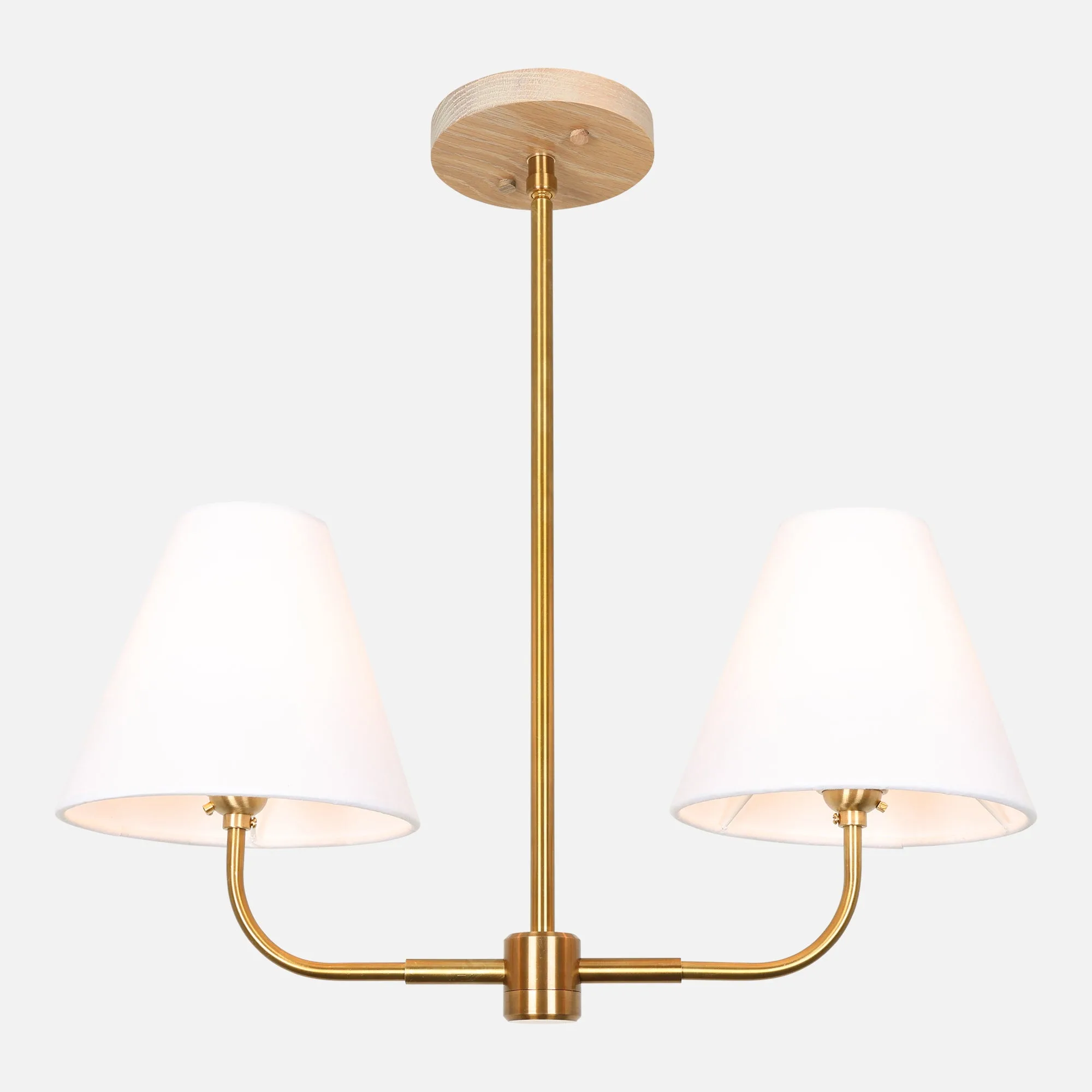
- Slope Chandelier Mini: The Slope Chandelier Mini is a two-shade chandelier with a slim profile, 7-inch depth, 18.5-inch width, and 19.5-inch height, and it ships in 2 to 3 weeks. Its shallow 7-inch depth makes it a better fit for rooms where a full pendant drop would feel heavy, and the 2-to-3-week lead time is worth planning around for a renovation schedule.
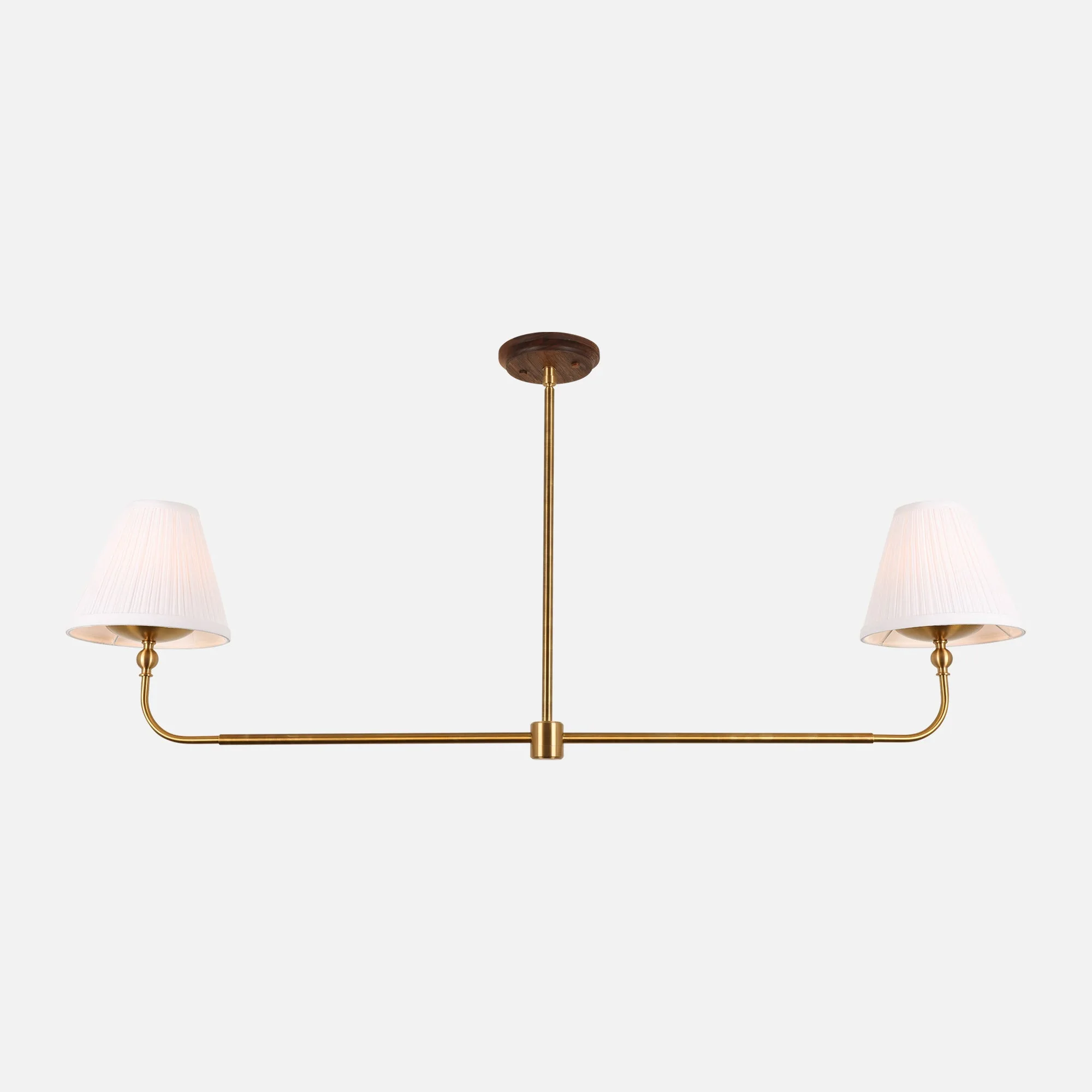
- Slope Chandelier Traditional: The Slope Chandelier Traditional has two softly pleated white linen shades, a 7-inch depth, 44-inch width, and 19-inch height, and is shown in walnut with antique brass. The wider 44-inch span and diffused linen shades suit a long dining table, while the shallow depth keeps it usable in rooms where a deep pendant would crowd the ceiling.
Who should choose which
Best for
- Rooms with ceilings under 8 feet where headroom matters
- Hallways, closets, laundry rooms, and bathrooms that need even, out-of-the-way light
- Renters or quick replacements who want a simple, low-risk install
- Kitchen islands and dining tables where a pendant can be centered and measured
Not for
- Rooms where the fixture is meant to be the main focal point and the ceiling is high enough for a pendant
- Spaces where you want directional task light over a specific surface
- Areas with very high ceilings where a flush mount would look undersized
Before you order, measure your ceiling height, decide whether the fixture needs to be a focal point or stay out of the way, and confirm the mounting, lamping, and damp-location rating match the room. If the numbers fit a pendant, hang it with the clearance rules above; if they do not, a flush mount will serve the room better.