Frequently Asked Questions About Flushable Wipes
Are flushable wipes safe for sensitive skin?
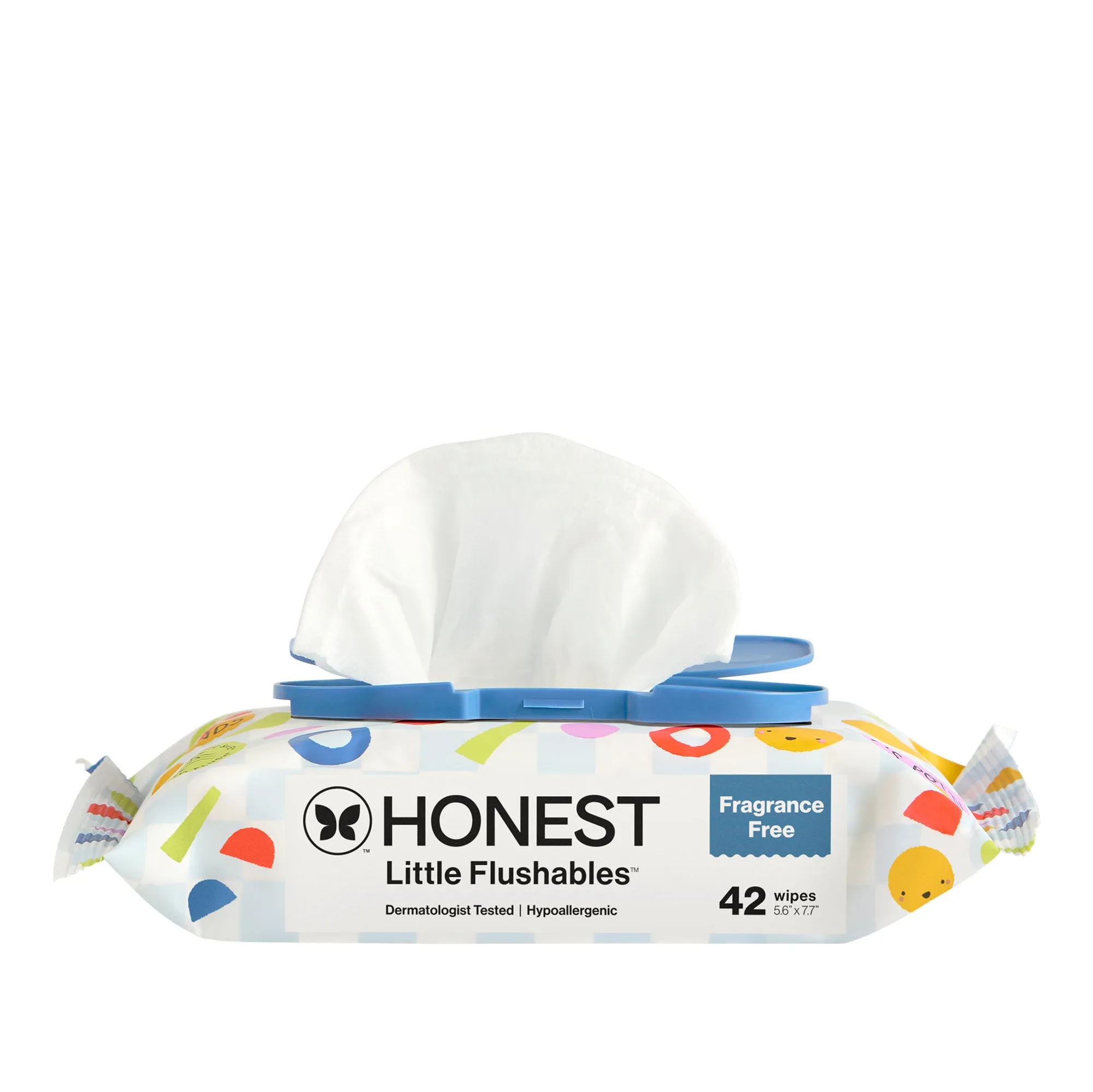
Flushable wipes can be safe for sensitive skin if they are formulated with gentle ingredients. The Honest Company’s Little Flushables are made with over 99% water and plant-based cloth, which helps keep them soft and gentle on toddler’s skin. They are also hypoallergenic and pediatrician-tested, making them a reasonable option for parents concerned about irritation.
What makes Little Flushables different from regular baby wipes?
Little Flushables are designed specifically for potty training. They are flushable, which means they can be disposed of in the toilet, offering a convenient cleanup during the transition from diapers to underwear. Their formulation with over 99% water and plant-based cloth is intended to be soft and gentle, and they are easy to carry for on-the-go cleanups.
Are flushable wipes truly flushable?
While Little Flushables are marketed as flushable, it’s important to follow local plumbing guidelines. Even flushable wipes can cause clogs in some plumbing systems, so always check with your municipality or plumbing professional if you have concerns. The product is designed for toddler’s fresh and easy clean, but responsible disposal is key.
How do flushable wipes compare to regular wipes for sensitive skin?
Regular baby wipes are often used for diaper changes, while flushable wipes are designed for potty training. Little Flushables share many gentle characteristics with Honest’s regular wipes—both are hypoallergenic and made with plant-based materials. The main difference is flushability and portability, making them a convenient choice for toddlers learning to use the toilet.
Key Features of Little Flushables
-
Little Flushables: Formulated with over 99% water + plant-based cloth, making them soft + gentle on toddler’s skin. For sensitive skin, a high water content and plant-based cloth reduce the chance of irritation compared to wipes with synthetic materials or heavy additives.
Little Flushables
-
Little Flushables: Hypoallergenic, pediatrician-tested wipes are designed for toddler’s tiny hands and are easy to carry for on-the-go cleanups. Parents want reassurance that a product is gentle and safe for young children; pediatrician testing and hypoallergenic claims provide that confidence.
What to Look for in Flushable Wipes for Sensitive Skin
When choosing flushable wipes for a child with sensitive skin, start with the ingredient list. Wipes with a high percentage of water and plant-based materials are often gentler than those with alcohol, fragrance, or harsh preservatives. Little Flushables contain over 99% water and plant-based cloth, which aligns with these preferences.
Also consider the wipe’s intended use. Flushable wipes are designed for potty training, not necessarily for everyday diaper changes. They are meant to be convenient for toddlers learning to use the toilet, so portability and ease of use matter. Look for a pack that is easy to carry, like the Little Flushables, which are designed for tiny hands and on-the-go cleanups.
Finally, remember that flushable doesn’t mean the same for every plumbing system. Even gentle wipes can cause issues if flushed improperly. Check your local guidelines and consider using a wastebasket if you’re unsure.
A Practical Trade-Off: Convenience vs. Plumbing Concerns
The main advantage of flushable wipes is convenience—no messy diaper pail during potty training. But that convenience comes with a responsibility: not all flushable wipes break down quickly, and some plumbing systems are more sensitive than others. If you live in an older home or have a septic system, you might prefer to dispose of wipes in the trash despite their flushable label.
That said, the gentle formulation of Little Flushables—over 99% water and plant-based cloth—makes them a solid choice for parents prioritizing skin sensitivity. The trade-off is between the ease of flushing and the peace of mind of knowing your plumbing is safe. Weigh your home’s plumbing situation against your child’s comfort needs.