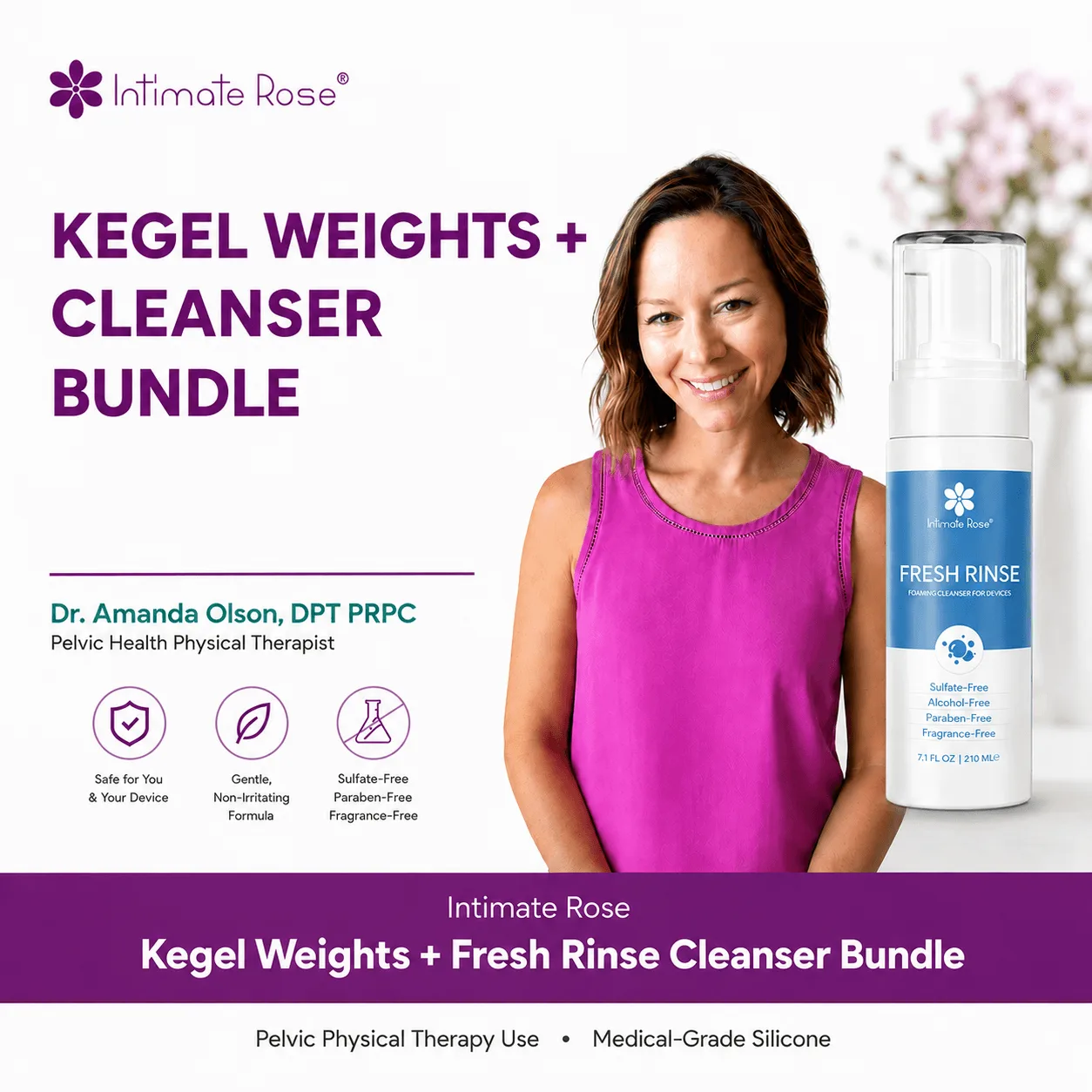
The real question is material compatibility, not lather
When you compare a foaming cleanser with household soap for dilators, pelvic wands and kegel weights, the useful question is not which one foams more. It is which one is documented as compatible with the materials your tools are made from, and whether you can follow the maker's directions without guesswork.
That distinction matters because the supplied evidence for Intimate Rose Foaming Cleanser specifically names silicone, plastic and rubber as compatible materials. The supplied information does not list a comparable material-compatibility statement for household soap, so treating the two as interchangeable would go beyond what the evidence supports.
What the Foaming Cleanser evidence actually says
-
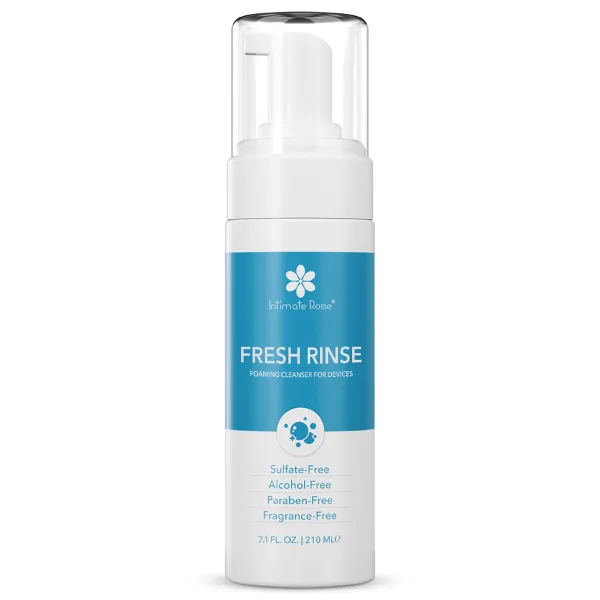
Foaming Cleanser: Formulated for use compatible with a variety of materials — silicone, plastic, rubber, and more. This is the clearest documented basis for choosing it over an unspecified soap when your dilators, wands or weights are silicone.
Foaming Cleanser
-
Foaming Cleanser: Described as a gentle, medical-grade cleanser designed specifically for pelvic health devices. It frames the product as purpose-built for the category of items you are cleaning, rather than a general household cleaner.
-
Foaming Cleanser: Helps neutralize lingering odor on devices. Odor control is a stated product detail, not an inferred benefit, so it is fair to weigh it in the comparison.
-
Foaming Cleanser: Available in 7.1 oz and 1.7 oz sizes. The smaller size suits a single tool or travel kit; the larger size suits a routine that covers several devices.
Foaming Cleanser vs household soap, side by side
- Documented material compatibility: Foaming Cleanser: supplied evidence names silicone, plastic and rubber. Household soap: no material-compatibility statement is supplied, so you cannot confirm from this evidence that it is suitable for every silicone, plastic or rubber tool you own.
- Purpose: Foaming Cleanser is described as designed specifically for pelvic health devices. Household soap is a general-purpose product, and the supplied evidence does not describe it for this use.
- Odor: Foaming Cleanser is stated to help neutralize lingering odor on devices. No comparable odor claim is supplied for household soap.
- Sizing: Foaming Cleanser comes in 7.1 oz and 1.7 oz. Household soap sizing is not part of the supplied product evidence, so a like-for-like size comparison is not possible here.
- Instructions: No preparation or operating instructions are included in the supplied Foaming Cleanser record. Follow the directions on the product label rather than a routine assembled from general advice.
Is soap safe for silicone dilators? What you can and cannot conclude
You may see broad claims online that any mild soap is fine for silicone. The supplied evidence does not confirm or deny that for household soap, and it does not name a specific soap brand or formula. What it does confirm is that the Foaming Cleanser is formulated to be compatible with silicone, plastic and rubber.
That asymmetry is the honest basis for a decision. If you want a cleanser whose compatibility with your silicone dilators, pelvic wand or kegel weights is documented in the product information you have, the Foaming Cleanser is the option that carries that documentation. If you choose soap instead, you are making a judgment the supplied evidence does not back up either way.
A practical cleaning routine that keeps the comparison simple
The supplied record does not include step-by-step washing instructions, so the sequence below is about choosing and organizing your supplies, not a manufacturer protocol. Check your device maker's own care directions before you clean.
- Check the material first: Confirm whether each item is silicone, plastic or rubber. The Foaming Cleanser's supplied compatibility statement covers those materials.
- Match the cleanser to the tool: Use the Foaming Cleanser for silicone dilators, pelvic wands and kegel weights where you want documented material compatibility. Do not assume a household soap carries the same documentation.
- Pick a size that fits your kit: The 1.7 oz size suits a single device or a travel bag; the 7.1 oz size suits a routine that covers several tools at home.
- Follow the label, not a guess: Because no preparation or operating instructions are supplied in this record, read and follow the directions printed on the product itself.
- Store clean and dry: The supplied evidence emphasizes devices being clean and safe to use. It does not specify a storage method, so defer to your device maker's guidance.
Where the comparison genuinely ends
This is a narrow comparison because the evidence is narrow. The supplied record does not include ingredient lists, pH values, antimicrobial test results or a stated contact time for the Foaming Cleanser, and it does not include any equivalent data for household soap. It also does not state whether the cleanser is intended for internal use, how much to dispense, or whether it should be rinsed in a particular way.
Those gaps are not reasons to avoid either option; they are reasons to avoid overclaiming. If a healthcare professional has given you cleaning instructions for a specific device, those instructions take priority over any general comparison. Use the Foaming Cleanser where its documented silicone, plastic and rubber compatibility and its purpose-built design matter to you, and treat soap as the option whose suitability for these tools is not established by the information here.