Quick answer
Buy a fort kit for the space you actually have, not the biggest set you can find. Check three things first: the piece count and connector type, the age range your child fits now, and where the set will live when it is not built. If storage is already tight, choose a kit that packs into one bin or cart and treat that as part of the purchase, not an afterthought.
Start with the pieces, not the box photo
A fort building set pieces list tells you more than the marketing image. Count the long poles, short poles, and connectors separately. Kits with many short poles build small, dense structures well; kits with longer poles cover more area but need more floor space and a taller ceiling clearance. Connectors matter too: ball-and-socket joints rotate in many directions, while clip or slot connectors hold a specific angle. More connectors than poles usually means sturdier builds, because corners are where forts fail.
Ask two questions before buying: can my child lift and connect one pole alone, and does the set include enough connectors to build a roof, not just walls? If the answer to either is no, size down or plan to build alongside your child.
Match the age range to real ability
Fort kit age range labels usually reflect fine-motor skill and safety, not interest. A preschooler may love the idea of a fort but struggle to push a stiff connector into a pole. Look for pieces that are chunky enough for small hands and light enough to reposition without adult help. For older kids, the limiting factor shifts from strength to ambition: they want taller, wider, more complex builds, which means more poles and more connectors, not just different colors.
If you have children across a wide age span, a mid-size kit with simple connectors serves both ends better than a large kit with tight tolerances. Younger children can build low and wide; older children can add height as their coordination improves.
Measure the playroom before you commit
A fort kit for playroom use needs a clear build zone plus a clear walking path around it. Measure the largest open floor rectangle in the room and subtract at least two feet on each side for access. That rectangle is your realistic fort footprint. If the room doubles as a bedroom or dining space, favor kits that break down quickly and store vertically.
Ceiling height matters as much as floor area. A kit that builds tall towers will not work under a low sloped ceiling or a ceiling fan. Check the tallest recommended build height, then subtract a foot for clearance.
Plan fort kit storage before the first build
Fort kit storage decides whether the set gets used weekly or ends up in a closet. Loose poles in a flimsy bag migrate across the house; a labeled bin or a rolling cart keeps pieces together and makes cleanup part of the play. Choose a storage spot within the build zone, not in another room, because the distance between storage and play is the main reason kits stop being used.
If you already own open shelving or a storage cart, measure its interior dimensions and compare them to the kit's longest pole. A kit that fits your existing storage costs less in space and frustration than one that requires a new bin.
Decide how the kit fits your existing play setup
Fort kits work best when they share a zone with other building and pretend-play materials. If your playroom already has open storage, a dress-up station, or a play kitchen, the fort kit should slide into that system rather than compete with it. That means checking whether the kit's pieces can be stored near the other toys your child uses in the same session.
For households that rotate toys, a fort kit is easier to rotate than a fixed play structure because it packs down. Pair it with a storage piece that already lives in the play area so the kit has a home the moment it comes back out.
Decision rules for choosing a fort kit
- If your child is under five: Choose a kit with fewer, larger pieces and simple connectors. Skip tall builds and prioritize pieces your child can connect without adult strength. Checkpoint: can your child connect two pieces alone in under ten seconds?
- If the playroom is shared: Measure the largest clear floor rectangle and subtract two feet per side. Pick a kit whose typical build fits inside that rectangle, and confirm the tallest build clears your ceiling. Checkpoint: does the kit break down into one bin or cart that lives in the same room?
- If you already own open storage: Measure the longest pole in the kit against your shelf or bin depth before buying. A kit that fits existing storage avoids a second purchase and keeps pieces together. Checkpoint: if the longest piece does not fit, choose a smaller kit or plan for a new storage piece.
- If you are buying for multiple ages: Favor a mid-size kit with forgiving connectors over a large kit with tight joints. Younger children build low and wide; older children add height as skill grows. Checkpoint: does the kit include enough connectors to build a roof, not just walls?
Products that support fort kit play and storage
- Kids' Rotating Dress Up Storage Center: The Rotating Dress Up Storage Center has a compact footprint with shelves and pronged hooks for costumes, accessories, and shoes, plus two full-length inset mirrors. If fort play and dress-up happen in the same corner, this keeps costumes and accessories off the floor so the fort build zone stays clear.
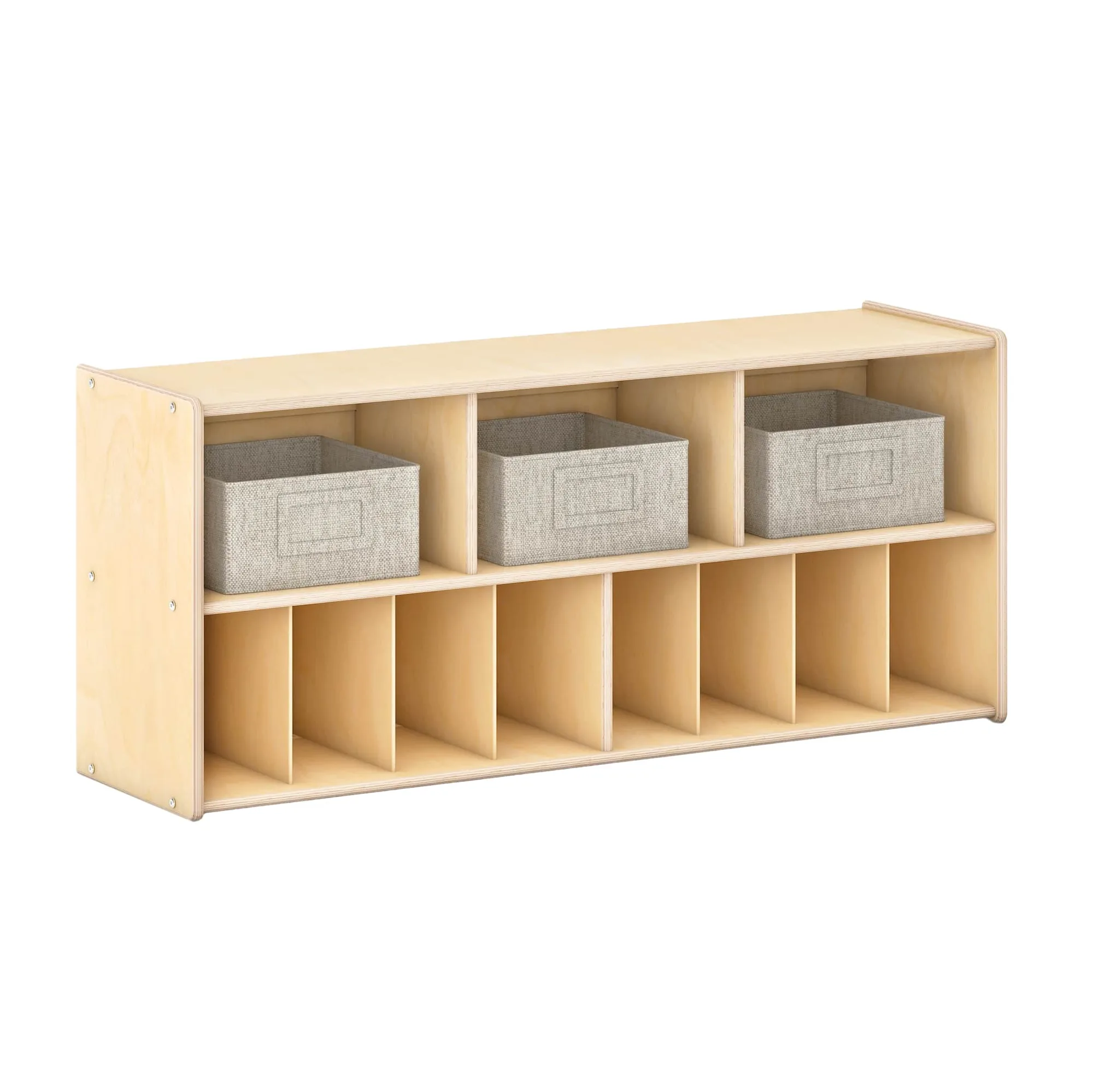
- EdQ 3-Shelf Open Storage with Bins - 36": The EdQ 3-Shelf Open Storage with Bins is part of a collection designed for classrooms, homeschool environments, and kids' play areas, keeping toys, books, art supplies, and learning materials organized and accessible. Open bins give fort pieces a visible, reachable home, which makes cleanup and independent rebuilding more likely.
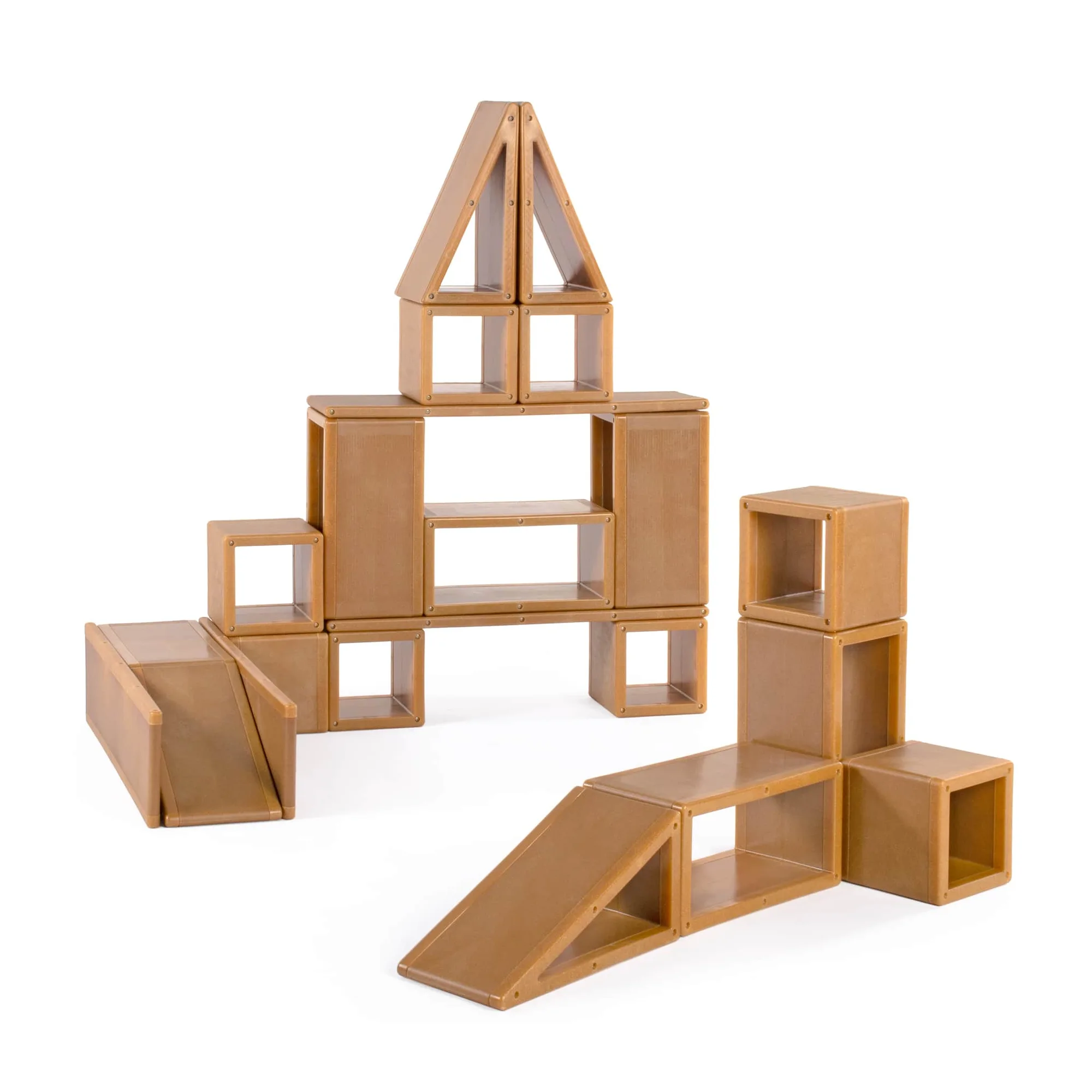
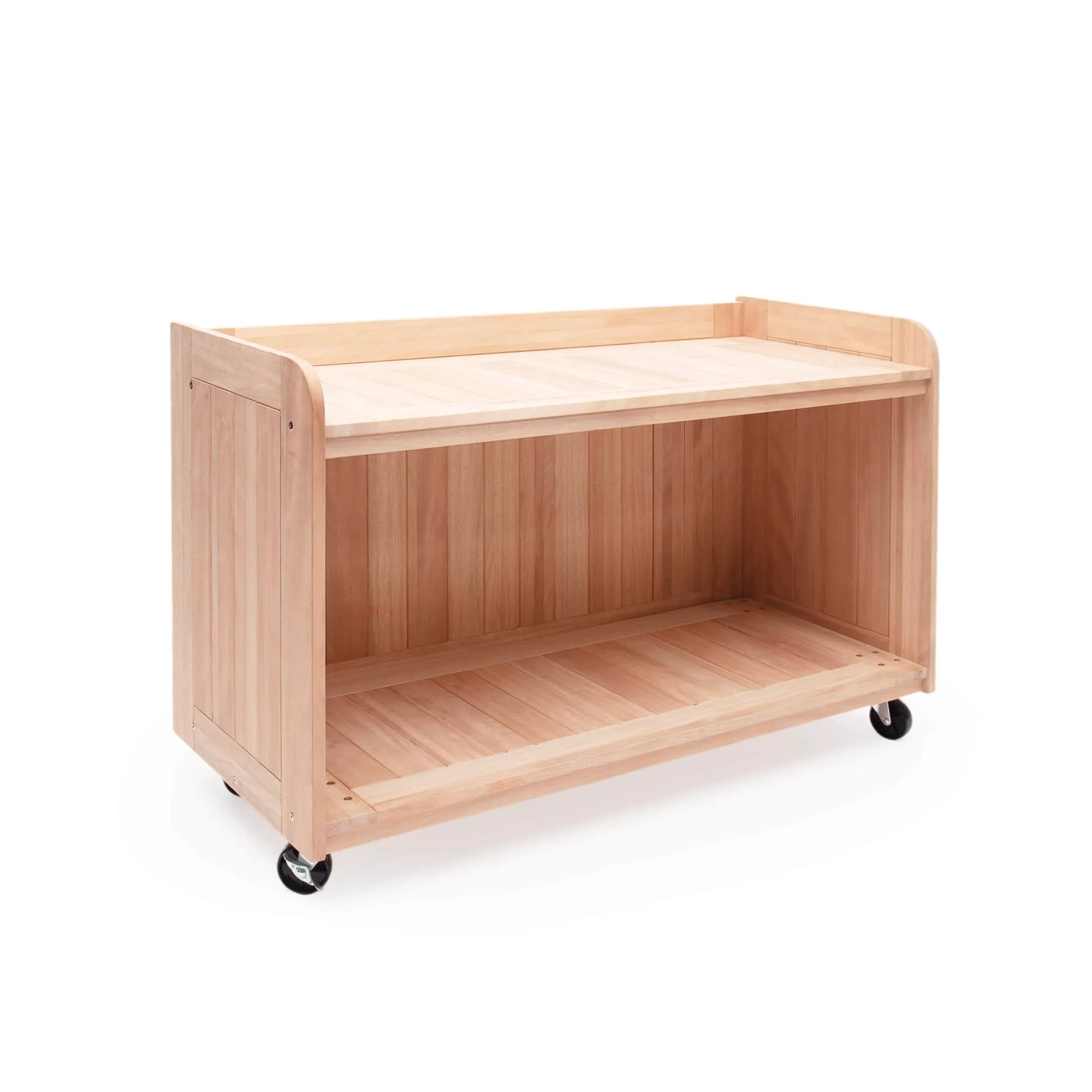
- Outdoor Hollow Blocks Storage Cart: The Outdoor Hollow Blocks Storage Cart stores and transports Guidecraft Outdoor Hollow Blocks - Set of 25, is made of eucalyptus wood, and has 4-inch locking swivel casters. Blocks are sold separately, and the cart should be stored in a dry, covered location. A rolling cart shows how mobile storage can move bulky building pieces between rooms, though it is sized for hollow blocks rather than fort poles.
Who this fort kit buying approach fits
Best for
- Families with a dedicated playroom corner who want a fort kit that stores in the same room
- Parents of children ages four to eight who will build alongside a younger sibling
- Households that rotate toys and need a kit that packs down between uses
Not for
- Buyers who want a permanent, climbable play structure instead of a rebuildable kit
- Rooms with no clear floor rectangle at least two feet wider than the intended fort on every side
- Shoppers who will not store pieces in a labeled bin or cart near the build zone