Quick answer
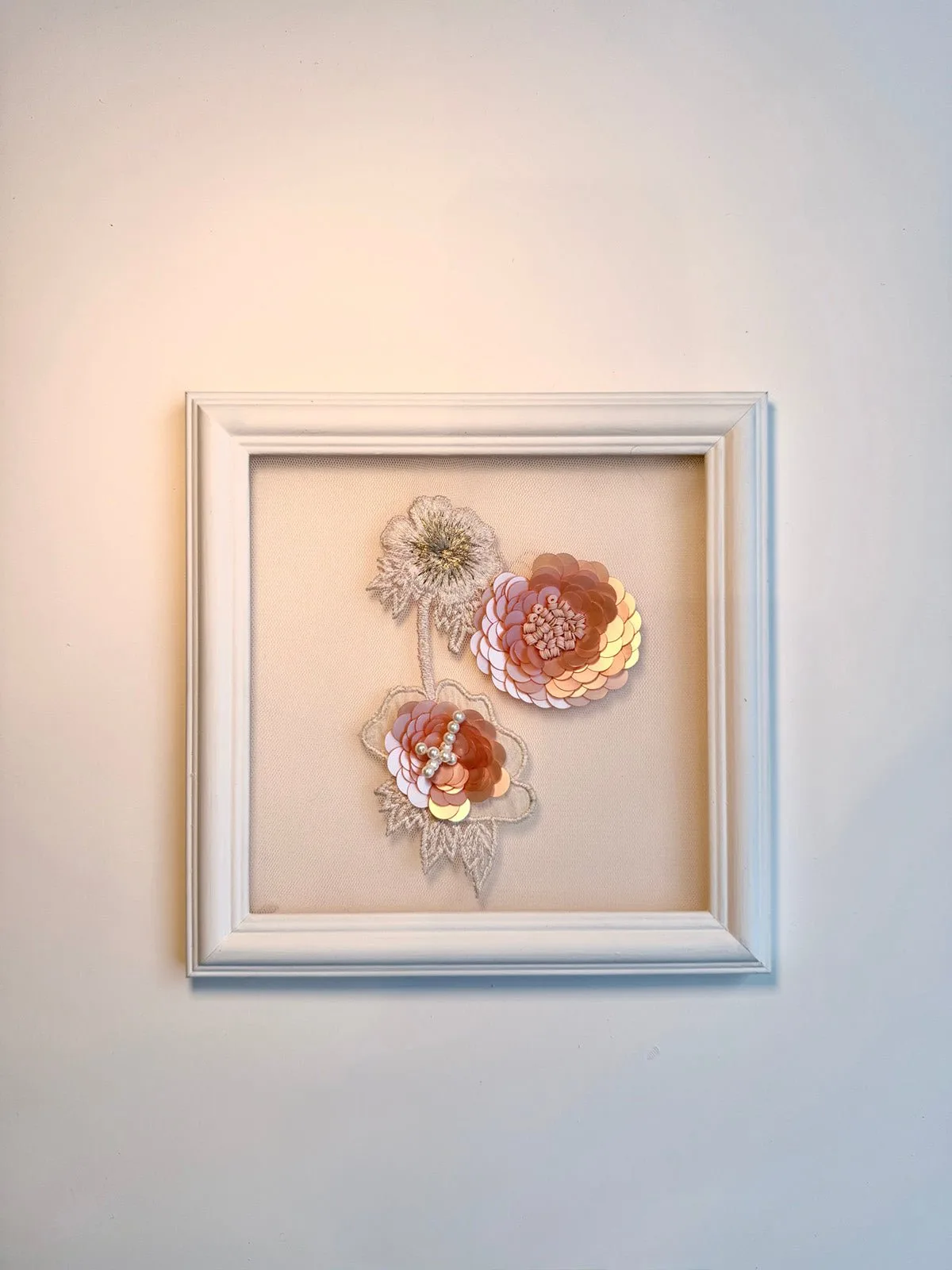
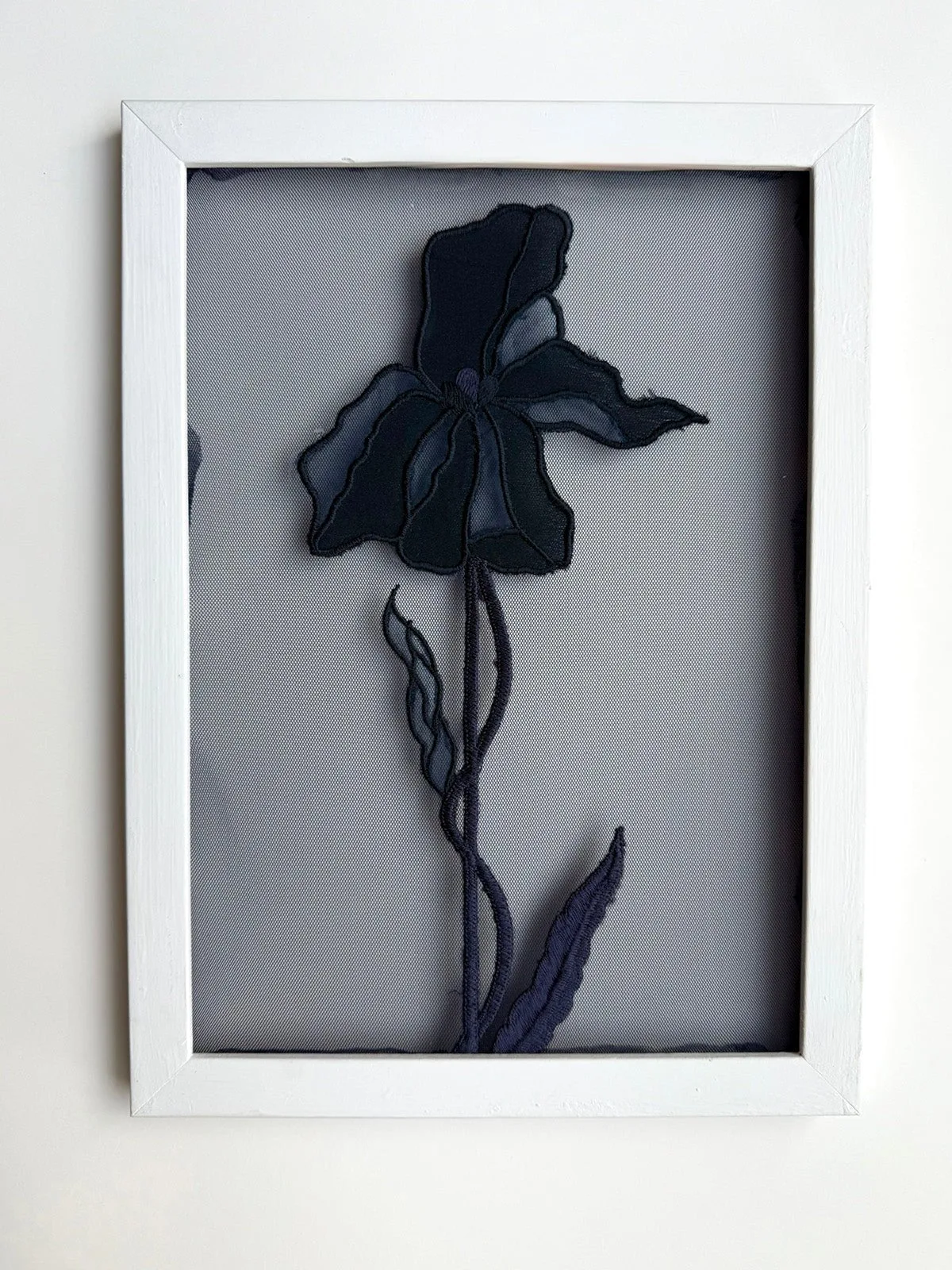
Buy the embroidery you would still want to look at in five years, then let the room decide the size. Choose a single bloom like Embroidery No. 055 for a quiet, small wall and a bolder study like Embroidery No. 002 for a larger, higher-contrast space. Display it away from direct sun and damp, and treat the frame as part of the artwork.
What you are actually buying
These are not reproductions. Each framed piece is a one-of-one work drawn from archive and current couture developments, and each is signed and numbered. That means the exact embroidery you order is the only one of its kind, and the catalog number is part of its identity rather than a SKU you can reorder later.
Because every piece is one-of-one, the usual advice to 'wait for the next drop' does not apply. If a specific bloom and ground speak to you, that is the piece. If you are buying for a particular wall, measure the wall first and then choose from what is available, rather than falling for a composition that will not fit.
How to choose size against your wall
Size is the option that changes the most about how a framed embroidery behaves in a room. A small framed piece reads as an intimate object: it works above a desk, on a narrow wall between windows, or grouped with others. A larger size reads as a focal point and needs more breathing room around it.
A simple rule: leave at least twice the frame width as empty wall on each side. If that leaves you with almost no wall, size down rather than crowding the piece. On a very large blank wall, one small embroidery can look lost; either choose a larger size or plan a deliberate group of two or three.
- Narrow wall or hallway: one small framed embroidery, hung at eye level.
- Sofa or console wall: one larger piece centered, or two to three smaller pieces in a row.
- Bedroom or dressing room: a single quiet bloom works better than a busy group.
Lighting and placement that protect the embroidery
Embroidery is textile, and textiles fade. Keep framed pieces out of direct sun and away from strong, hot spotlights. Diffused daylight or a soft wall wash shows the dimensional stitching without cooking the threads. If a wall gets hard afternoon sun, that is the wrong wall, however good the piece looks there at 9 a.m.
Humidity matters as much as light. Avoid bathrooms, above radiators, and damp exterior walls. A stable interior wall in a normally heated and ventilated room is the safest home for embroidered art.
Framing and hanging practicalities
These pieces arrive framed, so your main decisions are where and how high. Hang the center of the artwork at roughly eye level, or about 145–150 cm from the floor in a room where people stand. Above furniture, leave 15–25 cm between the top of the furniture and the bottom of the frame.
Use two hooks rather than one for anything wider than a small frame; it keeps the piece level and spreads the load. Check the wall type before you drill, and use appropriate fixings for plasterboard or masonry. If you rent, adhesive strips rated well above the frame weight are a reasonable alternative for small pieces.
Caring for embroidered art once it is on the wall
Dust is the main enemy, and it is easy to manage. Use a soft, dry brush or a vacuum on its lowest setting with a brush attachment held slightly away from the surface. Never rub the embroidery, and never use water, sprays, or cleaning products on the textile.
If the glass needs cleaning, spray the cloth, not the glass, so liquid cannot run behind the frame. Keep the piece out of direct sun and away from damp, and it will hold its color far better over the years.
Displaying more than one
If you are drawn to several pieces, decide whether you are building a collection or decorating one wall. A collection can mix scale and motif and be hung salon-style, but it needs a consistent frame line or a deliberate rhythm to avoid looking accidental. A single-wall arrangement usually works best with two or three pieces of similar size, spaced evenly.
Start with one piece. Live with it for a few weeks before adding another; the second choice is much easier once you know how the first behaves in the light.
When a framed embroidery is the wrong buy
If you want a matching pair, a repeatable design, or something you can replace in a year, these one-of-one pieces will frustrate you. If your only suitable wall is in direct sun or a damp room, the piece will not last well there. And if you need art that can be handled often or moved between homes without care, a framed textile is more demanding than a print or canvas.
Decision rules for buying framed couture embroidery
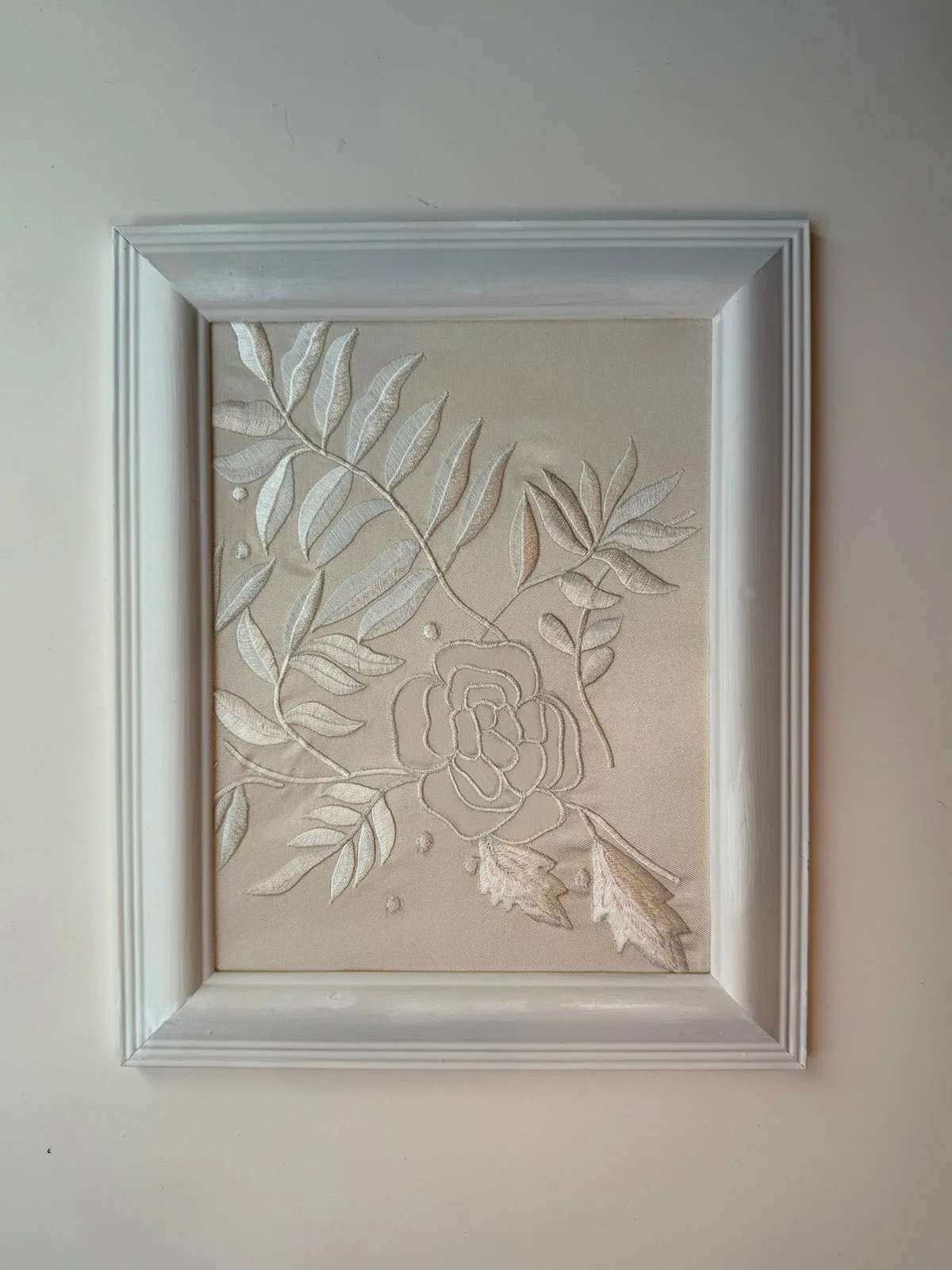
- Choose a single bloom if the wall is small or the room is calm: A single bloom like Embroidery No. 055 or No. 079 reads as an intimate object and does not need much space around it. Best for hallways, bedside walls, and quiet rooms.
- Choose a graphic or higher-contrast piece for a larger wall: A piece like Embroidery No. 002 has enough visual weight to anchor a bigger wall or a room with stronger color. If the wall is more than about 2 m wide, size up or plan a group.
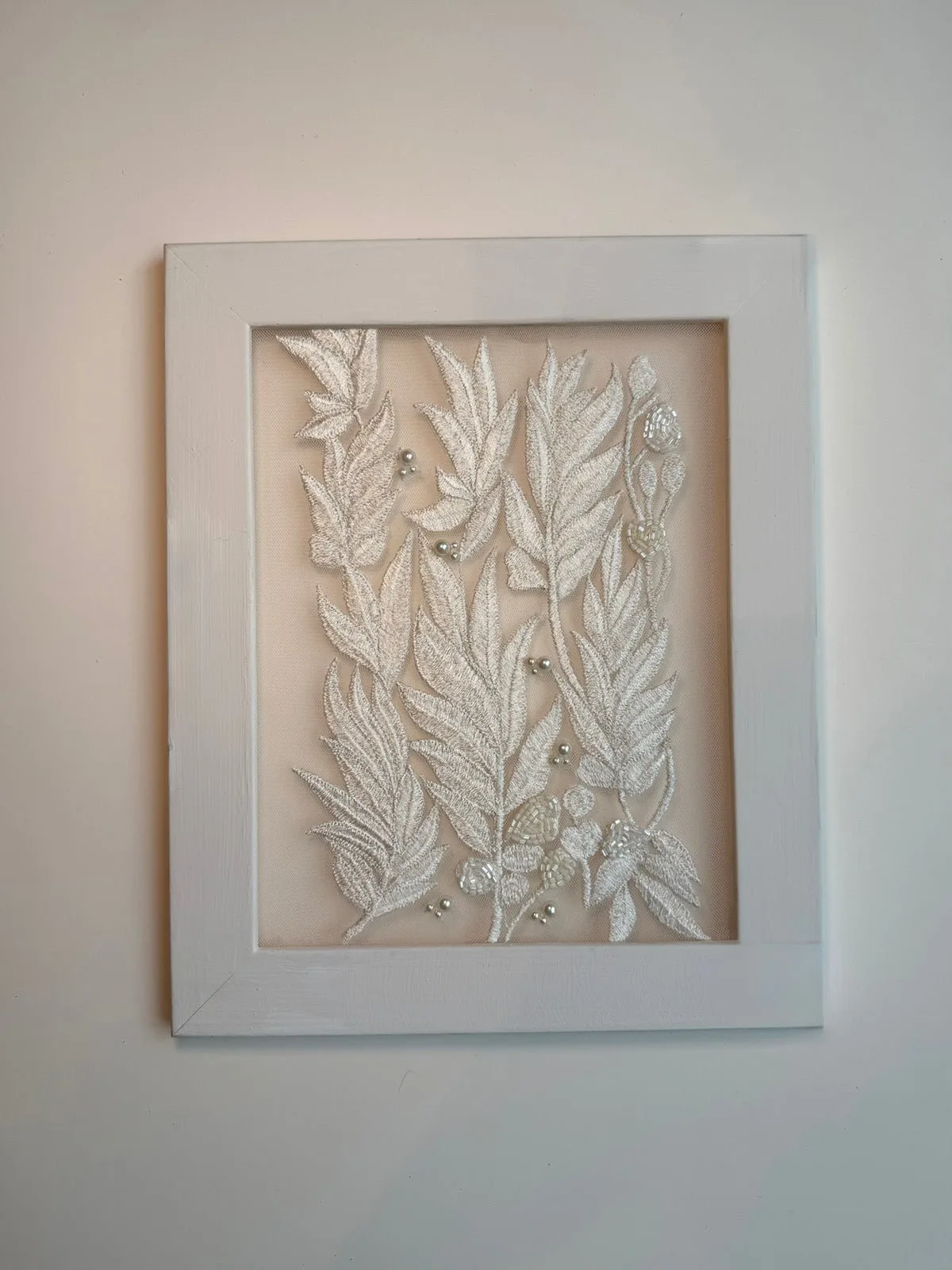
- Match the piece to the light before the wall color: Beaded and dimensional work needs soft, diffused light; direct sun will fade the threads over time. If the only available wall gets hard sun, choose a different wall.
- Buy one, live with it, then add: Because each piece is one-of-one, the second purchase is easier once you know how the first behaves in your light. Avoid buying a pair on the same day unless you have already tested the wall.
Product facts
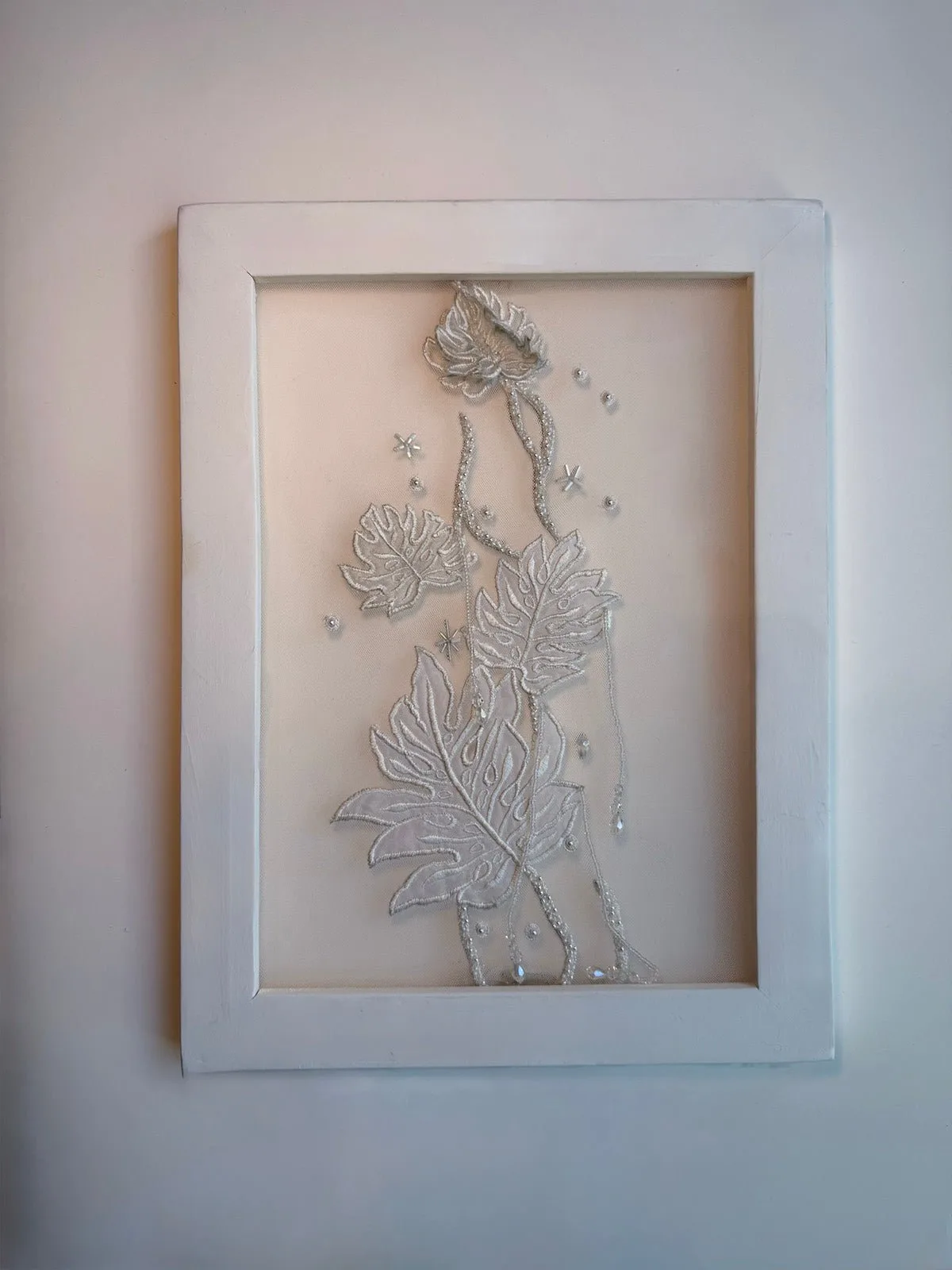
- Embroidery No. 102 - Signed & Numbered Framed Couture Embroidery: Embroidery No. 102 pairs two silvery-white lily blooms on beaded stems, scattered with small star-shaped accents. The beaded stems and star accents add surface texture, so this piece rewards soft, diffused light rather than a hard spotlight.
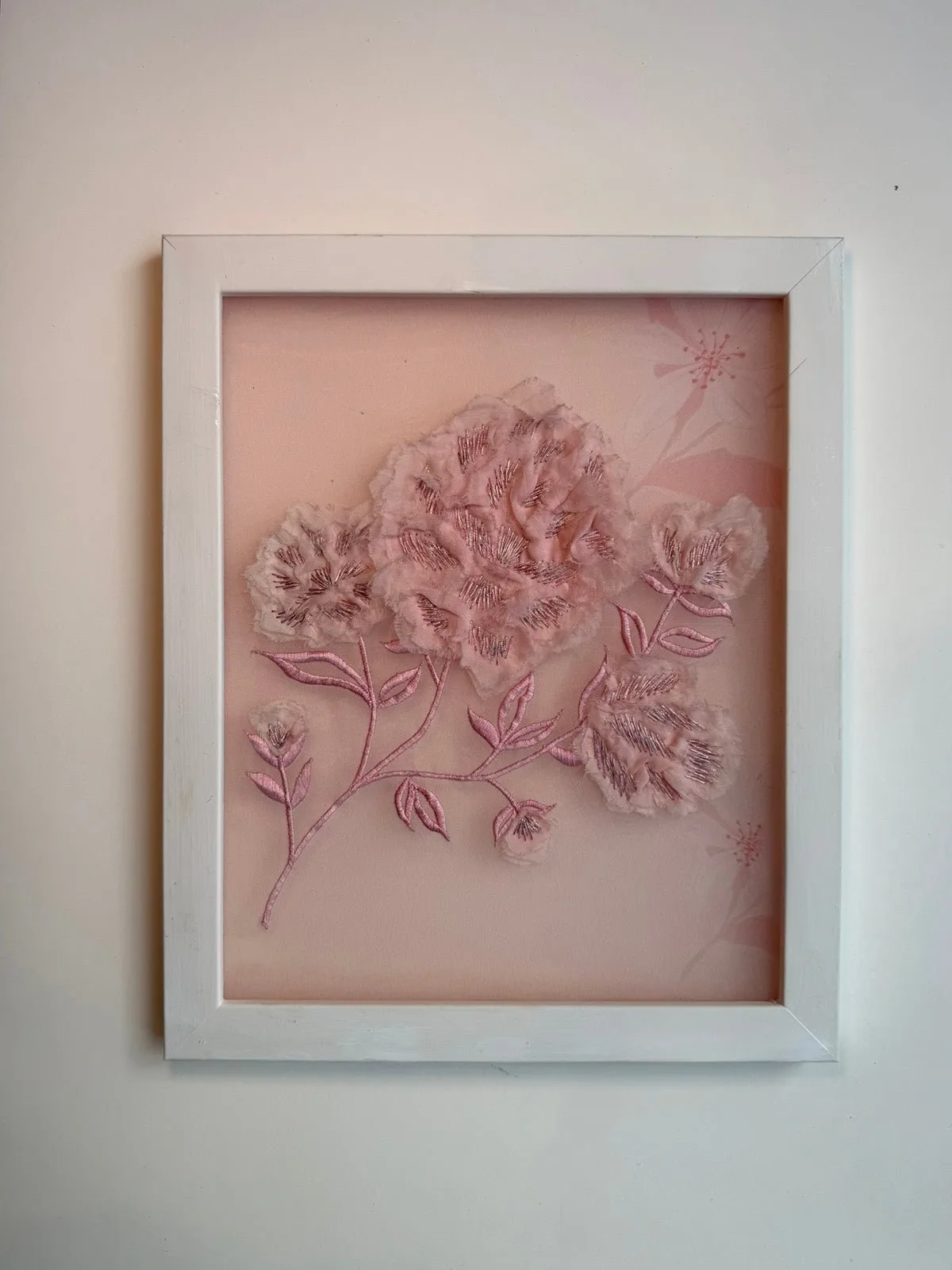
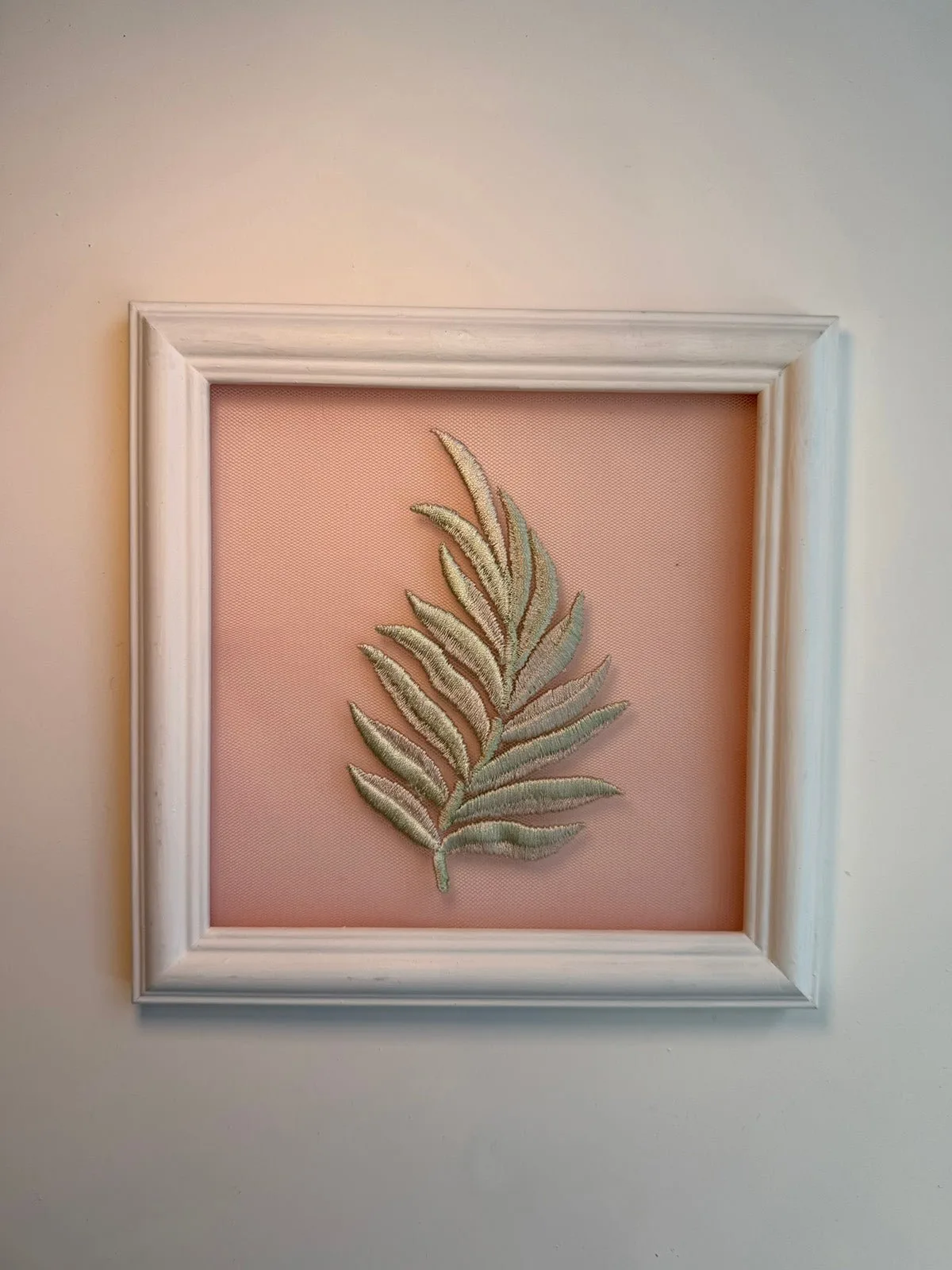
- Embroidery No. 079 - Signed & Numbered Framed Couture Embroidery: Embroidery No. 079 is a single blush pink ruffled bloom, softly dimensional against a hand-painted botanical ground. The hand-painted ground means the background is part of the artwork, so choose a wall color that lets the pale ground read clearly.
- Embroidery No. 002 - Signed & Numbered Framed Couture Embroidery: Embroidery No. 002 is a single dark indigo bloom with sheer, dagger-shaped petals outlined in inky thread. The high contrast and graphic outline hold their own on a larger wall or in a room with stronger color.
- Embroidery No. 055 - Signed & Numbered Framed Couture Embroidery: Embroidery No. 055 is a single blush pink rose bud, quiet and understated against its pale ground. Its calm palette suits small, low-traffic walls and rooms where you want the art to recede rather than dominate.
Is a framed couture embroidery right for you?
Best for
- Collectors who value a signed, numbered, one-of-one textile work.
- Anyone furnishing a calm interior who wants a quiet, botanical focal point.
- Gift-givers looking for a distinctive piece for a wedding, anniversary, or housewarming.
Not for
- Buyers who want a matching pair or a repeatable design.
- Rooms with direct sun, high humidity, or damp walls.
- Anyone who needs art that can be handled often or moved without care.