There's no fixed schedule — build a routine around what you notice
How often you spray a car air freshener depends on what you're trying to fix: a lingering odor, a stuffy cabin after a commute, or a fabric seat that holds onto smells. The supplied product information for Fresh Air Car~Pourri doesn't include a recommended spray frequency, so treat any schedule as a starting point you adjust to your car and your nose.
A useful habit is to refresh when you notice the cabin needs it rather than spraying on autopilot. That keeps the scent intentional and helps you spot the difference between a quick air refresh and a deeper fabric odor that needs more attention.
What Fresh Air Car~Pourri is built to do
-
Fresh Air - Car~Pourri Car Air Freshener: Works in the air and on fabrics in your ride This tells you the spray is designed for two jobs — freshening the cabin air and treating fabric surfaces — which shapes how you plan your routine.
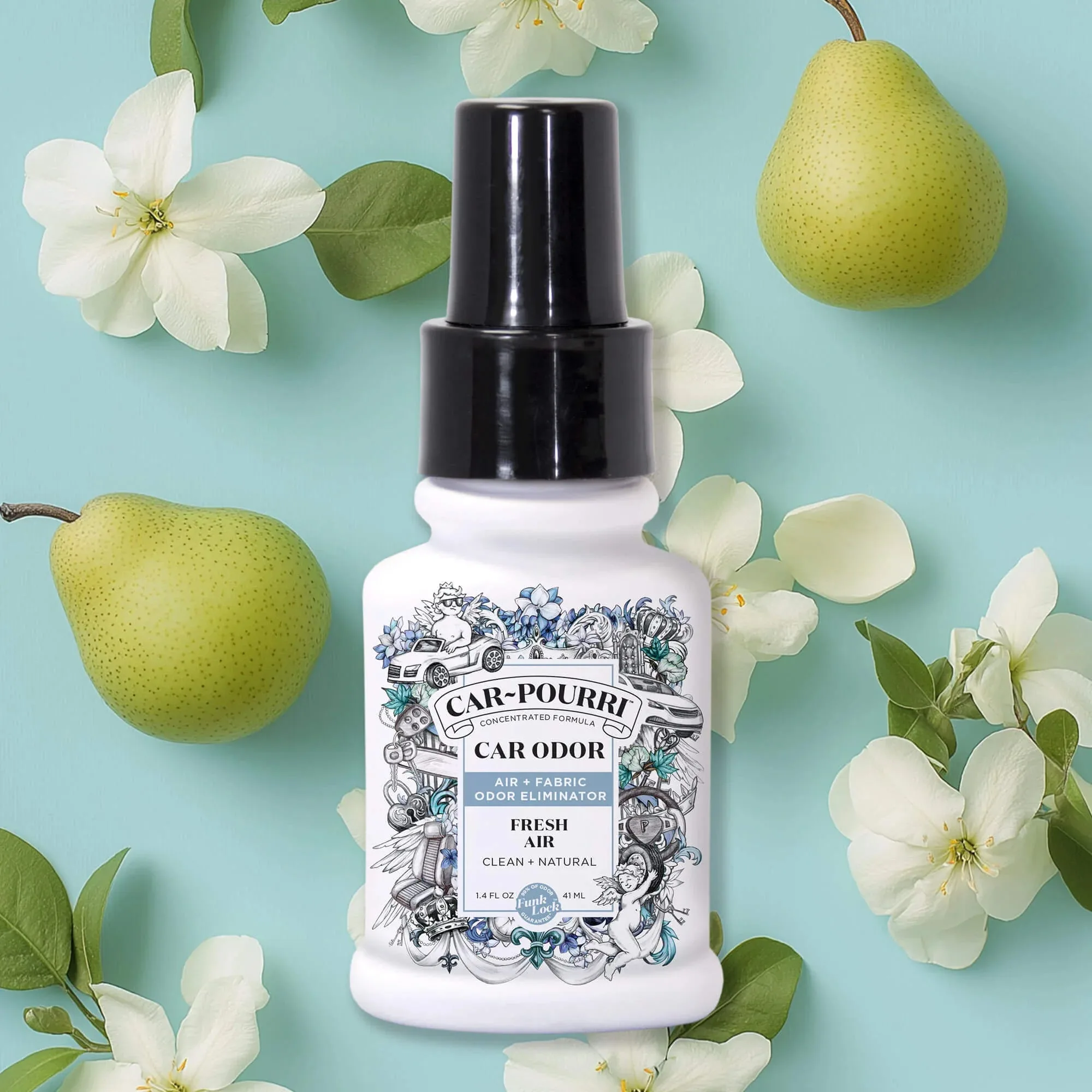
Fresh Air - Car~Pourri Car Air Freshener
-
Fresh Air - Car~Pourri Car Air Freshener: Made with essential oils that leave your car smelling like cruising along the countryside, windows down The scent profile is a fresh, outdoorsy one, so it suits a light, regular refresh rather than heavy masking.
-
Fresh Air - Car~Pourri Car Air Freshener: Freshens car odors—100% guaranteed The guarantee is the clearest performance signal in the record; use it as your benchmark when deciding whether the product is working for your car.
A simple car air freshener routine
The product record lists no preparation or operating instructions, so these steps are general practice for using a spray air freshener, not manufacturer directions. Adjust them to your car and the product label.
- 1. Start with a quick sniff test: Before spraying, notice whether the smell is in the air (stale cabin, food, smoke) or in the fabrics (seats, floor mats, headliner). That tells you where to aim.
- 2. Refresh the air first: A light spray into the cabin air is the fastest way to freshen the space. Keep it brief — you can always add more, but you can't take it back.
- 3. Follow with fabrics if needed: If the seats or mats still smell after the air refresh, mist the fabric surfaces from a comfortable distance. The product is designed to work on fabrics as well as in the air.
- 4. Air out and reassess: Give the cabin a minute, then check again. If the scent is where you want it, stop. If not, repeat lightly rather than soaking the interior.
When to reach for the spray
- After a commute or errand run: A quick air refresh before you park can reset a cabin that's picked up everyday smells.
- Before passengers get in: A light spray a few minutes ahead of pickup gives the scent time to settle without overwhelming anyone.
- When fabric odors linger: If the smell survives an air refresh, target the seats and mats — the product is formulated for fabrics too.
- After food, pets, or gym gear: These are the moments when a routine spray earns its place. Treat them as triggers rather than calendar dates.
Judging when your car needs a refresh
The most reliable checkpoint is your own nose. Spray, wait a moment, and ask whether the cabin smells fresh or merely covered up. If the underlying odor keeps returning quickly, the source — a forgotten takeout bag, damp mats, a pet blanket — is doing more work than any spray can undo.
The 1.4oz size is worth factoring into your routine. A small bottle is easy to keep in the car, but it also means you'll want to spray deliberately rather than generously. There's no supplied guidance on how long a bottle lasts, so track your own use and restock when it runs low.
What the catalog doesn't tell you
The supplied record doesn't include a recommended spray frequency, drying time, or surface-by-surface instructions. It also doesn't confirm compatibility with every interior material, so test on an inconspicuous area first if you're unsure about a fabric.
The 'Fresh & Clean Formula' and 'Formulated without funky ingredients' claims tell you what the product avoids, not what it contains. If you have sensitivities, check the full label before regular use.