Quick answer
Use dried thyme when you want convenience and a deeper, more concentrated herbal note; use fresh thyme when you want a brighter, more floral lift. As a starting point, substitute 1 teaspoon dried thyme for 1 tablespoon fresh thyme, then adjust after tasting. Store dried thyme in a small airtight container away from heat and light, and crush it between your fingers before adding it to a dish.
Why the dried thyme conversion ratio is not always 1:3
The common 1:3 ratio (1 part dried to 3 parts fresh) works well for long-cooked dishes like stews, braises, and roasted vegetables, where dried thyme has time to rehydrate and soften. But dried thyme is not just fresh thyme minus water. Its flavor is more concentrated and slightly more resinous, and it can taste dusty or flat if it has been sitting in the pantry too long. If your dried thyme is older than about a year, start with the full 1:3 ratio, taste near the end of cooking, and add more if needed. For quick-cooked dishes like scrambled eggs, sautéed mushrooms, or a pan sauce, use a little less dried thyme than the ratio suggests, because the herb will not have time to mellow.
How to use dried thyme so it tastes like something
Dried thyme needs two things to perform: moisture and heat. Add it early in soups, stews, tomato sauces, and bean dishes so it can hydrate and release its oils. For dry-heat cooking like roasting or grilling, rub dried thyme between your palms or crush it with the back of a spoon first; this breaks the leaves into smaller pieces and exposes more surface area. A good rule is to add dried thyme to the pan with the oil or fat, not at the very end. If you are using it in a cold dish like a salad dressing or yogurt dip, give it 10 to 15 minutes to sit in the liquid before serving.
Storing dried thyme: the three enemies are heat, light, and air
Keep dried thyme in a small airtight container in a cool, dark cabinet, not above the stove or in a clear jar on an open shelf. If you buy it in a plastic bag, transfer it to a glass jar with a tight-fitting lid. Avoid sprinkling directly over a steaming pot, because moisture introduced into the container will shorten its shelf life. Properly stored, dried thyme keeps a useful flavor for about one to two years. After that it is not unsafe, just weak; you can revive it slightly by toasting it in a dry pan for 30 seconds before adding it to your dish.
Thyme FAQ: quick answers for real cooking
Can I use dried thyme in place of fresh in a recipe?
Yes. Use about one-third the amount of dried thyme as fresh. Add it earlier in cooking than you would fresh thyme, and crush it first to help it blend in. Start with 1 teaspoon dried for 1 tablespoon fresh, then taste and adjust.
Does dried thyme go bad?
It does not spoil in a dangerous way, but it loses aroma and flavor over time. Heat, light, and moisture speed that decline. If it smells like hay or dust instead of thyme, replace it. Replace dried thyme after 1–2 years for the best flavor.
Which dishes are better with dried thyme?
Long-simmered dishes like stews, braises, bean pots, and tomato sauces are ideal because dried thyme has time to soften and infuse. Fresh thyme is better for quick finishes, salads, and garnishes. Match the form to the cooking time, not the other way around.
A dried thyme option that fits this guide
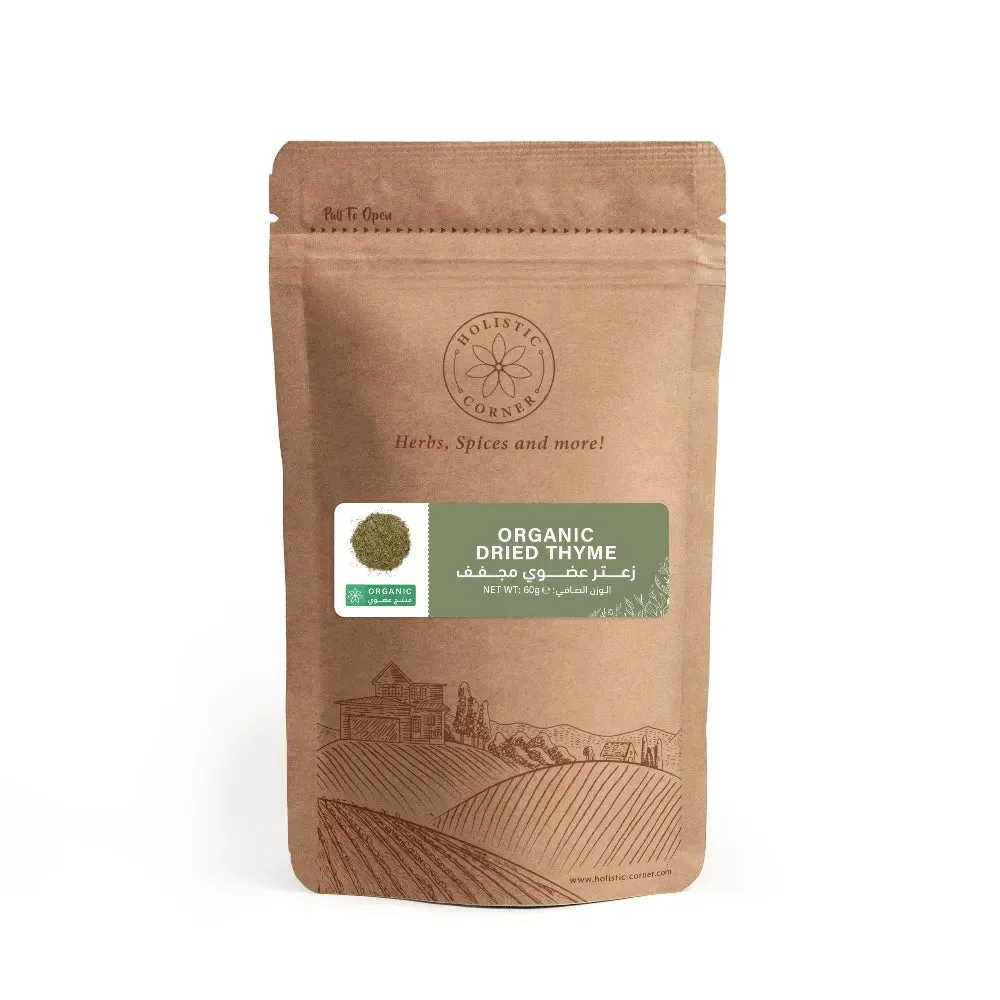
- Holistic Corner Organic Dried Thyme 60g: Holistic Corner Organic Dried Thyme 60g is grown organically without synthetic pesticides and is described as a versatile herb with rich aroma and distinct taste. If you want a dried thyme for everyday cooking, this one gives you a larger 60g format and an organic growing standard, which matters when you are using the herb frequently in stews, roasts, and dressings.