Quick answer
For narrow pod or oblong shapes, the Fretz HMR-108 Rounded Narrow Raising/Embossing Hammer gives you controlled overlapping marks. For flat cuff bracelets with a rolled edge, the Fretz M-128 Wide Flat Doming Bracelet Stake keeps the profile wide and round. If you need to refine broad surfaces, the Standard Planishing Stakes Set provides 12 machined stakes for precision forming.
What each tool actually does
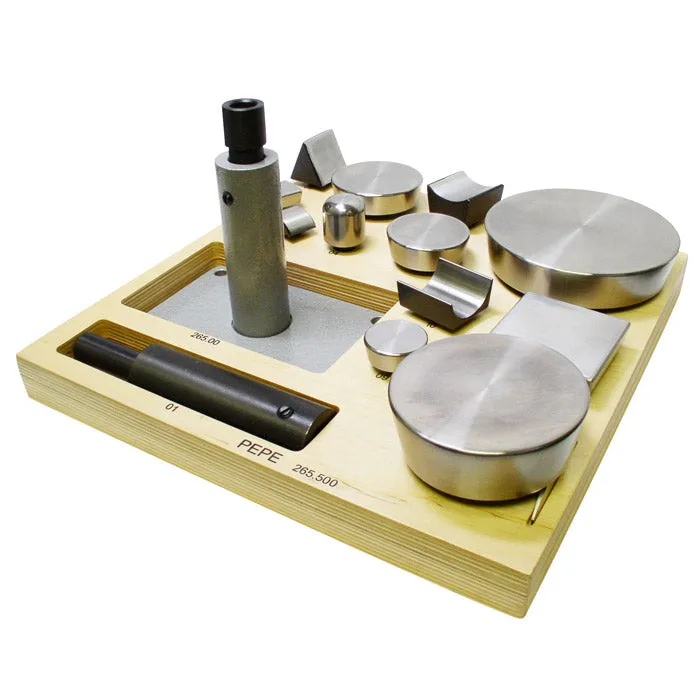
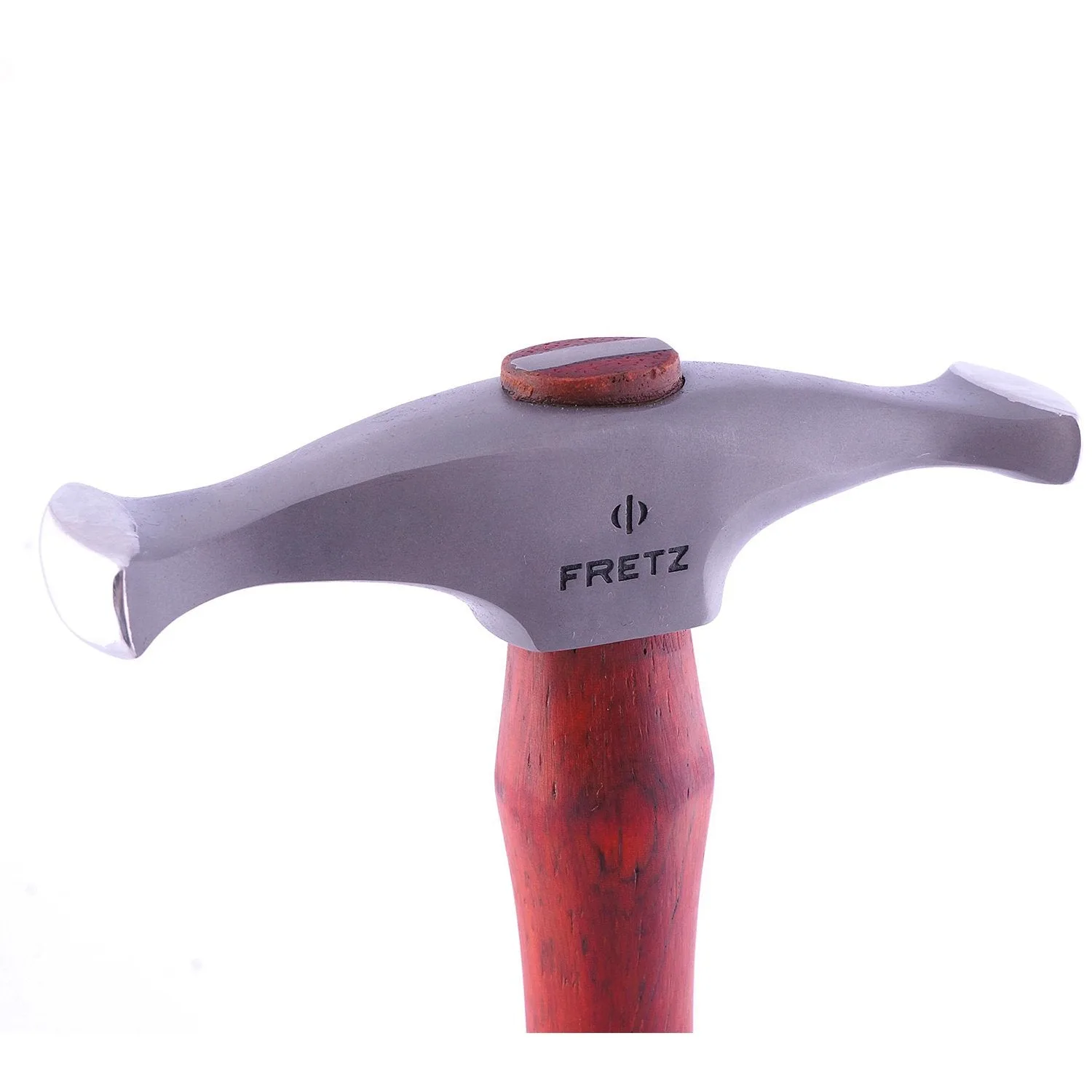
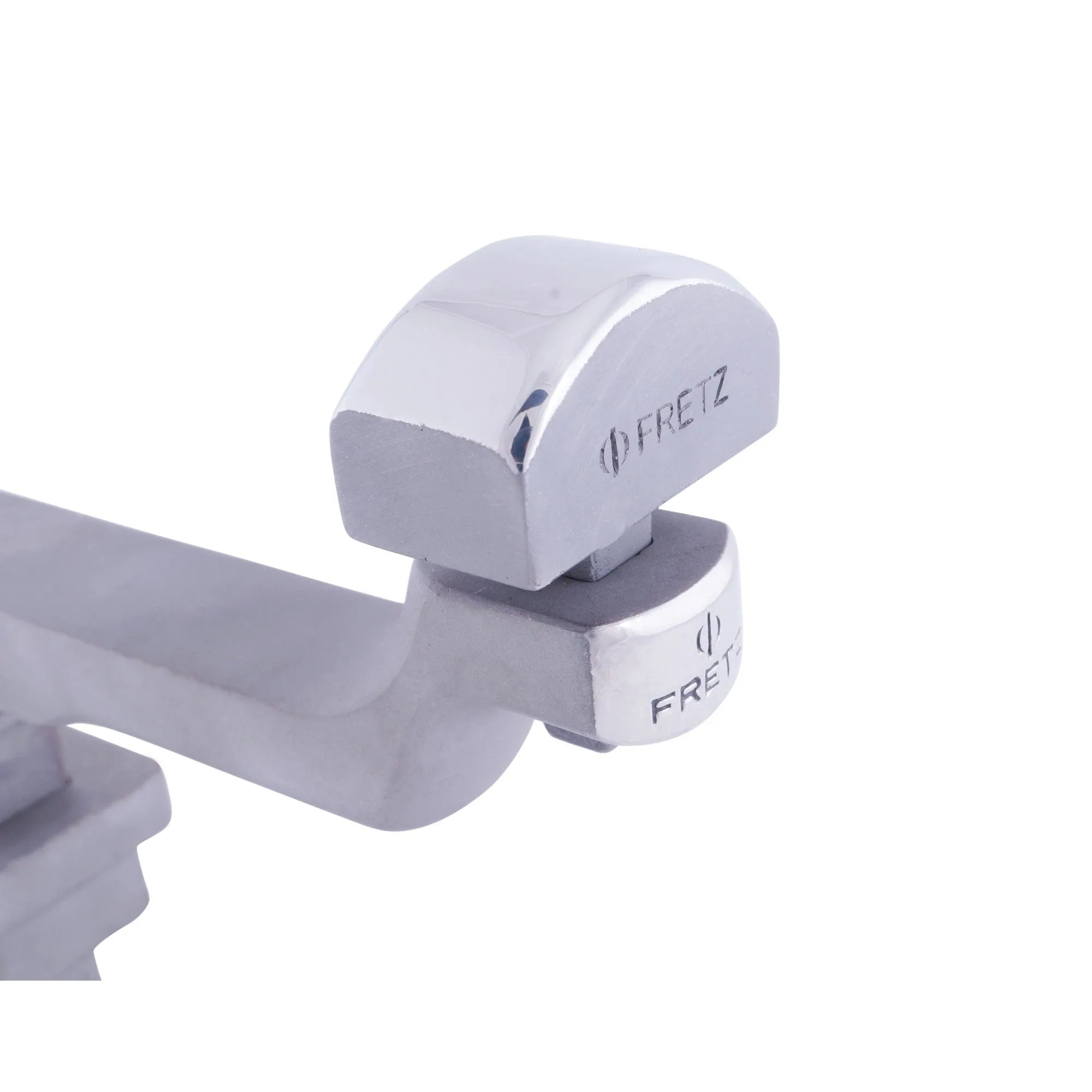
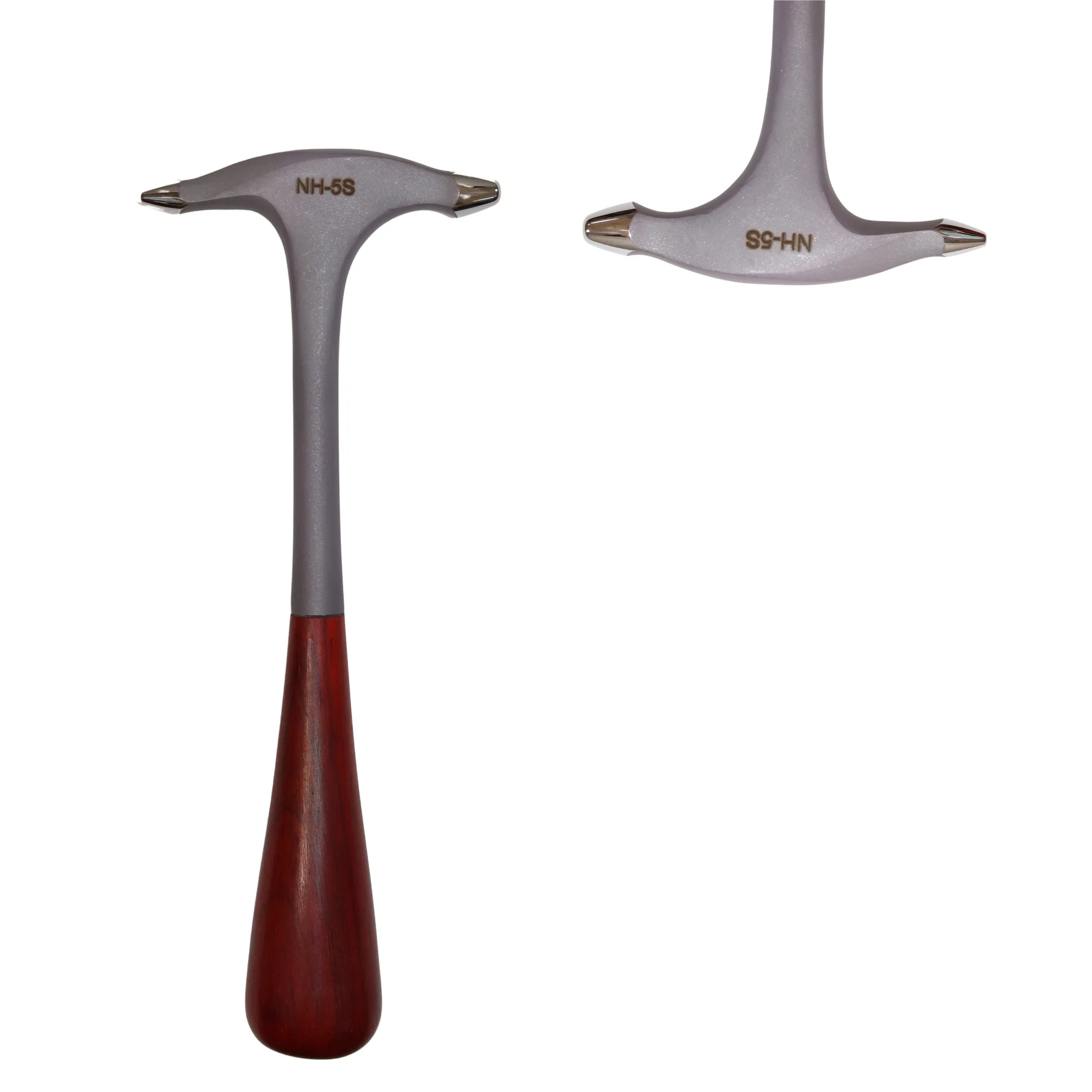
The Fretz HMR-108 is a dual-purpose raising and embossing hammer with two face sizes: 7.2 mm x 22.4 mm and 3.8 mm x 22.4 mm. Its narrow, rounded faces let you emboss narrow pod or oblong shapes, and the smoother overlapping marks are easier on long, thin shapes than a round embossing hammer. The Fretz M-128 is a wide flat doming bracelet stake, 36 mm wide, designed to make flat cuff bracelets with a rolled edge. Its dominant curve is correct for keeping a bangle or cuff bracelet round. The Standard Planishing Stakes Set includes 12 machined stakes, 1 cast iron base, 1 adapter, and 1 wooden base for raising and forming metal with precision.
Trade-offs in control, coverage, and setup
The HMR-108 trades coverage for control: its narrow faces are ideal for detailed raising and embossing, but you will make more strikes to cover a wide area. The M-128 trades versatility for dedicated cuff work: its 36 mm width and specific curve are excellent for wide-profile bracelets, but it is not a general-purpose forming stake. The Planishing Stakes Set trades portability for capability: the 12 stakes and cast iron base give you a broad range of planishing and forming options, but the set requires bench space and a stable mounting setup.
How to choose based on your project
If your work involves narrow pod or oblong shapes, start with the HMR-108. If you make flat cuff bracelets with a rolled edge, the M-128 is the direct match. If you need to refine surfaces and form metal across many profiles, the Standard Planishing Stakes Set gives you the most flexibility. Remember that the HMR-108 is a hammer, the M-128 is a stake, and the Planishing Stakes Set is a stake system, so they serve different stages of forming rather than replacing each other.
Trade-offs at a glance
- Fretz HMR-108: control vs. coverage: Narrow faces excel at detailed raising and embossing on long, thin shapes, but you will need more strikes to cover wide areas. Choose it for narrow pod or oblong forms where mark control matters most.
- Fretz M-128: cuff specialty vs. general forming: The 36 mm width and specific curve are ideal for wide-profile cuffs and bangles, but it is not a substitute for a general-purpose stake. Choose it if flat cuff bracelets with a rolled edge are your main product.
- Standard Planishing Stakes Set: capability vs. setup: 12 stakes and a cast iron base give you broad planishing and forming options, but the set needs bench space and stable mounting. Choose it when you need to refine surfaces across many profiles and can dedicate a mounting area.
Product facts
- Rounded Narrow Raising/Embossing Hammer, Fretz HMR-108: The Rounded Narrow Raising Hammer can emboss narrow pod or oblong shapes. Smoother overlapping marks are easier on long thin shapes than with a round embossing hammer. Face sizes 7.2 mm x 22.4 mm and 3.8 mm x 22.4 mm. Head length 102 mm. Handle length 250 mm. The narrow faces and long handle give you precise control for detailed raising and embossing, especially on narrow forms where a round hammer would be too broad.
- Wide Flat Doming Bracelet Stake, 36mm, Fretz M-128: The M-128 is designed to make flat cuff bracelets with a rolled edge. The width of the stake makes it suited for bracelets with a wide profile. The dominant curve of the stake is correct for keeping a bangle or cuff bracelet round. If you make wide cuff bracelets, this stake helps you maintain a consistent round form and a rolled edge without flattening the profile.
- Standard Planishing Stakes Set: 12 machined stakes, 1 cast iron base, 1 adapter, 1 wooden base. Raise and form metal with precision, using these new planishing stake sets. The set covers many planishing and forming profiles, so you can refine surfaces and shapes without buying individual stakes; the cast iron base adds stability for precise work.
Which Fretz tool fits your bench?
Best for
- Jewelers and silversmiths raising narrow pod or oblong shapes who need controlled overlapping marks
- Makers producing flat cuff bracelets with a rolled edge who need to keep a wide profile round
- Workshops that need a versatile planishing and forming setup with multiple stake profiles
Not for
- Those looking for a single tool to cover all raising, embossing, and planishing tasks
- Hobbyists with limited bench space who cannot mount a cast iron base and store 12 stakes
- Buyers who need a hammer for broad surface planishing rather than a stake system