Quick answer
Choose a frizz-fighting treatment mask if you want a fast, in-shower step that smooths strands and helps control frizz for up to 72 hours, especially in humidity. For most hair types 1–4c, start with smooth over frizz-fighting treatment mask, which is designed to reduce frizz by 73% and is a practical fit for wavy, curly, or thick hair that needs smoothing without a heavy feel.
What a frizz-fighting treatment mask actually does
A frizz-fighting treatment mask is a rinse-out smoothing step used in the shower, not a leave-in serum or a replacement for your regular conditioner. It targets the surface of the hair to reduce frizz and improve smoothness, often with a time commitment measured in seconds rather than minutes. The key difference from a standard hydrating mask is intent: hydration focuses on moisture and softness, while frizz control focuses on smoothing the cuticle and managing how hair responds to humidity.
That distinction matters when you are shopping. If your main complaint is dryness, a nourishing mask may be the better first step. If your main complaint is that hair puffs, expands, or develops a halo as soon as you step outside, a smoothing treatment mask is the more targeted tool. Some masks, like smooth over frizz-fighting treatment mask, are formulated to deliver measurable frizz reduction and smoother hair for up to 72 hours, which makes them useful for events, travel, or humid seasons.
How to choose based on hair type and humidity
Hair type should drive the decision more than the label. For wavy hair (type 2), frizz often comes from a mix of wave pattern and dryness, so a smoothing mask that does not flatten the wave is ideal. For curly hair (type 3), the goal is usually to keep definition while reducing the outer halo of frizz. For coily hair (type 4), smoothing can help with manageability, but you still need enough moisture to avoid brittleness. Thick hair often needs a mask that can coat a dense surface evenly without requiring a huge amount of product.
Humidity is the other variable. In high humidity, hair absorbs moisture from the air and the cuticle lifts, which is why frizz appears even when hair felt smooth after styling. A treatment mask for humid weather should be used as a prep step before styling, not as an afterthought. If you live in a climate with frequent rain or high dew points, look for a mask that explicitly mentions humidity or long-lasting smoothing, and plan to use it on wash days when you know you will be outside.
Where a smoothing mask fits in your routine
Use a frizz-fighting treatment mask after shampoo and before styling. If you also use a lightweight styling oil, the mask does the smoothing work in the shower and the oil adds shine and heat defense afterward. This two-step approach is often more effective than layering multiple leave-in smoothing products, which can weigh hair down or create buildup.
For very dry or brittle hair, you may need to alternate between a smoothing mask and a nourishing mask rather than using the same product every wash. A dry leave-in mask can be used on non-wash days to soften and moisturize without rinsing, which helps maintain results between treatments. If your hair feels stiff or crunchy after styling, that is usually a product buildup issue rather than a sign that the mask failed, so clarify before adding more product.
Decision rules for buying a frizz-fighting treatment mask
- If your frizz spikes in humidity and you want a fast wash-day fix: Choose a rinse-out smoothing mask that states a specific frizz-reduction percentage and a duration, like smooth over frizz-fighting treatment mask, which reduces frizz by 73% and lasts up to 72 hours. Prioritize masks with humidity or long-lasting smoothing claims over generic hydration masks.
- If your hair is wavy or curly and you want to keep definition: Use a smoothing mask as a prep step, then apply a lightweight oil only to the ends rather than the roots. This avoids flattening the pattern while still controlling the outer frizz halo. Smoothing does not have to mean straightening; placement matters more than product amount.
- If your hair is thick and dense: Look for a mask that spreads easily and does not require a long processing time. A 60-second mask is less likely to be under-applied or left on unevenly than a 10-minute treatment. Time-to-result is a practical specification, not a marketing detail.
- If your hair is dry or brittle between washes: Add a leave-in nourishing mask on non-wash days instead of re-wetting and re-smoothing. This maintains moisture without layering more smoothing product. Alternate smoothing and nourishing steps to avoid stiffness or buildup.
Product facts to compare
- smooth over | frizz-fighting treatment mask: smooth over frizz-fighting treatment mask is a 60-second in-shower rinse-out mask that instantly reduces frizz by 73% and delivers 2.2x smoother hair for up to 72 hours, even in high humidity. This is the most direct option for frizz control on wash days, and the 60-second timing makes it easy to add to an existing routine without a long treatment window.
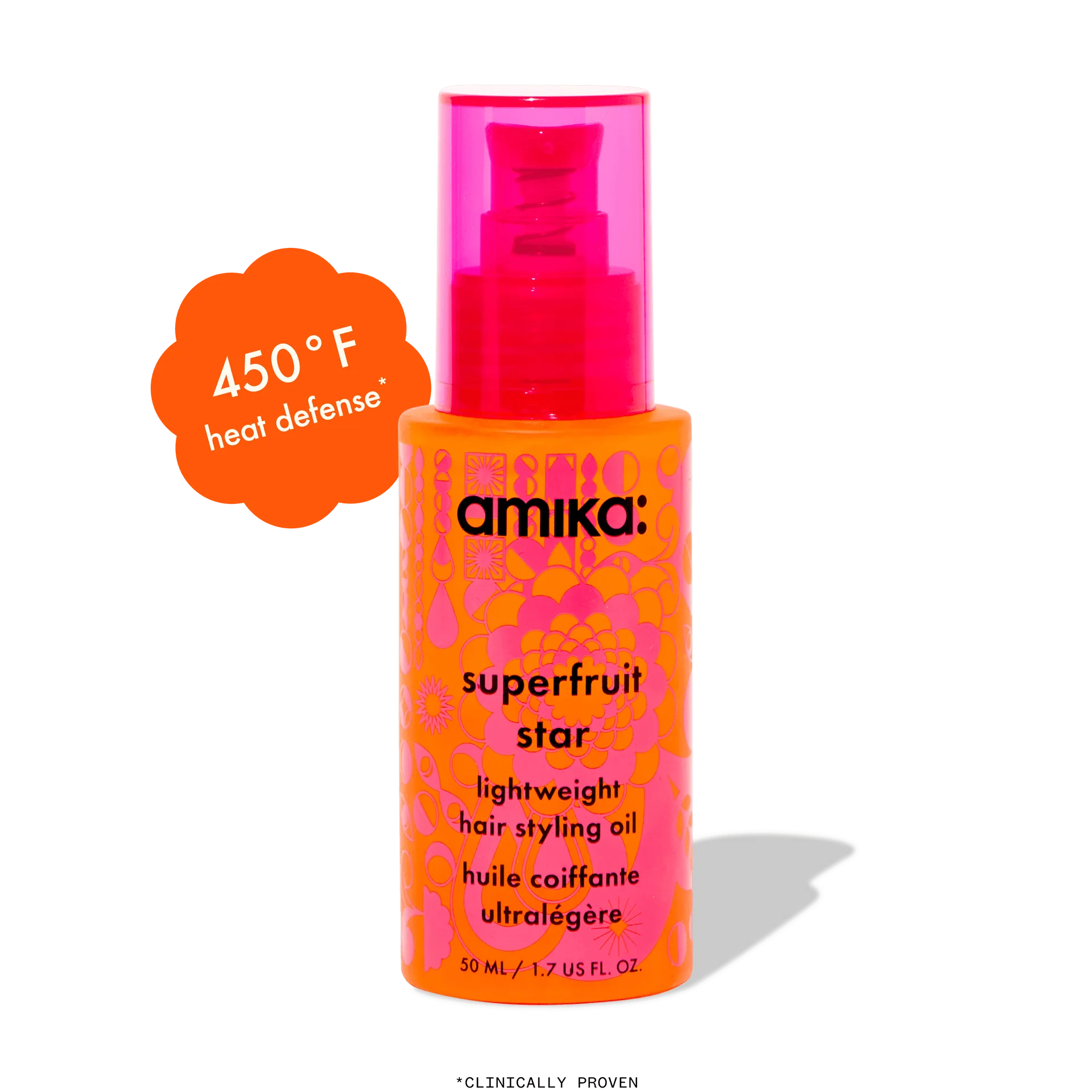
- superfruit star | lightweight hair styling + heat defense oil: superfruit star lightweight hair styling + heat defense oil is a non-greasy, superfruit-infused oil that can be used on dry or damp hair and is clinically proven to make hair 7x stronger, 2x smoother, and with 86% less breakage. Pairing this oil with a smoothing mask adds heat defense and shine after the mask step, which is useful if you blow-dry or heat-style regularly.
- soulstruck | nourishing dry hair mask: soulstruck nourishing dry hair mask is a leave-in spray that instantly softens, moisturizes, and strengthens dry, brittle hair, and is also suitable for extensions. If your frizz is driven by dryness rather than humidity alone, this can be used on non-wash days to maintain moisture without rinsing, helping you avoid over-smoothing.
Who should buy a frizz-fighting treatment mask
Best for
- Hair types 1–4c that frizz in humidity and need a fast in-shower smoothing step
- Wavy or curly hair that wants less halo without losing pattern
- Thick or dense hair that needs even coverage without a long treatment time
- Anyone who wants smoother hair for up to 72 hours between wash days
Not for
- Hair that is primarily dry or brittle with little humidity-related frizz—choose a nourishing mask first
- Scalp concerns that require a treatment rather than a surface smoothing product
- Anyone looking for a permanent straightening or chemical smoothing result