Quick answer
If you ride fast in cold, wet, or dusty conditions, a front windshield is the priority because it blocks direct wind, mud, and flying gravel from the cockpit. Add a rear window when you want to reduce the low-pressure swirl that pulls dust forward and fogs the cabin. Running both gives the most controlled airflow, but it also traps heat and requires compatible mounting.
Most UTV riders start with a front windshield and then wonder whether a rear window is worth adding. The two panels do different jobs: the front takes the hit from wind and debris, while the rear changes how air leaves the cab. That difference decides whether you get a clean, comfortable ride or a dust-filled helmet.
This comparison sticks to what the catalog actually shows, including polycarbonate front windshields for specific machines and rear-view mirror options that affect how much you can see behind you. Fitment matters more than marketing here, so check your model and roll bar size before buying either panel.
What a front windshield actually does
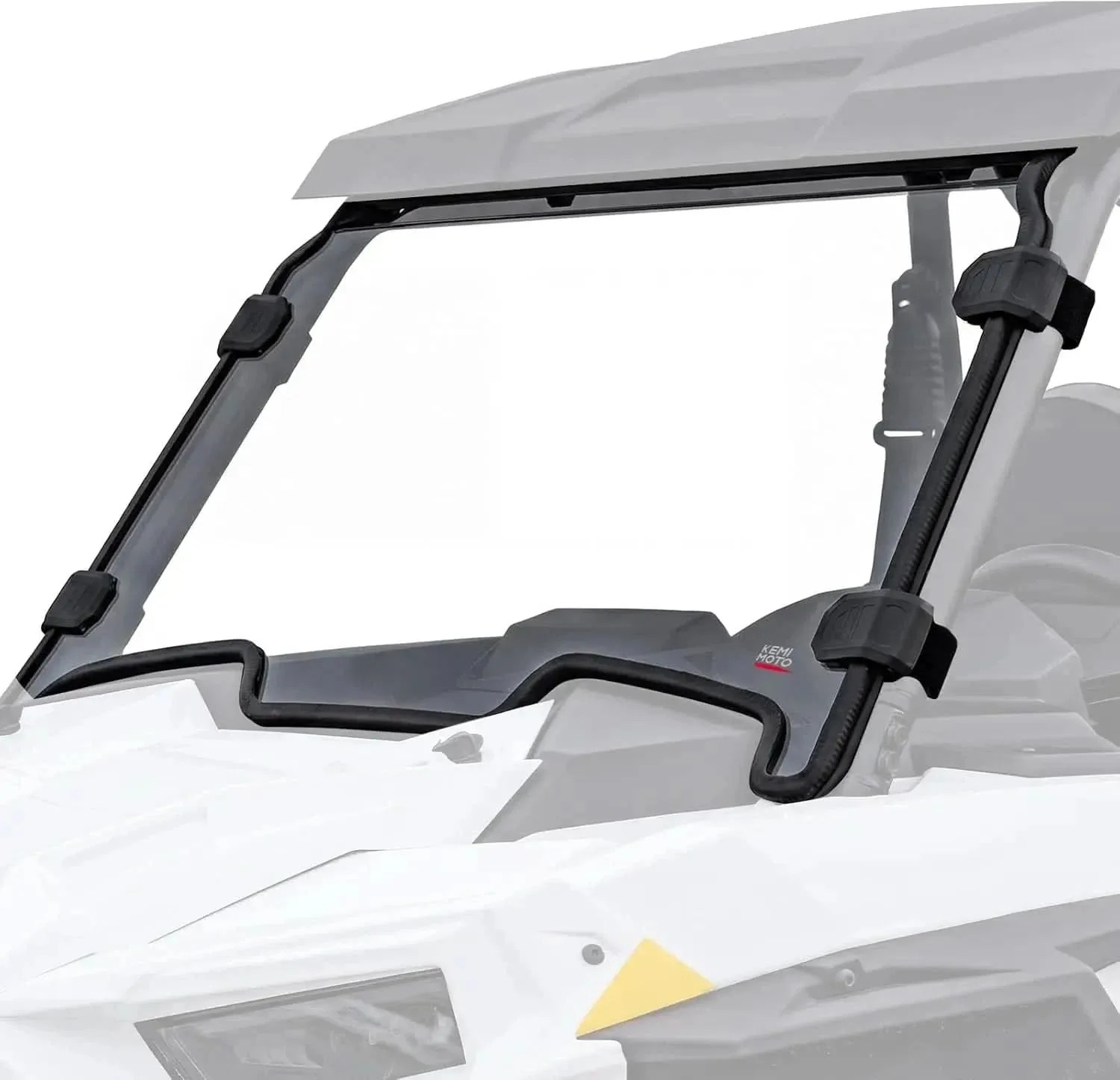
A front windshield creates a protective barrier that blocks direct wind, mud, dust, flying gravel, and debris from rushing into your cockpit. That keeps the cabin cleaner and more comfortable on fast trails. Polycarbonate construction is the common choice because it holds up across spring, summer, autumn, and winter instead of becoming brittle in cold weather.
The trade-off is that a full front panel also reduces the breeze that many riders rely on in summer. If you ride in hot climates, plan for ventilation or accept a warmer cab. On machines like the Polaris RZR Trail 900, S 900, and S 1000 2021+, a model-specific front windshield fits the factory cage profile rather than a universal frame.
- Check the model year and cage shape before ordering a front panel.
- Polycarbonate resists impact better than acrylic, but it still scratches if you wipe it dry with a dirty rag.
What a rear window changes
A rear window's main job is airflow management. Without one, the open back of the cab can act as a low-pressure zone that pulls dust, exhaust, and fine trail grit forward toward the driver and passenger. A rear panel interrupts that flow and can noticeably reduce the dust that settles on your dash and in your helmet.
The trade-off is heat. With both front and rear panels installed, air movement through the cab drops, so summer riding gets stuffier. Some riders run a rear window only in dusty or cold conditions and remove it for hot-weather trail days. Visibility is also a factor: a rear panel can limit your view when backing up, which is where a good rear-view mirror setup helps.
- If you ride in a group on dry trails, a rear window is often the single biggest dust-control upgrade.
- If you ride in extreme heat, test a rear panel before committing to a full enclosure.
Airflow and dust control together
The front vs rear windshield decision is really an airflow decision. A front panel alone stops incoming wind but can increase the low-pressure pull at the rear, which is why some riders report more dust after adding only a front windshield. Adding a rear window balances the pressure and reduces that pull.
For dust control, the combination of a front windshield and a rear window usually works better than either alone. For maximum summer airflow, a front windshield with an open or vented rear is the cooler option. There is no single correct setup; it depends on whether you prioritize dust exclusion or breeze.
- Run both panels for cold, wet, or dusty rides.
- Run front only, or front with an open rear, when heat is the bigger problem.
Fitment and mounting details that decide the purchase
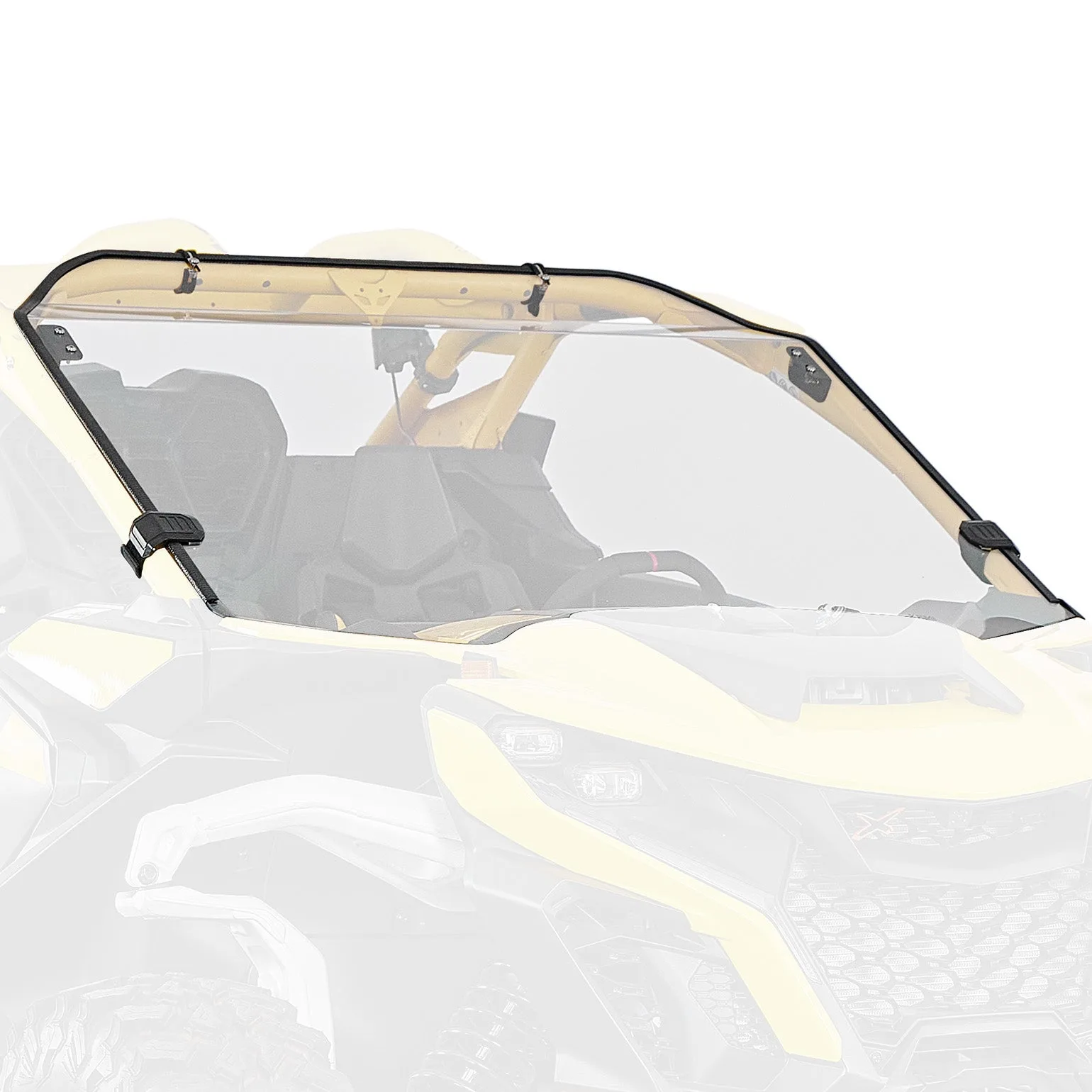
Front windshields are usually model-specific. The Can-Am Maverick R 2024+ front full windshield is built for that machine, while the Polaris RZR Trail 900 / S 900 / S 1000 2021+ front windshield is built for those cages. Buying a model-specific panel avoids drilling and gaps that let rain and dust through.
Rear-view mirrors are a separate but related purchase. Mirror sets clamp to round roll bars in the 1.75-inch to 2-inch range, and a rear-view mirror with 1.75-inch clamps fits that same bar size. If your cage is a different diameter, check the clamp size before ordering, because the catalog does not list every possible bar diameter for every product.
- Measure your roll bar diameter before buying any clamp-on mirror or accessory.
- Confirm the model year in the product title matches your machine.
Trade-offs to weigh before you buy
- Front windshield only: Best wind, rain, and debris protection with maximum summer airflow, but the open rear can still pull dust forward at speed. Choose this if heat and airflow matter more than dust.
- Rear window only: Reduces the low-pressure dust pull and can calm turbulence behind the cab, but leaves the driver exposed to direct wind and debris. Rarely enough on its own for fast trail riding.
- Front and rear together: The most controlled cabin for cold, wet, and dusty conditions, but heat builds up and rear visibility drops without a mirror. Pair with a convex rear-view mirror and plan ventilation for summer.
Catalog facts that matter for this comparison
- Front Windshield High-Light Anti-Scratch for Polaris RZR Trail 900 / S 900 / S 1000 2021+: Creates a protective barrier to block direct wind, mud, dust, flying gravel, and debris from the cockpit; premium polycarbonate delivers stable performance across all four seasons. This is the front-panel job in practice: cleaner cabin and year-round use, with the trade-off of reduced summer breeze.
- Front Full Windshield for Can Am Maverick R 2024+: Polycarbonate construction provides protection from wind, rain, and debris plus sun and ray protection, and the material is described as scratch resistant. Model-specific fit for the Maverick R means less gap, less rattle, and better protection than a universal panel.
- Rear View Mirror with 1.75" Clamps and Convex Design for Polaris RZR: Real glass convex lens gives non-distorted images, the 15-inch convex mirror widens the field of view, and the brackets offer three adjustment methods. When a rear window limits your rear view, a wide convex mirror is how you keep an eye on the trail behind you.
- Universal Side Rear View Mirrors and Center Mirror Fit 1.75“ - 2" Round Roll bars-NEWFLASH: High-impact aluminum, glass lens, and durable clamps resist wear and corrosion; side mirrors have a break-away feature with 180-degree adjustable angle. The break-away feature protects the mirror when branches or rocks hit it, which matters on tight trails.
Which setup fits your riding
Best for
- Cold, wet, or dusty trail riders who want a cleaner, quieter cockpit
- Polaris RZR Trail 900 / S 900 / S 1000 2021+ or Can-Am Maverick R 2024+ owners who want model-specific front fitment
- Group riders on dry trails who want to cut dust pulled into the cab
Not for
- Riders in extreme heat who need maximum open airflow
- Owners of machines not listed in the product titles, unless they confirm cage and bar dimensions first
- Anyone who wants a universal front panel without checking model year and cage profile
Start with a front windshield if wind, rain, and debris are your main problems, then add a rear window when dust and turbulence become the issue. Check your model year and roll bar diameter before ordering, and add a convex rear-view mirror if a rear panel limits your view. The right combination is the one that matches your climate and trail conditions, not the one with the most panels.