Quick answer
Buy a return-style, boost-referenced adjustable regulator if you run a return fuel system and need to tune pressure under load. Buy a fixed or factory-replacement regulator if your vehicle is stock and the ECU already manages fuel. Match the regulator to your pump, rail, and hose fittings before you worry about brand or price.
A fuel pressure regulator does one job: hold the pressure difference between the fuel rail and the intake manifold so the injectors deliver the fuel mass the ECU expects. When that job stops being done correctly, the engine runs rich, lean, or inconsistently, and no amount of injector tuning fixes it.
This fuel pressure regulator buying guide focuses on the decisions that actually change which part you order: return vs returnless, static vs boost-referenced, fixed vs adjustable, and how the regulator physically connects to your rail, pump, and return line. The goal is to help you avoid buying a regulator that cannot be adjusted far enough, cannot flow enough, or simply will not bolt to your fuel system.
Return-style vs returnless: the first decision
A return-style system sends unused fuel from the rail back to the tank through a return line, and the regulator sits on that return path. This is the classic layout for adjustable regulators because you can change rail pressure directly and the pump sees a constant recirculating flow. If your car has a return line from the rail to the tank, a return-style regulator is the natural choice.
A returnless system has no return line from the rail; the regulator is usually in the tank or integrated into the pump module, and the ECU controls pressure by modulating pump speed or a bypass. If you want an adjustable regulator on a returnless car, you must convert to a return-style system with a return line, which is a much larger job than swapping the regulator itself.
- Check for a return line at the rail before ordering; no return line means no simple adjustable FPR install.
- Returnless conversions require a return line, a regulator mounting point, and often a different pump module strategy.
Static vs boost-referenced (rising rate) regulators
A static regulator holds one pressure regardless of manifold pressure. That works on naturally aspirated engines where manifold pressure stays near atmospheric. A boost-referenced regulator, often called a rising rate regulator, raises fuel pressure as boost rises, typically at a 1:1 ratio, so the pressure difference across the injector stays consistent. This matters because injector flow is rated at a specific pressure difference, not at a fixed rail pressure.
Rising rate regulators with ratios above 1:1 are used to add fuel under boost without retuning the ECU, but they can push injectors and pumps past their comfortable range. If your ECU can be tuned for larger injectors, a 1:1 boost-referenced regulator is usually the cleaner choice than a high-ratio rising rate unit.
- Naturally aspirated: static regulator is usually sufficient.
- Boosted: choose a 1:1 boost-referenced regulator unless you have a specific reason to run a higher ratio.
- Higher ratios increase fuel pressure quickly; verify pump and injector limits before using one.
Adjustable vs fixed: when adjustment earns its cost
An adjustable fuel pressure regulator lets you set base pressure with a screw and locknut, then verify it with a gauge. That adjustability is useful when you change injectors, add boost, or need to compensate for a pump that runs slightly high or low. It also adds a failure point: an adjuster that moves, a diaphragm that ages, or a gauge port that leaks.
A fixed regulator is simpler and cheaper, and on a stock or mildly modified engine the factory pressure is already correct. The trade-off is that you cannot correct pressure drift or tune around a fuel system change. If you are building a car where fuel pressure is part of the tune, adjustable is worth it; if you are replacing a failed factory regulator on a stock car, fixed is often the better decision.
- Buy adjustable if you plan to tune base pressure or run boost.
- Buy fixed if the factory pressure spec is correct and you want fewer variables.
- Always verify adjustable base pressure with a gauge rather than trusting the adjuster position.
Flow capacity, ports, and fittings
Regulators have a flow limit, and a pump that outflows the regulator can cause pressure creep or inconsistent pressure at high demand. Match the regulator's inlet and return port sizes to your fuel line sizes. A regulator with 6AN ports on a system with 8AN feed and 6AN return may be fine, but a regulator with small return ports can restrict return flow and raise base pressure.
Fitting type matters as much as port size. AN hose ends, hose barbs, and OEM quick-connects are not interchangeable without adapters, and every adapter is another potential leak point. If your rail uses a specific port style, choose a regulator that accepts that style directly or budget for the correct adapter.
- Match regulator port sizes to your feed and return line sizes.
- Prefer direct-fit port styles over stacked adapters where possible.
- A restricted return path can raise base pressure even with a correctly set regulator.
Fitment checks before you buy
Fitment is where most regulator purchases go wrong. Confirm the mounting location, the rail port thread, the return line size, and whether the regulator needs a vacuum/boost reference port. A boost-referenced regulator needs a manifold pressure source; a static regulator does not. If you are using a fuel rail with a specific port, the regulator must match that port or use a known adapter.
Also check clearance. Regulators with gauges or large diaphragms can interfere with the hood, intake manifold, or wiring. Measure the space before ordering, and remember that a gauge can often be remote-mounted with a hose if clearance is tight.
- Confirm rail port thread and regulator inlet thread match.
- Confirm return line size matches regulator return port.
- Check hood and manifold clearance for the regulator body and gauge.
Decision rules for choosing a fuel pressure regulator
- If your car has a return line from the rail: Choose a return-style regulator and mount it on the return path. This is the only layout that supports simple adjustable base pressure. No return line means no simple adjustable FPR without a conversion.
- If you run boost: Choose a boost-referenced regulator, usually 1:1, and connect the reference port to manifold pressure. A static regulator will not compensate for boost. Verify the reference port sees both vacuum and boost, not just one.
- If you are tuning base pressure: Choose an adjustable regulator with a gauge port and a locking adjuster. Set base pressure with the vacuum reference disconnected, then reconnect it. An adjustable regulator without a gauge is a guess, not a tune.
- If your pump flows more than your old regulator: Check regulator flow capacity and return port size. A 340lph pump can overwhelm a regulator with a small return port. Match return port size to return line size.
- If you are replacing a failed factory regulator on a stock car: Choose a fixed replacement that matches factory pressure and port style. Adjustability adds cost and failure points you do not need. Stock fuel system, stock pressure, fixed regulator.
Product facts that affect regulator selection
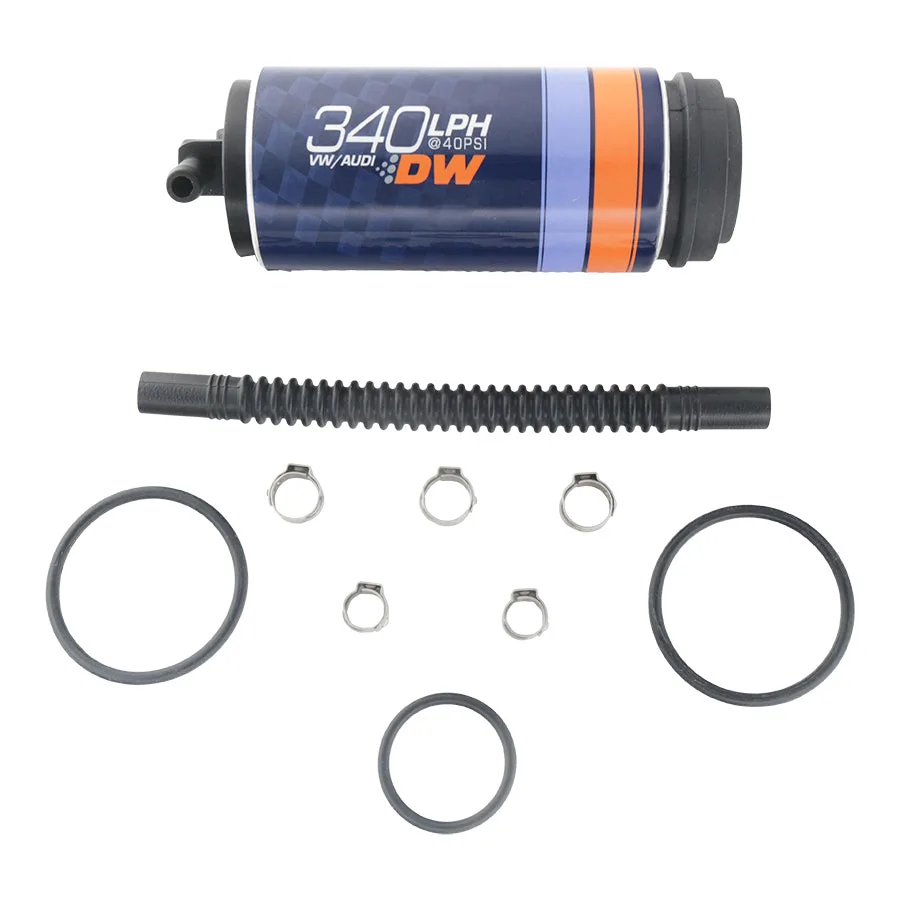
- DW340V Fuel pump for FWD VW/Audi: DW340v series, 340lph in-tank fuel pump with install kit for VW and Audi 1.8t FWD A 340lph pump can outflow a small regulator, so choose a regulator with adequate return flow and verify base pressure after installation.
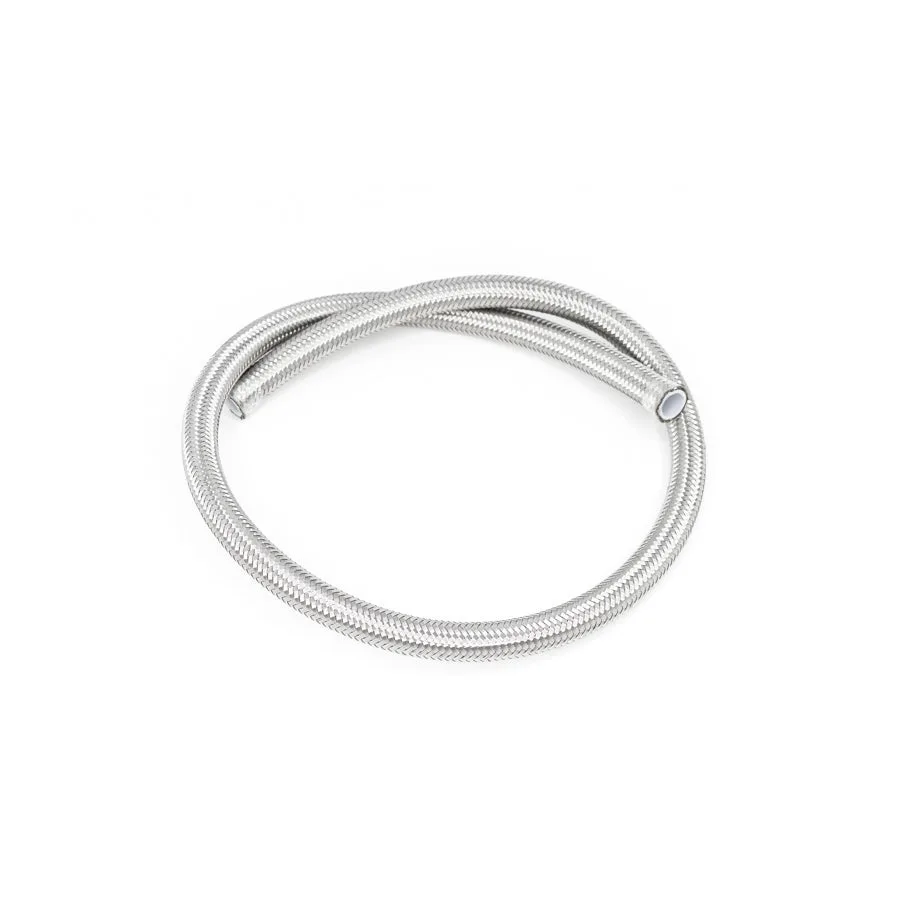
- 3 ft, 6AN SS Double Braided PTFE Hose: 6AN stainless steel double braided PTFE hose, 3 feet PTFE hose is compatible with ethanol and high-pressure fuel, and 6AN sizing helps you match regulator ports and return lines without adapters.
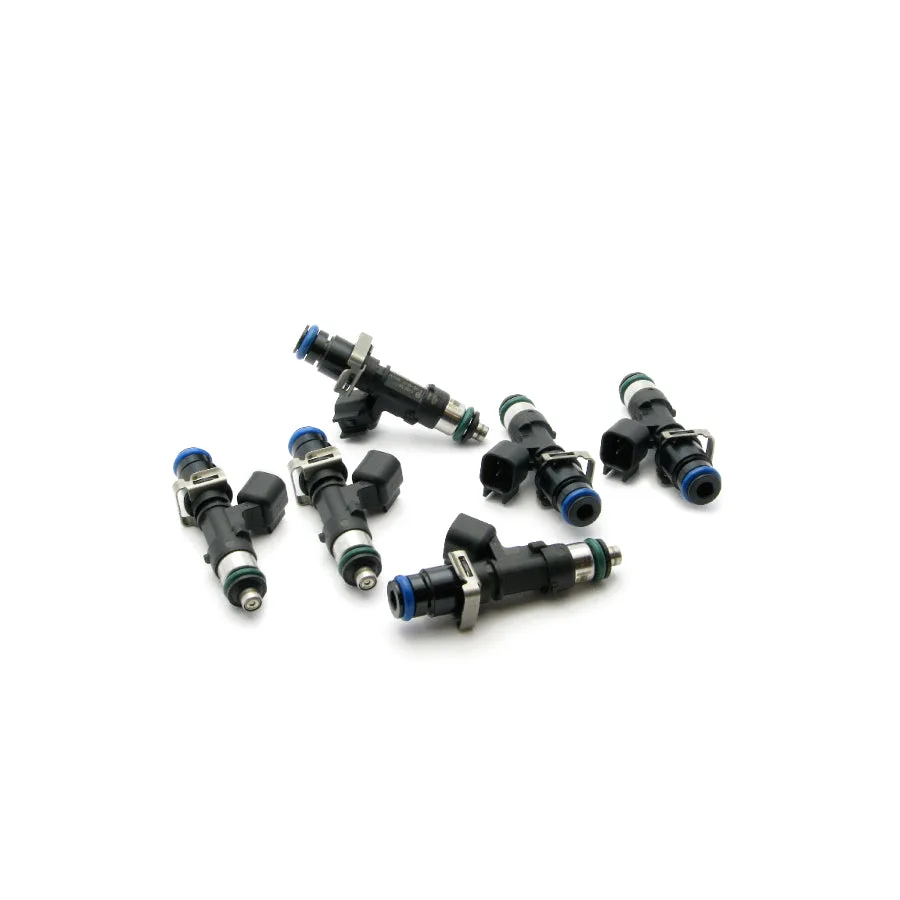
- Universal 48mm standard 1000cc/min: Bosch EV14 universal 48mm standard 1000cc/min Large injectors like these change the fuel demand your regulator must support; confirm the regulator can hold pressure at your target flow.
Who should buy which regulator
Best for
- Boosted engines with a return-style fuel system and a tunable ECU
- Naturally aspirated builds where base pressure needs correction after injector or pump changes
- Vehicles converting from returnless to return-style with a planned return line
Not for
- Stock returnless vehicles where the factory regulator is working correctly
- Owners who want a bolt-on part without verifying rail port, return line, or clearance
- Builds where the ECU can fully compensate for fuel demand without pressure changes
Pick the regulator that matches your fuel system layout first, then your tuning needs. Return-style and boost-referenced covers most performance builds; fixed replacement covers most stock repairs. Verify port sizes, return flow, and clearance before you order, and set adjustable base pressure with a gauge rather than by feel.