Quick answer
For a mostly stock TB48, a clean 255 LPH in-tank pump is enough. Once you add boost, cams, or E85 and target 500+ HP, plan on 340–450 LPH or dual pumps with a return-style system. The key is to match pump flow to your actual horsepower goal, then confirm the module physically fits the Patrol tank and hanger.
The TB48 is a big, thirsty inline-six, and the factory fuel system was sized for stock output, not for boost or E85. Most owners start asking about a Patrol TB48 fuel pump only after they notice lean conditions, fuel pressure drop, or a build plan that outgrows the stock supply.
This FAQ answers the questions that come up most often: how much flow you actually need, what fits the Patrol tank, what changes when you go in-tank versus inline, and what to check before and after install. The goal is to help you pick a pump that supports your power target without creating new problems.
How much fuel flow does a TB48 need?
Flow requirements scale with horsepower and fuel type. As a working rule, a naturally aspirated TB48 with bolt-ons is fine on a 255 LPH pump. A mild boost setup around 400–500 HP generally wants 340 LPH. Above that, or on E85, plan for 450 LPH or dual pumps. These are starting points, not guarantees; injector size, base pressure, and duty cycle all shift the real number.
The honest tradeoff is that bigger pumps move more heat and can overwhelm a factory return system. If you jump straight to a 450 LPH pump on a stock return line, you may get pressure creep at idle. Match the pump to the goal, and upgrade the return path when you go big.
- Estimate flywheel HP first, then add a 20% safety margin before choosing pump flow.
- E85 needs roughly 30% more flow than gasoline for the same power.
- If you are unsure between two sizes, the larger pump plus a proper regulator is usually the safer path.
What fits the Patrol TB48 tank?
Fitment is where most TB48 fuel pump projects go sideways. The Patrol tank uses a specific module and hanger arrangement, and pump diameter, length, and outlet position all matter. A pump that flows enough but sits too deep or too shallow will either starve on corners or foul the tank floor. Always confirm the pump body dimensions against your factory module before ordering.
If you are replacing the whole module rather than just the pump, check that the new assembly matches your tank depth and electrical connector. Some universal modules, like the UX1 Module, are designed to accept a pump of your choice and include a bucket, which can simplify the job when the factory hanger is worn or discontinued.
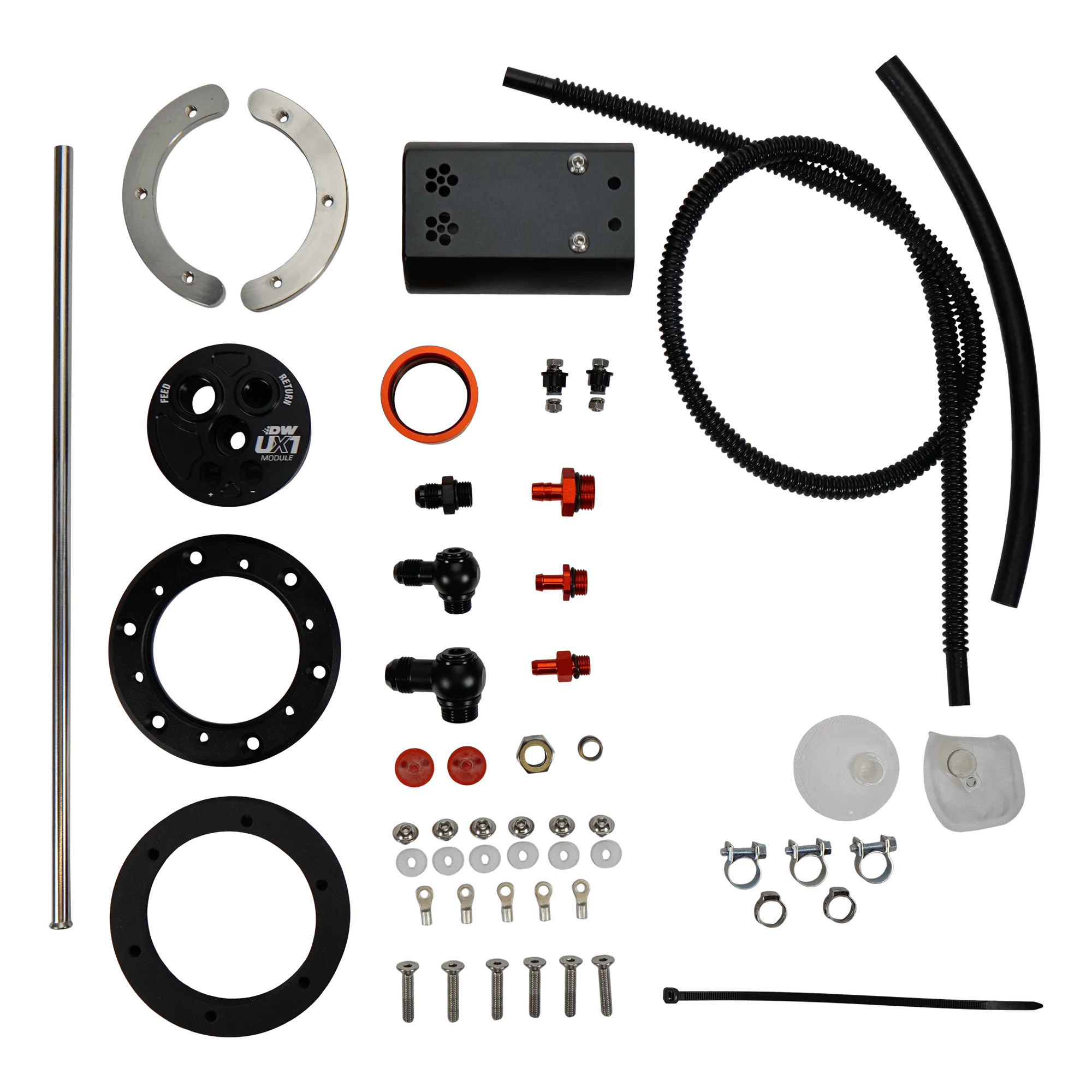
UX1 Module
- Measure your factory pump body length and diameter before buying a replacement.
- Check whether your Patrol uses a return-style or returnless system; the module must match.
- If the factory hanger is brittle or corroded, replacing the full module is often cheaper than repairing it.
In-tank vs inline: which should I choose?
For a TB48 daily or mild build, an in-tank pump is the right default. It stays cool, runs quieter, and keeps the install clean. A TB48 in-tank fuel pump upgrade also lets you keep the factory tank and sender, which saves time and money. The main limitation is ceiling: once you need more than about 450 LPH, in-tank single-pump options get scarce.
Inline pumps come into play for high-horsepower builds, surge-tank setups, or when the factory tank is modified. They are easier to service and can be staged, but they are louder and need a lift pump or surge tank to avoid starvation. For most Patrol owners, start in-tank and only move inline if your power target demands it.
- In-tank is better for street cars, heat management, and noise.
- Inline is better for race cars, dual-pump staging, and easy service access.
- If you go inline, plan a surge tank or lift pump to prevent fuel starvation under load.
What should I replace while I am in there?
Pulling the tank is the hard part, so replace wear items while you have access. The fuel filter and strainer are obvious, but also inspect the wiring connector, the tank seal, and the fuel hose. Old rubber hose can collapse or leak once it sees higher pressure from a bigger pump, so upgrading to a proper high-pressure hose is cheap insurance.
If your pump module uses a serviceable filter element, check its micron rating and condition. A clogged element can make a healthy pump look weak, and it is a common cause of lean conditions that owners misdiagnose as a failing pump.
- Replace the fuel filter and strainer every time you change the pump.
- Inspect and replace the tank seal to avoid leaks and EVAP codes.
- Upgrade tired rubber fuel hose to a high-pressure rated hose.
How do I install a TB48 fuel pump safely?
Safety first: relieve fuel pressure, disconnect the battery, and work in a well-ventilated area with no ignition sources. Drain or lower the tank if needed, then remove the module carefully to avoid bending the sender arm. Note the orientation of the pump and hanger before disassembly so you can reassemble it the same way.
When fitting the new pump, use new O-rings and lubricate them with a little fuel or assembly grease so they seat without tearing. Connect the outlet hose securely and confirm the pump sits at the correct depth. After reassembly, prime the system and check for leaks before starting the engine. If pressure is low or erratic, recheck the pump seating and the filter.
- Never reuse injector or pump O-rings; a torn O-ring can cause a dangerous leak.
- Prime the system and check for leaks before cranking the engine.
- If the pump whines loudly, it may be starved or incorrectly seated.
Do I need a tune or supporting mods?
Yes, if you increase flow beyond what the factory ECU expects. A larger pump can raise base pressure, and the ECU may need a tune to correct fueling. On a stock TB48 with just a pump upgrade, you might get away without a tune, but it is risky. A wideband air-fuel gauge is a smart addition to confirm you are not running lean.
If you are adding boost or E85, a tune is mandatory. The pump is only one part of the fuel system; injectors, regulator, and return line all need to support the same goal. Upgrading the pump alone without matching injectors can leave power on the table or create drivability issues.
- A wideband gauge is the cheapest insurance against a lean condition.
- Match injector size to your power goal and fuel type.
- If you change fuel type or boost, get a professional tune.
TB48 fuel pump decision checklist
Horsepower goal
Write down your realistic flywheel HP target and fuel type before shopping. This single number determines whether you need 255, 340, 450, or dual pumps. If you are between sizes, choose the larger pump and add a regulator.
Tank and module fitment
Measure your factory pump body and confirm the new pump or module matches the Patrol tank depth, outlet position, and connector. A pump that does not seat correctly will starve or leak, no matter how much it flows.
Supporting parts
Budget for a new filter, strainer, O-rings, tank seal, and high-pressure hose. These are cheap compared to pulling the tank twice. Replace wear items now, not later.
Tuning and monitoring
Plan for a tune if you increase flow significantly, and install a wideband gauge to verify air-fuel ratios. A pump upgrade without a tune is a gamble.
Products that fit this conversation
- DW400 Fuel pump module with PTFE return kit for 2014-18 Silverado/Sierra: DW400 Pump Module + Return Kit SS PTFE for Chevy Silverado 1500/2500/3500 & GMC Sierra 1500/2500/3500 2005-13 V8 4.8L/5.3L/6.0L Excl Flex Fuel While this specific module is for GM trucks, it shows the kind of complete in-tank solution that includes a return kit and PTFE hose. If you are considering a full module replacement for a high-flow build, look for a similar complete kit that matches your Patrol's tank and return style.
- UX1 Module: Universal X1 Module w/ bucket and no fuel pump This universal module can accept a pump of your choice, which is useful when the factory hanger is worn or when you want to run a specific flow rate. It includes a bucket to help prevent fuel starvation, a common issue in high-power builds.
- 5 micron, 110mm, In-line fuel filter element: In-line fuel filter element, stainless steel 5 micron. Fits DW 110mm housing. Universal A fine 5-micron stainless element protects injectors and the pump from debris. If your TB48 runs a serviceable inline filter, replacing the element during a pump upgrade is cheap protection against lean conditions caused by a clogged filter.
Choosing the right Patrol TB48 fuel pump comes down to matching flow to your actual power goal and confirming it fits your tank and module. Start with your horsepower target, pick a pump size with a safety margin, and replace the supporting parts while you have the tank open. If you are unsure, ask before you buy—getting the fitment right the first time saves far more than it costs.

