Quick Answer
Upgrade your fuel pump when your current setup runs out of fuel before it runs out of boost — typically when you add a larger turbo, flex fuel, or more aggressive tuning. Match the pump to your realistic power goal with headroom, not to the biggest number you can find. On a Honda 1.5T or 2.0T, the pump is only one link in the chain; lines, rails, and injectors have to keep up too.
You add a downpipe, a tune, and a bigger turbo, and the car pulls harder — until it doesn't. The most common limit people hit next isn't the turbo or the intercooler. It's the fuel system, and the fuel pump is usually the first restriction.
This guide gives you concrete decision rules for when a fuel pump upgrade is worth it, how to think about fuel pump sizing for a turbo build, and which supporting parts to change at the same time so you don't chase your tail. It also covers what to check before you buy, including fitment details that are easy to miss.
When to Upgrade Your Fuel Pump
The clearest signal is data, not a parts list. If your datalogs show fuel pressure dropping as RPM climbs, or your tuner has to pull fuel to stay safe, the pump is likely at its limit. Other signs: you're adding ethanol, you've moved to a larger turbocharger, or you're targeting power well beyond what the factory pump was designed to support.
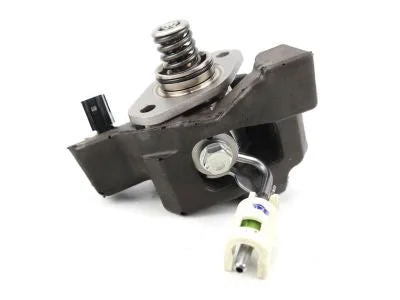
A worn factory pump can also cause problems even at stock power. Hard starting, lean conditions under load, and inconsistent fueling can all point to a pump that's tired rather than undersized. On a 2016-2021 Honda Civic 1.5T, the factory high pressure fuel pump is a known wear item, and replacing it with a genuine Honda assembly restores the baseline before you start adding power.
- Log fuel pressure and injector duty cycle before and after any fuel system change.
- If you're adding flex fuel, plan the pump and fuel lines as one project.
- Don't upgrade the pump to fix a bad tune — fix the tune first.
Fuel Pump Sizing: Match the Pump to the Goal
Fuel pump sizing starts with a realistic power target and the fuel you plan to run. Ethanol blends like E30 or E85 require more volume for the same power because they contain less energy per gallon. A pump that's fine on pump gas at 350 hp may be marginal on E85 at the same output. Build in headroom — 15-20% above your calculated demand is a reasonable rule of thumb — so the pump isn't running at 100% duty cycle.
Don't guess from a catalog number alone. Flow ratings are usually quoted at a specific pressure, and real-world flow drops as pressure rises. If you're running higher rail pressure, the pump has to work harder. Your tuner can help you translate your target into a required flow rate at your system pressure.
- Higher ethanol content = more volume needed for the same horsepower.
- A pump rated at 340 LPH at 3 bar may flow significantly less at 5 bar.
- If you're close to the limit, step up one size rather than maxing out the current pump.
In-Tank vs. Inline: What Fits Your Build
Most modern Hondas use an in-tank fuel pump module. An in-tank fuel pump upgrade usually means replacing the pump inside the module, sometimes with a higher-flow unit and a revised wiring harness. This keeps the factory tank and fuel level sender, which is simpler for a street car. The trade-off is installation complexity — dropping the tank or accessing the module can be a job in itself.
Inline pumps are common on dedicated track cars or when you need very high flow. They're easier to service and can be added in series with the in-tank pump, but they add noise, wiring, and another failure point. For a street-driven turbo build, a properly sized in-tank upgrade is usually the cleaner choice.
- Check whether your platform uses a returnless or return-style fuel system before buying.
- Upgraded wiring (often called a hotwire kit) is worth it if you're pushing a high-flow pump.
- If you smell fuel or hear whining after install, stop and diagnose before driving.
Supporting Parts: Don't Stop at the Pump
A high flow fuel pump pushes more volume, but the rest of the system has to handle it. On a 2018-2022 Honda Accord 2.0T, for example, a high volume intake system can improve airflow, but fuel delivery still depends on the pump, lines, and injectors working together. If you're upgrading the pump, inspect the fuel lines and rail at the same time — a restricted line or a corroded rail can undo the pump's benefit.
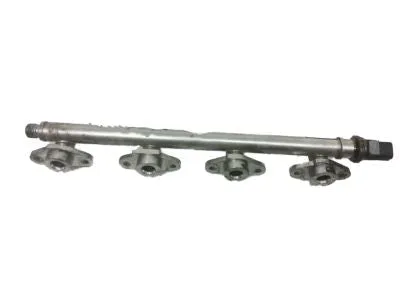
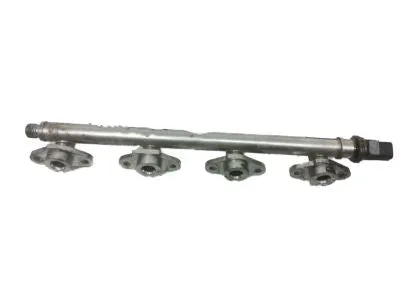
On the 2016-2021 Civic 1.5T, the fuel rail pipe is a factory replacement part that's worth replacing if you're already in there. It fits the Civic, Accord 1.5T, and CR-V 1.5T, so it's a common part across the 1.5T family. If you're chasing a fuel delivery issue, replacing a tired rail pipe is cheap insurance.
- Replace fuel filters and strainers when you change the pump.
- Inspect injector seals and O-rings for any signs of leaking.
- If you're adding flex fuel, a content analyzer is a separate but related purchase.
Decision Rules for Your Fuel Pump Upgrade
- If you're stock turbo and pump gas: Stay with a genuine replacement pump unless datalogs show pressure drop. A factory pump in good condition supports stock power reliably. Don't upgrade for the sake of it — fix what's worn first.
- If you're adding a larger turbo or flex fuel: Size the pump for your target power on the fuel you'll actually run, with 15-20% headroom. Ethanol needs more volume than gasoline at the same power. Plan the pump, lines, and injectors as one system.
- If you're chasing a fuel delivery problem: Check the pump, rail pipe, filter, and wiring in that order. A restricted rail pipe or tired wiring can mimic a failing pump. Diagnose before you buy; replace the weak link.
- If you're on a tight budget: A genuine replacement pump plus a new rail pipe and filter is often enough for mild builds. Skip the high-flow pump until your goals demand it. Spend on condition and fitment first, flow second.
Fuel System Parts That Fit the Job
- Genuine Honda Civic High Pressure Fuel Pump Assembly: Fits all 2016-2021 Civic 1.5T (Non-Si), including CVT, 6MT, RHD, and international models. Factory replacement Honda part number 16790-59B-003. If your stock 1.5T pump is failing or you're staying near stock power, this restores factory fuel delivery without aftermarket guesswork.
- https://prlmotorsportsec.com/products/genuine-honda-fuel-rail-pipe-civic-cr-v-accord-8ee7e3081402cb3370b6633a-2681100https://prlmotorsportsec.com/products/genuine-honda-fuel-rail-pipe-civic-cr-v-accord-1-ce58ec44a378b5d6bfca1c5e-2681106Genuine Honda Fuel Rail Pipe - Civic / CR-V / Accord: Fits 2016-2021 Civic 1.5T, 2018+ Accord 1.5T, and 2017-2022 CR-V 1.5T. Factory replacement Honda part number 16011-5AA-305. A worn or restricted rail pipe can limit flow even with a new pump, so replacing it during a fuel system refresh makes sense.
- 2017-2021 Honda Civic Type-R FK8 WiFi Ethanol Content Analyzer / Flex Fuel Kit: Fits 2017-2021 Civic Type-R FK8 and 2023+ Civic Type-R FL5. WiFi module analyzes ethanol content via smart device; optional 0.5V-4.5V output for tuning device. Not compatible with PRL PTFE Fuel Lines. If you're adding ethanol, you need to know the actual content to tune safely. This kit gives you that data without a dedicated gauge.
- 2018-2022 Honda Accord 2.0T High Volume Intake System - V2: Fits all 2018-2022 Accord 2.0T, including 10AT, 6MT, RHD, and international models. No ECU calibration required. Patent No. D902,255. More airflow only helps if fuel delivery keeps up. If you're adding an intake, check your fuel pump headroom before turning up the boost.
Is a Fuel Pump Upgrade Right for You?
Best for
- Turbo builds targeting power beyond the factory fuel system's safe limit
- Owners adding flex fuel or ethanol blends who need more volume
- Anyone whose datalogs show fuel pressure dropping under load
Not for
- Stock or lightly modified cars with healthy fuel pressure
- Owners who haven't confirmed the pump is the actual restriction
- Builds where the tune, not the hardware, is the real problem
A fuel pump upgrade is a supporting mod, not a headline one — but it's the difference between a safe tune and a lean one. Match the pump to your realistic power goal, replace worn supporting parts like the rail pipe while you're in there, and let datalogs tell you when you're done.